


























Photo: Jakub Hałun · CC BY-SA 4.0
Devín Castle & the Danube Riverfront: Cliffs, Iron Curtain & Danubiana
How to connect Bratislava's western cliff ruins and Iron Curtain trail with green city banks and downstream Danubiana.
Stepping beyond Bratislava's historic core swaps cobbled lanes for chalk cliffs, riverside willows, and long flood dykes. Upstream to the west perches cliff-top Devín Castle (de-VEEN), guarding natural river narrows opening into Austria. Downstream to the south-east juts contemporary art museum Danubiana close to the Hungarian border. Broad green embankments, calm gravel trails, and pedestrian river paths stitch both outer landmarks neatly onto central squares.
Frequent municipal buses sweep effortlessly out past limestone quarries and willow floodplains, leaving little need for hired cars. Riders pass swiftly from downtown tram clutter into peaceful frontier country framed against distant Austrian fields. Open horizons along western chalk ridges contrast sharply against low green floodplain trees stretching downstream toward Hungarian reeds. Packing light windbreakers makes riverside walks pleasant across breezy autumn channels. Keep seasonal rock closures and Monday museum shutdowns clearly in mind before boarding.
Where Dark Morava Currents Meet the Danube
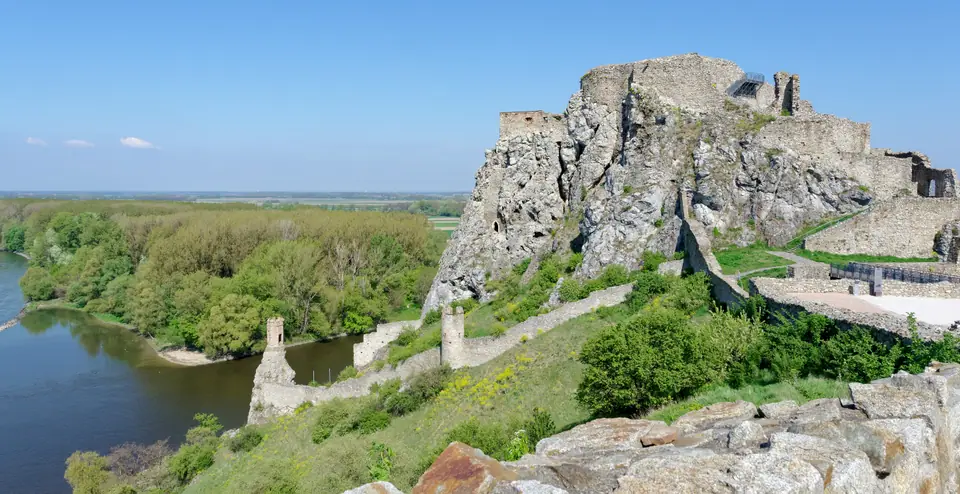
Hrad Devín perches boldly atop a 212-metre dolomite cliff above the river junction. Directly underneath, dark green-brown Morava currents merge into the paler, silt-rich Danube. That dramatic rocky spur carries one of Central Europe's oldest recorded strategic names. First chronicled as Dowina in 864 within the Fulda Annals as a Great Moravian fort, Devín grew into a stone thirteenth-century border castle. Medieval watchmen kept watch over busy river trade boats below. Retreating Napoleonic troops blew up its ramparts with gunpowder in 1809, and state custodianship began in 1932.
Gravel walkways weave steadily past excavated Roman masonry foundations, a deep courtyard rock well, and medieval gatehouses climbing up the sunlit limestone spine. White limestone steps wind smoothly past small exhibition vaults displaying medieval ironware and carved Roman gravestones. Watch grassy terraces where calm sheep occasionally graze below high fortified walls. Upper lawns catch cool summer river breezes and invite quiet stops away from busy downtown squares. Trace the narrow western rock spit to spot the slender Maiden Tower (Panenská veža). Its octagonal stone profile balances boldly above the clean two-toned colour seam between merging rivers. Extensive cliff stabilisation reopened restored Upper Castle terraces for bright warm-weather visits. However, winter ice closes exposed Upper Castle steps strictly from November through February, and the entire museum closes on Mondays. Confirm current entry conditions on the Bratislava City Museum website.
Reach the castle gates smoothly on municipal Bus 29 from riverside stops beneath Most SNP in twenty to thirty minutes. During warm months, LOD excursion boats leave downtown Osobný prístav for gentle upstream river approaches framed by steep wooded hills and sleepy boathouses.
Cold War Memory Below the Cliff
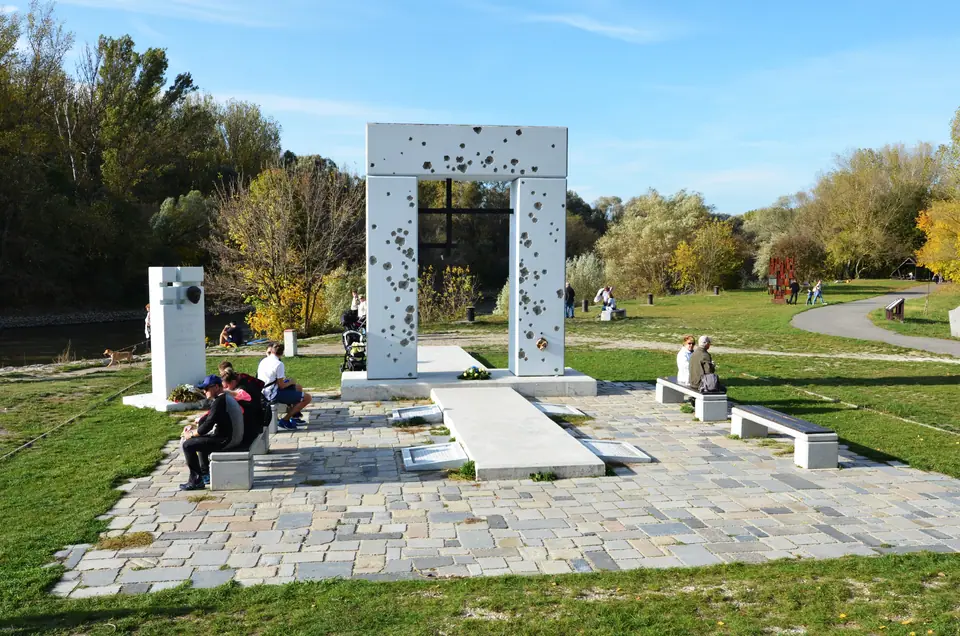
Walk downhill from Devín's entrance gate onto paved riverbank flags beside quiet willow groves. Facing Austrian meadows across the Morava stands the white travertine Gate of Freedom (Brána slobody). Sculptor Peter Mészároš crafted the jagged memorial arch, unveiled on 17 November 2005. Engraved stone panels carry names honouring more than 400 men and women shot or drowned between 1948 and 1989. Each quiet inscription recalls perilous midnight escapes across the heavily fortified Cold War Iron Curtain. Armed border patrol strips once barred citizens from stepping near wet river reeds.
Today, families cycle freely along the paved embankment path directly past the memorial on the international EuroVelo 13 Iron Curtain Trail. Riders push smoothly north toward Austria or east back into town along Devínska cesta. Active walkers can hike yellow-waymarked woodland tracks behind Devín village up 514-metre Devínska Kobyla, Bratislava's highest natural peak. Pause midway across bright golden sandstone faces at Sandberg to inspect 14-to-16-million-year-old Miocene marine layers. Bright sun-warmed rock shelves hold fossilised scallop shells, sea snails, and rare prehistoric shark teeth.
Carry drinking water and sun protection before climbing exposed sandy paths during hot summer afternoons, since low hillside scrub casts sparse shade. Village cafés and shaded courtyard pubs below castle ruins serve cold drinks and warm savoury plates beside the boardwalk. After lingering along the quiet water meadow, catch Bus 29 briskly past Karlova Ves back toward Most SNP.
Upstream Grasslands and Downstream Danubiana
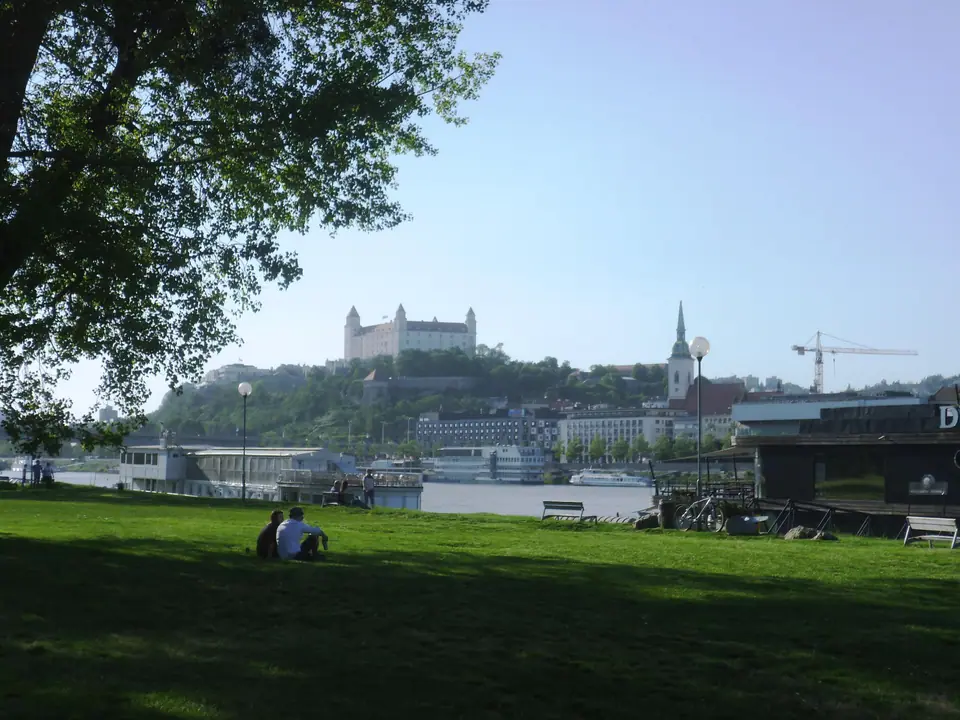
Central riverfronts bind both shores comfortably together for walkers and cyclists alike. Along the northern embankment, restored Slovak National Gallery quays lead past Twin City Liner docks toward bright Eurovea lawns. Across on Petržalka's southern bank, tall plane and chestnut trees shade broad paths inside Sad Janka Kráľa. Planted between 1774 and 1776, those peaceful meadows rank as Central Europe's oldest municipal public park. Wooden footbridges, open meadow benches, and shady willow walks invite calm afternoon breaks beside grazing river ducks before buses climb back into central boulevards. Evening lanterns glow above joggers, dog walkers, and quiet stone parapets looking cleanly toward softly lit castle ramparts.
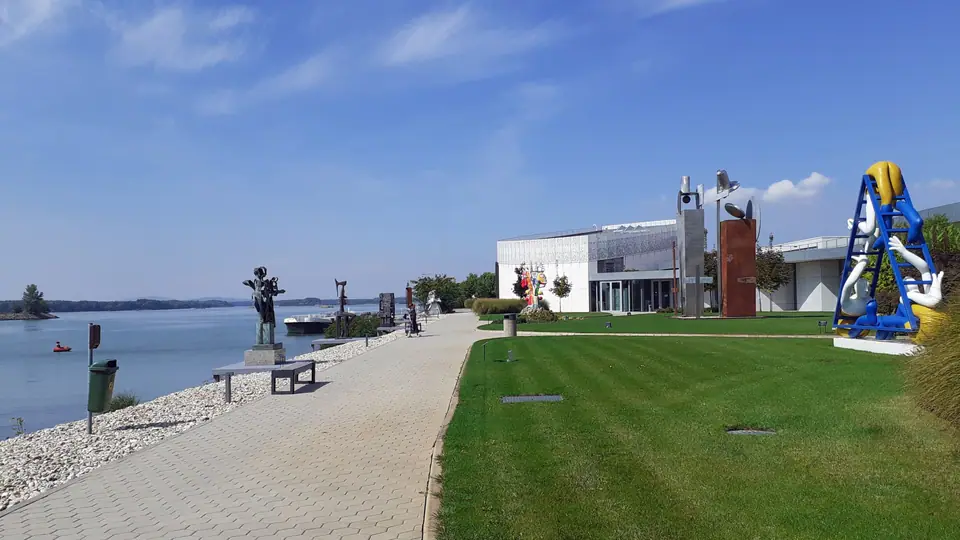
Twenty minutes south by municipal Bus 90 (departing outside the new Slovak National Theatre) sits contemporary gallery Danubiana Meulensteen Art Museum. Smooth paved cycling dykes skirt floodplain oak thickets down toward Čunovo water canals for riders travelling by bike. Dutch patron Gerard Meulensteen and Vincent Polakovič opened the original boat-shaped pavilion in 2000 before unveiling a bright 2014 expansion. Its white ship-prowed wing juts onto a narrow reservoir dyke near the Hungarian frontier, flooding bright upper rooms with river light. Herons and river terns glide slowly across calm reservoir bays while visitors circle rooftop bronzes beside open sky and sailing boats. Confirm Monday closures and winter bus frequency on the official Danubiana site. Returning city buses drop travellers cleanly beside Eurovea shops and tram tracks steps from evening tables in Staré Mesto.
Where it is
- 1Devín Castle & the Danube Riverfront
- Vienna International Airport (VIE) · about 31 km from here in a straight line
- Directions in Google Maps
Stations and taxi ranks: OpenStreetMap. Airports: OurAirports. Distances are in a straight line.
Traveller tips
Real advice from people who have been to Bratislava. Every tip is read by our team before it goes live.
No tips yet. Been here? Yours could be the first.
Thank you! Your tip will appear here after a quick review.
More in Bratislava
Continue exploring Bratislava with related neighbourhood, food, and planning guides
St Martin's Cathedral, the Coronation Story & Most SNP
Bratislava, Slovakia
Day Trips from Bratislava: Vienna & the Little Carpathians
Bratislava, Slovakia
Bratislava: Danube, Old Town & Cross-Border Rhythm
Bratislava, Slovakia
Best Things to Do in Bratislava: Palaces, Galleries & Hill Views
Bratislava, Slovakia
