


























Photo: Fred Romero from Paris, France · CC BY 2.0
Best Things to Do in Bratislava: Palaces, Galleries & Hill Views
How to divide sightseeing between pastel palaces, renewed modern art wings, hillside monuments, and Danube museums.
Bratislava rewards curious walkers far more than rushed afternoon bus groups. Around 1.2 million overnight visitors arrive every year, yet many spend bare hours circling Hlavné námestie before leaving town. Step past the medieval ring instead and you uncover glazed Art Nouveau churches, daring twentieth-century steel museums, formal gardens, and forested ridges.
Combine our castle and Old Town walk with these stops for a varied two-day route. Shaded botanical corners, quiet reading rooms, and woodland tracks round out short city breaks with calm green contrast. Pacing indoor museums during midday hours leaves morning light and late afternoons open for hilltop views and riverbanks. Museum timetables shift by season and weekday, so check official venue websites before setting out across town.
Art Nouveau Tiles at the Blue Church
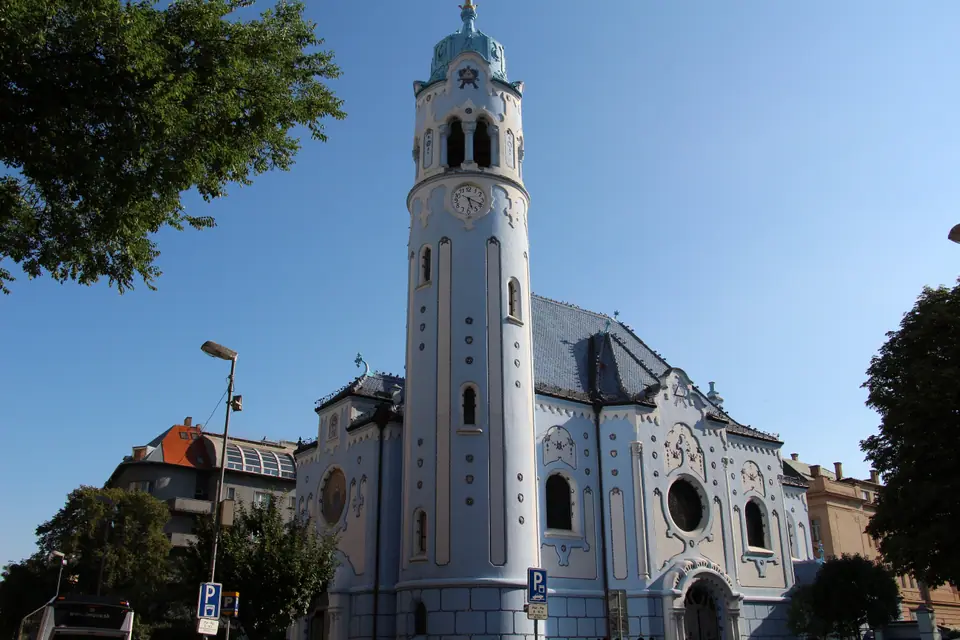
Five minutes east of the historic wall line on quiet Bezručova Street stands the Church of St Elizabeth. Residents affectionately call it Modrý kostolík (the Blue Church). Hungarian Secession master Ödön Lechner completed the church and its 36.8-metre round bell tower between 1909 and 1913 using moulded organic lines and glazed blue Zsolnay ceramics.
Pale stucco garlands frame powder-blue mosaic tiles across both facades and the barrel-vaulted nave. Floral ceramic details carry indoors onto curved wooden benches and soft blue altar reliefs. Nearby apartment blocks and a neighbouring Secession school echo the same gentle period curves along tree-lined residential pavements.
Morning sunlight strikes the curved entrance porch cleanly before midday shadows cross nearby apartments. Check posted parish Mass notices outside the gate so quiet architectural visits remain outside worship services.
National Gallery Bridges and Water Barracks
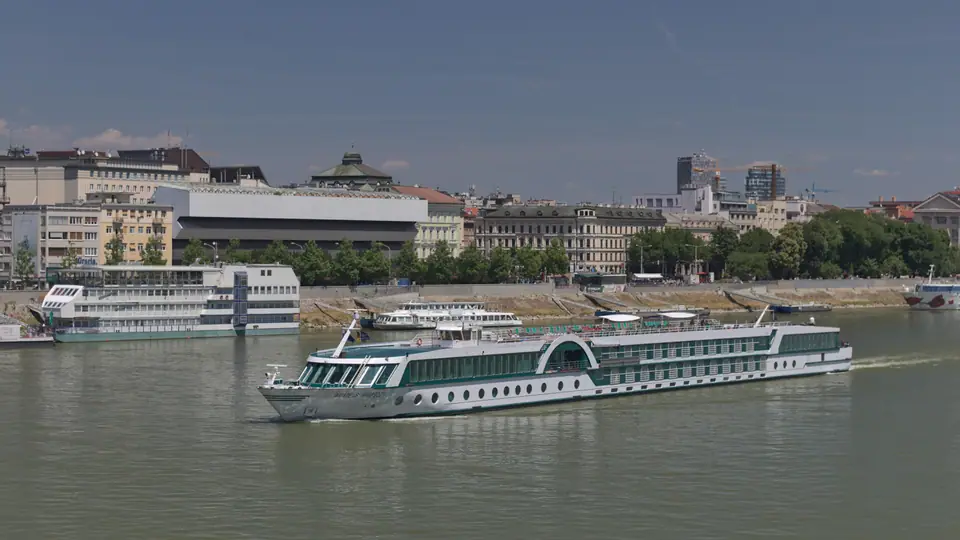
Facing the river quay along Rázusovo nábrežie, the reopened Slovak National Gallery (SNG) anchors contemporary cultural life in town. Architects Martin Kusý and Pavol Paňák completed a complex renewal in December 2022. Their design stitches baroque Water Barracks and Esterházy Palace together with Vladimír Dedeček's bold 1977 steel truss wing called Premostenie.
Bright inner courtyards, an open reading room, and calm brick vaults guide visitors across broad thematic wings. Galleries stretch from Gothic panel altars and carved wooden figures into twentieth-century Slovak sculpture, graphic design, and photography. Downstairs courtyards welcome strollers even when stopping briefly for coffee or browsing the art bookshop.
Galleries close on Mondays and waive general admission fees on the opening Sunday of each month. Check the official SNG site before visiting to see which temporary exhibitions run upstairs. Pause along the glazed upper walkway inside Dedeček's suspended wing before leaving. Full-height glass frames the Danube and Starý most like a shifting horizontal canvas.
Palaces Beyond the Main Square
Noble courtyards around the Old Town hide historic reception halls and calm pocket gardens steps from busy café terraces. Stepping beneath stone gatehouses reveals shady benches and cool arcades far quieter than nearby restaurant alleys.
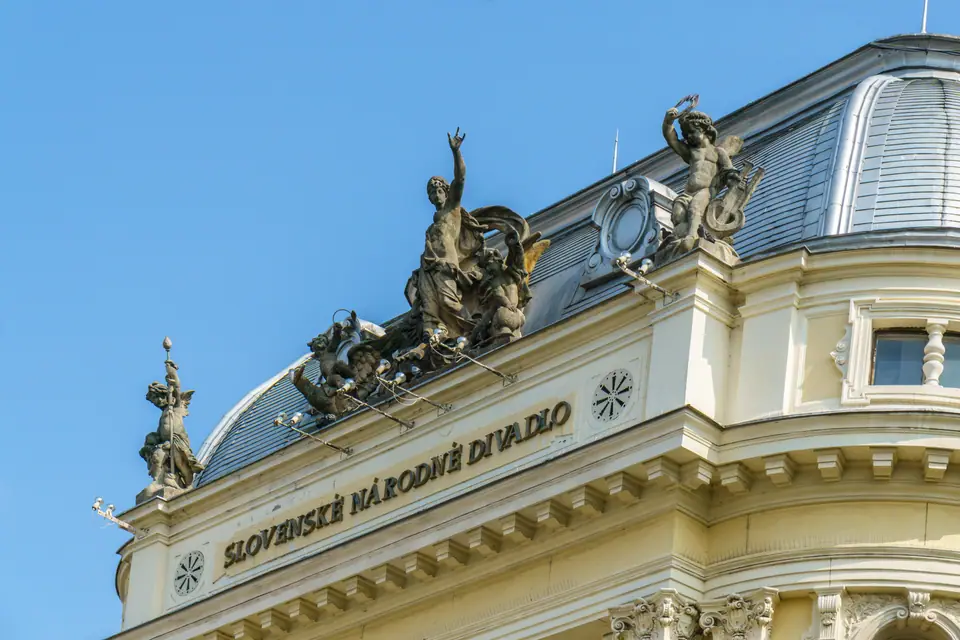
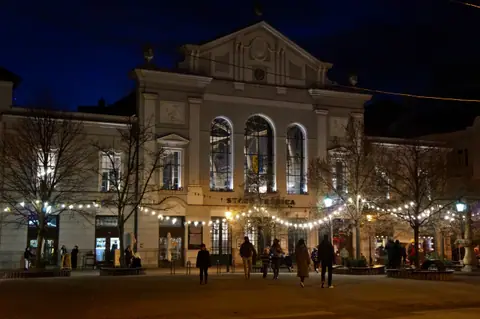
- Historic Slovak National Theatre (1886): Viennese theatre specialists Ferdinand Fellner and Hermann Helmer built this thousand-seat neo-Renaissance landmark crowning Hviezdoslavovo námestie. Opera and ballet alternate here with the glass complex opened in 2007 near Eurovea.
- Primate's Palace: Commissioned between 1778 and 1781 by Melchior Hefele, the pale pink residence holds the Hall of Mirrors. French and Austrian envoys signed the 1805 Peace of Pressburg here. Six rare 1630s English Mortlake tapestries found sealed behind panelling in 1903 hang next door.
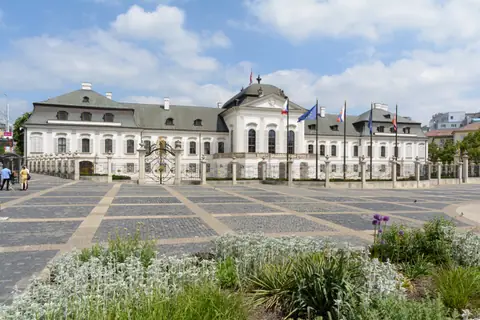
- Grassalkovich Palace: Built in the 1760s north of Michael's Gate on Hodžovo námestie, this white rococo palace has housed Slovakia's President since 1996. Guards patrol the main forecourt while its quiet rear formal garden stays open to daytime strollers.
- Old Town Hall and Apponyi Palace: Inside Stará radnica sits Slovakia's oldest museum, the Bratislava City Museum founded in 1868. Connected galleries inside 1762 Apponyi Palace showcase rococo salons and cellar viticulture rooms.
Hilltop Monuments Above the Vineyards
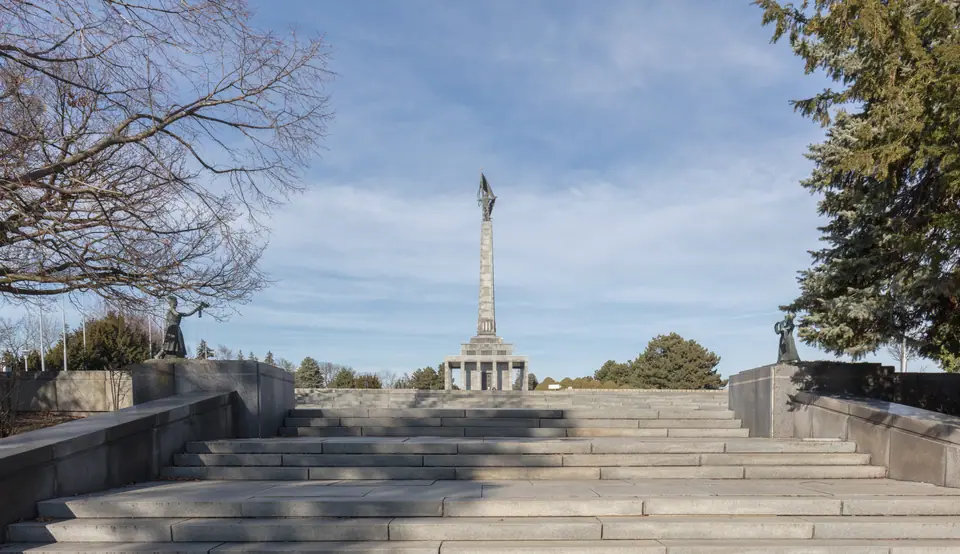
Climbing north-west out of the river basin rewards clear skyline orientation above wooded slopes. Built between 1957 and 1960 above diplomatic villas, Slavín raises a 39.5-metre granite obelisk and an eleven-metre bronze statue above the graves of 6,845 Red Army soldiers. Broad paved stairs and quiet stone terraces look straight across Old Town spires toward Austria and Hungary.
Higher woodland trails enter the Little Carpathian forest park at Kamzík. Catch municipal Bus 43 from Patrónka to the Železná studienka chairlift valley. Alternatively, follow marked beech forest tracks past quiet stream ponds straight toward the 194-metre rotating Kamzík TV Tower, the tallest structure in the city. For dramatic evening bridges down near the water, climb Most SNP or ride north-east toward Pezinok and Červený Kameň.
Modern Vydrica Lanes and River Sculpture
Below Bratislava Castle's southern retaining walls, pedestrian district Vydrica opened new stone alleys across late 2024 and 2025. Walkers follow calm paths along Floriánska and Oeserova streets linking lower castle slopes back toward the riverbank. Thoughtful site displays expose historic stone ice pits and eighteenth-century water-pumping remains associated with inventor Wolfgang von Kempelen.
Back inside Staré Mesto, scan pavement corners for playful bronze locals scattered along busy pedestrian crossroads. Sewer worker Čumil, installed in 1997, peeks out near Panská while polite Schöner Náci raises his silver hat nearby. Further east, a sculpted Napoleonic guard leans quietly on Hlavné námestie beside outdoor tables. Pedestrians pause smiling for quick street photos before dipping into shaded espresso yards off Panská and Sedlárska. Quiet museum galleries balance lively outdoor bronze sightings comfortably across warm afternoons.
Wrap up cultural days by riding Bus 90 south to the breezy peninsula lawns of Danubiana Meulensteen Art Museum. Then round off the evening using our Slovak dining and wine guide.
Where it is
- 1Bratislava
- M. R. Štefánik Airport (BTS) · about 8 km from Bratislava in a straight line
- Vienna International Airport (VIE) · about 40 km from Bratislava in a straight line
- Directions in Google Maps
Stations and taxi ranks: OpenStreetMap. Airports: OurAirports. Distances are in a straight line.
Traveller tips
Real advice from people who have been to Bratislava. Every tip is read by our team before it goes live.
No tips yet. Been here? Yours could be the first.
Thank you! Your tip will appear here after a quick review.
More in Bratislava
Continue exploring Bratislava with related neighbourhood, food, and planning guides
Where to Stay in Bratislava: Quiet Streets, Waterfronts & Petržalka
Bratislava, Slovakia
Best Time to Visit Bratislava: Climate, Harvest Wine & Advent
Bratislava, Slovakia
What to Eat in Bratislava: Halušky, Rožky, Stará Tržnica & Wine
Bratislava, Slovakia
Bratislava Castle, Michael's Gate & the Old Town Walk
Bratislava, Slovakia
