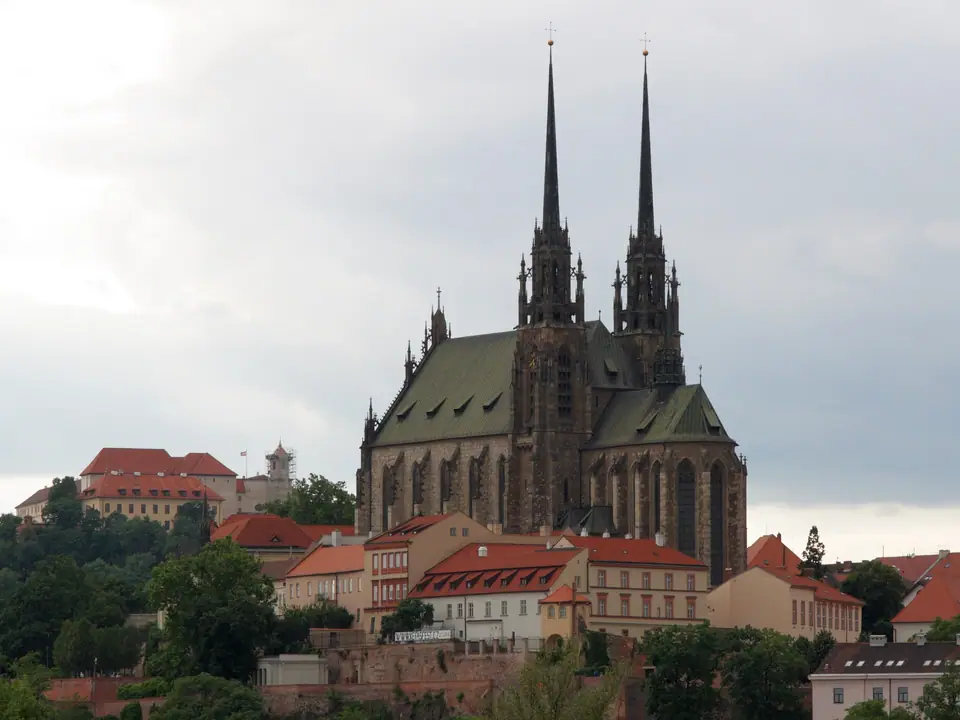
Photo: RomanM82 · CC BY-SA 3.0
Špilberk Castle, the Casemates and Petrov’s Twin Spires
A two-hill route linking Špilberk’s Habsburg casemate cells and Silvio Pellico’s prison history with Denis Gardens and Petrov Cathedral’s 11 o’clock bell.
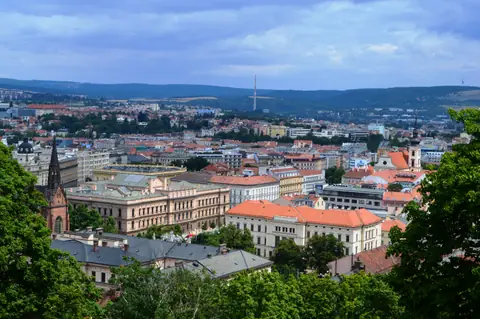
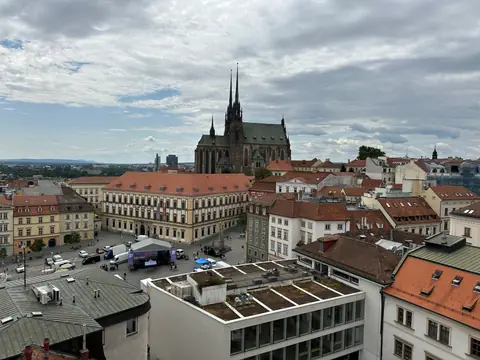
Every map of Brno pivots around two ridges standing barely one kilometre apart on the western and southern rim of the Old Town. Forested Špilberk (SHPEEL-berk) rises cleanly above baroque rooftops as a squat brick citadel. Across the valley notch, rocky Petrov lifts slender twin Gothic Revival needles straight above Zelný trh. Pairing both heights inside a single half-day route connects royal Moravian rule, Habsburg state confinement, and the siege legend that still governs Brno’s clocks.
From Royal Gothic Seat to Baroque Fortress Citadel
Bohemian King Přemysl Otakar II founded Špilberk Castle in the mid-thirteenth century as a royal stronghold guarding Moravian crown estates and river crossings below. Early stone residential wings hosted Moravian margraves before Renaissance nobles remodelled inner courtyards into residential palaces. Everything changed after 1645, when Brno’s citizens and garrison commander Jean-Louis Raduit de Souches fought off General Lennart Torstensson’s four-month Swedish siege beneath battered medieval walls.
Determined to turn Špilberk into an impregnable Moravian anchor, Habsburg military engineers transformed the entire hilltop across the late seventeenth and eighteenth centuries. They wrapped the old Gothic nucleus inside a massive Baroque bastion fortress ringed by earthen slopes, brick scarps, and dry moats. Standing on the southern parapet terrace today still shows why artillery struggled to breach those steep angled flanks rising above Staré Brno. Tree-lined footpaths climb smoothly up the wooded hillside from Husova street or wrap round the dry moats toward the central courtyard. Shaded park benches along outer earthworks give joggers, dog walkers, and daytime sightseers welcome summer shelter beneath mature oaks.
Inside the Casemates and the Habsburg Prison of Nations
Military obsolescence later shifted Špilberk from border fortress to imperial terror. In 1783, Emperor Joseph II ordered subterranean bastion tunnels converted into the monarchy’s harshest prison for violent felons and political rebels. That brutal role earned the castle its dreaded nickname "Prison of Nations" (Žalář národů). Down steep stone stairs run the barrel-vaulted brick casemates (Kasematy), built originally as bombproof soldier shelters. Inside wait timber solitary boxes, chained torture rooms, and damp winter darkness where political detainees endured years in irons. Pack steady shoes and a light layer because tunnel stone stays damp and cool even in midsummer.
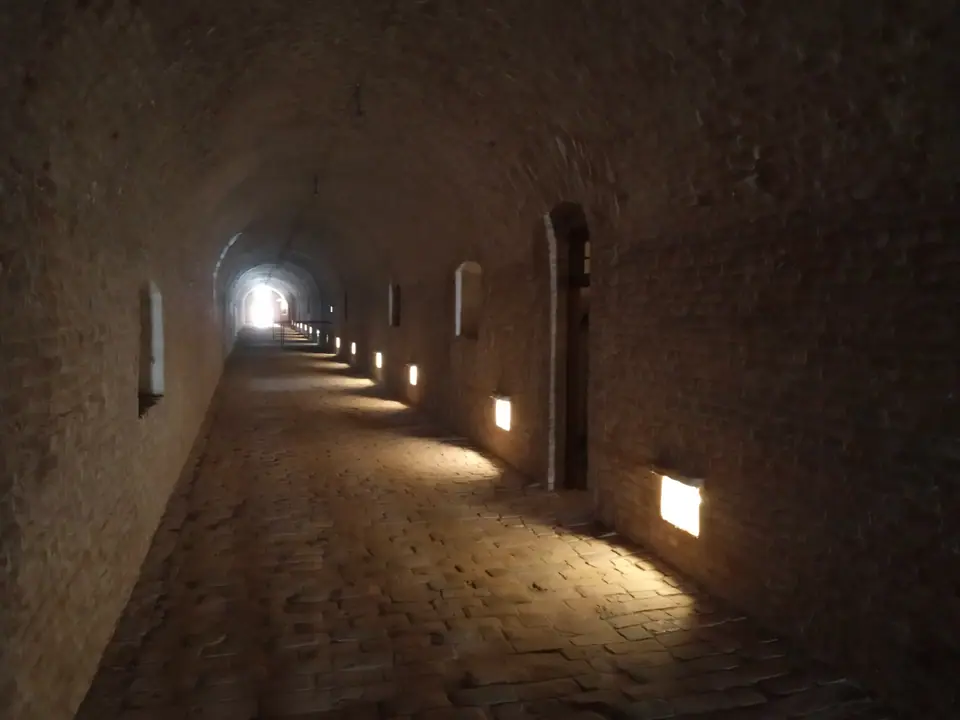
Among those political inmates stood Italian writer and patriot Silvio Pellico, locked here from 1822 to 1830 before publishing his memoir Le mie prigioni ("My Prisons"). Pellico’s book exposed Habsburg dungeon conditions across Europe. Imperial authorities closed the prison in 1855 and turned upper wings into army barracks. Since 1960, Špilberk has served peacefully as home to the Brno City Museum (Muzeum města Brna). Upper rooms display architecture exhibitions, baroque civic art, and historical prison circuits, while the lookout tower opens wide views over the wooded park. Cold War atomic shelter 10-Z cuts straight beneath Špilberk’s southern slope facing Husova street for visitors interested in twentieth-century bunker history.
Walking the Ridge Across Denis Gardens to Petrov
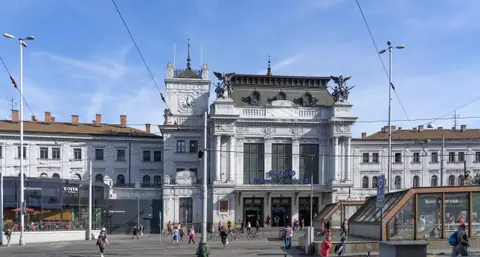
Descending Špilberk’s eastern park stairs brings walkers smoothly across Husova street into green Denisovy sady (Denis Gardens). Count Mitrovský laid out this terraced park from 1804. Later, in 1818, civic planners added an Empire-style stone obelisk celebrating victory over Napoleon. Shaded paths follow surviving sections of Brno’s old stone city ramparts straight onto Petrov headland. Morning light strikes red-tiled gables across Staré Brno cleanly from the balustrade beside the classicist garden colonnade. Warm stone benches along the rim make an easy natural pause between climbs. Narrow garden steps drop directly back toward Hlavní nádraží if legs tire early. Spring trees bloom over quiet grassy slopes facing western suburbs below.
August Kirstein’s 84-Metre Twin Cathedral Spires
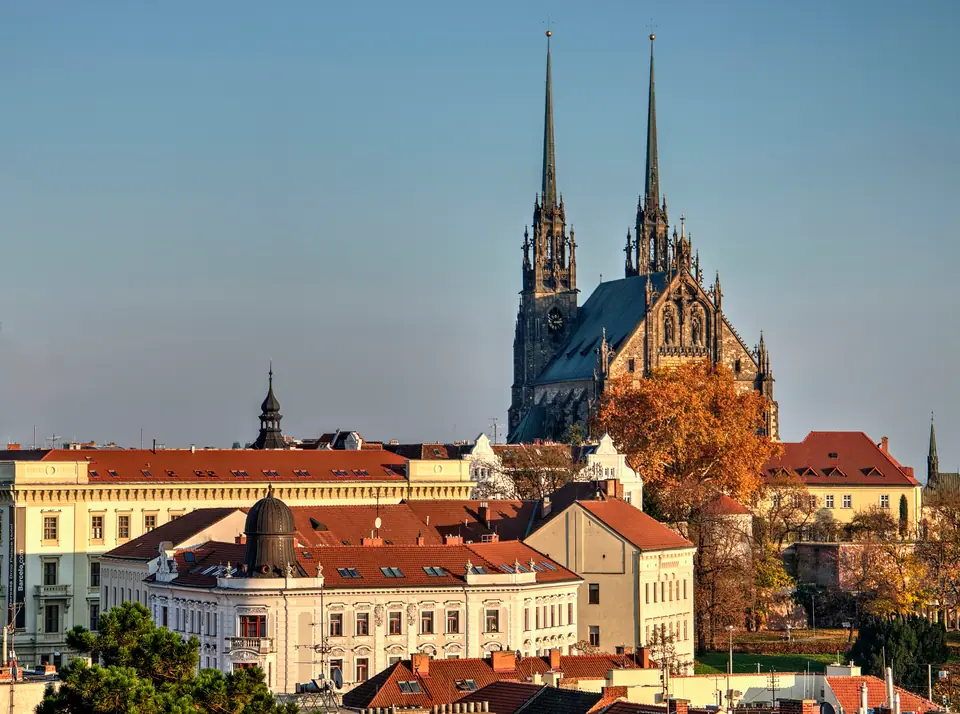
Dominating that southern limestone crest stands the Cathedral of Saints Peter and Paul, known universally across Czechia as Petrov. It occupies the footprint of a Romanesque basilica and Gothic collegiate church raised to cathedral status in 1777. Viennese architect August Kirstein led a sweeping Neo-Gothic rebuilding from 1901 to 1909. Kirstein’s soaring 84-metre twin spires, raised between 1904 and 1909, stamp Brno’s skyline so decisively that they grace the reverse of the Czech 10-koruna coin.
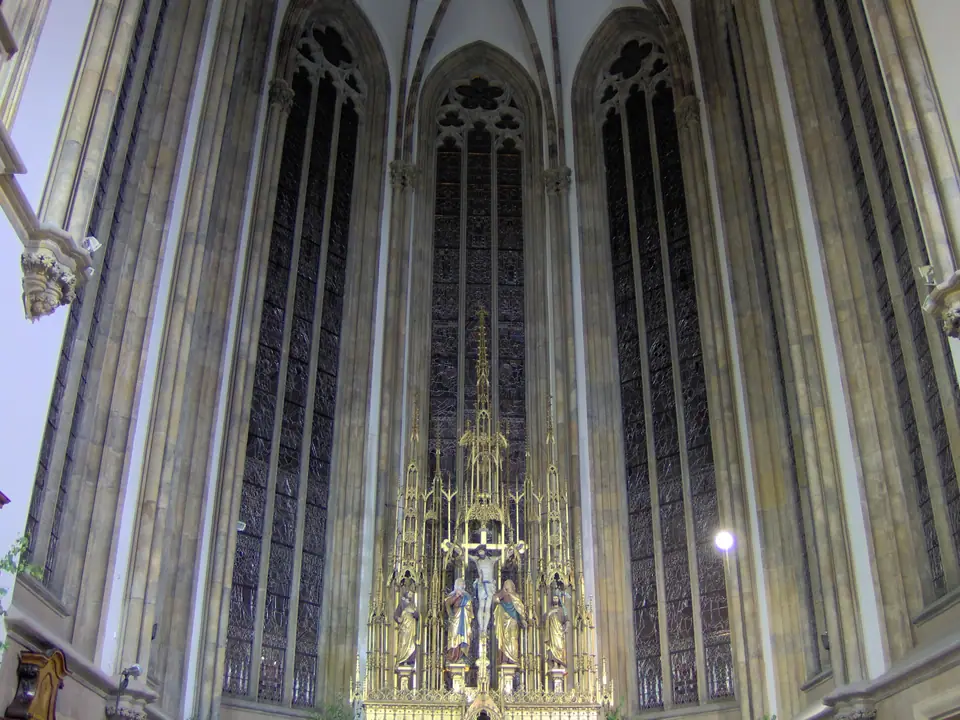
Inside, tall lancet stained-glass windows pierce a calm Baroque-restructured nave flanked by gilded side altars and carved choir woodwork. Visitors with steady knees can climb the narrow cathedral tower steps for aerial perspectives across Old Town Hall and Náměstí Svobody. Beneath the chancel sit cool Romanesque crypt stones and the diocesan treasury, worth pairing with nearby Capuchin Crypt vaults down the slope. Quiet morning visits avoid small tour groups filing through the central aisle. Free daytime sanctuary entry makes Petrov an effortless stop before continuing downward into Zelný trh market stalls.
Why Petrov Rings Midday at Eleven in the Morning
Linger near the cathedral terrace or Zelný trh steps toward late morning. Soon heavy bells begin tolling twelve strokes at 11 in the morning rather than noon. City lore traces that quirk straight back to 15 August 1645, near the climax of Torstensson’s exhausting siege. Exhausted Swedish troops allegedly vowed to abandon camp if Brno remained standing at midday. Tipped off to the ultimatum, resourceful defenders ordered Petrov’s bell-ringer to strike twelve an hour early. Weary besiegers heard the chimes, believed their deadline had passed, and retreated north. Petrov has tolled midday an hour early ever since, echoed daily when the black granite timepiece drops its glass marble below.
Where it is
- 1Špilberk Castle, the Casemates and Petrov’s Twin Spires
- Vienna International Airport (VIE) · about 121 km from here in a straight line
- Directions in Google Maps
Stations and taxi ranks: OpenStreetMap. Airports: OurAirports. Distances are in a straight line.
Traveller tips
Real advice from people who have been to Brno. Every tip is read by our team before it goes live.
No tips yet. Been here? Yours could be the first.
Thank you! Your tip will appear here after a quick review.
More in Brno
Continue exploring Brno with related neighbourhood, food, and planning guides