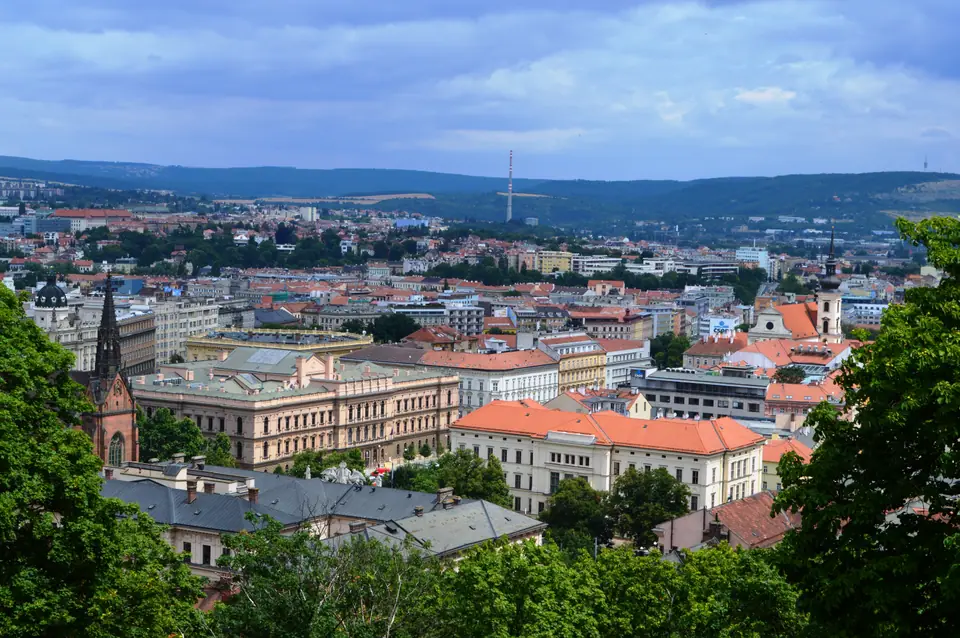
Photo: Scotch Mist · CC BY-SA 4.0
Brno: Royal Walls, Mendel’s Abbey and a Ring of Glass
How a fortified Moravian crossroads shed its Baroque bastions for 1860s ring parks, Gregor Mendel’s abbey garden, and bold First Republic modernism.
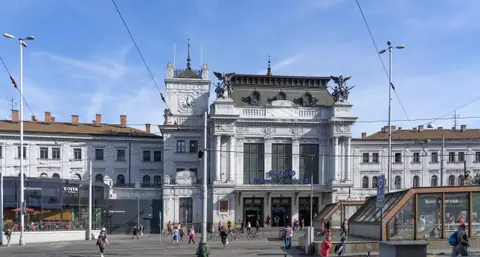
Brno (BURR-noh) wears its importance lightly for a city of 404,296 permanent residents. Where Prague stages imperial pageantry for riverfront crowds, Moravia’s historic capital works at human pace behind an oval ring of plane trees and red-and-white tram tracks. Recorded in 1091 and chartered in 1243, Czechia’s second-largest city grew as a fortified market crossroads between Bohemia, Austria, and Hungary. Stepping outside the railway concourse drops newcomers straight onto the old perimeter line where medieval walls once stood.
Royal Charters, Sieges and Bastion Walls
For five centuries, Brno’s physical layout obeyed military siege engineering rather than civic promenade plans. Bohemian King Wenceslaus I elevated the settlement with royal privileges in 1243, anchoring trade routes between two defensible limestone heights. Hussite armies assaulted the town in 1428 and 1430 without breaking through. Two centuries later, in 1645, Swedish General Lennart Torstensson battered the ramparts during the Thirty Years’ War. Brno stood firm as the only Moravian city that held out against the Swedish army. That stubborn defence shaped two enduring traditions at 11 in the morning, heard daily at Petrov Cathedral and watched on Náměstí Svobody.
Prussian troops returned in 1742 and likewise retreated after failing to breach the citadel ring. Victory came at an architectural price. Habsburg engineers wrapped the compact burgher core in towering brick bastions, ravelins, and bare defensive glacis fields that strangled expansion well into the nineteenth century. Crammed inside those tight ramparts, parish churchyards overflowed downward into vaulted cellars while suburbs clung timidly beyond town gates.
Why the Medieval Ramparts Became a Green Ring
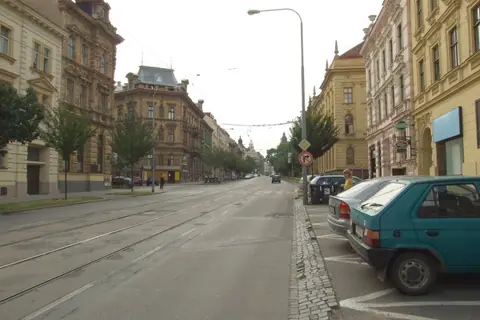
Brno finally broke out of its stone corsets between 1859 and 1864. Following earlier gate clearances from 1849 to 1851, city planners dismantled the obsolete Baroque bastions systematically, copying Vienna’s Ringstraße urban model on a smaller Moravian scale. Instead of handing every liberated plot over to dense factories, architects turned the northern and eastern glacis into sweeping park boulevards along Koliště, Rooseveltova, and Moravské náměstí. Walking around that curving green belt today still traces the exact polygonal footprint of Brno’s seventeenth-century artillery trenches.
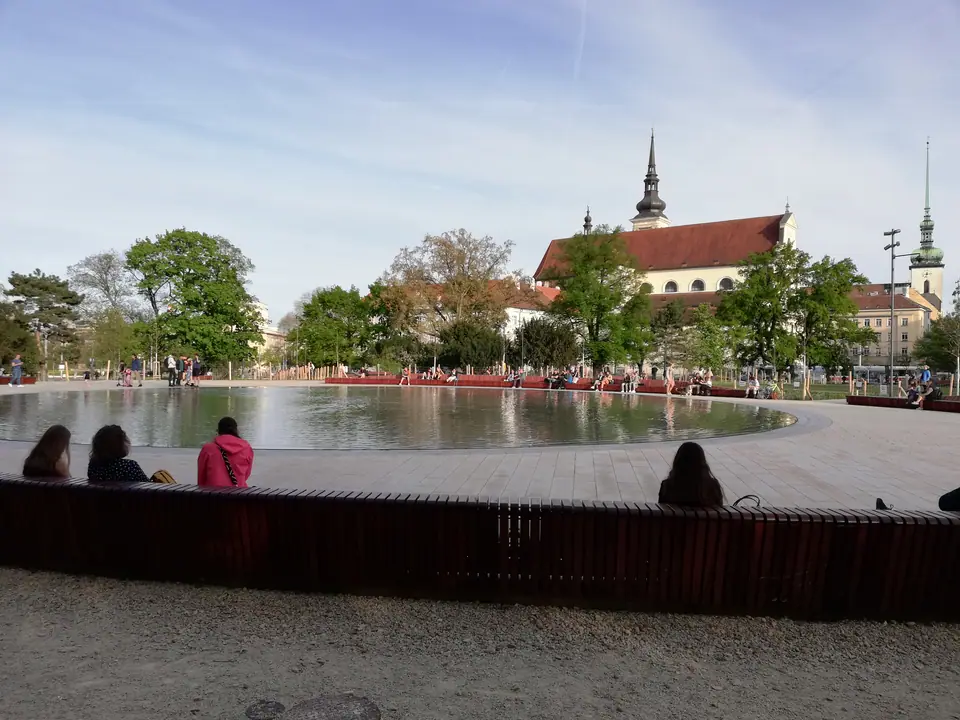
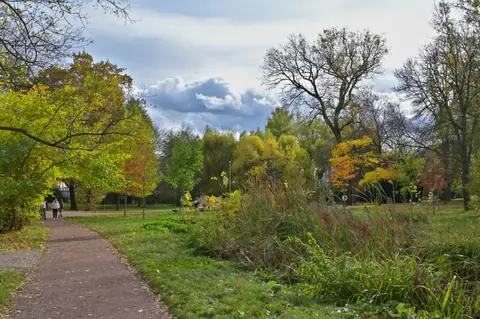
Two older gardens anchored that nineteenth-century green transformation. North of the ring stretches Lužánky, opened in 1786 by imperial decree of Emperor Joseph II on former Jesuit estates as the oldest public park in the Czech lands. South beneath Petrov’s cathedral slopes sit Denisovy sady (Denis Gardens), landscaped from 1804 and crowned by an 1818 obelisk marking victory over Napoleon. Both parks bind quiet shaded lawns seamlessly to central tram corridors.
Mendel’s Peas, Horse Trams and First Republic Glass
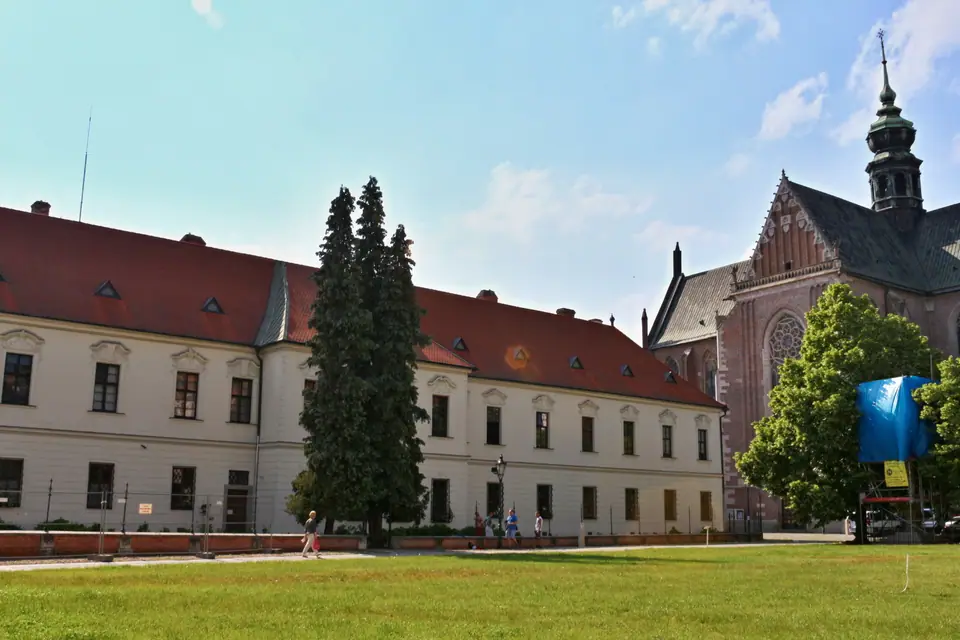
Industrial wealth transformed Moravian Brno into a powerhouse of textile mills and scientific invention throughout the 1800s. Direct steam rail connected the city with Vienna in 1839, decades ahead of many regional capitals. On 17 August 1869, Brno launched the first horse-drawn tram service in the Czech lands. Steam engines took over the rails in 1884, followed by electric trams in 1900. Over in Staré Brno, Augustinian friar Gregor Mendel spent seven quiet summers from 1856 to 1863 cultivating thousands of pea plants inside the walled abbey garden of St Thomas. His careful cross-breeding uncovered modern laws of inheritance long before he became abbot in 1868.
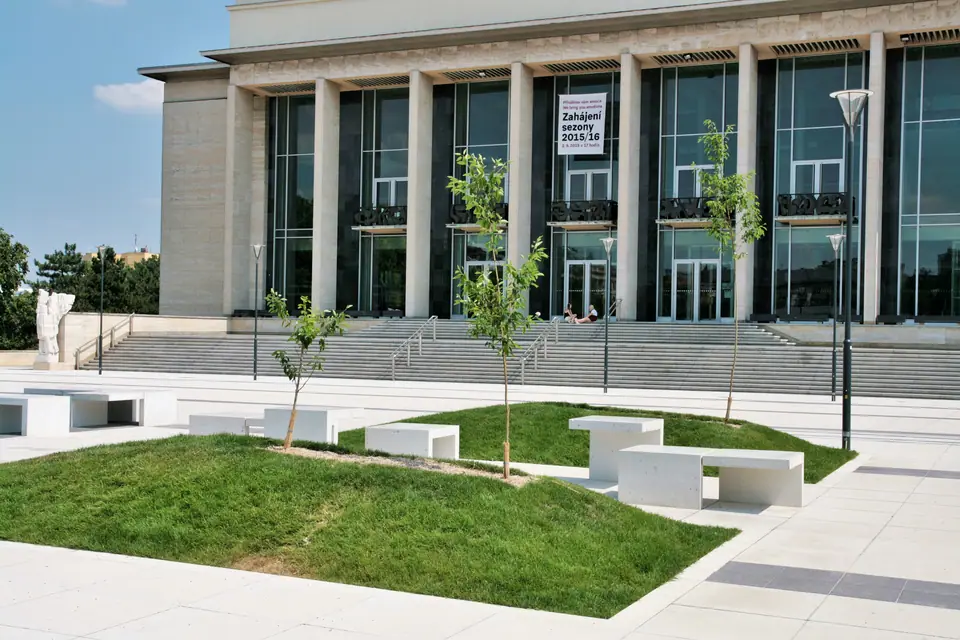
Removing the 1860s bastions freed Brno twice: green boulevards circled the old core, while hillside slopes opened up for bold interwar glass.
Czechoslovak independence in 1918 triggered an extraordinary architectural leap across those newly opened slopes. Masaryk University opened in 1919, drawing young scholars and modern patrons who rejected ornate Habsburg stucco. Throughout the First Republic era between the world wars, architects built clean travertine terraces, flat steel roofs, and continuous ribbon windows across Černá Pole and Pisárky. That wave culminated in Ludwig Mies van der Rohe and Lilly Reich’s Villa Tugendhat, finished in 1930 and inscribed by UNESCO in 2001.
Two Rivers, One Culverted Stream and Twin Hills
Looking down from castle bastions explains why Brno’s streets bend the way they do. Covering 230.18 square kilometres across elevations from 190 to 497 metres, the municipal bowl gathers where the River Svratka skirts western Pisárky and Old Brno while the River Svitava threads eastern industrial quarters. Between them once ran a third waterway, the narrow Ponávka stream, whose mills powered nineteenth-century wool yards before urban engineers culverted much of its inner course underground.
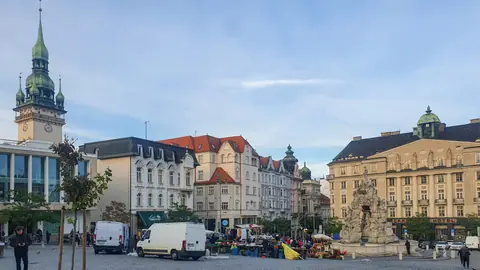
Above those valley flats rise two sandstone and limestone shoulders roughly a kilometre apart. Western Špilberk carries brick fortress ramparts behind wooded switchbacks, while southern Petrov anchors Gothic Revival cathedral spires directly beside historic Zelný trh. Almost every sight inside our walking itinerary fits cleanly between those two ridges and the pedestrian core below.
Daily Rhythms Between Students and Trade Fairs
Today more than 65,000 university students across 10 universities keep central streets lively without drowning them in souvenir shops. Mornings belong to cabbage and herb growers on Zelný trh and espresso counters around Jakubské náměstí. Evenings shift toward standing beer pubs, South Moravian wine bars, and stages celebrating Brno’s 2017 designation as a UNESCO Creative City of Music, rooted in composer Leoš Janáček’s decades here.
Before booking beds, check practical national basics cleanly. Czechia uses the Czech koruna (CZK) rather than the euro, though contactless card acceptance covers shops, cafés, and DPMB trams. Municipal tap water is safe to drink straight from hotel taps. Under UK FCDO guidance, Schengen visitors face the 90-days-in-180 limit with passports issued under 10 years ago and valid 3 months past departure. Plan two to three unhurried days for Brno’s core, checking trade-fair dates and seasonal weather plus direct rail links toward Prague and Bratislava.
Where it is
- 1Brno
- Vienna International Airport (VIE) · about 121 km from Brno in a straight line
- Directions in Google Maps
Stations and taxi ranks: OpenStreetMap. Airports: OurAirports. Distances are in a straight line.
Traveller tips
Real advice from people who have been to Brno. Every tip is read by our team before it goes live.
No tips yet. Been here? Yours could be the first.
Thank you! Your tip will appear here after a quick review.
More in Brno
Continue exploring Brno with related neighbourhood, food, and planning guides