The Round Tower, Latin Quarter and Strøget Side Streets
Step-free spiral views from the 1642 Round Tower and the cobbled bookshop lanes of the Latin Quarter.
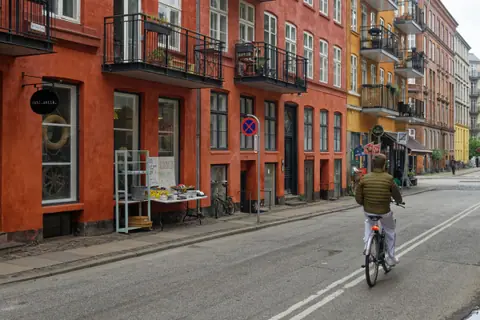
While the main pedestrian shopping artery of Strøget (stretching 1.1 kilometres from City Hall Square to Kongens Nytorv) draws international high-street crowds, stepping just one or two blocks north into the Latin Quarter (Latinerkvarteret) and the cobbled lanes around Købmagergade reveals the oldest academic and artisanal heart of Copenhagen.
Climbing the Round Tower (Rundetaarn, 1642)
Halfway along pedestrian Købmagergade stands the Round Tower (Rundetaarn), built by King Christian IV between 1637 and 1642 as the astronomical observatory, church tower and university library hall of the adjacent Trinitatis Church. Instead of stairs, the tower is ascended via a wide, whitewashed brick 209-metre spiral equestrian ramp that winds seven and a half turns around the hollow central core; it was designed so horse-drawn wagons could haul heavy astronomical instruments and crates of books up to the library hall (and in 1716, Tsar Peter the Great rode a horse straight to the top while Empress Catherine followed in a carriage). Halfway up, pause inside the bright former Library Hall for changing design and history exhibitions, peek into the historic privy where Hans Christian Andersen's characters once referenced the building, and emerge onto the circular outdoor lattice platform 34.8 metres above the street for the clearest close-up view of Copenhagen's copper church spires. At the very top sits Europe's oldest functioning astronomical observatory.
Exploring the Latin Quarter, Gråbrødretorv and Historic Courtyards
Descend the ramp and turn west into the Latin Quarter, named for the centuries when Latin was spoken around the University of Copenhagen (founded in 1479 on Frue Plads beside the neoclassical Vor Frue Kirke cathedral, which holds Bertel Thorvaldsen's marble sculptures of Christ and the Twelve Apostles). Wander slowly along Studiestræde, Larsbjørnsstræde and Sankt Peders Stræde (home to Sankt Peders Bageri, famous for its Wednesday cinnamon rolls, onsdagssnegle), browsing independent record shops, Danish streetwear boutiques and espresso bars.
- Gråbrødretorv: a quiet, car-free square ringed by pastel-painted 18th-century townhouses built after the Great Fire of 1728 around a giant plane tree.
- Pistolstræde and Jorcks Passage: duck under low archways off Østergade and Vimmelskaftet to discover 18th-century timbered courtyards and terrazzo-floored passages that link seamlessly with Kongens Have and Rosenborg Castle.
Traveller tips
Real advice from people who have been to The Round Tower, Latin Quarter and Strøget Side Streets. Every tip is read by our team before it goes live.
No tips yet. Been here? Yours could be the first.
Thank you! Your tip will appear here after a quick review.
More in Copenhagen
Continue exploring Copenhagen with related neighbourhood, food, and planning guides