






Dubrovnik Old Town Walking Guide
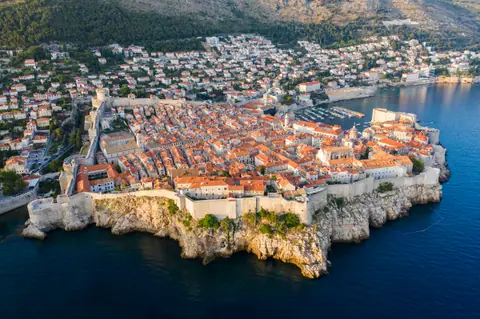
Most of what you see inside the walls dates from after 1667, when an earthquake destroyed much of the city and killed thousands of its people. The rebuilt town was more uniform and more Baroque, with identical stone houses along Stradun. This loop takes about two hours at an easy pace. Start early, before 9am in summer, and do it on a day when you aren't also walking the city walls, or your legs will complain.
- Pile Gate. Cross the old drawbridge and look up: St Blaise stands in a niche over the arch. Just inside is Onofrio's Great Fountain, a 15th-century domed fountain with sixteen carved masks spouting water. The water is drinkable.
- The Franciscan Monastery. On your left, a quiet Romanesque cloister and one of the oldest working pharmacies in Europe, open since 1317. Shelves of old apothecary jars sit alongside modern face creams made to monastery recipes.
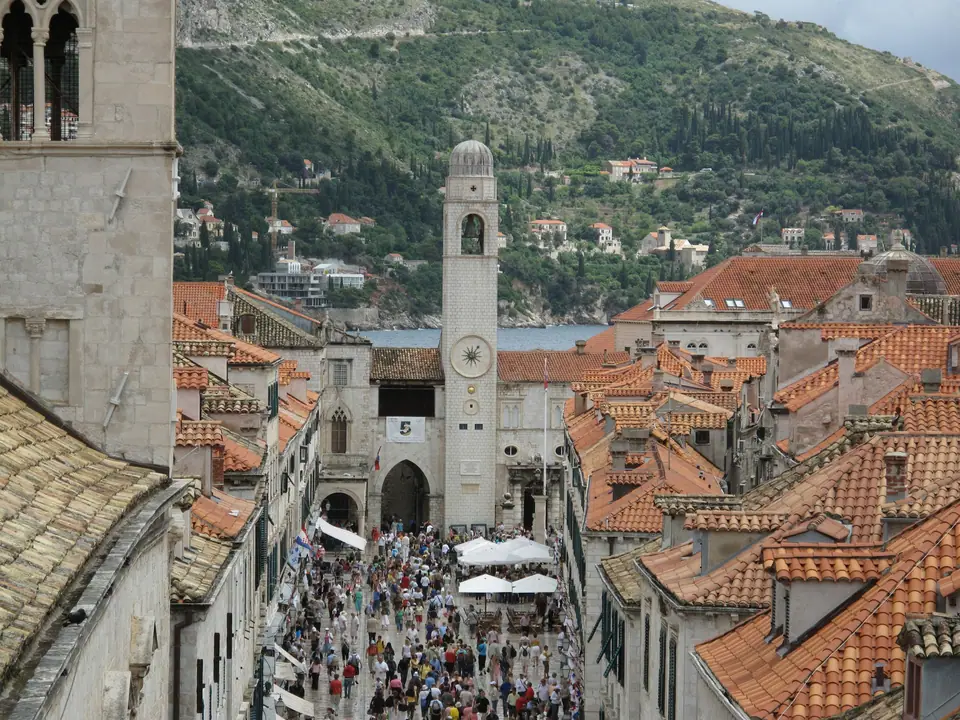
- Stradun. Walk the main street end to end. Notice the houses: the same height, the same shopfront arches with a door and a window under one arch. That's post-earthquake planning.
- Prijeko. Turn left up any of the narrow stairways to reach Prijeko, the lane running parallel to Stradun. It's lined with restaurant tables and touts. Carry on up to the top lanes under the walls, where people live, cats sleep and laundry hangs.
- Luža Square. Back down at the east end of Stradun, stand by Orlando's Column, where the republic read out its decrees and flew its flag. Around you are the bell tower, with two bronze figures striking the hours, and the Sponza Palace, the old customs house, now the state archives.
- St Blaise's Church. The Baroque church of the patron saint, facing the square. Inside, a silver statue of St Blaise holds a model of the city as it looked before the earthquake.
- The Rector's Palace. The seat of government. The rector was elected for just one month at a time and couldn't leave the building without permission, so no one could build up too much power. Now a museum with a courtyard used for summer concerts.
- The cathedral. Rebuilt after 1667, with a treasury holding reliquaries of St Blaise and a Titian polyptych over the altar.
- Gundulić Square and the Jesuit Stairs. A morning market fills Gundulić Square. Behind it, the wide Baroque staircase climbs to the Jesuit church. Game of Thrones fans know it as the start of the "walk of shame".
- The Old Port. Finish by walking out through Ponte Gate to the harbour, where the boats leave for Lokrum and Cavtat. Continue east through Ploče Gate for the Dominican Monastery and its small museum of Ragusan painting.
For more beyond the walls, see our things to do list.