Photo by Nazrin Babashova on Unsplash
Best Things to Do in Dubrovnik
The walls, Fort Lovrijenac, the cable car, Lokrum and the Old Town churches and museums: the Dubrovnik sights that shape a first visit.
Short answer: walk the full circuit of the city walls, then use the same ticket for Fort Lovrijenac. Ride the cable car up Mount Srđ for the view, take the boat to Lokrum, and spend an evening in the Old Town lanes. Add a museum or two on a hot afternoon.
Walk the city walls
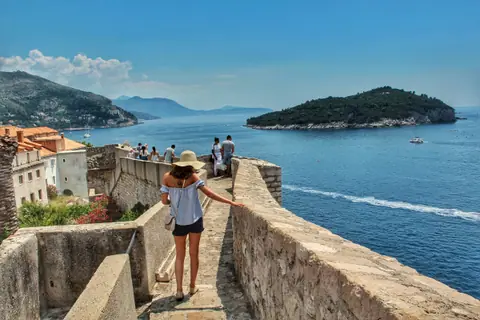
The walls are 1940 metres long and wrap around the whole Old Town. Along the way you pass sixteen towers, three fortresses and six bastions. At some points the main wall rises 25 metres, and on the land side it is 4 to 6 metres thick. You look down into courtyards and onto roofs, then out across the Adriatic.
The ticket is valid for one tour, and re-entry is not possible. Bring water, a hat and sunscreen, as the operator advises, because shade is scarce. Our city walls guide covers entrances, timing and the rules on the walls.
Visit Fort Lovrijenac
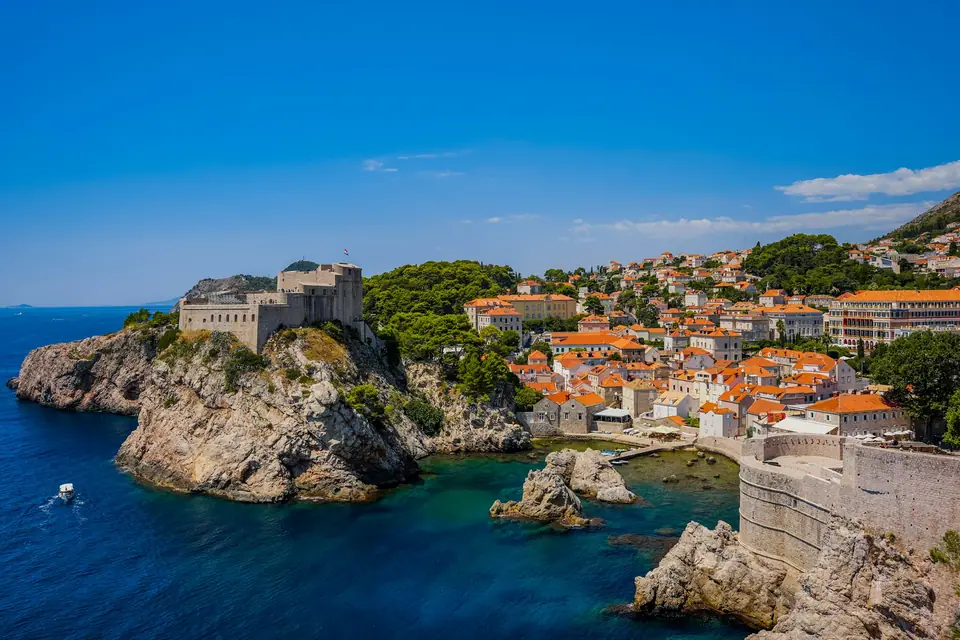
Lovrijenac stands on a 37-metre rock outside Pile Gate. Its walls reach twelve metres thick in places, and its origins go back to 1018 and 1038. Over the gate is the Latin motto Non bene pro toto libertas venditur auro, which says that freedom should not be sold for all the gold in the world. During the Summer Festival the fort becomes a stage.
Your walls ticket includes Lovrijenac, so visit on the same day and keep the ticket. If you start at Lovrijenac instead, you pay extra at the walls.
Ride the cable car up Mount Srđ
The cable car first carried passengers in 1969. It was destroyed in the war and restored in 2010. Today the ride takes three minutes and lifts you to 405 metres above sea level. From the top, the Old Town looks like a model, with the islands spread out beyond it.
Next to the upper station, the Imperial Fortress houses the Museum of the Croatian War of Independence. Its exhibition, Dubrovnik in the War of Independence 1991-1995, explains what the city went through, and it is sobering.
Take the boat to Lokrum
Lokrum is a ten-minute boat ride from the Old Town harbour. The island has been a Special Reserve of Forest Vegetation since 1948, and the European Commission notes that forest covers 90% of it. Its main monument is the Benedictine Monastery of St Mary. A botanical garden was set up there in 1959.
In the south of the island is the Dead Sea, a small lake that was once a cave until its roof collapsed. It makes a calm place to swim. Our day trips guide has more on the island.
Explore the Old Town
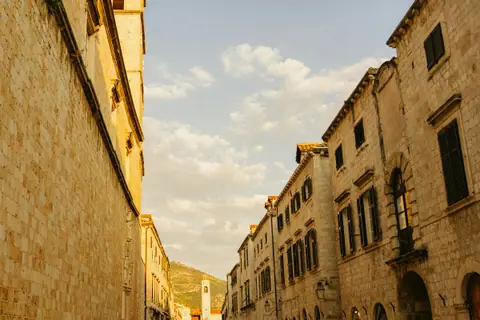
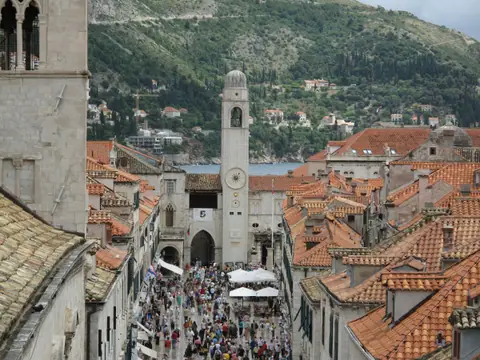
Start at the large Onofrio fountain inside Pile Gate, where water pours from 16 carved stone masks. Walk the length of Stradun to the square at the eastern end, where Orlando's Column shows a medieval knight holding a sword. The Sponza Palace and the Rector's Palace stand nearby. The Rector's Palace was the administrative centre of the old republic and is now a museum.
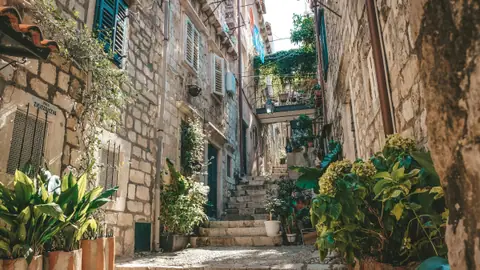
Then climb into the side lanes, where people still live. Our walking route links the main sights in a loop.
See the churches and the synagogue
- St Blaise's Church: the city's patron saint's church, which dates in its current form from 1715.
- The Dominican Monastery: near Ploče Gate, in its present form since the 14th century.
- The Franciscan Monastery: its pharmacy has been active without a break since 1317.
- The Jesuit Church of St Ignatius: described by the tourist board as the city's most beautiful baroque complex.
- The Serbian Orthodox Church of the Annunciation: built in 1877.
- The synagogue: founded in 1408 by Jews from Spain, and described by the tourist board as the world's oldest active Sephardic synagogue.
Cover your shoulders and knees when you enter churches.
War Photo Limited
This gallery of war and conflict photojournalism sits at Antuninska 6, just off Stradun, on two floors. Its stated aim is to show war as it really is. The gallery opens from April to October and closes from November to March. It is harder going than most museums, but you will remember it.
Museums for a hot afternoon
The Dubrovnik Museums group runs the Cultural History Museum in the Rector's Palace, the Maritime Museum, the Ethnographic Museum and the Archaeological Museum. All of them are included in the Dubrovnik Pass, which makes it easy to duck into one when the streets get too hot.
Swim near the walls
Banje beach lies just east of Ploče Gate, with the Old Town across the water. Lapad Bay beach is a short bus ride away and quieter. Wherever you swim, remember that walking back through the Old Town in swimwear can earn you a fine. Pack a shirt, as our packing guide explains.
The Feast of St Blaise
If you visit in early February, plan around 3 February, the day of the saint and the city. UNESCO lists the festivity as intangible heritage. Parish banner bearers come into the city in folk costume, and a procession fills the streets. The ritual dates back in some form to at least 1190.
Planning the list
Two full days cover the walls, Lovrijenac, the cable car and the Old Town. A third day brings in Lokrum or a museum afternoon. With more time, look at Ston and the Elaphiti islands. Our three-day plan puts the main sights in a sensible order.
The story of a free republic
Dubrovnik was an independent republic for centuries, and the city still takes pride in that. The walls operator says the city kept its freedom until 1806, when Napoleon's army occupied it. The republic formally ended in 1815 after the Congress of Vienna. In 1979 the Old Town joined UNESCO's World Heritage list, and from 1991 to 1998 it was on the List of World Heritage in Danger after the war damage.
Knowing this makes the sights easier to read. The Rector's Palace was the seat of government, the walls were the republic's defence, and the motto over Lovrijenac is a statement about liberty.
Ston and the islands
If you have a car or join a tour, the Walls of Ston make a striking day out. They were originally 7000 metres long, and the same society that runs the Dubrovnik walls manages them. By boat, the Elaphiti islands offer quiet villages and beaches, with ferries from Gruž. Both are covered in our day trips guide.
Where it is
- 1Dubrovnik
- Dubrovnik Ruđer Bošković Airport (DBV) · about 17 km from Dubrovnik in a straight line
- Directions in Google Maps
Stations and taxi ranks: OpenStreetMap. Airports: OurAirports. Distances are in a straight line.
Traveller tips
Real advice from people who have been to Dubrovnik. Every tip is read by our team before it goes live.
No tips yet. Been here? Yours could be the first.
Thank you! Your tip will appear here after a quick review.
More in Dubrovnik
Continue exploring Dubrovnik with related neighbourhood, food, and planning guides