


























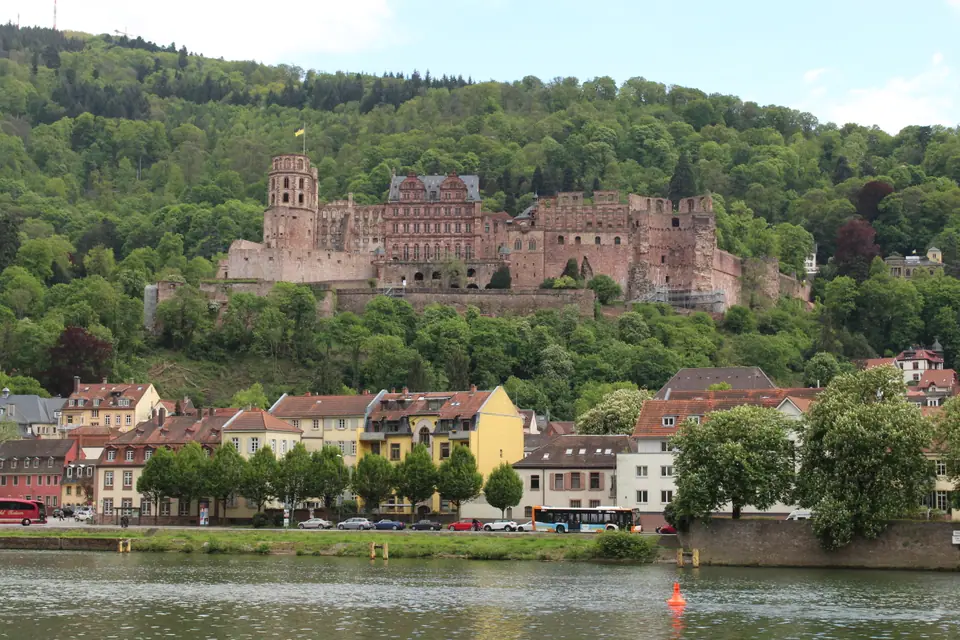
Photo: Silvia Tamburini · CC BY-SA 4.0
Heidelberg Castle Across War, Lightning and Romanticism
Separating Schlossticket access from guided interiors, reading Renaissance stone wings against 1693 mines, and strolling Hortus Palatinus.
Crowning the wooded northern shoulder of Königstuhl 80 metres above Neckar rooftops, Schloss Heidelberg endures as Germany's iconic ruin because later rulers stopped rebuilding it. French siege mines cracked its bastions in 1689 and 1693. Lightning gutted its rebuilt halls in 1764, and Romantic artists later froze that shattered red-sandstone profile into European imagination. Know which ticket enters palace rooms and which wings display Renaissance ambition. Seeing how free garden terraces frame town turns a busy hilltop landmark into clear stone history.
Electoral Palace to Ruin: Ottheinrich, Friedrich and 1693
Written records cite a castle above Heidelberg in 1214 (and 1225 as Castrum), joined by a lower castle between 1294 and 1303 before lightning wrecked the upper stronghold in 1537. Following King Ruprecht's 1401 coronation and the division of Palatine lands among four sons after 1410, wealthy Electors converted cramped watchtowers into a grand Renaissance residence. Inside the courtyard, plain medieval masonry at Ruprechtsbau gives way abruptly to dramatic stone carving. Between 1556 and 1566, Elector Ottheinrich raised the Ottheinrichsbau. Its sculpted courtyard windows parade mythological, biblical, and allegorical figures chiselled in warm sandstone. Rich reddish ashlar contrasts boldly beside weathered dark stone along older medieval wings facing the same cobbles.
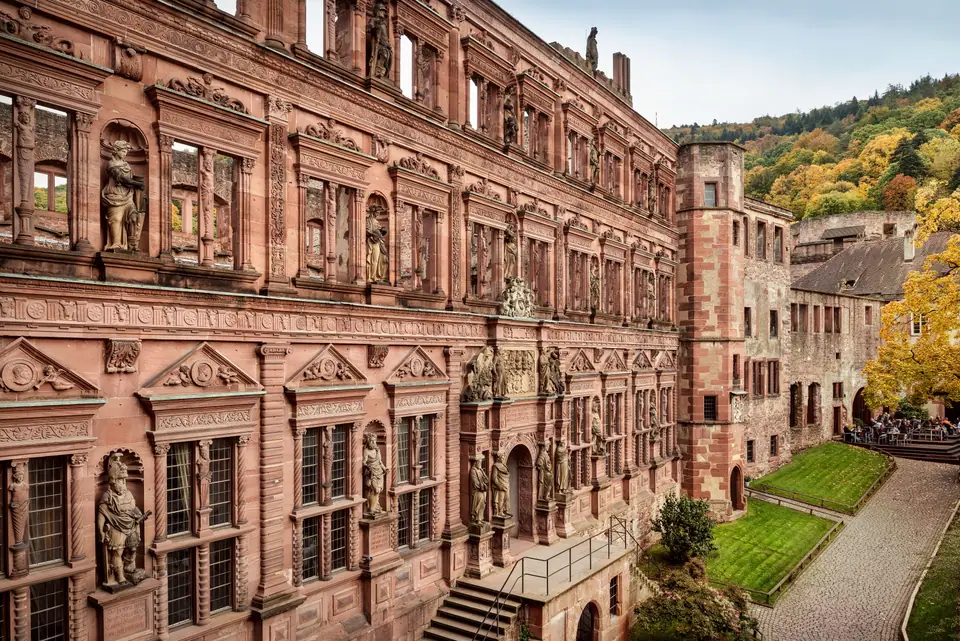
Two generations later, Elector Friedrich IV hired architect Johannes Schoch and sculptor Sebastian Götz to raise the ornate Friedrichsbau from 1601 to 1607. Its steep courtyard gable displays ancestral stone statues of Palatine rulers beneath carved Renaissance dormers, extensively restored between 1890 and 1900. Yet royal grandeur lasted barely decades before war ended court life. French forces occupied town on 24 October 1688. Withdrawing on 2 March 1689, soldiers torched palace chambers and split the massive Fat Tower.
Returning in May 1693, French armies captured town on 22 May, forced castle surrender on 23 May, and detonated heavy powder mines beneath the fortifications. Those blasts sheared the thick Gesprengter Turm (Blown-up Powder Tower), dropping half its stone cylinder intact into the dry moat. Standing beside the moat rail shows clear blast marks where sappers cut deep rock chambers for gunpowder charges. Lush ivy and wild ferns now drape that fallen masonry ring inside quiet ditch lawns. When lightning struck the rebuilt Saalbau twice on 24 June 1764 (dated 23 June in Victor Hugo's account), plans for royal habitation ended permanently.
Schlossticket vs Guided Interiors, Great Tun and Pharmacy
Over three million annual visitors and roughly one million city overnight stays centre around the castle complex. Gatehouse turnstiles enforce two distinct ticket tiers that regularly confuse arrivals uphill. Buying the standard Schlossticket (sold at Kornmarkt, Castle station, or bundled inside the HeidelbergCARD) unlocks four clear sections. It covers the lower Bergbahn round trip (Kornmarkt, Schloss, and Molkenkur), open entry to Schlosshof, the vaulted Großes Fass wine cellar, and the Deutsches Apotheken-Museum.
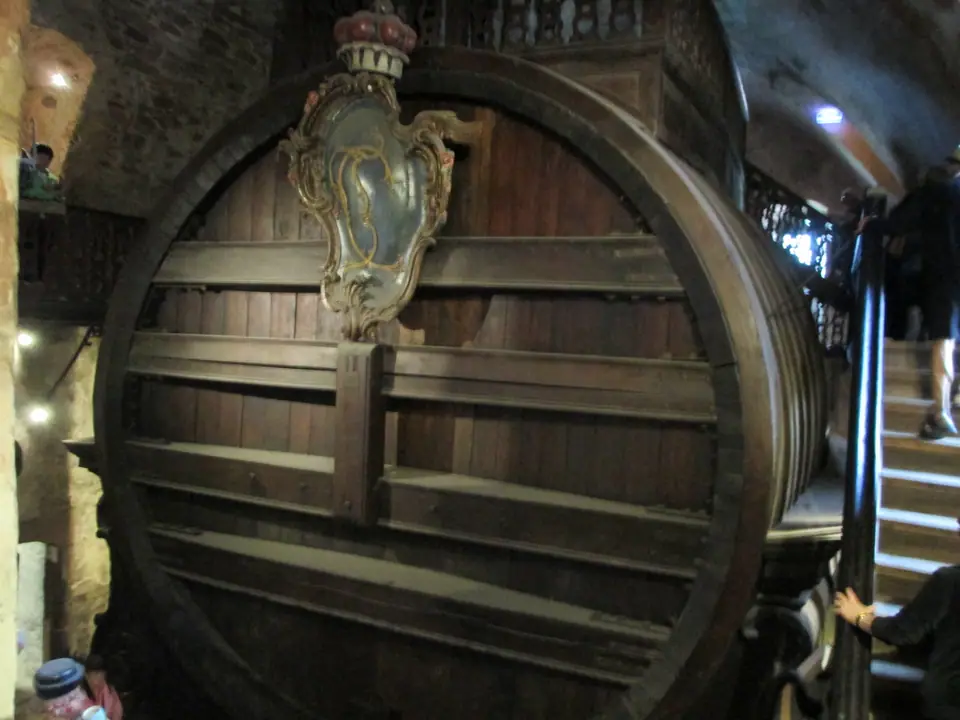
Crucially, that standard Schlossticket excludes furnished interior rooms inside the Friedrichsbau wing. Entering those palace suites requires booking a dedicated official guided tour separately at the castle visitor centre. Confirm live tour availability on schloss-heidelberg.de before riding uphill so you never miss timed English departures. Inside the standard cellar circuit sits Elector Charles Theodore's fourth Great Barrel built in 1751 from roughly 130 oak trees. Originally holding 221,726 litres and holding 219,000 litres today after timber shrinkage, its raised timber deck once hosted court dances watched over in legend by tiny jester Perkeo. Wooden steps lift visitors over mossy flagstones to inspect hand-carved oak staves up close. Cool cellar stone brings welcome shade after crossing sunny central cobbles outside.
Upstairs inside the Ottheinrichsbau wing operates the German Pharmacy Museum, founded in Munich in 1937 and moved permanently to Heidelberg Castle in 1957. Timbered rooms preserve Baroque apothecary cabinets, hand-blown glass flasks, historical brass mortars, and dried medicinal drawers. Expect ongoing conservation scaffolding along weathering sandstone walls as masons stabilise fragile seventeenth-century reliefs.
Hortus Palatinus, Elisabethentor and Charles de Graimberg
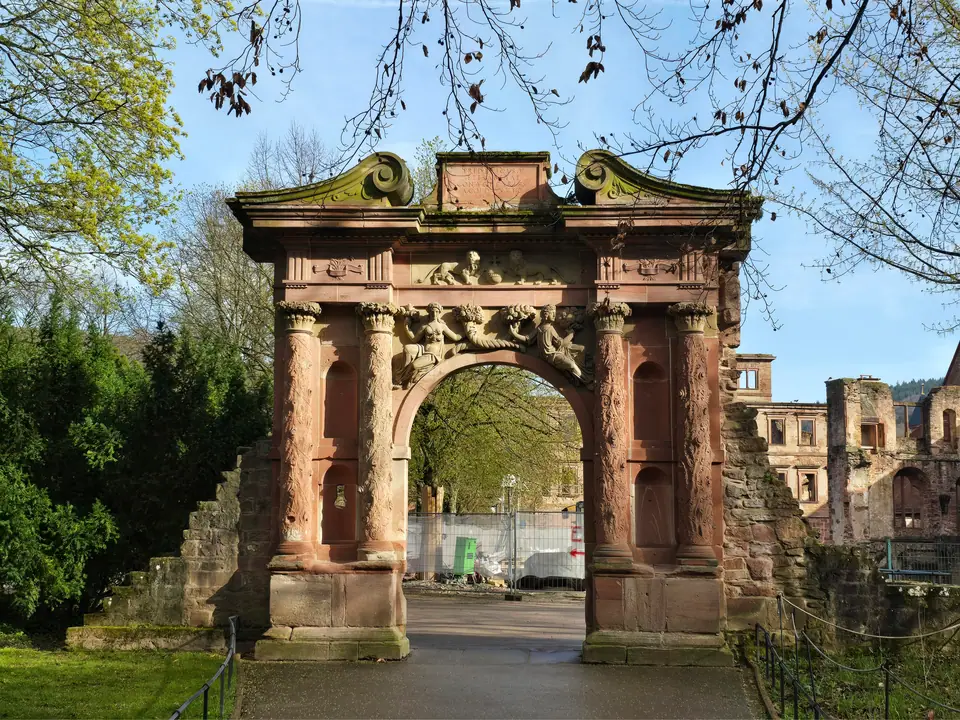
Step outside the palace gate onto free terraces where courtly landscape engineering and one French émigré rescued these ruins from quarrying. After Friedrich V wed English princess Elizabeth Stuart, engineer Salomon de Caus erected the carved sandstone Elisabethentor arch in 1615, reputedly built overnight as a birthday gift. Between 1616 and 1619, he carved sweeping geometric terraces across steep rock for the famed Hortus Palatinus gardens. Halted by the Thirty Years' War, these level promenades and the Father Rhine fountain stay open free during daylight hours, framing broad vistas down onto Alte Brücke. Wide gravel paths skirt sunlit bastion parapets facing river barges and wooded slopes across the valley. Gentle ramps bypass steeper courtyard staircases whenever visitors stroll straight between garden lawns and lower terraces.
For decades after 1764, townsfolk hauled fallen palace blocks downhill as cheap masonry until French nobleman Count Charles de Graimberg arrived in 1810. Graimberg lived inside cold ruins, financed emergency stabilisation out of his own fortune, halted stone permits, and published copper engravings that drew Romantic artists across Europe. His salvaged sculptures and drawings later seeded Heidelberg's civic museum collections down in the Old Town.
English painter J. M. W. Turner sketched these silhouettes repeatedly between 1817 and 1844, lifting the ruins far taller on canvas than real hill slopes. Mark Twain later poked warm fun at the Great Barrel and campus traditions in his 1880 book A Tramp Abroad. Catching early departures on the lower Bergbahn from Kornmarkt lets quiet stone terraces shine well before midday coach crowds climb uphill. Climbing steep Burgweg cobbles demands firm shoes because smooth rounded stones grow slick after valley showers. Flat garden paths around Scheffelterrasse open clear views onto Altstadt 69117 roofs before walking peacefully back down toward dinner.
Where it is
- 1Heidelberg Castle Across War, Lightning and Romanticism
- Frankfurt Main Airport (FRA) · about 69 km from here in a straight line
- Directions in Google Maps
Stations and taxi ranks: OpenStreetMap. Airports: OurAirports. Distances are in a straight line.
Traveller tips
Real advice from people who have been to Heidelberg. Every tip is read by our team before it goes live.
No tips yet. Been here? Yours could be the first.
Thank you! Your tip will appear here after a quick review.
More in Heidelberg
Continue exploring Heidelberg with related neighbourhood, food, and planning guides
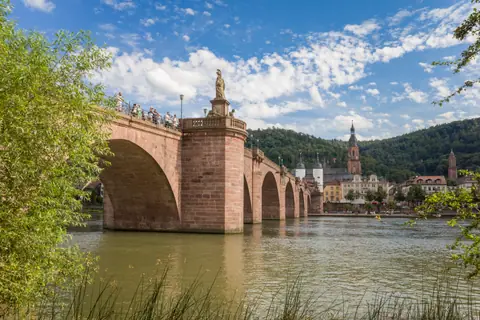
Alte Brücke, Schlangenweg and the Sunlit Heiligenberg
Heidelberg, Germany
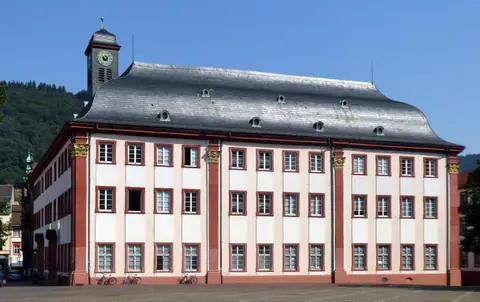
Germany's Oldest University: Alte Aula, Karzer and Palatina
Heidelberg, Germany
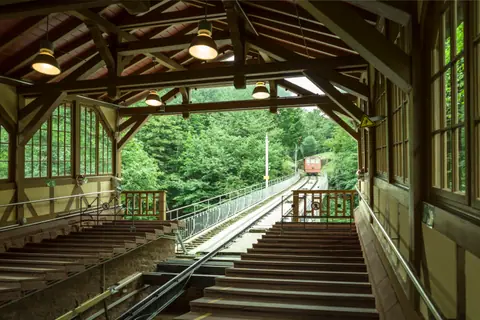
Riding the 1907 Wooden Mountain Railway up the Königstuhl
Heidelberg, Germany
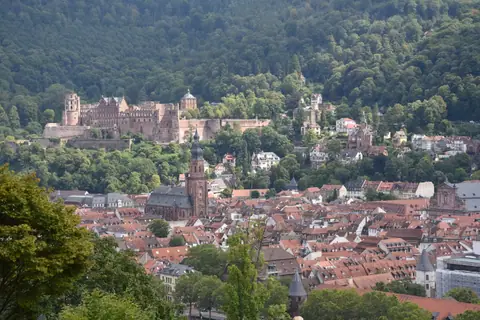
Heidelberg on the Neckar: Baroque Lanes Below Sandstone Ruins
Heidelberg, Germany
