


























Photo: Stephan van Helden · CC BY-SA 4.0
Alte Brücke, Schlangenweg and the Sunlit Heiligenberg
Nine crossings across two millennia, the bronze Bridge Monkey, warm south-slope fig trees along Philosophenweg, and Heiligenberg hill ruins.
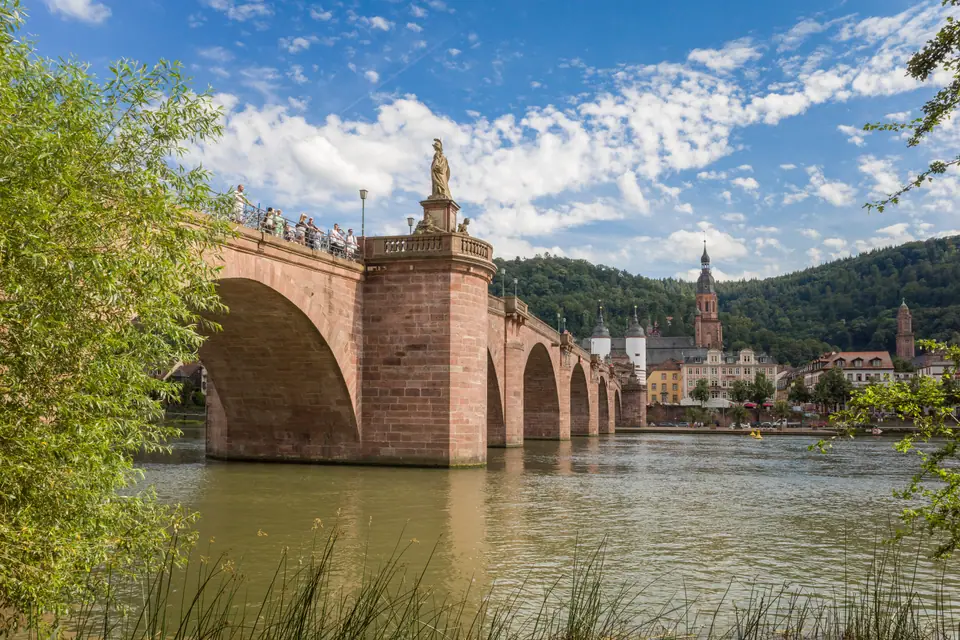
Crossing the Neckar on foot over Heidelberg's red-sandstone Alte Brücke, officially named the Karl-Theodor-Brücke, moves you directly from tight Baroque lanes onto the sunlit southern flank of Heiligenberg. Every pier carries centuries of winter floods, wartime demolitions, and careful post-war repair. Walking slowly across warm stone arches takes barely minutes, yet open river breeze resets pace cleanly away from crowded Hauptstraße shops. Directly off its northern bank climbs a steep walled path leading into one of southwestern Germany's mildest pockets of Mediterranean vegetation.
Nine Bridges Before 1788 and the March 1945 Demolitions
Today's 200-metre crossing rising 7 metres above normal river levels marks either the eighth or ninth bridge erected at this narrow valley pinch. Roman engineers drove wooden pilings during the first century CE and raised stone piers around AD 200. Nearly a millennium then passed without fixed spans across the water. Medieval records note a crossing again in 1284, yet winter Neckar ice floes tore away five successive bridges in 1288, 1308, 1340, around 1400, and again in 1470.
A covered wooden roadway known as the Merian Bridge took heavy ice blows on 2 February 1565. On 2 March 1689, French troops under Mélac burnt and dismantled that span the same day they torched Heidelberg Castle. Ferries and pontoon boats carried foot traffic across for nearly twenty years until builders raised a covered wooden span across old stone piers from 1706 to 1708. After a catastrophic ice flood smashed that wooden crossing on 27 February 1784, Elector Charles Theodore built the present nine-arch Neckar-sandstone bridge from 1786 to 1788. Its flood-bents guided high water safely past town until retreating German soldiers blew up three arches and two piers on 29 March 1945, one day before American troops arrived. Citizen donations financed faithful sandstone repairs completed swiftly in 1947.
During dry late summers, low river levels occasionally expose submerged medieval masonry around downstream bridge piers. Standing on the pedestrian walkway reveals clean axial sightlines linking Marktplatz spires directly uphill toward forested castle battlements. Quiet viewing bays above stone piers let walkers watch long cargo barges navigate narrow river channels between moored boats and wooded hills.
Brückentor, Nepomuk and the Copper Bridge Monkey
Guarding the southern Altstadt approach stands the medieval twin-towered Brückentor gatehouse, topped with Baroque slate helmets added in 1714 above old toll chambers and tight guard rooms. Centuries ago, wooden gates barred nocturnal entry until bridge tolls cleared river barges and country carts. Narrow vaulted portals still frame tight horse-cart clearances beneath steep slate turrets facing river bends. Along the sandstone parapets rise baroque statues of Elector Karl Theodor and goddess Minerva, balanced by a 1738 figure of St John of Nepomuk watching over river currents. Pausing beside stone parapets gives crisp close-ups of carved sandstone shields and weathered Baroque inscriptions. Just west beside the old gate sits Heidelberg's playful bronze Brückenaffe (Bridge Monkey), cast by sculptor Gernot Rumpf in 1979.
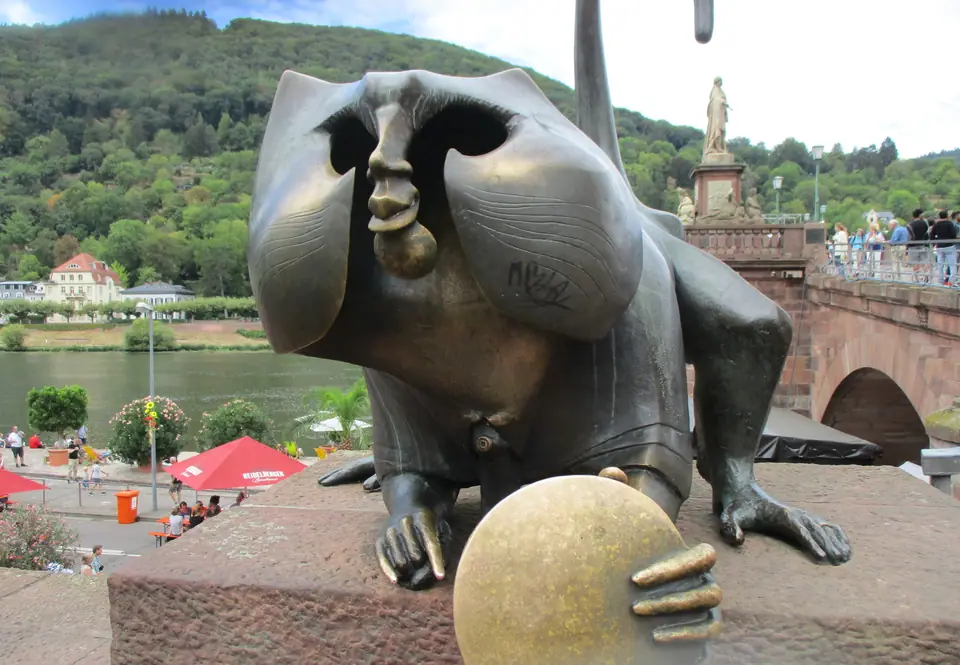
Touching its polished brass mirror or tiny companion bronze mice revives a fifteenth-century warning tower motif. Martin Zeiler's 1632 verse reminds townsfolk and travellers alike to inspect themselves humbly before stepping across the gate. Morning sunlight warms the western sandstone arches cleanly before midday walkers cluster around the bronze plinth for photos.
Climbing Schlangenweg to the Mediterranean Philosophenweg
Leave the bridge's northern Neuenheim abutment and cross Ziegelhäuser Landstraße directly onto Schlangenweg (SHLAHNG-en-vayk, "Snake Path"). Its cobblestone switchbacks rise briskly for roughly 500 metres between tall dry-stone vineyard walls punctuated by brick rest balconies overlooking river bends. Facing due south beneath sheltering Odenwald ridges, those sandstone retaining walls absorb afternoon sunshine and radiate gentle warmth well past dusk.
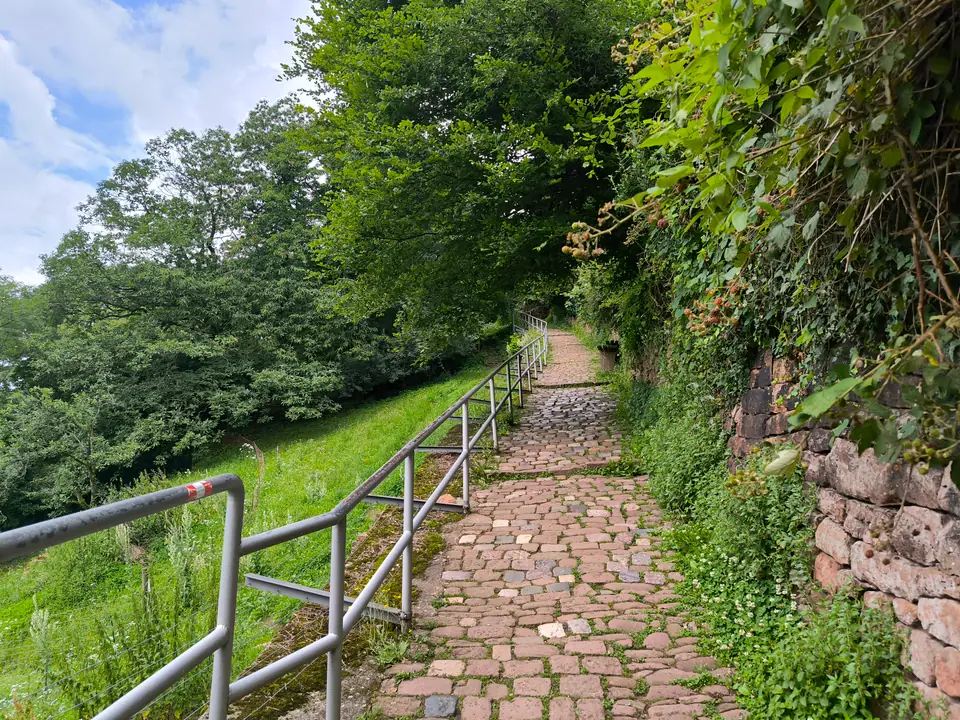
That south-facing microclimate explains the unexpected subtropical greenery flourishing along the level 2-to-2.5-kilometre Philosophenweg (fee-loh-ZOH-fen-vayk) and its terrace garden, Philosophengärtchen. Fig trees, lemon shrubs, pomegranates, cypresses, and early pink-and-white almond trees bloom as early as February and March far north of the Alps. Generations of university professors paced this sunny terrace between afternoon lectures, giving the hillside walkway its famous name.
From shaded stone benches opens the classic sunset panorama across the Neckar toward Heiliggeistkirche and the Castle painted by Romantic master J. M. W. Turner. Afternoon walkers pause beside low stone walls gazing out over terracotta Altstadt gables, church spires, and bright green river islands stretching west. Strollers skipping steep steps on Schlangenweg can ascend smoothly via paved Bergstraße slopes from western Neuenheim instead. Both trails stay open free throughout the year, rewarding early morning starts before tour groups cross the river. Quiet timber benches under spreading chestnut branches make unhurried sketching or lunch stops effortless high above passing riverboats.
Heiligenberg Summit: Thingstätte and Michaelskloster Ruins
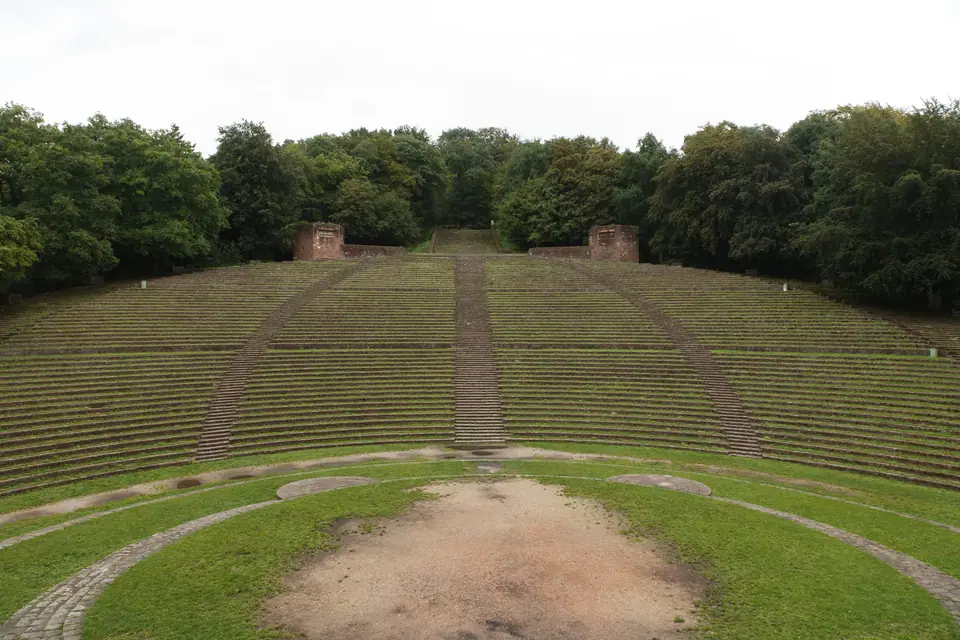
Wooded trails continue uphill above Philosophenweg toward the 445-metre crest of Heiligenberg, climbing 331 metres above the 114-metre town floor. Near the forested summit opens the stark stepped limestone bowl of the Thingstätte, an open-air amphitheatre built between 1934 and 1935 under the Nazi regime for propaganda rallies. Since the mid-1980s, residents have reclaimed its stone tiers calmly for quiet walks and informal sunset picnics. Tall beeches and chestnuts canopy the ridge cleanly on warm afternoons, lowering trail heat beneath deep shade.
Five minutes higher along mossy forest paths stand the weathered sandstone ruins of eleventh-century Michaelskloster, built atop an earlier 870 monastic foundation. Nearby forest clearings reveal ancient Celtic ring-wall earthworks and deep medieval stone cisterns predating Old Town squares below. Marked woodland paths wind smoothly downhill into residential Neuenheim cafés whenever afternoon storm clouds gather over river plains. Exploring those tranquil ruins crowns a memorable three-hour forest loop before returning smoothly to Neckarwiese lawns and bridge cafés.
Where it is
- 1Alte Brücke, Schlangenweg and the Sunlit Heiligenberg
- Frankfurt Main Airport (FRA) · about 69 km from here in a straight line
- Directions in Google Maps
Stations and taxi ranks: OpenStreetMap. Airports: OurAirports. Distances are in a straight line.
Traveller tips
Real advice from people who have been to Heidelberg. Every tip is read by our team before it goes live.
No tips yet. Been here? Yours could be the first.
Thank you! Your tip will appear here after a quick review.
More in Heidelberg
Continue exploring Heidelberg with related neighbourhood, food, and planning guides

Studentenkuss, Spargel and Kurpfalz Taverns in Heidelberg
Heidelberg, Germany
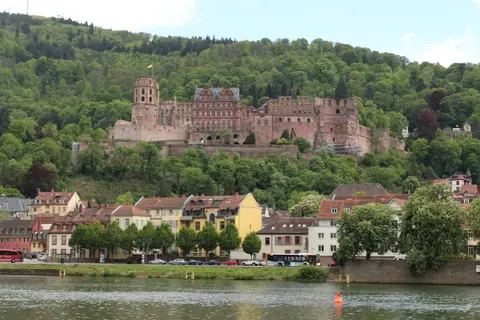
Heidelberg Castle Across War, Lightning and Romanticism
Heidelberg, Germany
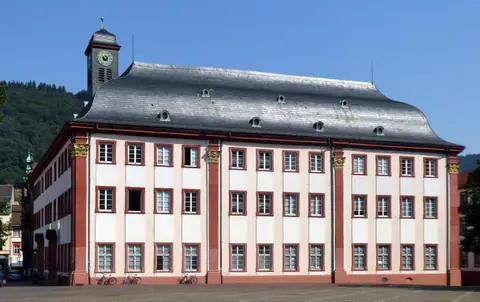
Germany's Oldest University: Alte Aula, Karzer and Palatina
Heidelberg, Germany
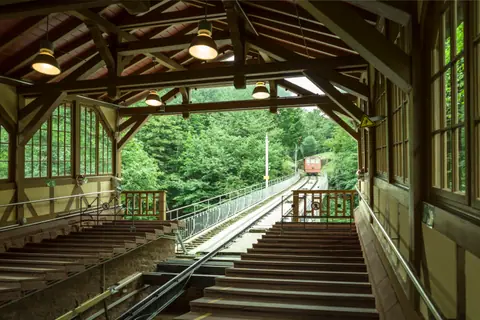
Riding the 1907 Wooden Mountain Railway up the Königstuhl
Heidelberg, Germany
