


























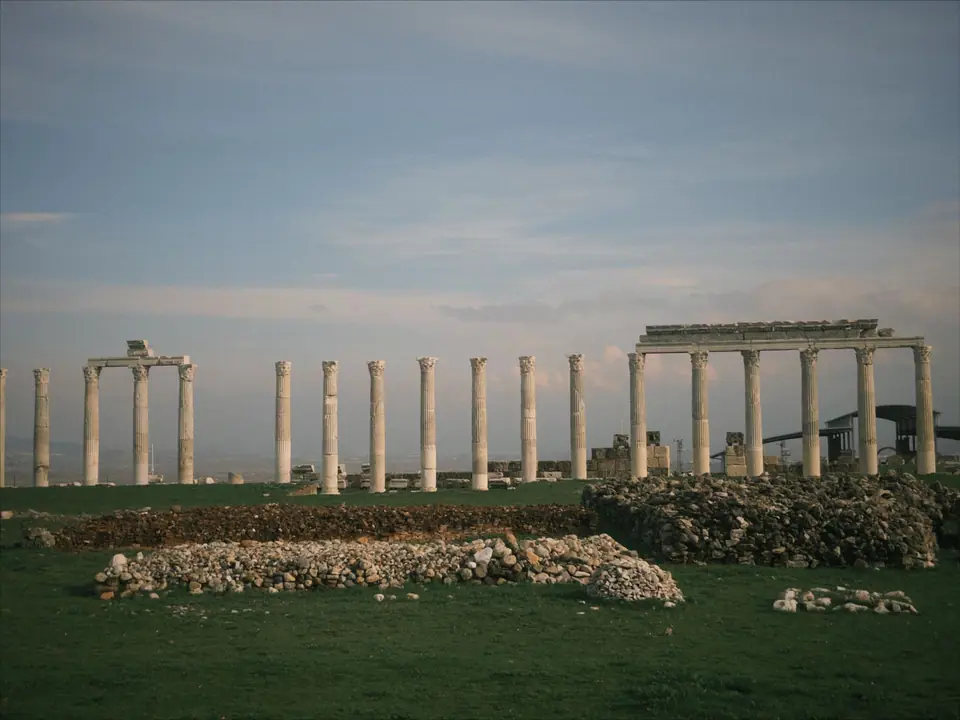
The Ancient Agora of Smyrna, Kadifekale and the Historical Asansör
Walking beneath Roman marble arches at the Agora of Smyrna and riding the 1907 Asansör cliff lift for sunset.
Rising directly behind Kemeraltı Bazaar and the coastal strip of Karataş are the historical hillsides where ancient and multi-faith Smyrna stood for over two millennia. You can visit the Roman Agora on foot in ten minutes from the bazaar, and ride a 1907 cliff elevator up to the finest panoramic terrace in the city.
1. The Ancient Agora of Smyrna (Smyrna Agorası, Namazgah)
Wait until you step down below street level at Namazgah to see why the Agora of Smyrna is one of the most impressive urban archaeological sites in the Mediterranean. Originally laid out in the 4th century BC after Alexander the Great refounded Smyrna, the civic square was rebuilt with imperial funding from Roman Emperor Marcus Aurelius and his wife Faustina after a devastating earthquake in 178 AD:
- The Vaulted Basement of the Civil Basilica: at 165 metres long and three storeys high, Smyrna's Basilica was the largest known Roman civil basilica. Walk right underneath the cool, intact cross-vaulted stone basement arcades where spring water brought by Roman clay pipes still flows through open stone channels today.
- The World's Largest Collection of Ancient Greek Graffiti: on the plastered basement walls, archaeologists uncovered hundreds of 2nd- to 4th-century AD charcoal and incised drawings made by everyday citizens: detailed Roman merchant ships with sails, gladiators, love riddles, word squares and early Christian prayers.
2. Kadifekale ("The Velvet Castle" on Mount Pagos)
Crowning the 186-metre summit above the Agora, Kadifekale was built in the late 4th century BC by Alexander the Great's general Lysimachus. Five round stone towers, Hellenistic and Byzantine ramparts, a vaulted subterranean Byzantine cistern and a sweeping view across the entire curve of the Gulf of Izmir make it worth a quick taxi ride up in the late morning.
3. The Historical Asansör (Tarihi Asansör, 1907) and Dario Moreno Street
Two kilometres west of Konak along the coastal tram line (get off at Karataş Tram Stop and walk two blocks inland), a sheer 58-metre rock cliff separated the lower seaside street of Mithatpaşa from the upper hillside quarter of Halil Rıfat Paşa. Until 1907, residents, especially elderly neighbours and pregnant women, had to climb 155 steep stone steps (the Karataş Stairs). Wealthy Jewish merchant and philanthropist Nesim Levi (Bayraklıoğlu) commissioned French and Italian engineers to build a monumental brick elevator tower using bricks imported from Marseille, housing two lifts (originally one steam-powered and one electric). Today, riding the Historical Asansör is completely free: step out at the top onto a wooden balcony overhanging the cliff for a 180-degree sunset view over the Aegean bay, then walk down the mosaic-paved lower approach lane of Dario Moreno Sokağı past the preserved house of the beloved Izmir-born Jewish-Turkish singer and actor Dario Moreno.
Traveller tips
Real advice from people who have been to The Ancient Agora of Smyrna, Kadifekale and the Historical Asansör. Every tip is read by our team before it goes live.
No tips yet. Been here? Yours could be the first.
Thank you! Your tip will appear here after a quick review.
More in Izmir
Continue exploring Izmir with related neighbourhood, food, and planning guides
Urla Guide: The Urla Wine Route, Art Street and Ancient Klazomenai
Izmir, Turkey
Visiting Ephesus, the Terrace Houses and Selçuk on a Day Trip from Izmir
Izmir, Turkey
Day Trip from Izmir to Bergama (Ancient Pergamon): Acropolis and Asclepion
Izmir, Turkey
Foça (Phokaia) and Seferihisar (Sığacık): Slow Coastal Towns Near Izmir
Izmir, Turkey
