


























Day Trips from Kazan: Sviyazhsk Island, Ancient Bolgar and Raifa Monastery
Plan day trips from Kazan to two UNESCO World Heritage sites on the Volga River, the 1551 island town of Sviyazhsk and medieval Bolgar, plus Raifa Monastery.
While the Kazan Kremlin was inscribed on the UNESCO World Heritage List in 2000, the Republic of Tatarstan holds two additional UNESCO World Heritage sites along the middle Volga River that can be visited on full-day or half-day excursions from Kazan: the sixteenth-century island fortress of Sviyazhsk to the west and the tenth- to thirteenth-century medieval capital of Volga Bulgaria at Bolgar to the south, often paired with the forest-ringed Raifa Bogoroditsky Monastery.
Sviyazhsk: The 1551 Island Fortress and UNESCO Assumption Monastery
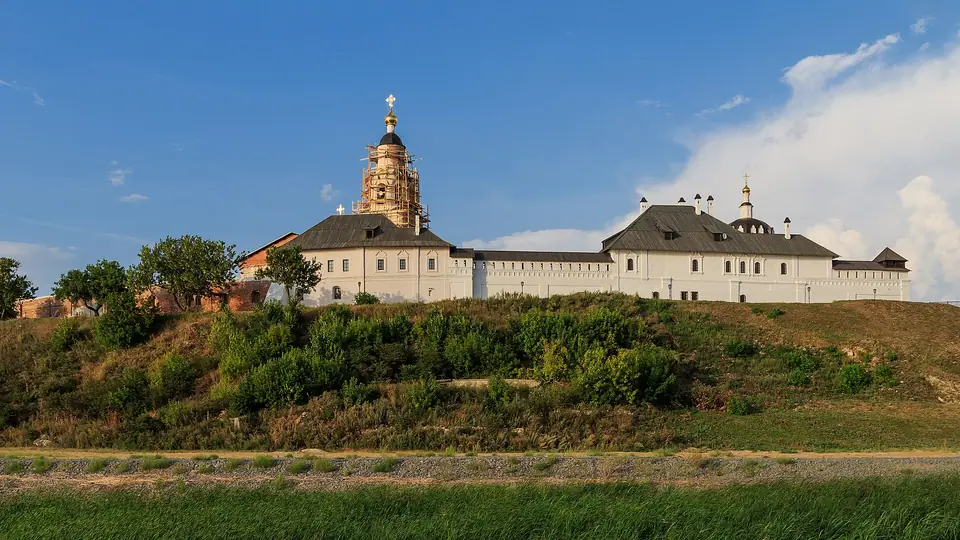
Located 30 kilometres west of Kazan by river (or 60 kilometres by road along the M7 highway and a causeway opened in 2008, plus 6 kilometres from Sviyazhsk railway station on the mainland), the hill town of Sviyazhsk (Zöyä in Tatar) sits at the confluence of the Volga and Sviyaga rivers, surrounded by water since the filling of the Kuybyshev Reservoir in 1957. In the spring of 1551, after earlier campaigns against the Khanate of Kazan faltered for lack of a forward supply base, Russian military engineer Ivan Vyrodkov had an entire wooden fortress prefabricated in the northern forests around Uglich, floated the numbered logs down the Volga, and assembled the citadel on the hill in just four weeks. Following the 1552 conquest of Kazan, Sviyazhsk flourished as a monastic and administrative centre:
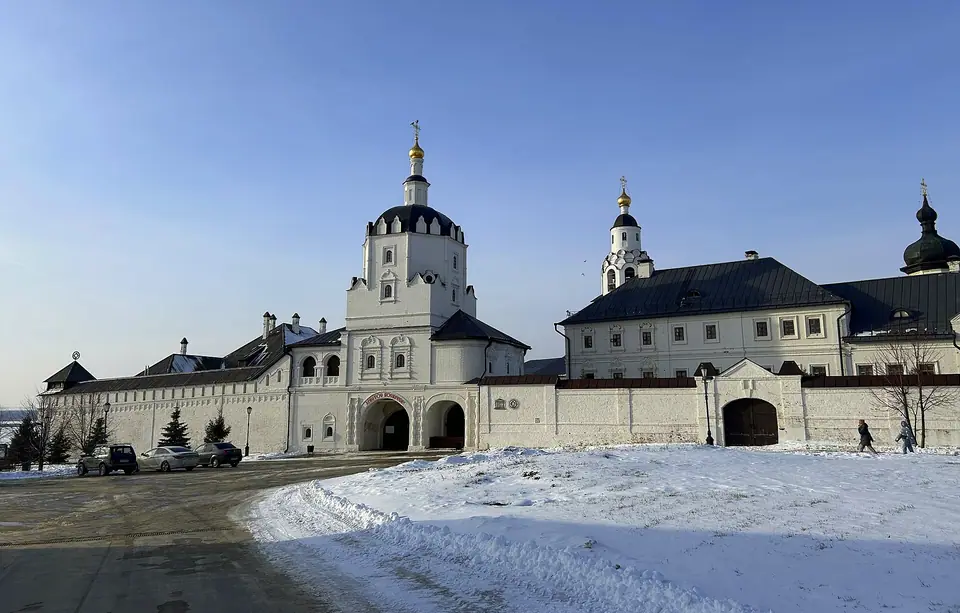
- Assumption Cathedral and Monastery (UNESCO 2017): Founded in 1555 when the Orthodox Diocese of Kazan was established, the Sviyazhsk Assumption Monastery was inscribed on the UNESCO World Heritage List in 2017. Its 1556 to 1560 Assumption Cathedral, built by Pskov master Postnik Yakovlev, preserves more than 1,000 square metres of original sixteenth-century frescoes, including a rare depiction of Tsar Ivan the Terrible and Metropolitan Macarius and a fresco of Saint Christopher, alongside the 1556 to 1558 Saint Nicholas Refectory Church with its tall bell tower.
- The 1551 Wooden Trinity Church: Inside the nearby St. John the Baptist Convent stands the wooden Church of the Holy Trinity, erected in May 1551 by Ivan the Terrible's carpenters without metal nails during the initial four-week construction of the fortress.
Bolgar: Ancient Capital of Volga Bulgaria and the White Mosque
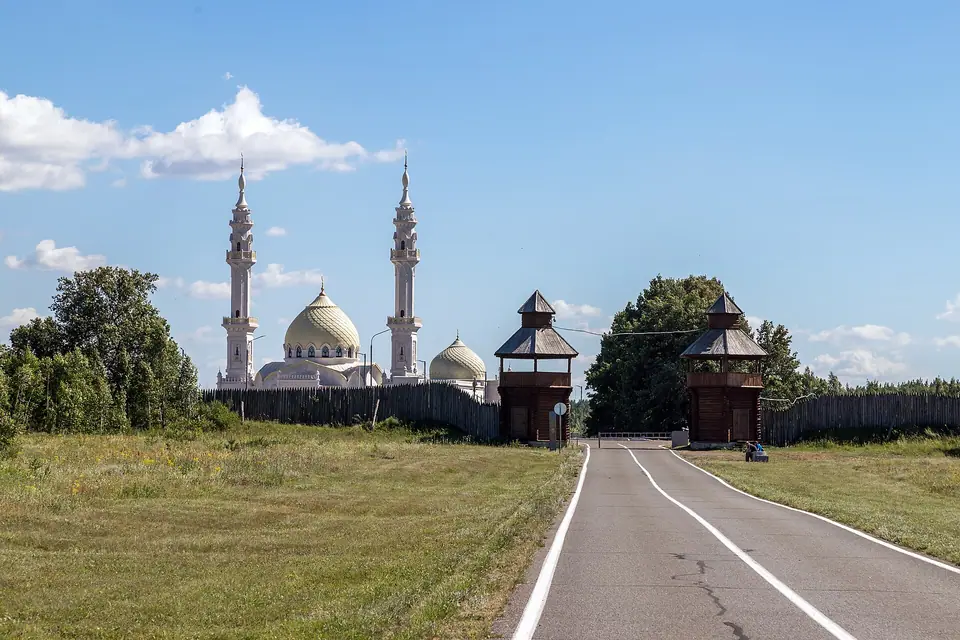
About 180 kilometres by road south of Kazan on the high left bank of the Volga (30 kilometres downstream from its confluence with the Kama River in Spassky District, reachable in roughly two hours by summer high-speed Meteor hydrofoil from the Kazan River Port or around two and a half hours by coach or car), the Bolgar Historical and Archaeological Complex was inscribed on the UNESCO World Heritage List in 2014. Founded in the tenth century, ancient Bolghar (Şähri Bolğar) was where the Volga Bulgars officially adopted Islam in 922 AD during the embassy of Ahmad ibn Fadlan from Baghdad, and after the 1236 Mongol invasion it served as the first capital of the Golden Horde in the thirteenth century before its decline in 1361 and 1431. Walking the open grassy bluff above the Volga, visitors explore thirteenth- and fourteenth-century limestone monuments preserved by Tsar Peter the Great's 1722 heritage preservation ukase, including the Great Minaret and Congregational Mosque foundation, the Northern and Eastern Mausoleums, the Black Chamber (Chernaya Palata), the Khan's Shrine, and the Small Minaret, alongside the six-storey riverside Museum of Bolgar Civilization, the Memorial Sign housing the world's largest printed Quran, and the gleaming 2012 White Mosque (Aq Mäçet) framed by an arcaded marble courtyard and reflecting pool.
Raifa Bogoroditsky Monastery in the Volga-Kama Pine Forest
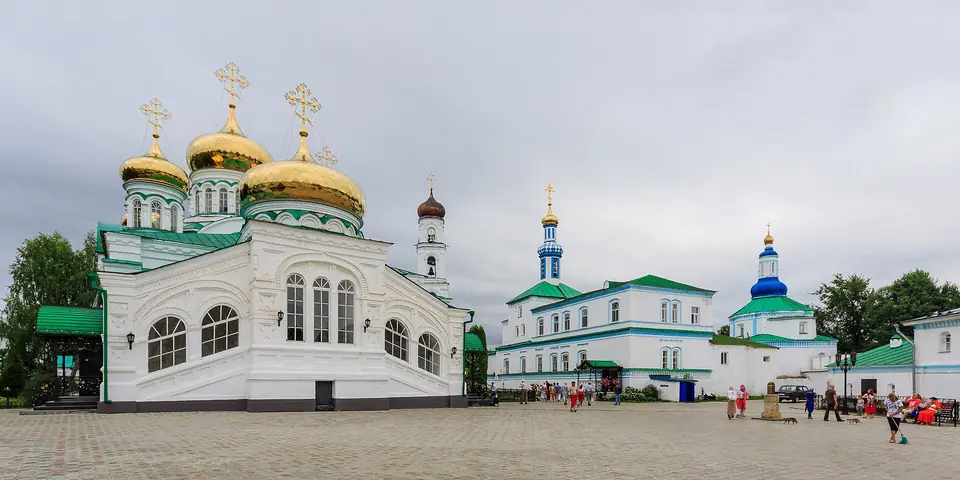
Roughly 30 kilometres northwest of Kazan inside the protected old-growth pine forests of the Volga-Kama State Nature Biosphere Reserve (frequently combined in a single day trip with Sviyazhsk), the Raifa Bogoroditsky Monastery sits on the shore of tranquil Raifa Lake. Founded in 1613 by the hermit Filaret and built in white stone between the late seventeenth and nineteenth centuries, the walled monastic complex shelters the Cathedral of the Gruzinskaya (Georgian) Icon of the Mother of God, the Trinity Cathedral, the tiny Church of the Holy Fathers of Sinai and Raifa, and a consecrated spring-water chapel overlooking the lake.
Volga Boat Schedules vs Road Connections
During the summer navigation season from May through September, passenger boats depart the Kazan River Port each morning for Sviyazhsk and high-speed Meteor hydrofoils sail downstream to Bolgar; check the official river port timetable before setting out and arrive thirty minutes before boarding. Outside summer, or for travellers combining Raifa Monastery and Sviyazhsk in one loop, suburban trains to Sviyazhsk railway station (linked to the island by a 6-kilometre causeway road) and intercity buses from Kazan's Central and Southern bus stations run year-round.
Traveller tips
Real advice from people who have been to Day Trips from Kazan: Sviyazhsk Island, Ancient Bolgar and Raifa Monastery. Every tip is read by our team before it goes live.
No tips yet. Been here? Yours could be the first.
Thank you! Your tip will appear here after a quick review.
More in Kazan
Continue exploring Kazan with related neighbourhood, food, and planning guides
Lake Kaban, Kamal Tatar Theatre and Ekiyat Puppet Theatre Guide
Kazan, Russia
Palace of Farmers, Kazanka Embankment and Kazan Family Center
Kazan, Russia
Temple of All Religions and Kazan Federal University: Cultural Landmarks
Kazan, Russia

What to Eat in Kazan: Öçpoçmaq, Qıstıbí, Göbädiä and Chak-Chak
Kazan, Russia
