


























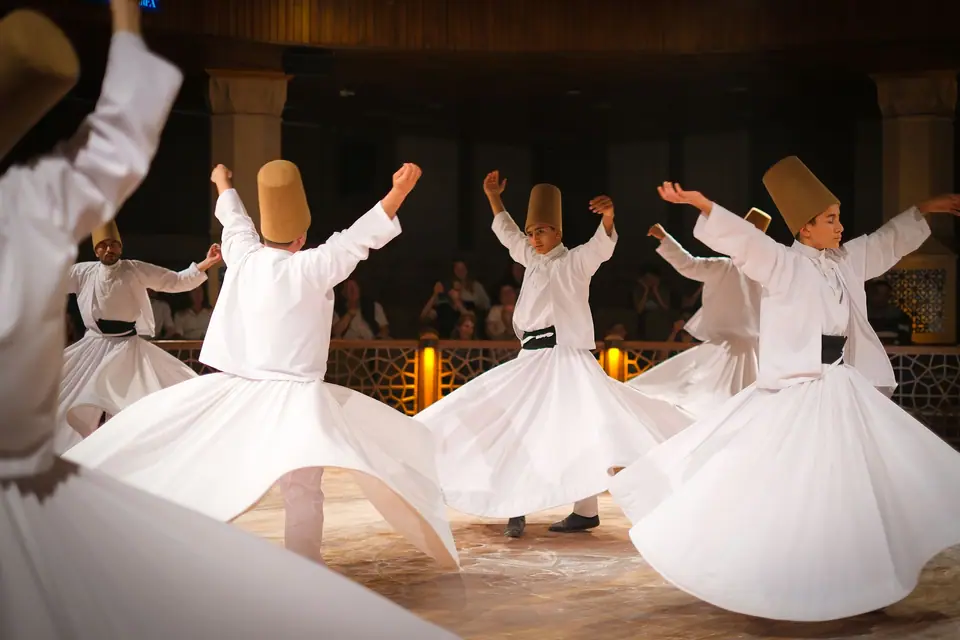
How to See the Whirling Dervishes (Sema Ceremony) in Konya: Schedule and Meaning
Attending a genuine Mevlevi Sema ceremony in Konya and understanding the deep spiritual meaning of every movement.
Unlike commercial dinner-show performances staged for tourists in other cities, attending a Mevlevi Sema Ceremony (Mevlevi Mukabelesi) in Konya, performed by the official Turkish Ministry of Culture's Konya Turkish Sufi Music Ensemble, is a solemn, deeply moving 800-year-old liturgical prayer service inscribed on UNESCO's Intangible Cultural Heritage of Humanity list in 2005.
When and Where to See the Sema Ceremony Year-Round
Ten minutes' walk (800 metres) east of the Mevlana Museum along Aslanlıkışla Caddesi stands the purpose-built Mevlana Cultural Centre:
- Every Saturday Evening (All Year Round): the official Sema ceremony takes place inside the circular main Semahane hall of the Mevlana Cultural Centre every Saturday evening in the early evening in winter / late in the evening in summer (check exact seasonal ticket/registration status on the official Konya Culture & Tourism portal and arrive 45 minutes early to be seated, as doors close strictly once the prayer begins).
- Thursday Evenings in Summer: between June and September, atmospheric outdoor evening Sema gatherings are also held on Thursdays in the courtyard of the Mevlana Museum or the neighbouring İrfan Medeniyeti centre.
- The December Şeb-i Arus Festival: for ten days leading up to the anniversary of Rumi's passing on 17 December, Konya hosts twice-daily ceremonies, international Sufi concerts and lectures (tickets for December must be booked online at sebiarus.gov.tr in October/November).
Understanding the Symbolism of What You Are Watching
Every piece of clothing and every gesture in the 7-part ceremony has a precise cosmological meaning:
- The Attire: the tall brown felt conical hat (sikke) represents the tombstone of the dervish's ego (nefs); the long black cloak (hırka) represents his worldly grave; and when he casts off the black cloak to reveal the flowing white robe (tennure), it symbolises spiritual rebirth into truth.
- The Posture of the Hands: as the Semazen (whirling dervish) revolves counter-clockwise around his own heart and around the circle of the hall, his right palm is turned upward toward heaven to receive Divine grace, while his left palm is turned downward toward the earth to distribute that love to humanity, claiming nothing for himself: "From God we receive, to the people we give."
- Important Audience Etiquette: because the Sema is a form of worship (zikir), never applaud at the end of the ceremony; when the final Qur'anic recitation and greeting conclude, guests stand quietly as the dervishes bow and file out in silence.
Traveller tips
Real advice from people who have been to How to See the Whirling Dervishes (Sema Ceremony) in Konya: Schedule and Meaning. Every tip is read by our team before it goes live.
No tips yet. Been here? Yours could be the first.
Thank you! Your tip will appear here after a quick review.
More in Konya
Continue exploring Konya with related neighbourhood, food, and planning guides
Best Time to Visit Konya: Spring Steppe, Autumn Light and December Şeb-i Arus
Konya, Turkey
What to Wear in Konya: Modest Mosque Attire, Steppe Layers and Flat Walking Shoes
Konya, Turkey
3 Days in Konya: Mevlana Museum, Seljuk Madrasas, Çatalhöyük, Sille and Sema
Konya, Turkey
Silk Road Stops Around Konya: Zazadin Han, Obruk Sinkhole Lakes and Kilistra
Konya, Turkey
