


























Kotor Old Town (Stari Grad): Squares, Palaces & Cathedral Walk
Self-guided walking tour of Kotor Old Town (Stari Grad): Sea Gate, Clock Tower, Cathedral of Saint Tryphon, Maritime Museum, Venetian palaces and St Luke's.
Enclosed within a 4.5-kilometre circuit of Venetian stone ramparts and wedged between the emerald waters of the bay and the sheer vertical karst cliff of St John's Hill. Kotor Old Town (Stari Grad) is one of the best-preserved medieval urban ensembles in the Mediterranean. Unlike Dubrovnik's orthogonal grid or Split's Roman palace quadrangle, Kotor's street plan is an organic, asymmetrical labyrinth of cobbled lanes that open unexpectedly onto sun-dappled plazas named after historic guilds. These include the Square of the Arms, the Square of Flour, the Square of Milk and the Square of Salad. The street grid was designed for defence so that invading forces would lose their bearings inside its twisting alleys. Even so, the Old Town requires no map if you follow the sequence of its three monumental gates, six noble Venetian palaces and four historic churches.
| Old Town Monument / Stop | Square / Location | Admission Fee (as of Nov 2026) | Recommended Time |
|---|---|---|---|
| Sea Gate (Vrata od Mora) & Clock Tower. | Trg od Oružja (Main Square). | Free exterior access. | 20 min. |
| Cathedral of Saint Tryphon & Treasury. | Trg Svetog Tripuna. | €4.00 (includes museum & balcony). | 40 to 50 min. |
| Maritime Museum of Montenegro. | Trg Bokeljske Mornarice (Grgurina Palace). | €5.00 (includes multilingual audio guide). | 45 to 60 min. |
| Churches of St Luke & St Nicholas. | Trg Svetog Luke (Northern Quarter). | Free entry (respectful dress required). | 25 to 30 min. |
| Gurdic Gate & River Gate Bastions. | Southern & Northern moat corners. | Free exterior / moat viewing. | 20 min. |
The Three Gates: Sea Gate, Gurdic Bastion & River Gate
Every walk through Stari Grad begins at one of the three fortified portals piercing the up-to-16-metre-thick Renaissance walls:
- The Sea Gate (Vrata od Mora / Main Gate, 1555). Built under Venetian Provveditore Bernardo Renier, its rusticated barrel-vaulted passage displays two fascinating historical layers. Inside sits a 15th-century Gothic marble relief of the Madonna and Child flanked by Saint Tryphon (holding a miniature model of Kotor) and Saint Bernard. Overhead rises the winged Lion of Saint Mark together with a 20th-century inscription quoting Josip Broz Tito ("Tuđe nećemo, svoje ne damo" , "What belongs to others we do not want, What is ours we will never surrender") together with the liberation date 21 November 1944.
- The Gurdic Gate (Južna Vrata / South Gate). Anchoring the southern apex of the triangle where the walls meet the cliff face, this triple-layered gatehouse spans an emerald karst spring canyon via a wooden drawbridge. In winter and spring, underground water surges up from the Lovćen cavern system to flood the moat, while in late summer the siphon retreats inside the limestone cave.
- The River Gate (Sjeverna Vrata / North Gate, 1540). Commemorating Kotor's victory together with Venetian admiral Vincenzo Capello over Ottoman fleet commander Hayreddin Barbarossa in 1539, this arched gate opens onto the roaring turquoise waters of the Škurda River and the Kamp Bastion.
Square of the Arms (Trg od Oružja) & Square of Flour (Pjaca od Brašna)
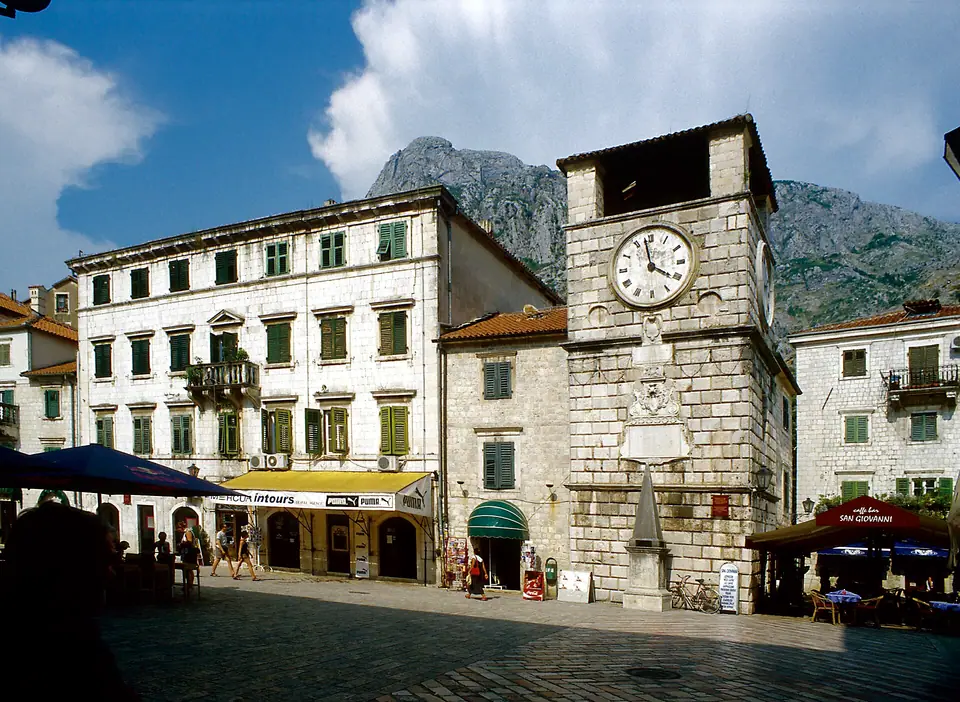
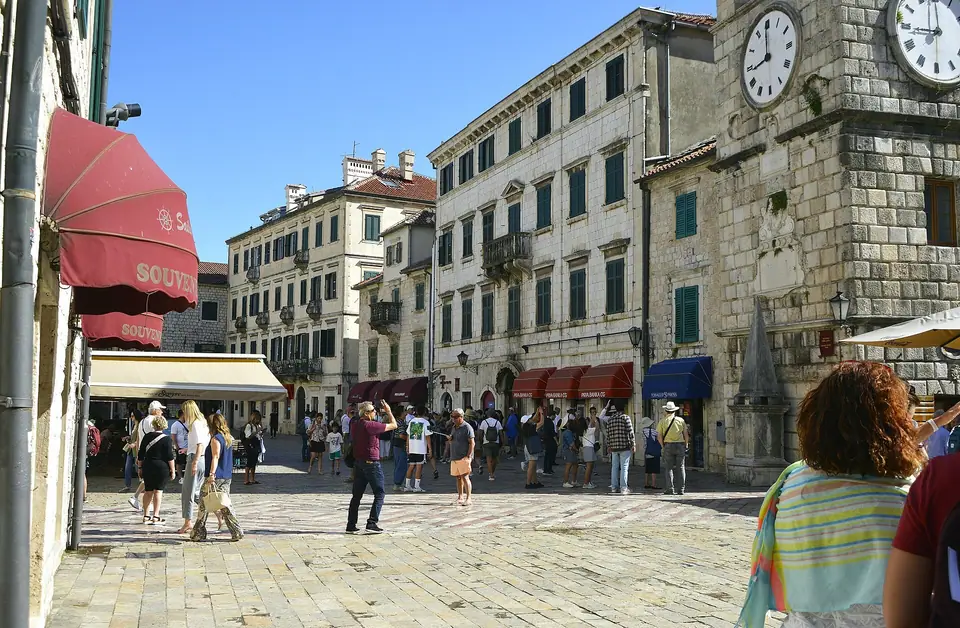
Stepping through the Sea Gate brings you onto Trg od Oružja (Square of the Arms), the largest plaza in Kotor, where Venetian arsenals were stored and repaired. Directly in front of you rises the three-storey Clock Tower (Gradski Toranj, 1602), which leans noticeably towards the west due to the catastrophic earthquakes of 1667 and 15 April 1979. At the base of the Clock Tower stands a tapering medieval stone pyramid , the Pillar of Shame (Stup Srama) , where petty offenders and tax debtors were publicly bound before the citizenry. Surrounding the square are the elongated Provveditore's Palace (Kneževa Palata), the 19th-century Napoleon Theatre and the polygonal 15th-century Kampana Tower.
Walk south into the adjacent Pjaca od Brašna (Square of Flour), once dominated by maritime wheat warehouses, to compare two contrasting noble residences of Kotor's patrician families. On one side stands the Venetian-Gothic Pima Palace (recognisable by its green wooden shutters, Renaissance arcaded terrace and wrought-iron balconies forged after the 1667 earthquake). Opposite sits the austere Beskuća Palace, whose late-Gothic portal displays the elaborate coat of arms of Count Jozo Beskuća, who famously ambitioned to own exactly 100 houses around the Bay of Kotor.
Cathedral of Saint Tryphon (Katedrala Svetog Tripuna, 1166)
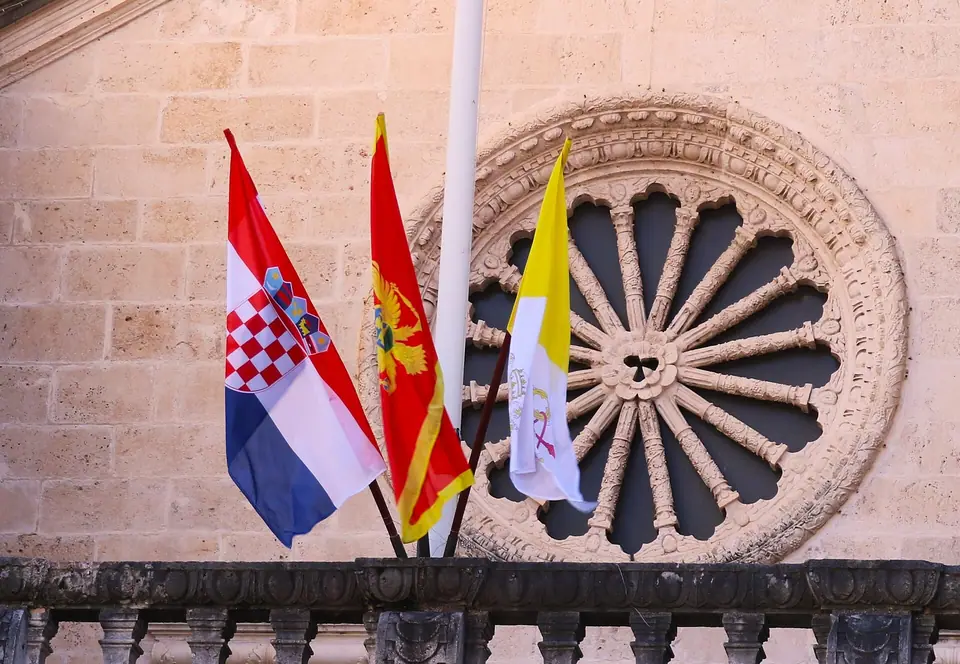
Consecrated on 19 June 1166 over the foundations of an 809 AD preromanesque rotunda built by citizen Andreaci Saracenis to house the relics of Saint Tryphon (acquired from Venetian merchants returning from Constantinople). Consecrated in 1166, the Cathedral of Saint Tryphon is older than Notre-Dame de Paris and remains the spiritual heart of Roman Catholic Boka. After the 1667 earthquake toppled its original medieval belfries, two Baroque bell towers (33 and 35 metres tall) linked by a monumental rose window were erected along the western facade.
Inside the three-aisled nave (€4 ticket as of November 2026), alternating granite Corinthian columns and sturdy Romanesque piers frame the jewel of the church. A three-tiered 14th-century Gothic stone ciborium rises above the high altar carved with miniature reliefs depicting the life and martyrdom of the young third-century saint. Behind the altar glistens the 1440 gilded silver Pala d'Oro crafted by master goldsmiths of the Kotor school. Climb the narrow stone staircase inside the northern tower to visit the Reliquary Treasury (Relikvijar), which holds the silver head reliquary of Saint Tryphon and hundreds of sailors' silver votive plaques. Afterwards, step onto the upper balcony between the bell towers for views over St Tryphon's Square.
Maritime Museum (Grgurina Palace) & the Northern Churches of St Luke & St Nicholas
Two minutes north of the cathedral on Boka Navy Square stands the early-18th-century Baroque Grgurina Palace. Today it houses the Maritime Museum of Montenegro (Pomorski Muzej Crne Gore) (€5 entry including a superb multilingual audio handset as of November 2026). Across two noble reception floors (piano nobile) with original Venetian stone balconies, the museum chronicles the rise of the Bokeljska Mornarica (Boka Navy Fraternity) founded in 809 AD , one of the oldest maritime guilds in the world , together with scale ship models, 17th-century flintlock naval weapons, stern lanterns and portraits of local sea captains like Ivo Visin (the first South Slav to circumnavigate the globe between 1852 and 1859). Another hall honours Matija Zmajević, who became Admiral of the Russian Baltic Fleet under Tsar Peter the Great.
Finish your walk in the tranquil northern quarter at Trg Svetog Luke (St Luke's Square), where two historic Orthodox churches stand side by side:
- Church of St Luke (Crkva Svetog Luke, 1195). Built in Romanesque-Byzantine style by Kotor nobleman Mauro Cazafrangi during the reign of Serbian Grand Prince Stefan Nemanja, this intimate stone church holds a rare history of interfaith tolerance. From 1657 to 1812, it contained both a Roman Catholic altar and an Eastern Orthodox iconostasis under the same roof so both communities could worship inside the fortified walls.
- Church of St Nicholas (Crkva Svetog Nikole, 1909). Towering above the northern square with twin domes and a Serbian tricolour flag over the portal, its incense-scented interior houses a magnificent silver-and-wood iconostasis painted by Czech master František Ziegler. Admission is completely free (ensure shoulders and knees are covered, as detailed in our Kotor dress guide). Outside on nearby Cats' Square (Pjaca od Mačaka / Trg od Salate), stop by the small Kotor Cats Museum (€1 contribution) supporting the sterilization and feeding of the Old Town's beloved feline population.
Hidden Corners: Blessed Ozana, Collegiate St Mary's & Gurdić Spring
Just fifty metres south of the River Gate stands the Collegiate Church of St Mary (Crkva Svete Marije Koleđate, 1221), known to locals as the Church of the Blessed Ozana. It was built over the ruins of a 6th-century early Christian basilica whose stone baptistery remains visible beside the apse. Inside, this Romanesque church holds the incorrupt body of Blessed Ozana of Kotor (1493 to 1565), a Montenegrin shepherd girl who lived for over fifty years as an anchoress in a stone cell. From her window, she advised townspeople and prayed for peace during the Ottoman naval siege of 1539. The church's monumental bronze entrance doors, sculpted by Vasko Lipovac, depict twenty-four scenes from her life and Kotor's medieval history.
To finish your loop around the quiet southern perimeter of Stari Grad, follow the narrow lane behind the Drago and Bizanti palaces past the 13th-century Franciscan Monastery of St Clare. The lane leads straight to the Gurdić Gate. Step onto the wooden drawbridge outside the southern arch to look down into the deep turquoise cavern of the Gurdić karst siphon. Here, freshwater from Mount Lovćen mixes with the tidal waters of the bay.
Where it is
- 1Kotor Old Town (Stari Grad)
- Tivat Airport (TIV) · about 4 km from here in a straight line
- Directions in Google Maps
Traveller tips
Real advice from people who have been to Kotor. Every tip is read by our team before it goes live.
No tips yet. Been here? Yours could be the first.
Thank you! Your tip will appear here after a quick review.
More in Kotor
Continue exploring Kotor with related neighbourhood, food, and planning guides
Lovćen National Park, Njegoš Mausoleum & 25-Hairpin Road Guide
Kotor, Montenegro
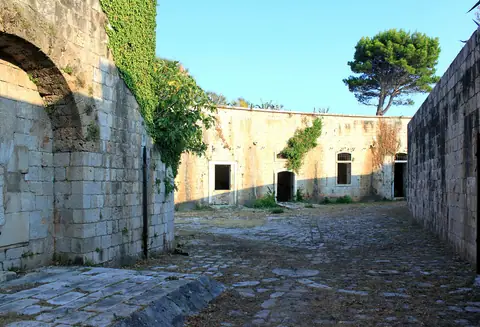
Blue Cave (Plava Špilja), Mamula & Submarine Tunnels Boat Guide
Kotor, Montenegro
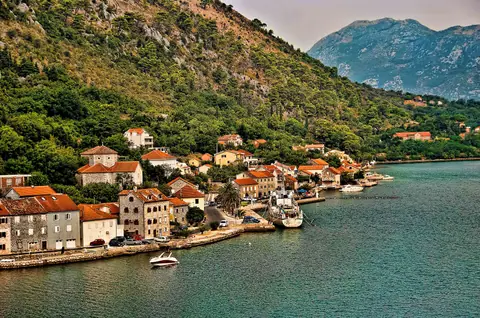
Dobrota Promenade: Captain's Palaces, Churches & Swimming Pontas
Kotor, Montenegro
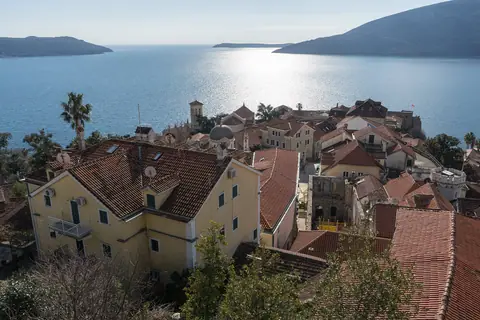
Risan Roman Mosaics, Herceg Novi & Budva Day Trips from Kotor
Kotor, Montenegro
