






















Sintra
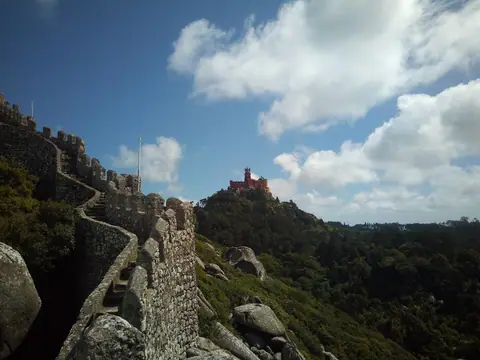
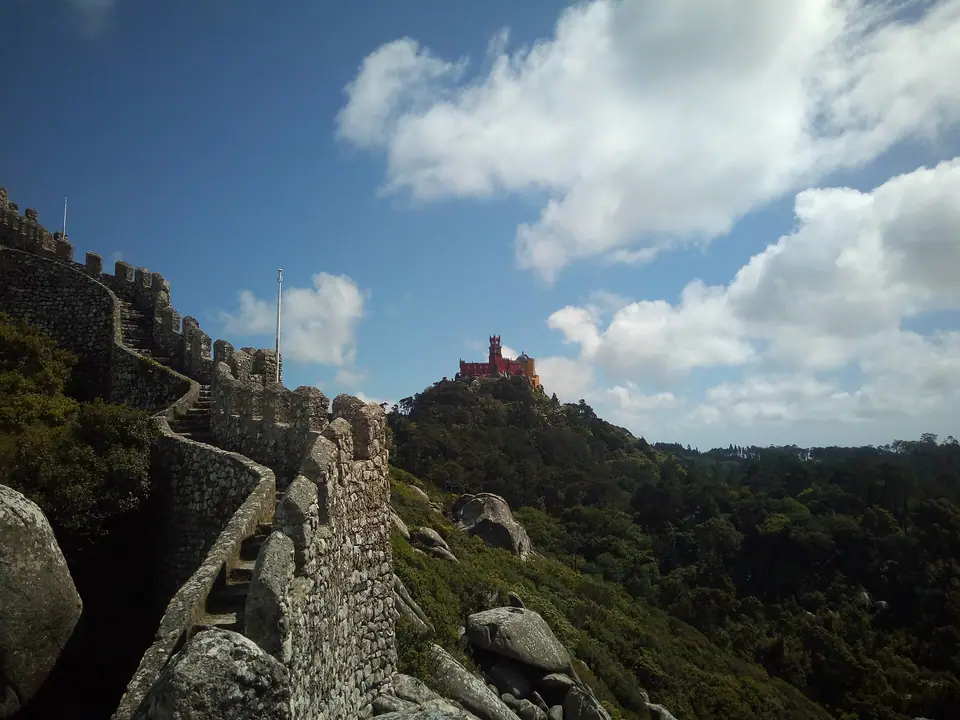
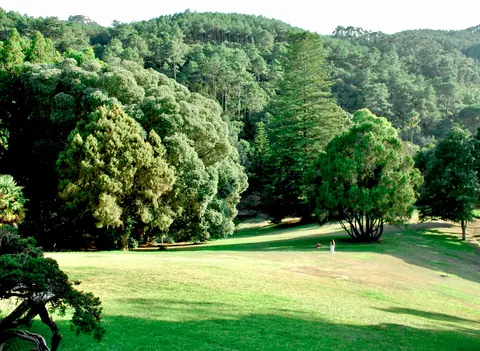
Rising from a mist-cloaked granite mountain range 28 km northwest of Lisbon, Sintra is Europe's first UNESCO Cultural Landscape, where fairy-tale Romanticist palaces, 8th-century Moorish ramparts, and subterranean initiation wells hide inside exotic botanical forests.
Quick decisions
How many days?
Avoid the rushed 2-palace Lisbon day-trip trap by spending 2 to 3 full days: Day 1 for Pena Palace and the Moorish Castle, Day 2 for Quinta da Regaleira and Monserrate Palace, and Day 3 for Cabo da Roca and Azenhas do Mar.
Where should I stay?
Stay in historic Sintra-Vila to walk to the National Palace and Quinta da Regaleira at 08:30 before Lisbon trains arrive, or near Estefânia for quiet access to the train station.
Do I need a car?
Never drive into Sintra's historic core or up to Pena Palace: since 2020, private rental cars are banned on the mountain roads. Take the 40-minute CP Rossio train from Lisbon and use Scotturb buses 434 and 435.
Best for
19th-century Romanticist palace architecture, Masonic garden symbolism, mossy forest hiking trails, early-modern Portuguese azulejo tilework, and wild Atlantic cliff viewpoints.
Before you go
Book your Pena Palace 30-minute timed interior slot (€20.00 as of November 2026) and Quinta da Regaleira entry (€15.00) online in advance, as your Pena slot is for the palace door at the summit, not the park gate below.
Getting around
Use the Scotturb Hop-on Hop-off 434 Pena Circuit and 435 Four Palaces route (€13.50 combined 24h pass as of November 2026), hike the Vila Sassetti trail, or take Carris Metropolitana bus 1253 to Cabo da Roca.
Continue your trip
Ride bus 1624 from Sintra past Cabo da Roca (mainland Europe's westernmost point) down to Cascais, then take the coastal train back to Lisbon.
Overview
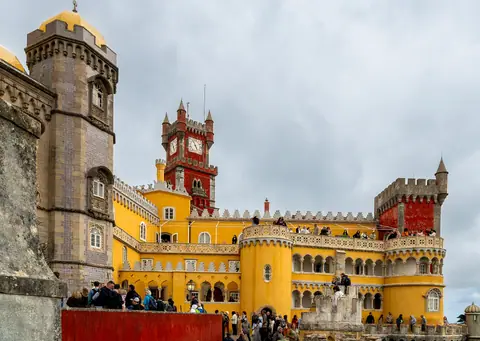
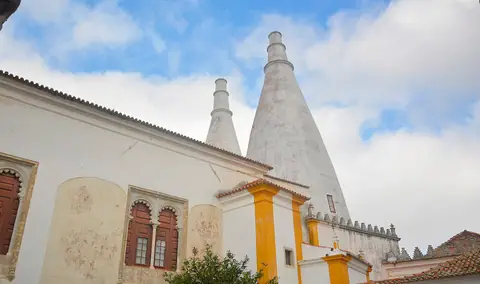
Jutting 529 metres out of the coastal plain just 28 kilometres northwest of Lisbon, the granite massif of the Serra de Sintra acts as a natural condenser for moist Atlantic winds, creating a cool, mist-shrouded microclimate of ancient oaks, giant tree ferns, and camellias that Lord Byron hailed in 1809 as a "glorious Eden". For six hundred years, Portuguese monarchs escaped Lisbon's summer heat inside the twin-chimneyed Sintra National Palace in the valley below. In the 1840s, King Consort Ferdinand II of Saxe-Coburg and Gotha transformed a ruined 16th-century Jerónimos monastery on the second-highest peak into the flamboyant National Palace of Pena, inspiring a 19th-century wave of eccentric estates including Quinta da Regaleira and Monserrate Palace. In 1995, Sintra became the very first site in Europe inscribed by UNESCO as a Cultural Landscape (Reference 723).
Getting there
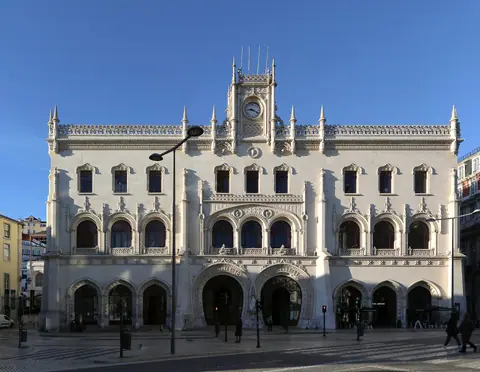
Ride the direct Comboios de Portugal (CP) urban train from Lisbon's Rossio Station (40 minutes) or Oriente Station (47 minutes) for €2.45 on a Navegante card (as of November 2026). Private rental cars are strictly prohibited from driving up the Serra de Sintra palace loop.
Where to stay
Book a 19th-century romantic quinta in Sintra-Vila (Historic Centre) to reach Quinta da Regaleira on foot before day-trippers arrive, a modern boutique hotel in Estefânia near the train station, or a dramatic cliffside resort above Praia das Maçãs and Azenhas do Mar.
Things to do
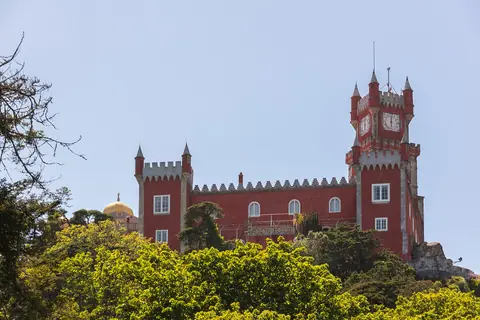
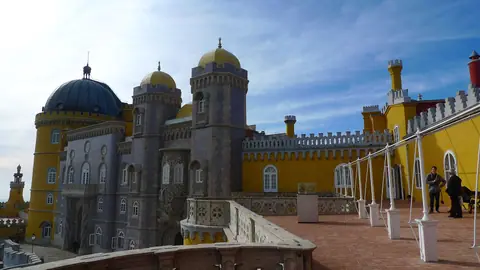
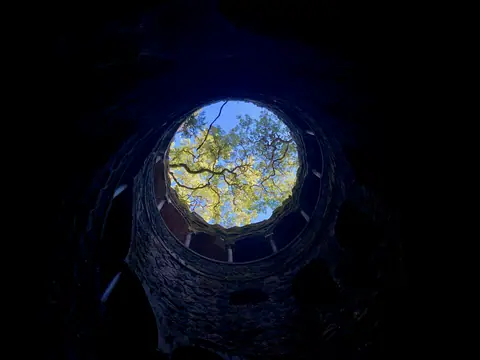
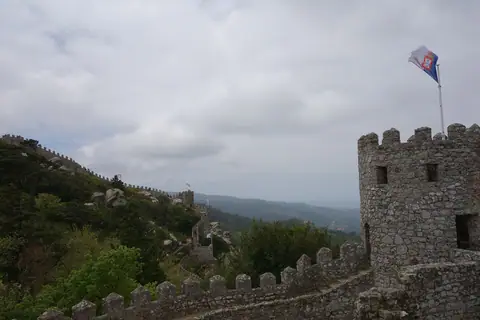
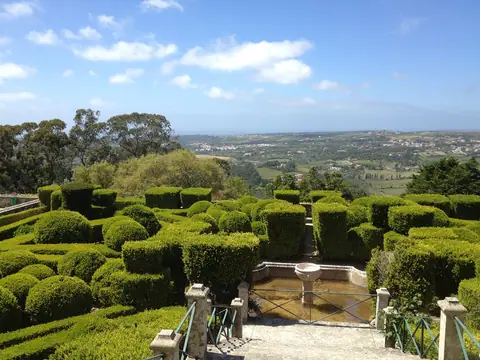
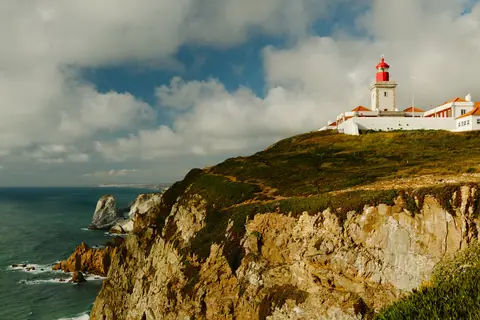
Explore the hilltop Pena Palace and Park and the Chalet of the Countess of Edla, walk the battlements of the 8th-century Moorish Castle, descend the 27-metre Initiation Well at Quinta da Regaleira, admire the Indo-Gothic arches of Monserrate Palace and the cork-lined cells of the Convent of the Capuchos, and watch the sunset at Cabo da Roca.
Food and drink
Queue outside family-run Casa Piriquita (founded in 1862) for warm puff-pastry Travesseiros de Sintra filled with almond and egg cream, bite into cinnamon-spiced Queijadas de Sintra cheese tarts, and sip Vinho de Colares, made from Ramisco vines grown in deep coastal sand dunes that survived Europe's 19th-century phylloxera plague.
Culture
Known to the Romans as Mons Lunae (Mountain of the Moon) and to Islamic geographers as Xintara, Sintra blends Mudéjar tilework from the Age of Discovery, Manueline maritime stone carvings, German Romanticism, and esoteric Knights Templar and Rosicrucian garden architecture.
Weather by month
Sintra is warmest in July, with average highs around 25°C, and coldest in January, when nights drop to about 8°C. January is the wettest month, with rain on about 11 days. For mild weather with fewer rainy days, aim for March, May, June, July, August and September.
| Month | Low | Range | High | Rain | Rainy days |
|---|---|---|---|---|---|
| Jan | 8°C | 14°C | 77 mm | 11 d | |
| Feb | 9°C | 15°C | 63 mm | 9 d | |
| Mar | 10°C | 17°C | 56 mm | 8 d | |
| Apr | 11°C | 18°C | 63 mm | 9 d | |
| May | 13°C | 20°C | 42 mm | 6 d | |
| Jun | 15°C | 23°C | 21 mm | 3 d | |
| Jul | 17°C | 25°C | 7 mm | 1 d | |
| Aug | 17°C | 25°C | 14 mm | 2 d | |
| Sep | 16°C | 24°C | 35 mm | 5 d | |
| Oct | 14°C | 21°C | 63 mm | 9 d | |
| Nov | 11°C | 17°C | 77 mm | 11 d | |
| Dec | 9°C | 15°C | 77 mm | 11 d |
Averages of daily values from 2015 to 2024. Rainy days are days with at least 1 mm of rain. Source: Open-Meteo · Compare destinations by month.
Sintra on the map
Every place we cover in Sintra. Tap a category or pin to explore.
In-depth Sintra guides
Browse the guides grouped by topic: sights, neighbourhoods, food, transport, day trips and trip planning.
Sights, Landmarks & Parks
Key monuments, viewpoints, museums and nature trails.
- 10 Best Things to Do in Sintra: Pena Palace, Initiation Well, Moorish Walls & CoastDiscover the 10 best things to do in Sintra for 2026: exploring Pena Palace and Quinta da Regaleira's Initiation Well, walking the Moorish Castle, and visiting Cabo da Roca.
- What to Wear in Sintra: Wet Cobble Grip, Wind Layers & TunnelsPractical packing guide for Sintra: non-slip shoes for mossy granite and wet palace ramps, windbreakers for the 500 m ridge and Cabo da Roca, and tunnel gear.
- Sintra 3-Day Itinerary: Pena, Regaleira, Monserrate & CoastStep-by-step 3-day Sintra itinerary covering Pena Palace, Moorish Castle, Quinta da Regaleira, Monserrate, Convent of the Capuchos and Cabo da Roca.
- Pena Palace & Park Guide: Timed Tickets, Terraces & Bus 434Complete 2026 guide to Sintra's National Palace of Pena: €20 Interior vs €10 Park & Terrace tickets, the 30-min uphill gate rule, Triton Gate and Pena Park.
- Quinta da Regaleira Guide: Initiation Well, Tunnels & TicketsComplete 2026 guide to Quinta da Regaleira in Sintra: descending the 27 m Initiation Well, underground tunnels, Knights Templar symbolism and €15 timed tickets.
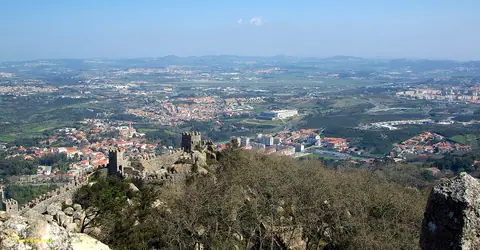
- Castle of the Moors (Castelo dos Mouros): Walls, Hike & ViewsComplete 2026 visitor guide to Sintra's 8th-century Castle of the Moors (Castelo dos Mouros): walking the 450 m battlements, Royal Tower climb, Vila.
- Sintra National Palace (Town Palace): Swan Room & AzulejosComplete 2026 guide to Sintra National Palace (Palácio Nacional de Sintra): twin 33 m kitchen chimneys, 15th-century Mudéjar azulejos, Swan Room and Blazon.
- Monserrate Palace & Convent of the Capuchos: Complete GuideComplete 2026 guide to Sintra's Palace and Botanical Gardens of Monserrate (€12) and the 1560 cork-lined Convent of the Capuchos (€11), plus Bus 435 tips.
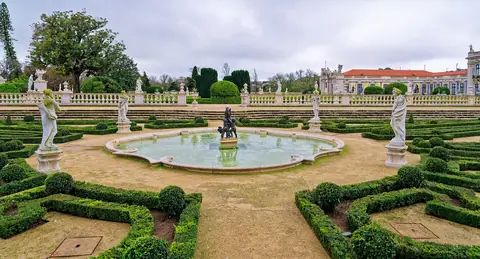
- Palace of Queluz & Chalet of the Countess of Edla: Complete GuideComplete 2026 guide to the 18th-century Rococo National Palace of Queluz (€10) on the Lisbon-Sintra train line and the alpine Chalet of the Countess of Edla.

Neighbourhoods & Where to Stay
Districts, historic quarters and the best bases for your stay.
- Sintra: avoiding the Day-Trip Trap, Palace Zones & Car BanEssential 2026 planning guide to Sintra: why you cannot see four palaces in one day, how the historic centre car ban works, timed ticket traps, and microclimate tips.
- Best Time to Visit Sintra: Fog, Months, Crowds & WeekdaysMonth-by-month weather in Sintra, how to dodge dense Atlantic ridge fog at Pena Palace, best weekdays to avoid crowds and seasonal garden blooms for 2026.
- Where to Stay in Sintra: Sintra-Vila, Estefânia, Seteais & CoastCompare Sintra's 4 best accommodation areas: historic Sintra-Vila, train-friendly Estefânia, Seteais & Colares estates, and coastal Azenhas do Mar.
Food & Drink
Local dishes, markets, cafés and dining districts.

Getting Around & Arrival
Airport transfers, public transit, passes and driving rules.
Day Trips & Excursions
Easy half-day and full-day trips from the city.
Need your embassy or consulate in Portugal? See embassies and consulates in Portugal.
Reviews
Log in to write a review.
No reviews yet.