





















Kotor: Boka Bay Layout, Cruise-Ship Timing, Euro Cash & Local Tips
Everything you need to know before visiting Kotor: navigating the triangular Old Town and Boka Bay, beating cruise-ship crowds, tourist tax registration, and 2026 prices.
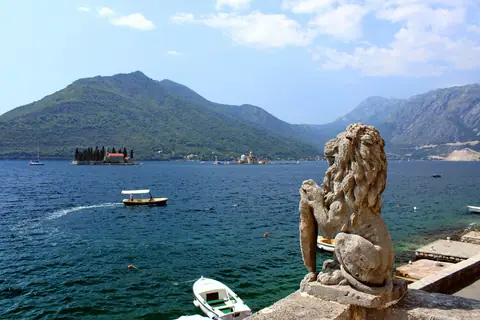
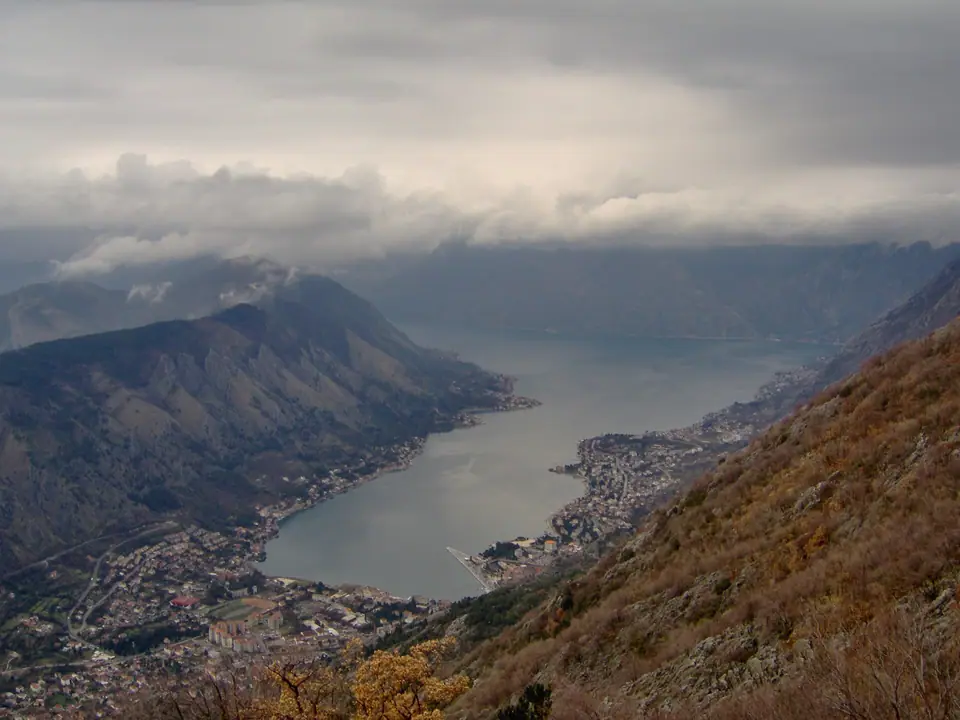
Often mistaken for a Scandinavian fjord, Boka Kotorska (the Bay of Kotor) is actually a submerged river canyon (ria) consisting of four interconnected turquoise basins linked by the 340-metre-wide Verige Strait. At the southeastern dead-end of the innermost basin, wedged into a narrow alluvial triangle between the Škoda (Škurda) River, the Gurdić karst spring. The vertical limestone wall of Mount Lovćen, stands Kotor's Stari Grad (Old Town). Inscribed by UNESCO (Ref, 125) in 1979, Kotor is completely car-free inside its Renaissance walls and small enough to cross in seven minutes, yet surrounded by 28 kilometres of waterfront villages. Pair this orientation guide with our top things to do in Kotor and our Kotor 3-day itinerary.
| Kotor Planning Factor | How It Works on the Ground | 2026 Price / Fee (Nov 2026) | Smart Visitor Strategy |
|---|---|---|---|
| 1. Old Town (Stari Grad) Access. | Three medieval gates (Sea Gate, River Gate, Gurdić Gate); 100% pedestrian inside. | Free 24/7 access to Old Town streets and squares. | Explore Stari Grad before 09:00 and after 17:30 when cruise excursions leave. |
| 2. San Giovanni Fortress Walls. | 1,350 steps rising 260 m up the mountain from River Gate or Church of Our Lady of Remedy. | €15.00 adult official rampart ticket (08:00 to 20:00). | Start at 06:30 for shade, or hike the free outer Ladder of Kotor trail. |
| 3. Bay Transport (Perast & Dobrota). | Local Blue Line coastal bus runs hourly along the bay shore road. | €1.50 to €2.00 cash on board to Perast; €5.00 boat to Our Lady of the Rocks. | Flag down the Blue Line bus at the stop opposite the Old Town market. |
| 4. Currency & Tourist Registration. | Montenegro uses the Euro (€); mandatory tourist tax registration within 24 hours. | €1.00 per adult per night tourist tax (hotels register you automatically). | Carry €20 to €40 in small Euro notes for buses, bakeries, and island boats. |
How to Beat Kotor's Midday Cruise-Ship Crowds
The single most important piece of advice for visiting Kotor between May and October is understanding the daily cruise-ship rhythm. Deep-water cruise liners anchor or dock at the pier just 150 metres outside the Main Sea Gate. Between one and three ships can discharge 2,500 to 6,000 passengers into the tiny 300-metre-wide Old Town between 09:30 and 15:30.
You can easily enjoy Kotor in complete peace by flipping your daily schedule. Spend 07:00 to 09:30 climbing the San Giovanni Fortress or wandering the empty marble alleys of Stari Grad while the stones are cool. Between 10:00 and 16:00, head out onto the water or into the mountains. Take a morning boat to Perast and Our Lady of the Rocks, ride the Kotor to Lovćen Cable Car up to 1,350 metres, or swim off the sunny stone piers (ponte) of Dobrota. Return to Stari Grad after 17:00, when the ships sound their horns and sail out through the bay, leaving the floodlit Venetian squares to overnight guests and violin buskers.
2026 Monument Tickets, Currency, and Mandatory Tourist Registration
Although Montenegro is not yet a full member of the European Union, the country adopted the Euro (€) as its sole official currency in 2002. Credit and contactless bank cards are widely accepted at hotels, supermarkets, and sit-down restaurants. Even so, cash in small Euro notes (€5, €10, €20) and coins is still essential for Blue Line coastal buses, the €5.00 Perast island boats, the open-air farmers' market along the city walls, and intercity bus station platform fees (€1.00 to €2.00 luggage/print fee).
As of November 2026 (subject to seasonal municipal adjustments), key entry prices around Kotor are:
- San Giovanni Fortress & City Walls Climb. €15.00 per person at the two turnstiles (North River Gate entrance and Špiljari gate) between 08:00 and 20:00 from May to October.
- Cathedral of Saint Tryphon, Reliquary & Sacristy Museum. €4.00 adult.
- Maritime Museum of Montenegro (Grgurina Palace). €5.00 adult (includes multilingual audio guide; family ticket €10.00).
- Kotor City Walls Scenic River Walk (Kamp Bastion upper rampart). €3.00 adult.
- Kotor to Lovćen Cable Car (Dub station to Kuk 1,350 m). €23.00 adult round-trip / €13.00 one-way.
Finally, note Montenegro's strict 24-hour Tourist Registration Law (Boravišna taksa). Every foreign visitor staying in Montenegro must be registered with the local Tourist Organization within 24 hours of arrival (€1.00 per adult per night in Kotor). If you stay at a hotel or licensed guesthouse, the reception registers your passport electronically. If you rent a private apartment, verify that your host registers you and hands you the pink/white receipt slip. You can also walk two minutes to the Tourist Info kiosk right outside the Sea Gate with your passport so you do not face a fine at the border when departing.
Why Are There So Many Cats in Kotor?
As you walk from the Sea Gate to St Luke's Square, you will see dozens of sleek, friendly cats sleeping on warm Venetian wellheads and café chairs. During Kotor's centuries as a Venetian naval port, merchant ships arriving from around the Mediterranean carried cats aboard to keep rats out of grain and rope stores. Generations of ship cats stayed ashore in the walled port and kept the town free of rodents. Today, cats are Kotor's unofficial civic symbol: the volunteer group Kotor Kitties coordinates spay-and-neuter clinics, feeding stations stand in the parks. The quirky Cats Museum on Square of the Blessed Ozana charges a €1.00 coin entry to help support local feline care.
Kotor's Three Fortified Gates & Pedestrian Orientation
Navigating Kotor is effortless once you know the three medieval gates that pierce its 4.5-kilometre circuit of Venetian stone walls. The Main Sea Gate (Vrata od Mora), completed in 1555 under Venetian Provveditore Bernardo Renier, opens directly from the harbourfront onto Square of the Arms. Above its arch sits the winged Lion of Saint Mark and a 1944 partisan liberation inscription. At the northern apex of the triangle, the River Gate (Sjeverna Vrata, 1540) spans the turquoise Škurda River canyon and leads directly to the turnstile for the San Giovanni Fortress stairs. At the southern tip, the Gurdić Gate (Južna Vrata) crosses a dramatic underground karst spring moat via a wooden drawbridge.
Inside the walls, streets do not have formal names on plaques. Instead, buildings are numbered sequentially within six historic quarters, and locals orient themselves by the nearest square or church. Key plazas include Square of the Arms, Square of Flour, St Tryphon's Square, Boka Navy Square, Square of Salad, and St Luke's Square. Because the entire walled triangle measures only 400 metres from north to south, you are never more than a five-minute walk from any gate. If you ever lose your bearings inside the twisting marble alleys, simply look up at the vertical limestone cliff of St John's Hill to find east. Then walk downhill in the opposite direction to reach the harbour.
Practical Essentials: Tap Water, Pharmacies, Luggage Storage & ATMs
For most of the year, tap water in Kotor is fed by mountain karst springs and is safe to drink. However, during late summer droughts in August and early September, seawater occasionally intrudes into the coastal spring siphon, giving the municipal tap water a noticeably salty taste. Local residents check daily water notices and switch to 1.5-litre or 5-litre bottles from the Idea or Aroma supermarkets inside the Kamelija Shopping Centre (located 100 metres north of the River Gate). You will also find a well-stocked pharmacy (Apoteka), post office, and luggage storage lockers right outside the Sea Gate. Additional lockers sit at the Kotor Bus Station (€3.00 to €5.00 per bag per day as of November 2026). When withdrawing cash inside the Old Town, use ATMs attached to major Montenegrin retail banks such as CKB (Crnogorska Komercijalna Banka), NLB Banka, or Hipotekarna Banka rather than standalone tourist ATMs. Always decline dynamic currency conversion so your home bank processes the transaction in Euros.
Where it is
- 1Kotor
- Tivat Airport (TIV) · about 5 km from Kotor in a straight line
- Directions in Google Maps
Traveller tips
Real advice from people who have been to Kotor. Every tip is read by our team before it goes live.
No tips yet. Been here? Yours could be the first.
Thank you! Your tip will appear here after a quick review.
More in Kotor
Continue exploring Kotor with related neighbourhood, food, and planning guides
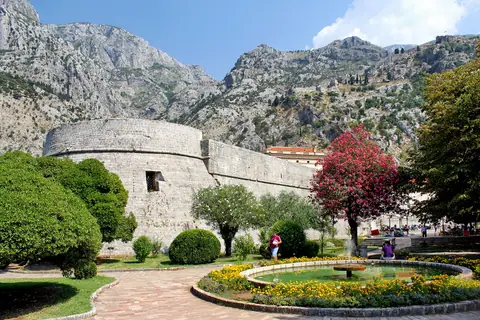
San Giovanni Fortress & Ladder of Kotor: Hike & Steps Guide
Kotor, Montenegro
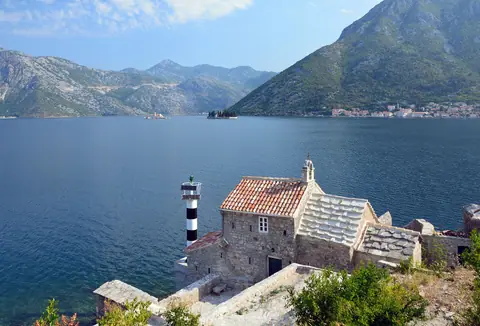
Perast & Our Lady of the Rocks: Boat Tickets & Palaces Guide
Kotor, Montenegro
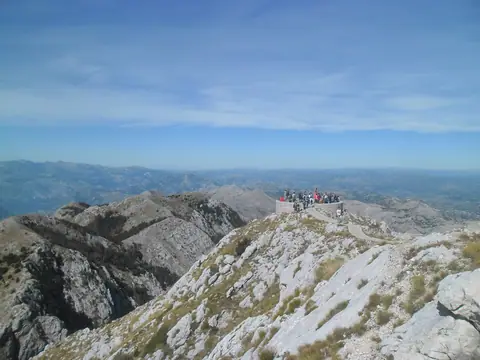
Lovćen National Park, Njegoš Mausoleum & 25-Hairpin Road Guide
Kotor, Montenegro
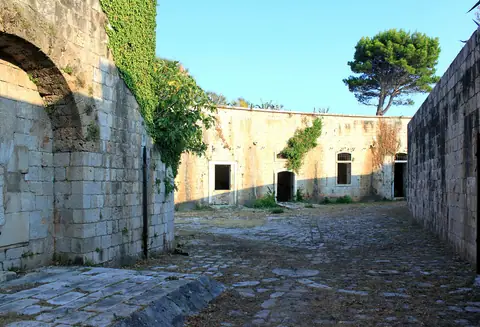
Blue Cave (Plava Špilja), Mamula & Submarine Tunnels Boat Guide
Kotor, Montenegro
