Photo: J.O · CC BY-SA 4.0
What to Eat in Ljubljana
Protected sausage and pumpkin oil, potica, štruklji and the wine regions behind the glass.
Slovenian food is regional, seasonal and quietly proud. Ljubljana sits where Alpine, Mediterranean and Pannonian traditions meet, and its Central Market stalls, historic inns and Friday street kitchens reflect all three. Use this table guide to read local menus, recognise EU-protected products and pair traditional dishes with wines worth pouring.
Plan meals around the sights in our things to do guide, and shop at the market described in the Old Town guide.
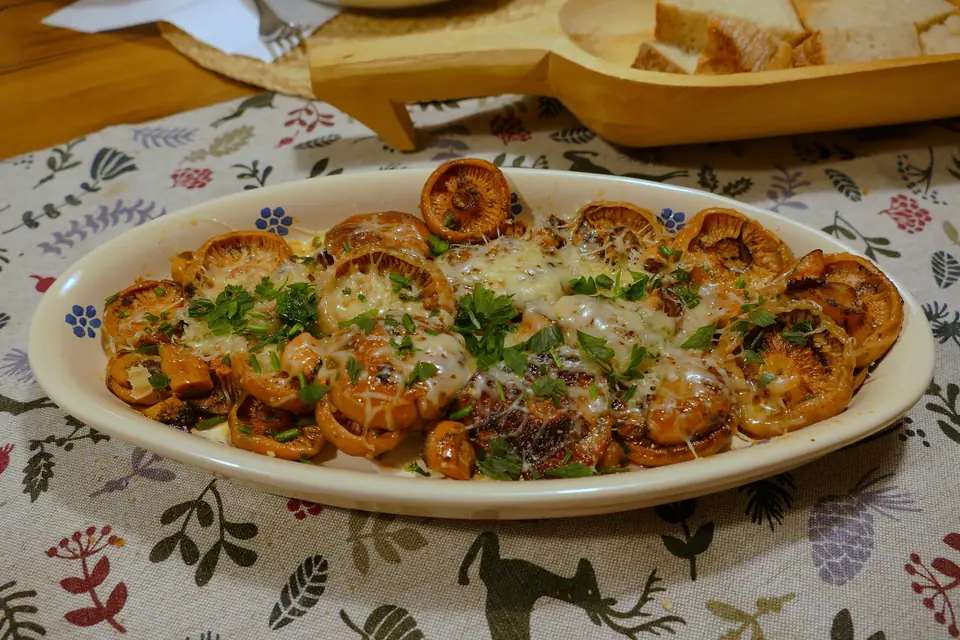
Štruklji dumplings, autumn sirovke mushrooms and Vipava jota
Štruklji are traditional rolled dumplings served savoury with cottage cheese or sweet with walnuts and tarragon. In autumn, rustic menus feature sautéed saffron milk cap mushrooms (sirovke) pan-fried gently with garlic and parsley as an earthy woodland starter. Jota, in its Vipava form, is a tangy bean and sauerkraut soup, močnik is a traditional grain porridge cooked with buckwheat, and tiny žlikrofi potato dumplings come from Idrija.
Styria-Prekmurje pumpkin seed oil is a dark oil with protected status. It is drizzled on salads and soups and travels well, so check that the bottle carries the protected name.
EU-protected Carniolan sausage and mustard counters
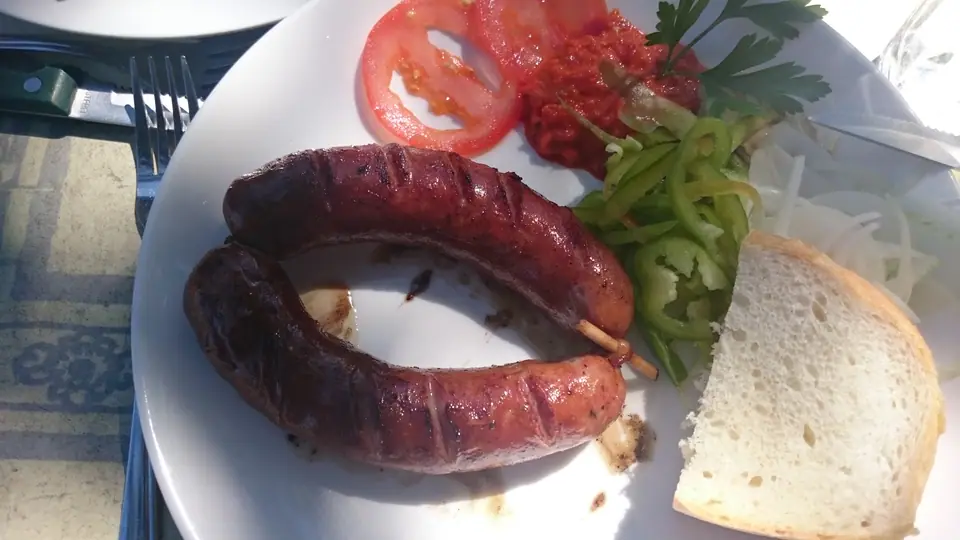
The Carniolan sausage entered the EU register of protected geographical indications in January 2015, over objections from Austria, Croatia and Germany. The specification is strict: at least 75 to 80 per cent pork, excluding bacon, and no more than 20 per cent bacon, with up to 5 per cent water. Seasonings stop strictly at Sečovlje sea salt, a little garlic, saltpetre and black pepper. The sausages are formed in pairs 12 to 16 centimetres long, weigh 180 to 220 grams, and are hot smoked and heat-cured at about 70 °C. In Ljubljana it is typically served hot inside a crusty bun with mustard and freshly grated horseradish.
Traditional walnut potica and layered Prekmurska gibanica
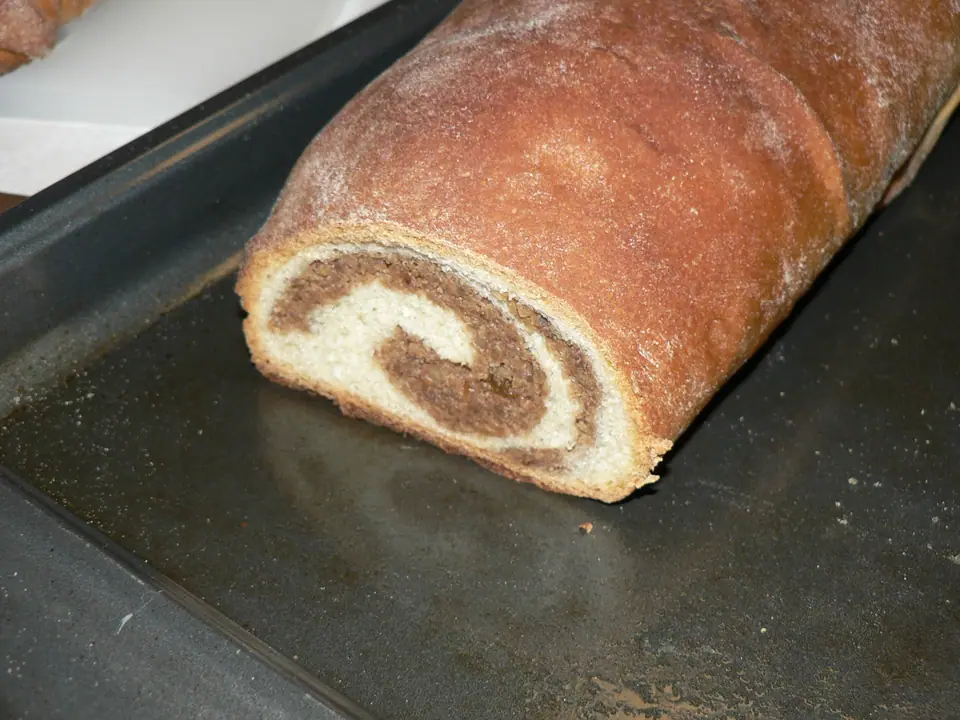
Potica is a leavened, enriched dough rolled thin, spread with filling and rolled into a log, then baked in a round mould with a central chimney called a potičnik. Primož Trubar mentioned it in 1575 and 1577 under the older name povitica, and Johann Weikhard von Valvasor described it in detail in 1689. Slovenska potica has been an EU Traditional Speciality Guaranteed since April 2021, and the specification permits five fillings: walnut, walnut with raisins, raisin, tarragon, and tarragon with cottage cheese. It appears at Christmas and Easter, weddings and christenings.
Prekmurska gibanica, from the north-eastern region of Prekmurje, layers poppy seeds, walnuts, apples, quark and raisins between sheets of pastry. The oldest known description, written in 1828 by József Kossics, mentions ten or eleven layers of dough. It has been an EU Traditional Speciality Guaranteed since March 2010, and its name comes from the dialect word güba, meaning a fold.
| Dish or product | What it is | Where to meet it |
|---|---|---|
| Kranjska klobasa | Hot-smoked protected sausage, 180 to 220 g a pair | Market counters and Klobasarna |
| Potica | Rolled yeast pastry with five permitted fillings | Bakeries and festive tables |
| Štruklji | Rolled dumplings | Traditional restaurants |
| Prekmurska gibanica | Layered pastry of poppy seed, walnut, apple and quark | Bakeries and restaurants |
| Pumpkin seed oil | Dark protected oil | Markets and shops |
| Vipava jota | Sour soup | Inns in the Vipava valley and the capital |
Weekday Central Market halls and Friday Odprta kuhna
The Central Market is open daily except Sundays and stretches between the Triple Bridge and the Dragon Bridge on the right bank. The flower market sits at the junction of Pogačar Square and Vodnik Square. Buy orchard fruit, crusty rye loaves and mountain cheese for a picnic and sample sausage or dairy products from farm stalls. Mornings offer the fullest stalls. On dry Fridays from spring into autumn, Odprta kuhna (Open Kitchen) fills neighbouring Pogačarjev trg with Slovene chefs cooking regional dishes and street food outdoors. The cream cake from Bled is a separate pilgrimage, covered in our Bled and Bohinj guide.
Slovenia's regional produce from Prekmurje to the Karst
Slovenia was named a European Region of Gastronomy for 2021, and its regional traditions stay distinct. Prekmurje, the easternmost region, is known for prekmurska gibanica and bujta repa, a turnip dish, while the Karst and the coast produce their own air-dried ham and dry white wines. Kitchen tradition here rests on seasonal farm harvests rather than inflated tourist menus.
Terraced Goriška Brda whites and Karst Teran reds
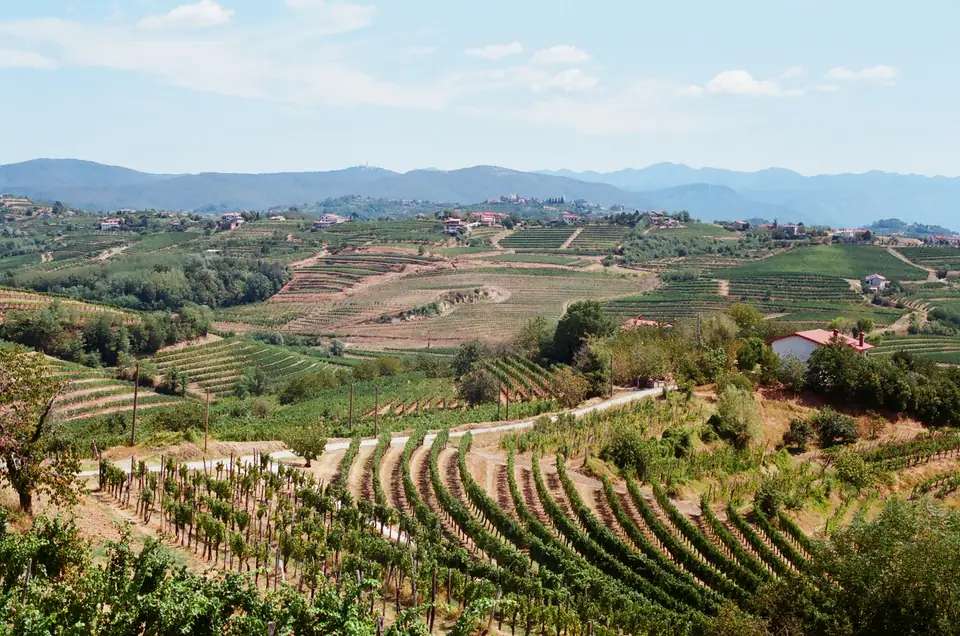
Slovenia has three main wine regions: Podravje in the north-east, which is the largest and produces mostly white wine, Posavje along the lower Sava, and Primorska near the coast. Across western Primorska, Goriška Brda borders Italy's Friuli-Venezia Giulia region across sunny terraced hillside vineyards and hilltop wine villages, celebrated for mineral white Rebula (Ribolla Gialla) and structured Merlot-Cabernet blends. The nearby Vipava valley produces floral whites from local Pinela and Zelen grapes, while deep purple, high-acid Teran grows from Refošk grapes in the iron-rich red soils of the Karst plateau.
In eastern Slovenia, Maribor preserves the Stara trta grapevine, documented at over 450 years old as the world's oldest living vine. If you are heading to the coast or the Karst, the caves and Karst guide explains how to combine wine-growing hill towns with an underground visit.
Klobasarna, Gostilna Šestica and neighbourhood inns
Step off the busiest riverbank terraces beside the Triple Bridge to find kitchens grounded in heritage cooking. On Ciril-Metodov trg near the cathedral, Klobasarna focuses squarely on certified Kranjska klobasa, buckwheat štruklji and hearty stews. Nearby on Slovenska cesta, Gostilna Šestica has hosted diners continuously since 1776 with classic pork, mushroom and pastry plates in wooden rooms. Elsewhere, favour any traditional neighbourhood gostilna posting a brief chalked list of daily dishes.
- Order protected names: Certified Kranjska klobasa and Styria-Prekmurje pumpkin oil guarantee strict recipes.
- Time market stalls early: Central Market halls run briskly from morning and stay closed Sundays.
- Target Friday Odprta kuhna: Check sunshine forecasts to taste dozens of Slovene kitchens across Pogačarjev trg.
- Finish with local cake: Pair black coffee with walnut potica or warm layered gibanica.
Where it is
- 1Ljubljana
- Ljubljana Jože Pučnik Airport (LJU) · about 19 km from Ljubljana in a straight line
- Zagreb Franjo Tuđman International Airport (ZAG) · about 126 km from Ljubljana in a straight line
- Directions in Google Maps
Stations and taxi ranks: OpenStreetMap. Airports: OurAirports. Distances are in a straight line.
Traveller tips
Real advice from people who have been to Ljubljana. Every tip is read by our team before it goes live.
No tips yet. Been here? Yours could be the first.
Thank you! Your tip will appear here after a quick review.
More in Ljubljana
Continue exploring Ljubljana with related neighbourhood, food, and planning guides