Photo: Romainbehar · CC0
Vieux Lyon, the Cathedral and the Traboules
The Renaissance quarter, a cathedral built over 296 years and the passages that join the streets.
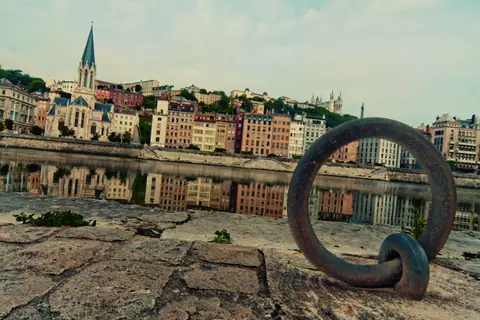
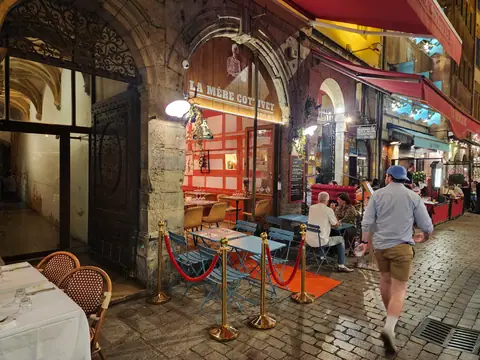
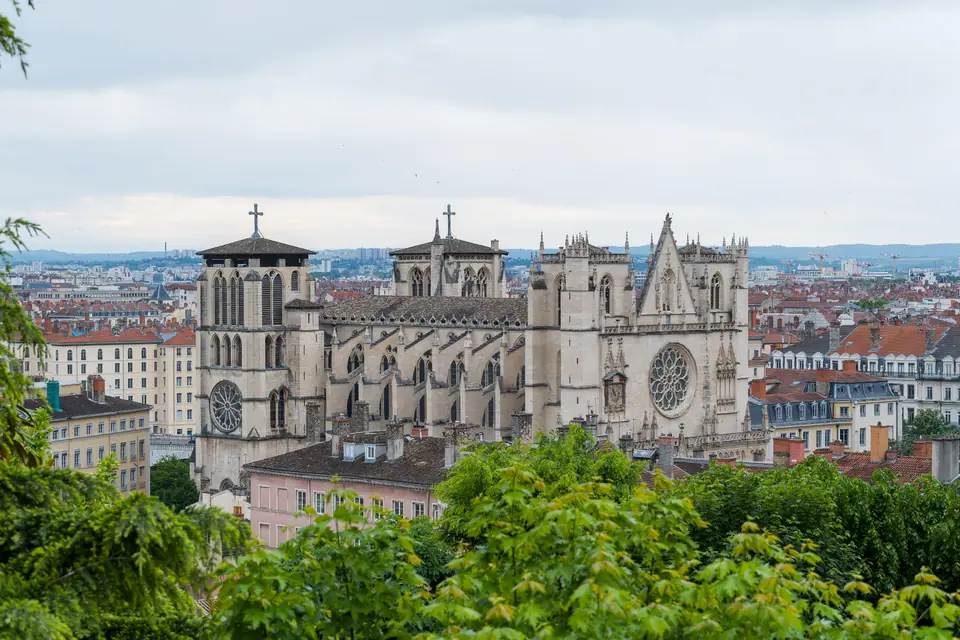
Pressed onto a narrow shelf between Fourvière's cliffs and the Saône riverbank, Vieux Lyon holds Europe's densest surviving Renaissance quarter outside Italy. Steep terrain left room for few parallel cross-streets. Fifteenth- and sixteenth-century builders therefore carved vaulted corridors straight through ground floors called traboules. Walking the quarter pairs three centuries of Gothic stonework at Cathédrale Saint-Jean with quiet paths inside inhabited apartment courtyards.
Saint-Paul, Saint-Jean and Saint-Georges
Lying inside the fifth arrondissement and the 1998 UNESCO zone, Vieux Lyon falls cleanly north to south into three clear neighbourhoods. Northern Saint-Paul boomed once royal privileges transformed Lyon's seasonal trade fairs into international clearinghouses. Florentine and Flemish merchant banks soon settled around Place du Change, leaving an open Renaissance trading loggia beside modern Saint-Paul station. Central Saint-Jean holds the cathedral, the Renaissance courts of Musées Gadagne and lively Rue Saint-Jean and Rue du Bœuf. Southern Saint-Georges keeps quieter medieval lanes by the river, home to early silk artisans before looms climbed Croix-Rousse.
| Quarter (North to South) | Historic residents | Key sights |
|---|---|---|
| Saint-Paul | Renaissance merchants and foreign bankers | Place du Change, Church of Saint-Paul |
| Saint-Jean | Clergy, magistrates and printers | Saint-Jean Cathedral, Longue Traboule, Tour Rose, Gadagne |
| Saint-Georges | Early silk artisans and boatmen | Neo-Gothic church, riverside Saint-Georges footbridge |
Cathédrale Saint-Jean-Baptiste and its long build
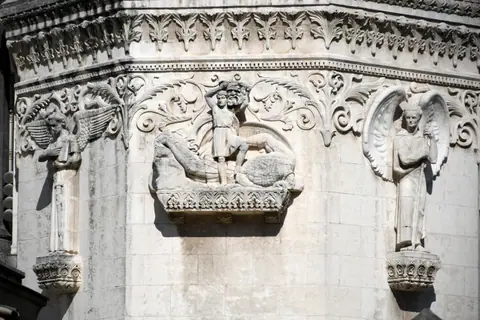
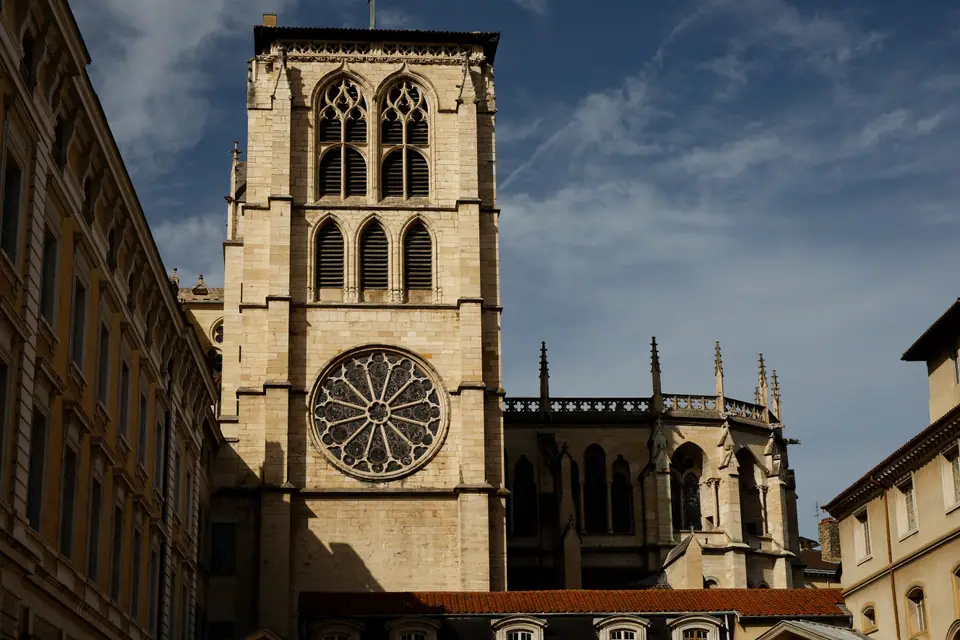
Before stones rose on Place Saint-Jean, Pope Gregory VII named Lyon's archbishop Primate of All the Gauls in 1079. That rank gave the church its lasting title of Primatiale. Masons laid new walls atop sixth-century church ruins in 1180 and finished the west front roughly by 1480. In 1245 the half-built sanctuary hosted the First Council of Lyon. Walking east to west reveals changing medieval architecture clearly. Round Romanesque arches clasp the 20-metre choir. Further west, Gothic vaults lift the 80-metre nave up to 32.5 metres beneath glowing rose windows and carved Bourbon stonework. Triple west portals show empty statuary niches damaged during sixteenth-century religious wars.
| Cathedral feature | Verified measurement or date |
|---|---|
| Primate of All the Gauls title | Granted in 1079 by Pope Gregory VII |
| Construction span | 1180 to 1480 over sixth-century church ruins |
| Interior dimensions | 80 m long, 20 m choir width, 32.5 m nave height |
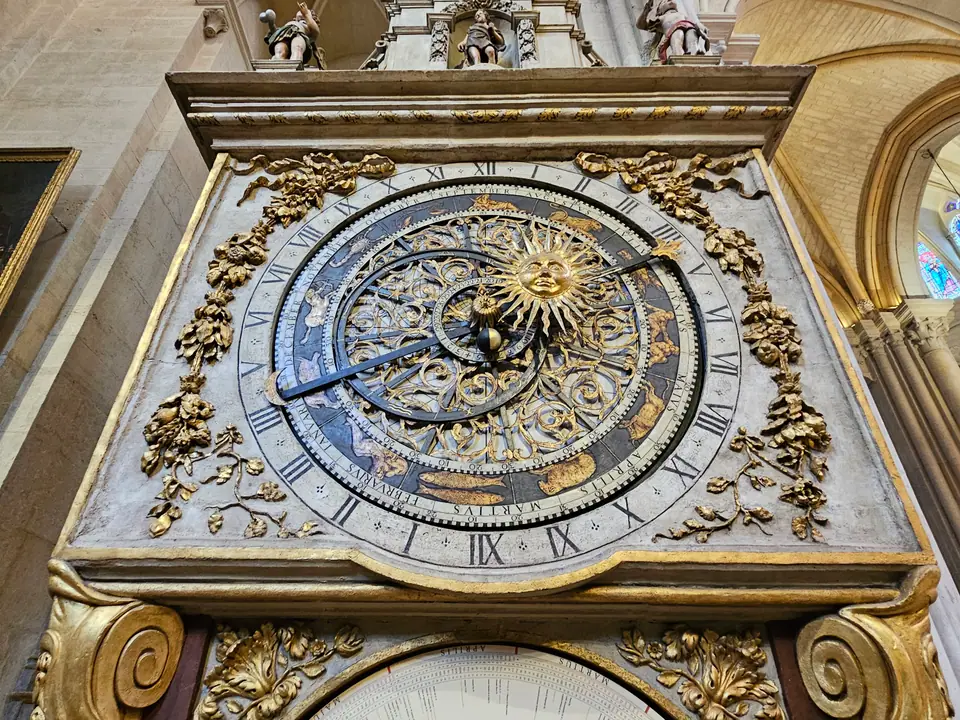
| Astronomical clock | Documented 1379 to 1383; rebuilt 1661 (9 m tall) |
Inside the north transept: the astronomical clock
Towering nine metres inside the north transept stands one of Europe's oldest documented astronomical clocks. Cathedral accounts record a mechanical timepiece between 1379 and 1383. Master horologist Guillaume Nourrisson rebuilt its brass dials, perpetual liturgical calendar wheels and upper spire in 1661. During scheduled afternoon chimes, sculpted angels, a crowing rooster, a dove and an animated Swiss Guard cross the cabinet. Below them turn celestial astrolabe rings calibrated decades forward. Check notices near the nave entrance for afternoon chime times and respect liturgical services.
How traboules work and courtyard etiquette
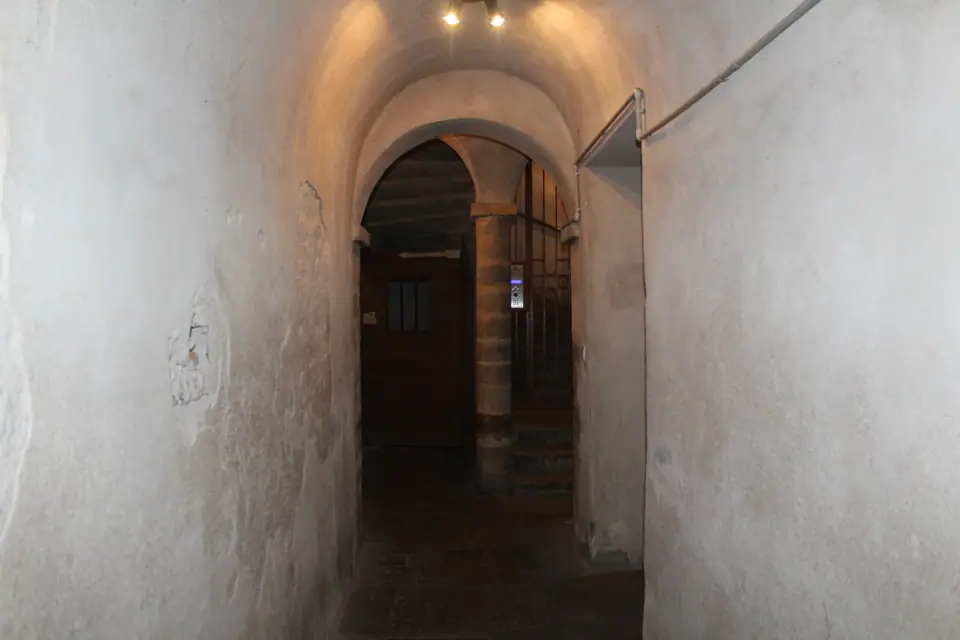
Named from the Latin trans ambulare, meaning to pass through, traboules connect separate streets via dark tunnels and sunlit courtyards. Fourth-century riverside households opened early paths down to the Saône for drinking water. Centuries later, Renaissance silk traders sheltered precious brocades beneath vaulted corridors during storms. Around 200 passages survive across Vieux Lyon, plus dead-end courtyards termed miraboules, though most sit behind private locks. Under Lyon's Courtyard and Traboule Agreement, participating residential blocks unlock roughly forty signed passages from morning until early evening.
Courtyard architecture and doorway respect
Pause quietly inside open courtyards to spot Italian-style vaulted loggias, pink-ochre limewash walls, cantilevered wells and corkscrew stair towers. Apartment doorways open straight onto every landing, so quiet courtesy preserves daytime access. Speak softly beneath stone vaults and never force locked gates outside daylight agreement hours. Keep stairways clear of bulky bags and avoid photographing residents crossing their own landings.
La Longue Traboule, Tour Rose and Gadagne
Three landmarks showcase Renaissance Vieux Lyon stonework within two minutes on foot. Enter 54 Rue Saint-Jean to cross La Longue Traboule. That corridor threads through four joined houses and courtyard galleries out to 27 Rue du Bœuf. Nearby at 16 Rue du Bœuf rises the sixteenth-century octagonal stair turret of the pink-ochre Tour Rose (Maison du Crible). Just north along Rue de Gadagne, the broad mansion housing Musées Gadagne unites two collections beneath quiet terraced gardens. Exhibits trace civic history together with the World Puppet Museum's tributes to Guignol, invented around 1808 by Laurent Mourguet. Small upper courtyard terraces offer cool stone benches above crowded shopping lanes below.
Walking Vieux Lyon cleanly
- Cathedral morning: Enter Cathédrale Saint-Jean early before large coach groups crowd Place Saint-Jean and check afternoon clock chimes.
- Courtyard loop: Walk La Longue Traboule from 54 Rue Saint-Jean to 27 Rue du Bœuf. Step inside Tour Rose at 16 Rue du Bœuf and explore Musées Gadagne.
- Upward or river link: Board the F1 or F2 funicular beside Saint-Jean up to Fourvière. For lunch downhill, cross Passerelle du Palais de Justice toward a Presqu'île bouchon.
Flat rubber-soled shoes handle uneven river cobbles far better than thin sandals across all three historic quarters. Even in bright sunshine, narrow stone passages stay slightly damp after street-washing trucks pass each morning. Three pedestrian footbridges cross the Saône along this stretch, linking Saint-Paul, Saint-Jean and Saint-Georges quickly back to the central Presqu'île.
Where it is
- 1Vieux Lyon, the Cathedral and the Traboules
- Lyon Saint-Exupéry Airport (LYS) · about 21 km from here in a straight line
- Directions in Google Maps
Stations and taxi ranks: OpenStreetMap. Airports: OurAirports. Distances are in a straight line.
Traveller tips
Real advice from people who have been to Lyon. Every tip is read by our team before it goes live.
No tips yet. Been here? Yours could be the first.
Thank you! Your tip will appear here after a quick review.
More in Lyon
Continue exploring Lyon with related neighbourhood, food, and planning guides