Old Colonial Harbour, Nuuk Cathedral and Hans Egede House
A walking guide to Nuutoqaq, the historic waterfront where Nuuk was founded in 1728, home to the 1849 Cathedral and the Mother of the Sea.
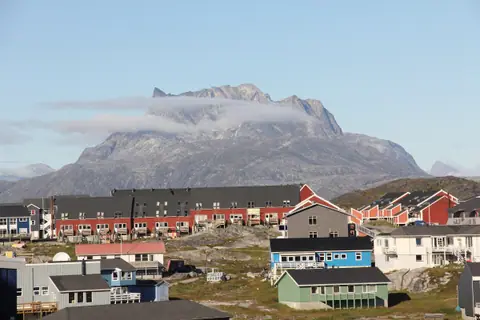
Known in Kalaallisut as Nuutoqaq ("Old Nuuk") and in Danish as Kolonihavnen, the Old Colonial Harbour on the western tip of the peninsula is where the modern capital took shape in 1728 when royal governor Claus Paarss and Norwegian-Danish Lutheran missionary Hans Egede moved their Hope Colony from Kangeq Island to the sheltered mainland cape of Nûk. Compact enough to cover on foot in two hours, the waterfront brings together eighteenth- and nineteenth-century timber buildings, the Greenland National Museum, and the brightly painted wooden cottages of Myggedalen.
Nuuk Cathedral (Annaassisitta Oqaluffia)
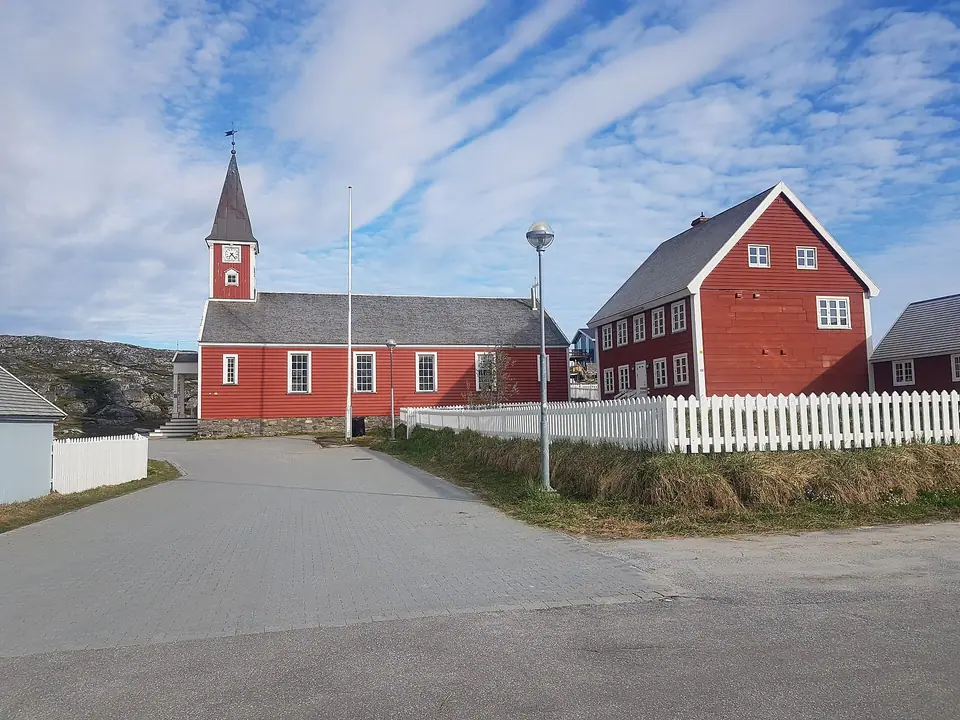
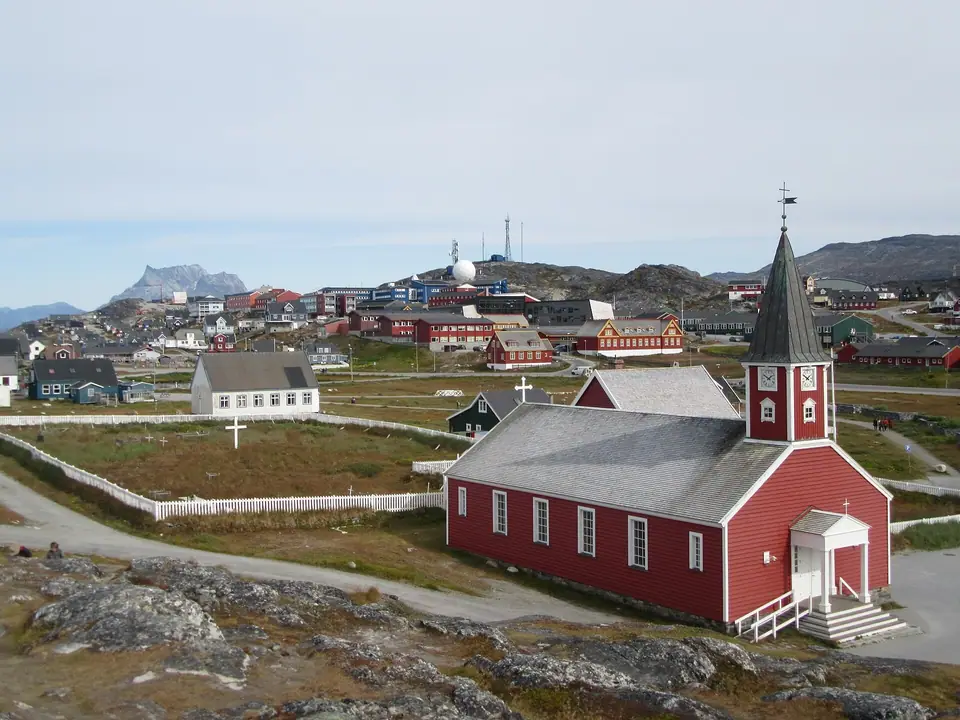
Standing on a granite rise above the shoreline, the Church of Our Saviour (Annaassisitta Oqaluffia, Danish: Vor Frelser Kirke) was built between 1848 and 1849 with funds donated by Karen Ørsted's Fund and consecrated on 6 April 1849, replacing older congregation churches dating back to 1758. Originally constructed in half-timbered framing insulated with local soapstone and talc, the structure was later clad in red wooden siding with white-painted interior panelling; its clock tower and steeple were added in 1884 and rebuilt in 1928, and electricity was installed in 1949. Under the Law of Greenland's Church and School of 6 May 1993, the church became the Cathedral of the Diocese of Greenland, with Kristian Mørk ordained in 1994 as the first bishop in Greenland in 616 years, followed from 1995 to 2020 by Greenland-born Bishop Sofie Petersen. Inside stand two tall brass altar candelabras gifted by the Church of Norway and an 11-rank 1970 Marcussen & Søn organ. In front of the entrance stands a bronze bust of celebrated psalm writer and organist Jonathan Petersen, while a 1921 copy of the Statue of Hans Egede crowns the hilltop above.
Hans Egede House and Ilinniarfissuaq
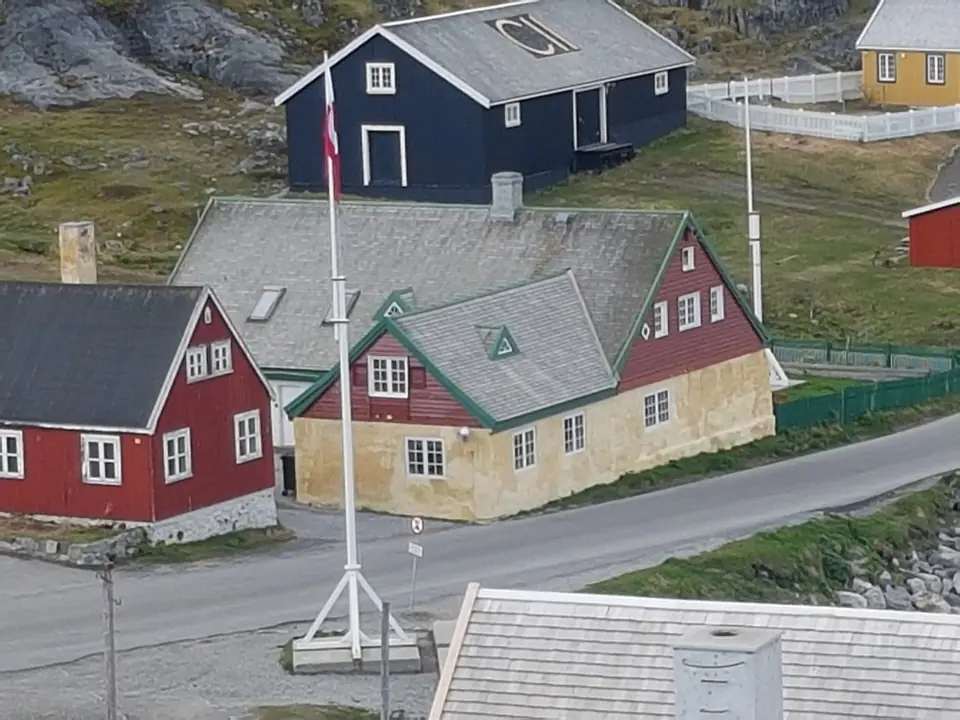
A two-minute walk south along the harbour leads to Hans Egede House, built in 1728 as the missionary's residence and preserved today as the oldest house in Greenland; after serving for decades as the official residence of the Prime Minister of Greenland, it is now used for government receptions. Across the lane in Old Nuuk stands Ilinniarfissuaq, Greenland's oldest educational institution and teacher-training seminary, founded in the nineteenth century near the house where geologist and administrator Hinrich Johannes Rink launched Atuagagdliutit, Greenland's first Greenlandic-language newspaper, in 1861.
Mother of the Sea (Sassuma Arnaa) and the Tidewater Steps
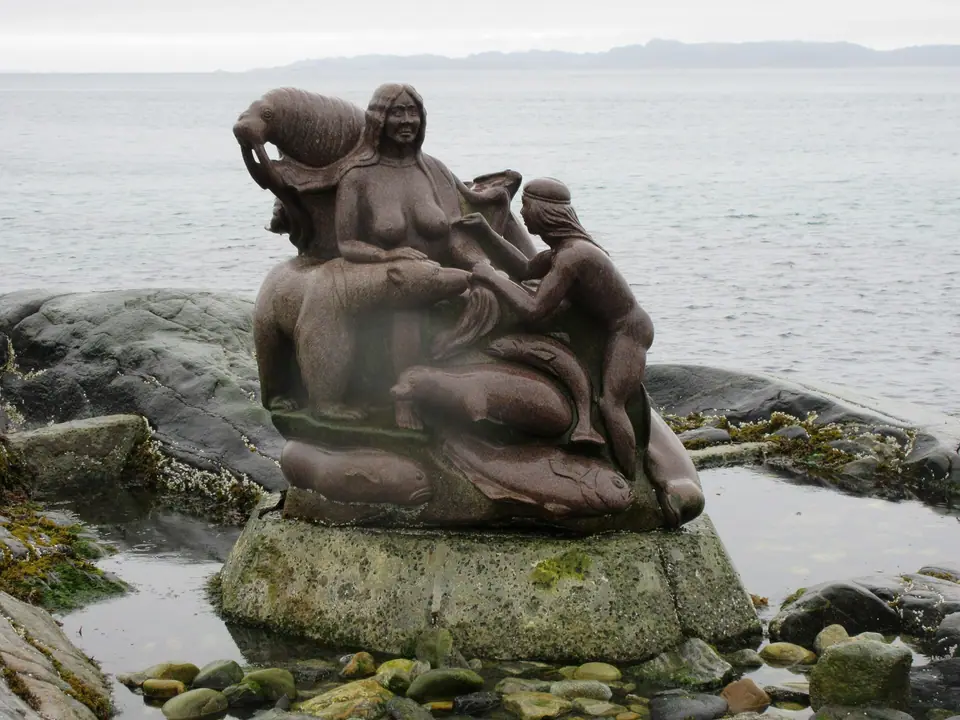
In the tidal cove directly below Hans Egede House sits sculptor Christian Rosing's red-granite monument to Sassuma Arnaa (the Mother of the Sea), the spirit of Inuit mythology who holds back the marine mammals in her tangled hair when human communities disrespect nature, until a shaman swims down to comb her locks clean. At high tide the statue disappears almost entirely beneath the fjord waves, emerging onto the seaweed-draped rocks at low tide surrounded by carved seals, a walrus, and a polar bear. Check the daily tide times or combine your visit with the coastal boardwalk directly south of the cove.
Traveller tips
Real advice from people who have been to Old Colonial Harbour, Nuuk Cathedral and Hans Egede House. Every tip is read by our team before it goes live.
No tips yet. Been here? Yours could be the first.
Thank you! Your tip will appear here after a quick review.
More in Nuuk
Continue exploring Nuuk with related neighbourhood, food, and planning guides