


























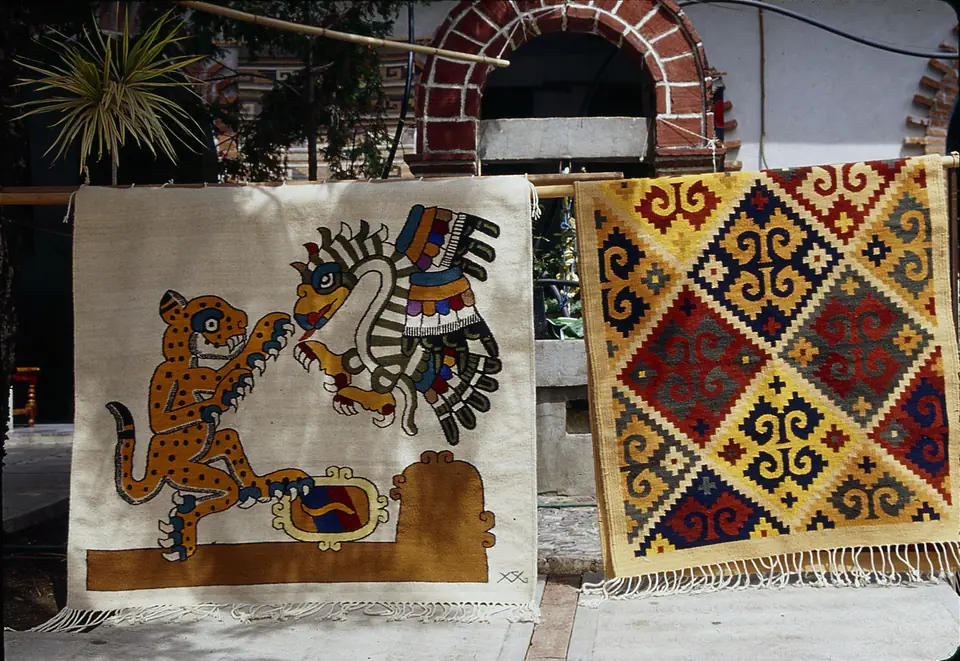
Oaxaca Mezcal Palenques, Teotitlán Weavers & Artisan Villages Guide
Complete 2026 guide to Oaxaca's mezcal and craft villages: ancestral clay-pot palenques in Santa Catarina Minas vs Santiago Matatlán, cochineal wool dyeing in Teotitlán del Valle, black clay in Coyotepec, and alebrijes.
In Oaxaca, artisan crafts and mezcal are not factory commodities, they are village-specific Zapotec traditions passed down inside family compounds for fifteen generations. Because each village in the Central Valleys specialises in a single material, natural-dyed sheep's wool in Teotitlán del Valle. Metallic black clay in San Bartolo Coyotepec, carved copal-wood alebrijes in San Martín Tilcajete. Clay-pot ancestral mezcal in Santa Catarina Minas, knowing how to distinguish authentic family workshops from highway commission traps transforms your trip. Pair this craft and mezcal guide with our Tlacolula Valley day trip and Oaxaca travel guide.
| Artisan / Mezcal Village | Valley & Distance | Signature Craft / Spirit | How to Reach It |
|---|---|---|---|
| 1. Santa Catarina Minas.. | Southern Valley (38 km south via Ocotlán). | Ancestral Mezcal (Mezcal de Olla de Barro) distilled in clay pots & mashed by hand with wooden mallets. | Colectivo to Ocotlán + mototaxi, or small-group mezcal specialist tour. |
| 2. Santiago Matatlán.. | Eastern Tlacolula Valley (48 km east past Mitla). | Artisanal Mezcal crushed with horse-drawn stone tahona wheels & copper alembic stills. | FyPSA bus or colectivo along Highway 190 east. |
| 3. Teotitlán del Valle.. | Eastern Tlacolula Valley (28 km east). | Zapotec pedal-loom wool rugs dyed with crushed cochineal insects, indigo, and pomegranate. | Colectivo to Teotitlán turning on Hwy 190 + 5-min blue mototaxi into village. |
| 4. San Bartolo Coyotepec & San Martín Tilcajete.. | Southern Valley (12 km & 25 km south on Hwy 175). | Unvarnished metallic Barro Negro (Black Clay) pottery & hand-carved copal wood Alebrijes. | Halcón bus or colectivo south from Central de Abastos along Hwy 175. |
Understanding Oaxaca Mezcal: Artisanal vs. Ancestral & Agave Varieties
Over 85% of Mexico's certified mezcal is distilled in the state of Oaxaca, yet not all mezcal is made the same way. Under official Mexican regulation (NOM-070), traditional Oaxacan mezcal falls into two noble categories that you can see first-hand at a village distillery (known in Oaxaca as a palenque):
- Mezcal Artesanal (predominant in Santiago Matatlán & Tlacolula). Mature agave hearts (piñas) are roasted for 3 to 5 days in a conical underground pit lined with volcanic river stones heated over oak and mesquite wood. The caramelised smoky hearts are crushed by a heavy limestone wheel (tahona) pulled by a horse or mule. Fermented natively with wild airborne yeasts in open pine or Montezuma cypress vats (tinas), and double-distilled in copper alembic stills.
- Mezcal Ancestral (famous in Santa Catarina Minas & Sola de Vega). The oldest, purest method. Roasted agaves are pounded entirely by hand using heavy wooden mallets (mazos) inside a hollowed stone or tree canoe. Fermented in wood, stone pits, or raw cowhides, and distilled exclusively inside stacked clay pots (ollas de barro) fitted with wooden spoons and reed condensing tubes. Because clay is porous and retains heat differently than copper, mezcal en barro from Santa Catarina Minas (visit legendary family palenques such as Real Minero by appointment, Lalocura, or Mezcaloteca partner maestros) has a round, velvety, mineral complexity unlike any spirit on earth.
At a palenque or a downtown tasting room (such as Mezcaloteca, In Situ Mezcalería, or Sabina Sabe), compare cultivated Espadín (maturing in 7 to 9 years) against wild mountain agaves that take 12 to 25 years to flower. Floral miniature Tobalá, herbal stalk-like Cuishe / Madrecuishe, earthy giant Arroqueño, and green peppery Tepeztate (which clings to sheer limestone cliffs for up to 25 years). Remember the local Zapotec rule: never shoot mezcal like cheap tequila, sip it slowly ("kiss the mezcal", a besitos) from a shallow clay copita or gourd jícara without lime.
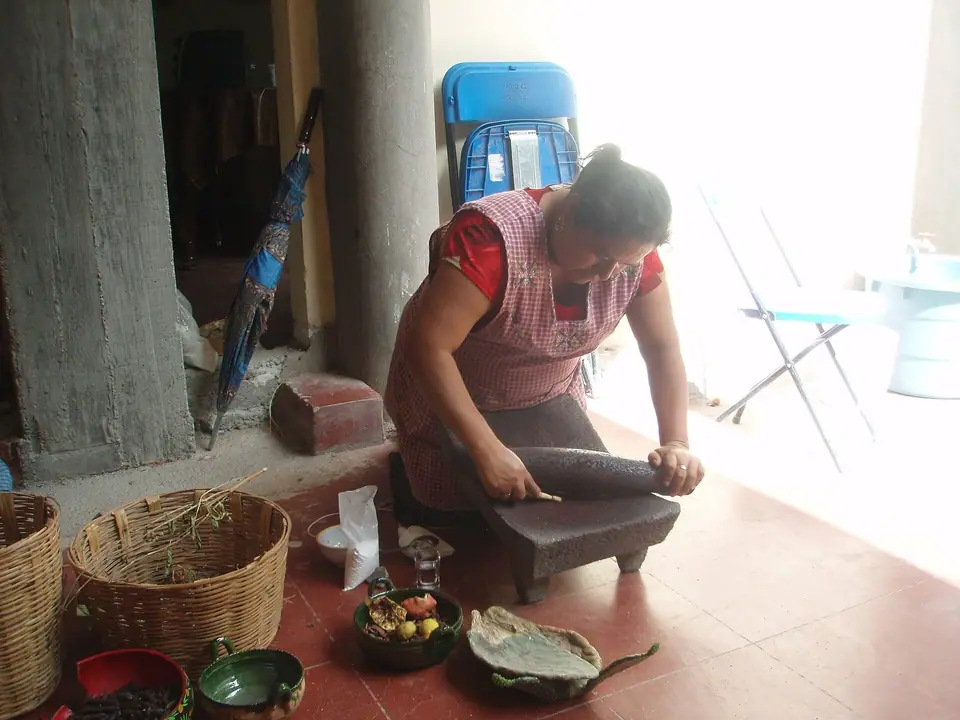
Teotitlán del Valle: Cochineal Insects and Pedal-Loom Masterpieces
Tucked at the foot of sacred Picacho mountain 28 kilometres east of Oaxaca City, Teotitlán del Valle was the very first city founded by the Zapotecs around 1400 BCE. In the 1530s, Dominican friars introduced upright European wooden foot-pedal looms and merino sheep's wool to local weavers who had woven cotton on backstrap looms for millennia. Walk past the village market and Museo Comunitario to visit family courtyard workshops (such as Tierra Antigua and Bii Dauu), where weavers demonstrate natural dyes:
- Grana Cochinilla (Cochineal). Weavers scrape white,cottony scale insects (Dactylopius coccus) off paddle cacti, dry them in the sun. Grind them on a stone metate into a deep carmine powder, the same crimson dye that was New Spain's second most valuable export to Europe after silver. By adding acidic key lime juice to the dye bath, the crimson shifts instantly to fiery orange-scarlet. By adding alkaline limestone water (cal), it shifts to deep royal purple.
- Añil (Wild Indigo), Pomegranate & Moss. Combined with fermented wild indigo cakes from the Isthmus of Tehuantepec, tree moss (cucharek) for yellow. Walnut husks for brown, a true naturally dyed Teotitlán rug will never fade in direct sunlight over fifty years (avoid cheap roadside stalls selling synthetic aniline-dyed acrylic rugs that bleed in water).
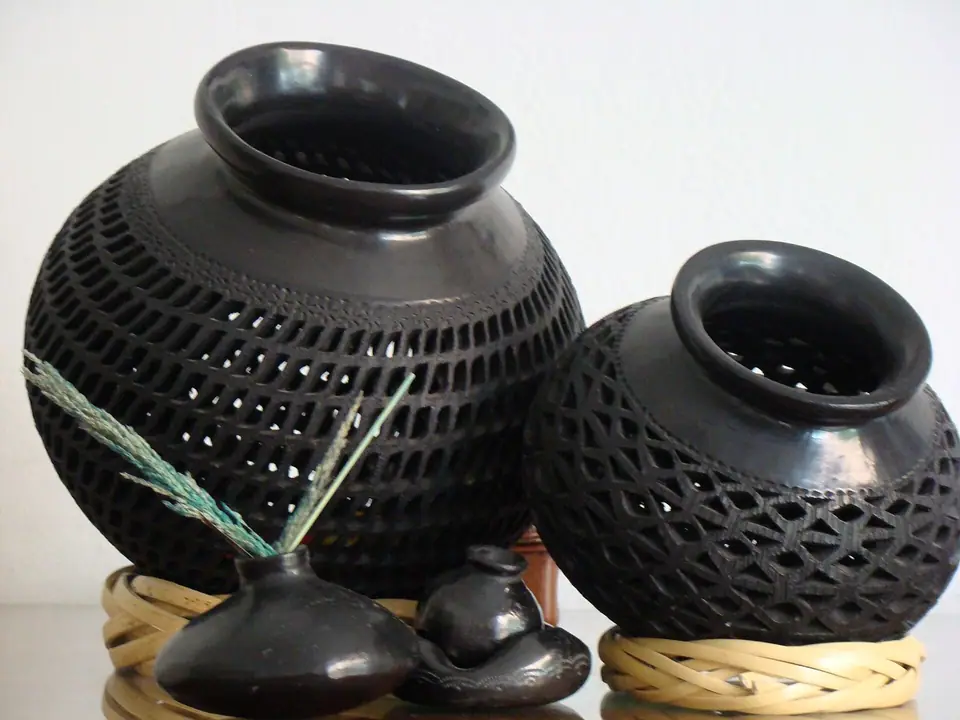
San Bartolo Coyotepec (Barro Negro) & San Martín Tilcajete (Alebrijes)
A 25-to-40-minute drive south of Oaxaca down Highway 175 combines two world-famous craft villages in a single morning:
- San Bartolo Coyotepec (Black Clay / Barro Negro). For two thousand years, Zapotec potters shaped grey clay jugs (cántaros) on hand-spun clay saucers (moldes). In the 1950s, Doña Rosa Real de Nieto discovered that burnishing unfired clay with quartz before oxygen-starved pit firing turns it a lustrous jet-black. Visit the Mercado Artesanal, historic Alfarería Doña Rosa, and MEAPO (Museo Estatal de Arte Popular de Oaxaca) on the square (20 MXN entry).
- San Martín Tilcajete & San Antonio Arrazola (Wooden Alebrijes). Twelve kilometres further south in San Martín Tilcajete (home to renowned studios like Jacobo &, María Ángeles together with dozens of smaller family courtyards), artisans harvest soft green branches of the sacred copal tree. Carve them with machetes and pocketknives into jaguars, armadillos, and winged spirit guides (tonas and nahuales from the 260-day Zapotec ritual calendar). Season the wood for months so it doesn't crack, and paint every surface with thorns and single-hair brushes in hypnotic geometric Zapotec fretwork.
Where it is
- 1Oaxaca
- Xoxocotlán International Airport (OAX) · about 25 km from Oaxaca in a straight line
- Directions in Google Maps
Traveller tips
Real advice from people who have been to Oaxaca. Every tip is read by our team before it goes live.
No tips yet. Been here? Yours could be the first.
Thank you! Your tip will appear here after a quick review.
More in Oaxaca
Continue exploring Oaxaca with related neighbourhood, food, and planning guides
Sierra Norte Hiking Guide: Pueblos Mancomunados & Cuajimoloyas (2026)
Oaxaca, Mexico
What to Eat in Oaxaca: The Seven Moles, Tlayudas, Tejate & Street Food
Oaxaca, Mexico
Oaxaca: 3 Valleys, UNESCO Sights, Cash Rules & Safety (2026)
Oaxaca, Mexico
15 Best Things to Do in Oaxaca: Monte Albán, Santo Domingo & Moles
Oaxaca, Mexico
