


























Hierve el Agua, Mitla & Tule Tree Day Trip Guide (Tlacolula Valley 2026)
Complete 2026 day-trip guide to Oaxaca's Eastern Tlacolula Valley: swimming at Hierve el Agua's petrified waterfalls, Mitla's 100,000 stone mosaic grecas, the UNESCO caves of Yagul, and El Tule Tree.
Stretching seventy kilometres east of Oaxaca de Juárez along Highway 190, the Tlacolula Valley is the most rewarding single-day excursion in southern Mexico. Along this one valley corridor, you can stand beneath the widest tree trunk on earth in Santa María del Tule. Explore the UNESCO-inscribed prehistoric rock shelters and citadel of Yagul, walk inside the mortarless geometric stone mosaic palaces of Mitla. Swim in natural mineral infinity pools perched at the edge of a 200-metre cliff at Hierve el Agua. Below is how to sequence the route in 2026, either independently by public bus and shared colectivo or with a hired driver. You beat the tour buses at every stop. Pair this day-trip guide with our Teotitlán weavers and Matatlán mezcal guide and our Oaxaca 3-day itinerary.
| Tlacolula Valley Stop | Distance East of Oaxaca | 2026 Entry Fee | Recommended Time Needed |
|---|---|---|---|
| 1. Hierve el Agua (Petrified Waterfalls).. | 68 km east (via Mitla mountain road). | 70 MXN entry + 20 MXN ejido road toll (cash only). | 2 to 2.5 hours (swim + 45-min cliff loop hike). |
| 2. Mitla Archaeological Zone.. | 44 km east. | 100 MXN (INAH, open daily 08:00 to 17:00). | 60 to 75 minutes. |
| 3. Yagul Ruins & UNESCO Caves.. | 36 km east. | 75 to 80 MXN (INAH, open daily 08:00 to 17:00). | 60 minutes. |
| 4. Árbol del Tule (Santa María del Tule).. | 10 km east. | 20 MXN churchyard ticket (cash). | 30 to 40 minutes. |
The Golden Sequencing Rule: Why You Must Visit Hierve el Agua FIRST
Ninety percent of commercial tour buses departing Oaxaca City follow the geographic order from west to east. They stop at El Tule Tree at 09:00, Teotitlán at 10:00, Mitla at 11:30. A buffet lunch at 13:00, and finally arrive at Hierve el Agua between 14:00 and 16:00, when the two cliffside mineral pools are packed wall-to-wall with hundreds of bathers under the harsh afternoon sun. Instead, invert the loop. Travel straight to Hierve el Agua first thing at 07:30 so you arrive at the cliff pools by 08:45. Swim and hike the lower waterfall trail in complete peace, and then work your way leisurely westward back through Mitla, Matatlán, Yagul, and El Tule in the afternoon.
Hierve el Agua: Swimming on the Edge of a Petrified Waterfall
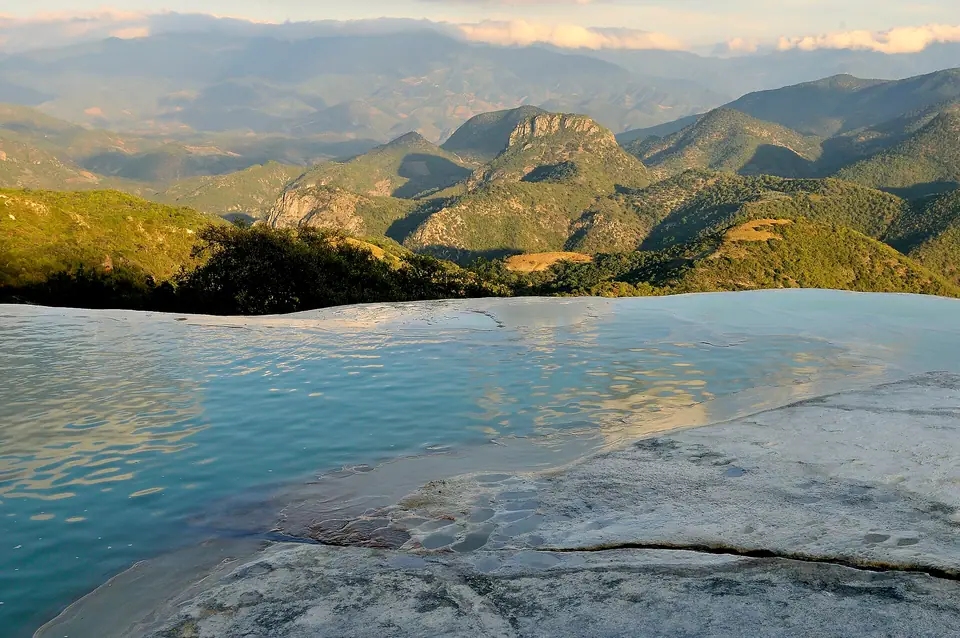
Perched high in the rugged Sierra Mixe mountains 24 kilometres beyond Mitla, Hierve el Agua ("The Water Boils") is one of only two major calcified travertine waterfall formations in the world (together with Pamukkale in Turkey). Despite its name, the water bubbling up from the limestone fractures is not volcanic or hot, it emerges at a refreshing 22°C to 25°C (72°F to 77°F), supersaturated with calcium carbonate, magnesium, and sulphur. Over thousands of years, as this mineral-rich spring water trickled over the 50-to-90-metre vertical cliff edge and evaporated in the mountain wind, it deposited colossal white stalactite curtains that look like frozen cataracts frozen mid-plunge:
- The Amphitheatre & Natural Infinity Pools (Cascada Chica). Five minutes downhill sits the upper terrace, where Zapotec engineers carved 2,500-year-old irrigation canals (apotzalli). Two natural turquoise pools sit right on the lip of the cliff overlooking the valley.
- The 45-Minute Loop Hike to Cascada Grande. Do not stay only at the swimming pools. Lace up sneakers with good grip and walk the 2-kilometre loop trail that descends through organ-pipe cactus forest to the very base of the 30-metre-tall white Cascada Grande. Before climbing back up the stone steps (bring a 1-litre water bottle and a sun hat, as the return climb is steep).
- How to Reach Hierve el Agua by Colectivo / Camioneta. Take a second-class Fletes y Pasajes (FyPSA) bus (every 20 minutes from the Estadio de Béisbol stop on Boulevard Eduardo Vasconcelos, 35 MXN, 60 minutes) or a maroon colectivo taxi to the town of Mitla. At the Mitla crossroads, transfer to an open-back pickup truck (camioneta, 75 to 100 MXN per person as of November 2026) for the 40-minute climb to Hierve el Agua. Pickups wait until 6 to 10 passengers gather, or you can share a private Mitla taxi for 400 MXN.
Mitla: 100,000 Mortarless Stone Mosaic Grecas
Returning from Hierve el Agua brings you into San Pablo Villa de Mitla, known to the Zapotecs as Lyobaa ("Place of Rest"). Mitla rose to prominence around 850 CE as the sacred seat of the Zapotec high priest. In the 16th century, Spanish friars built the crimson-domed Church of San Pablo directly atop the pre-Hispanic palace walls.
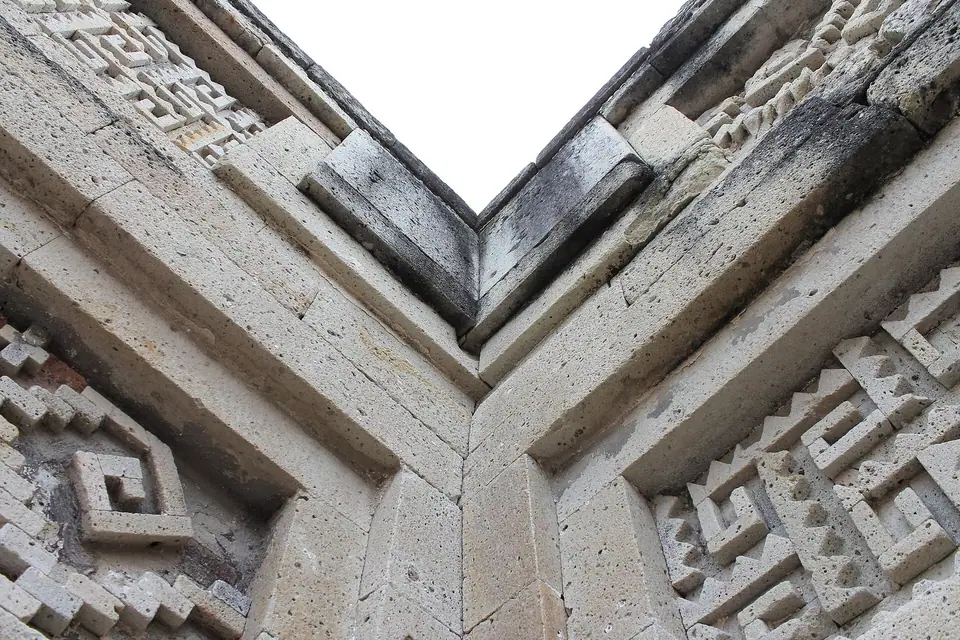
Enter the Group of the Columns (100 MXN INAH ticket as of November 2026, open 08:00 to 17:00). Pass through the six monolithic porphyry columns of the Great Hall into the inner patio. Every wall and interior chamber is covered in fourteen distinct patterns of geometric step-fret stone mosaics (grecas). Over 100,000 individual volcanic tuff stones were bevelled by hand like tapered puzzle pieces and locked into a core of stone and mud without any surface mortar. Representing the feathered serpent Quetzalcóatl, lightning bolts (Cocijo), waves, and the descent into the underworld.
Yagul UNESCO Caves and the 2,000-Year-Old Árbol del Tule
On your drive back toward Oaxaca City along Highway 190, make two final stops:
- Yagul and the Prehistoric Caves of Guilá Naquitz (UNESCO Ref, 1352). Eight kilometres west of Mitla rises the fortified hilltop citadel of Yagul (75 MXN, open 08:00 to 17:00), famous for its labyrinthine Palace of the Six Patios. The second-largest Mesoamerican ballcourt in Oaxaca, and panoramic views over the cactus-studded valley where the surrounding caves of Guilá Naquitz preserved 10,000-year-old domesticated bottle gourds. Squash seeds, and primitive maize cobs (teocintle) that earned the valley its 2010 UNESCO World Heritage inscription.
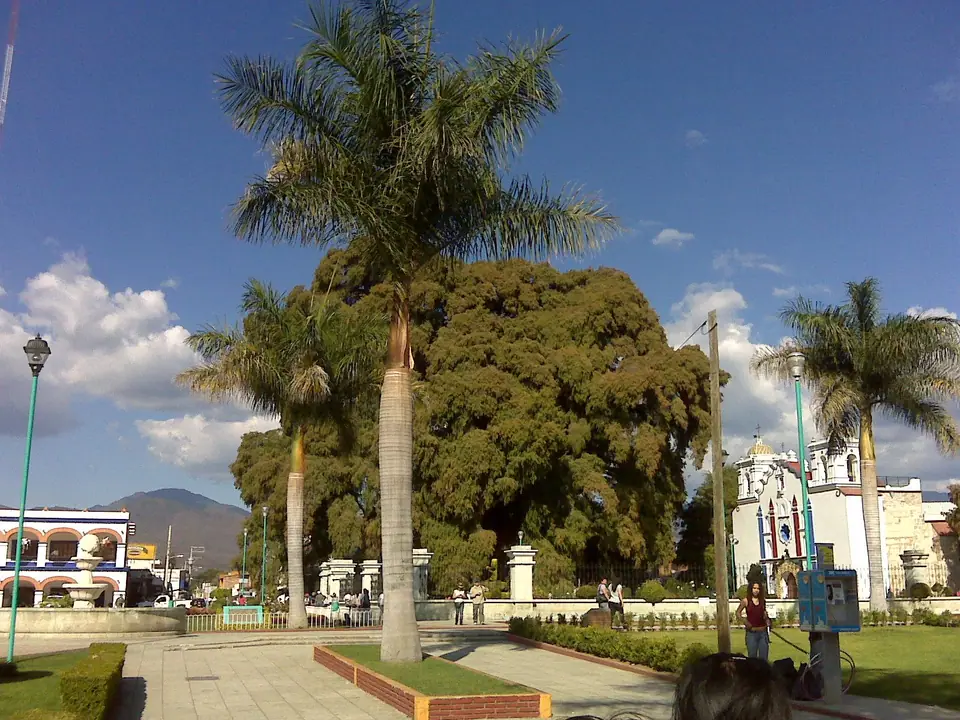
- El Árbol del Tule (Santa María del Tule). Ten kilometres east of Oaxaca City, step into the manicured churchyard of Santa María del Tule (20 MXN cash). To stand beneath the Montezuma cypress (Ahuehuete) with the stoutest single tree trunk in the world. 14.05 metres (46.1 feet) in diameter, 42 metres in circumference, and an estimated 1,400 to 2,000 years old, so massive that it takes 30 people holding hands with outstretched arms to encircle its base.
Where it is
- 1Oaxaca
- Xoxocotlán International Airport (OAX) · about 40 km from Oaxaca in a straight line
- Directions in Google Maps
Traveller tips
Real advice from people who have been to Oaxaca. Every tip is read by our team before it goes live.
No tips yet. Been here? Yours could be the first.
Thank you! Your tip will appear here after a quick review.
More in Oaxaca
Continue exploring Oaxaca with related neighbourhood, food, and planning guides
15 Best Things to Do in Oaxaca: Monte Albán, Santo Domingo & Moles
Oaxaca, Mexico
How to Get to Oaxaca: Flights (OAX), ADO Buses & New Coast Highway
Oaxaca, Mexico
Best Time to Visit Oaxaca: Day of the Dead, Guelaguetza & Seasons
Oaxaca, Mexico
What to Wear in Oaxaca: Altitude Layers, Monte Albán Sun & Cobblestones
Oaxaca, Mexico
