




















Santo Domingo Church, Ethnobotanical Garden & Calle Alcalá Guide (2026)
Complete 2026 visitor guide to Oaxaca's crown jewel: Templo de Santo Domingo de Guzmán, the Tomb 7 gold inside the Museum of Oaxacan Cultures, the Ethnobotanical Garden tour rules, and Calle Alcalá.
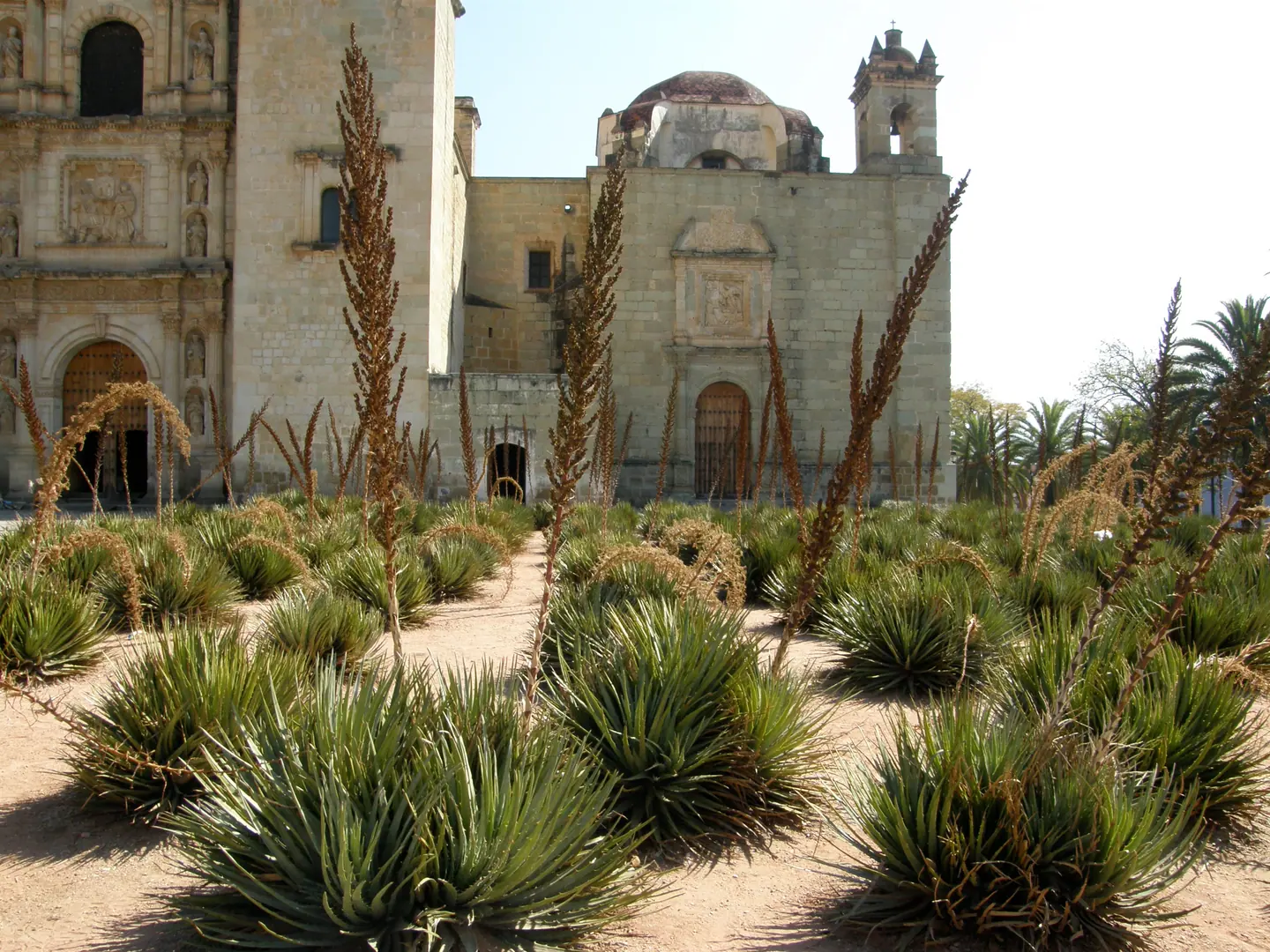
Every path in Oaxaca de Juárez eventually leads to the wide flagstone esplanade of the Ex-Convento de Santo Domingo de Guzmán. The complex spans more than four hectares at the northern head of the pedestrian Andador Turístico (Calle Macedonio Alcalá). This monumental complex was constructed by the Dominican Order together with Indigenous Zapotec and Mixtec stonemasons between 1572 and 1666. Because Oaxaca sits in an active seismic zone, Dominican architects built the green cantera stone walls two metres thick with low twin bell towers. After serving as a cavalry barracks in the 19th century, the complex was restored between 1994 and 1998. Today, Santo Domingo houses three distinct experiences side by side. The Baroque Church, the Museum of Oaxacan Cultures, and the Ethnobotanical Garden. Pair this guide with our Monte Albán guide and our historic barrios walk.
| Part of the Complex | 2026 Admission Fee | Opening Hours & Closed Days | Crucial Visitor Rule |
|---|---|---|---|
| 1. Templo de Santo Domingo (Church).. | Free (0 MXN).. | Daily 07:00 to 13:00 & 16:00 to 20:00. | No tourist walking down the aisles during active Catholic Mass or Friday/Saturday weddings. |
| 2. Museo de las Culturas de Oaxaca.. | 100 MXN (INAH).. | Tuesday to Sunday 10:00 to 18:00 (Closed Mondays). | Houses the original Mixtec Gold Treasure of Monte Albán's Tomb 7 in the upper gallery. |
| 3. Jardín Etnobotánico de Oaxaca.. | 100 MXN cash (English) / 50 MXN (Spanish).. | English Tours: Tue, Thu & Sat at 11:00 only (Closed Sundays). | Strictly guided tours only; no online booking, queue at the side gate by 10:15 to 10:20. |
Inside Templo de Santo Domingo: 60,000 Sheets of Gold Leaf
Before stepping through the arched wooden portal of the church, pause in the open stone atrium (atrio) to admire the central retablo facade. Carved in high relief into the green volcanic stone is Saint Dominic of Guzmán joined by Saint Hippolytus holding up a church model beneath the Hapsburg double-headed eagle of the Spanish Crown. When you step through the low entrance doors beneath the choir loft (sotocoro), look straight up before walking into the nave:
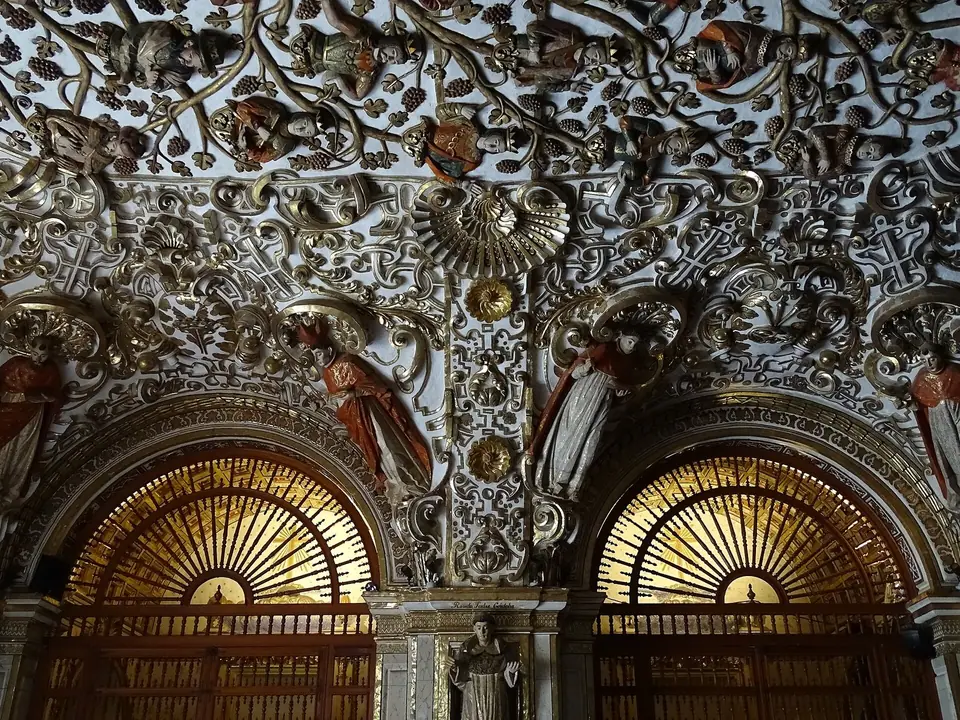
- The Genealogical Tree of Saint Dominic (El Árbol Genealógico). Spreading across the entire low vaulted ceiling beneath the choir is a striking three-dimensional polychrome stucco relief sculpted in the early 1600s by Puebla and Oaxacan master plasterers. Growing out of the reclining torso of Félix de Guzmán (founder of the noble Guzmán lineage), grape-laden golden vines curl around 34 painted busts of Dominican saints, kings, and scholars, crowned by the Virgin of the Rosary. Intriguingly, pre-Columbian historians note that placing a cosmic Tree of Life directly over a subterranean threshold mirrors Mixtec creation myths from the codices.
- The Barrel Vault and the Chapel of the Rosary (Capilla del Rosario). Walking forward into the 65-metre nave reveals walls and barrel vaults covered in more than 60,000 sheets of 23.5-karat gold leaf framing 36 oil paintings of scenes from the Old and New Testaments. On the right (south) side of the nave, step into the 1724 to 1731 octagonal Capilla del Rosario, a church within a church where every square centimetre of the cupola glitters with gilded cherubs and Marian symbols.
How to Visit the Jardín Etnobotánico de Oaxaca (2026 Tour Rules)
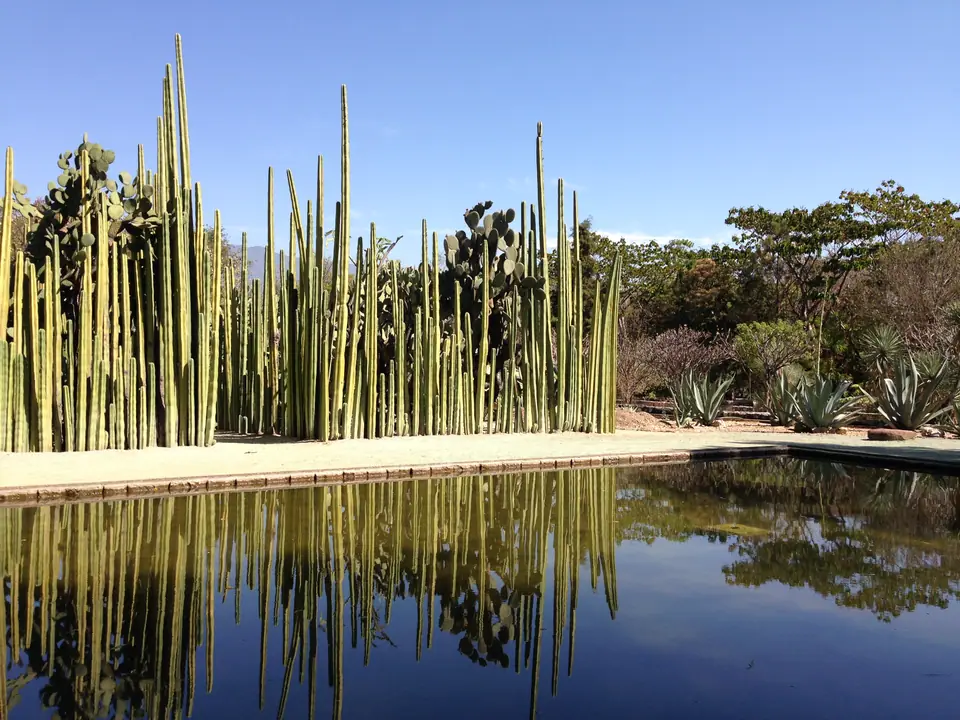
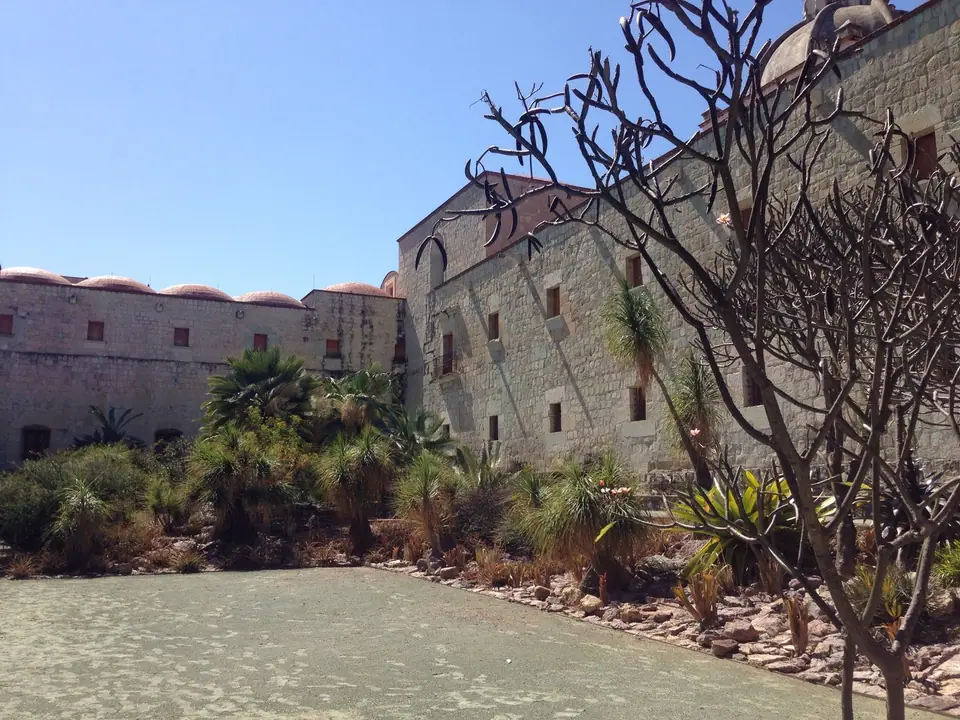
Immediately behind the eastern walls of the monastery stretches the 2.3-hectare Jardín Etnobotánico de Oaxaca. When the Mexican Army vacated the monastery barracks in 1993, state authorities initially proposed paving the military parade ground into a luxury hotel and convention parking lot. Master painter Francisco Toledo and PRO-OAX led a successful campaign to turn the enclosure into a living museum. The garden celebrates the bond between Oaxaca's Indigenous peoples and the native flora of Mexico's most biodiverse state.
Because the garden preserves fragile rare species, you cannot walk into the Ethnobotanical Garden independently at any time; entry is strictly by official guided tour only:
- 2026 Tour Schedule (as of November 2026). 2-Hour English Tours run three times a week on Tuesday, Thursday, and Saturday at 11:00 (cost: 100 MXN in cash only). 1-Hour Spanish Tours run Monday through Saturday at 10:00, 11:00, 12:00, and 17:00 (cost: 50 MXN cash). The garden is closed on Sundays.
- How to Guarantee Your Spot. There are zero online or advance tickets, and each tour is strictly capped at 25 to 30 visitors. Walk around to the garden entrance gate on Calle Reforma (at the corner of Calle Constitución). At least 40 to 45 minutes before tour time (by 10:15 for the 11:00 English tour). To stand in line, and bring a wide-brimmed sun hat and a bottle of water, as the two-hour route has very little shade.
- What You Will See Inside. Among 200-year-old organ-pipe cacti (Stenocereus marginatus), over 100 species of agaves, copal trees, and 16th-century laundry basins, you will see Francisco Toledo's Sangre de Mitla fountain, where water pulses red like cochineal dye.
Museo de las Culturas de Oaxaca & The Treasure of Tomb 7
To the right of the church facade, enter the monumental two-storey stone cloister of the Museo de las Culturas de Oaxaca (100 MXN as of November 2026, open Tuesday to Sunday 10:00 to 18:00). Even if you miss the Ethnobotanical Garden tour, climbing the grand stone staircase of the museum gives you unobstructed elevated window views looking straight down over the entire cactus garden and the Dominican domes. Inside the fourteen chronological halls, head straight to the Sala III / Tomb 7 Treasury (Tesoro de la Tumba 7). To see the original Mixtec gold breastplate of the Lord of the Dead (Mictlantecuhtli) wearing a jawless golden mask. Intricate filigree rings displaying descending eagles, a human skull encrusted in sky-blue turquoise mosaic, and the solid rock-crystal goblet carved using harder mineral abrasives over generations of pre-Hispanic labour. Also step into the historic Fray Francisco de Burgoa Library inside the building, which displays over 23,000 rare 15th- to 19th-century leather-bound incunabula and Zapotec catechisms.
Walking the Pedestrian Spine: Calle Macedonio Alcalá (Andador Turístico)
From the front plaza of Santo Domingo, walk south down the nine pedestrianised green-stone blocks of Calle Macedonio Alcalá toward the Zócalo. Along the way, step inside these four free or low-cost cultural stops:
- Instituto de Artes Gráficas de Oaxaca (IAGO, Alcalá 507). Directly opposite Santo Domingo inside Francisco Toledo's former family house, this beloved printmaking library and courtyard café is completely free to enter and displays rotating exhibitions of graphic art.
- Museo de Arte Prehispánico de México Rufino Tamayo (Alcalá 503, one block west on Morelos). Founded by Oaxacan modernist painter Rufino Tamayo to display his personal collection of 1,000 pre-Columbian sculptures arranged in jewel-toned rooms by aesthetic power rather than dry academic labels.
- Centro Fotográfico Manuel Álvarez Bravo (CFMAB, Calle Manuel Bravo 116). Another free courtyard cultural centre founded by Toledo, showcasing contemporary Mexican documentary photography together with a listening library for the blind.
- Teatro Macedonio Alcalá & the Cathedral. Finish at the 1909 French Belle Époque corner facade of the Teatro Macedonio Alcalá just before emerging onto the Zócalo beside the green-stone Cathedral of Our Lady of the Assumption.
If you have a spare afternoon in Centro Histórico between valley excursions, step into the quiet. Shaded courtyards of the Museo de los Pintores Oaxaqueños (MUPO) beside the Alameda de León and the Graphic Arts Institute (IAGO) opposite Santo Domingo.
Where it is
- 1Santo Domingo Church, Ethnobotanical Garden & Calle Alcalá Guide (2026)
- Xoxocotlán International Airport (OAX) · about 7 km from here in a straight line
- Directions in Google Maps
Traveller tips
Real advice from people who have been to Oaxaca. Every tip is read by our team before it goes live.
No tips yet. Been here? Yours could be the first.
Thank you! Your tip will appear here after a quick review.
More in Oaxaca
Continue exploring Oaxaca with related neighbourhood, food, and planning guides
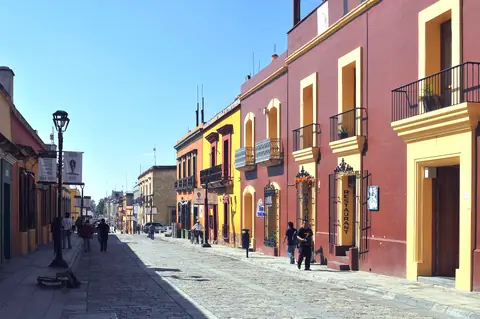
What to Wear in Oaxaca: Altitude Layers, Monte Albán Sun & Cobblestones
Oaxaca, Mexico
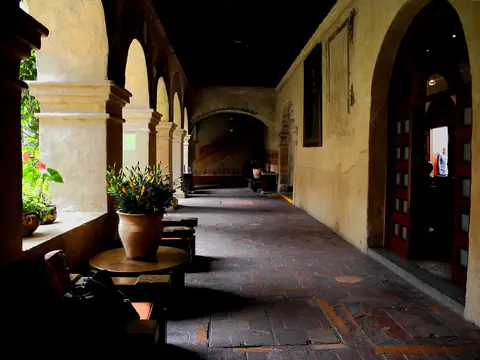
Where to Stay in Oaxaca: Santo Domingo, Jalatlaco & Xochimilco Guide
Oaxaca, Mexico
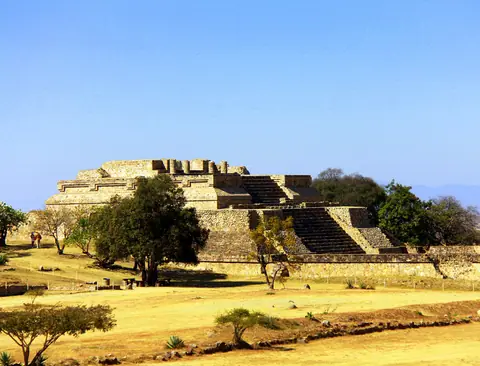
Oaxaca 3-Day Itinerary: Monte Albán, Santo Domingo, Hierve el Agua & Markets
Oaxaca, Mexico
Monte Albán Guide 2026: Shuttle Bus, Zapotec Pyramids, Los Danzantes & Tips
Oaxaca, Mexico
