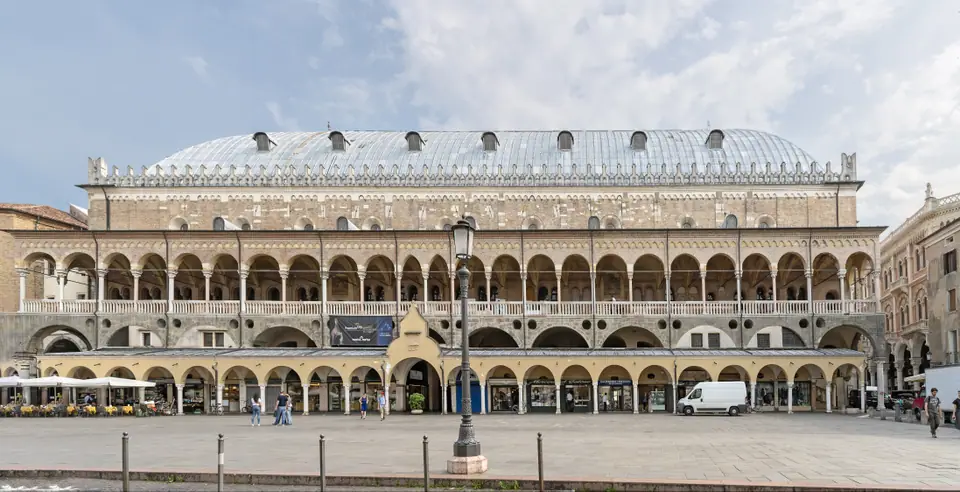
Photo: Didier Descouens · CC BY-SA 4.0
Palazzo della Ragione: Il Salone Frescoes and Sotto il Salone
Architectural history, astrological frescoes, Wooden Horse, Debtor's Shame Stone and Europe's oldest covered food market below Il Salone.
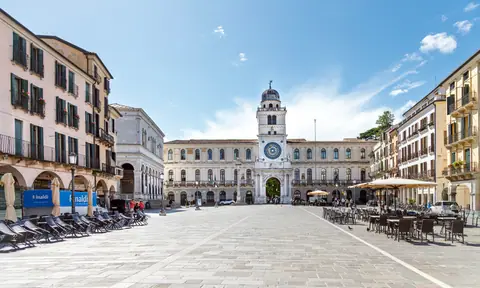
Anchoring the exact midpoint of Centro Storico between Padua's twin morning produce squares rises Palazzo della Ragione. Townsfolk call its vast upstairs hall simply Il Salone, framed externally by two stacked tiers of stone loggias and a towering lead-clad vault. Inscribed under the 2021 Padova Urbs Picta UNESCO designation (Reference 1623), the landmark joins theatrical medieval court rituals upstairs with Europe's oldest continuously operating indoor market downstairs. Broad external stone stairs climb up from the market corners onto airy covered balconies before entering the hall.
Fra' Giovanni's Roof Above Medieval Law Courts
Communal leaders erected Padua's original seat of law courts between 1172 and 1219, honouring a traditional 1218 civic charter. Builders originally divided legal chambers into three separate rooms under distinct pitched roofs. Between 1306 and 1309, Augustinian friar-architect Fra Giovanni degli Eremitani knocked away internal partition walls. He widened perimeter walkways and hoisted an extraordinary timber roof curved like an inverted ship's hull (carena di nave rovesciata).
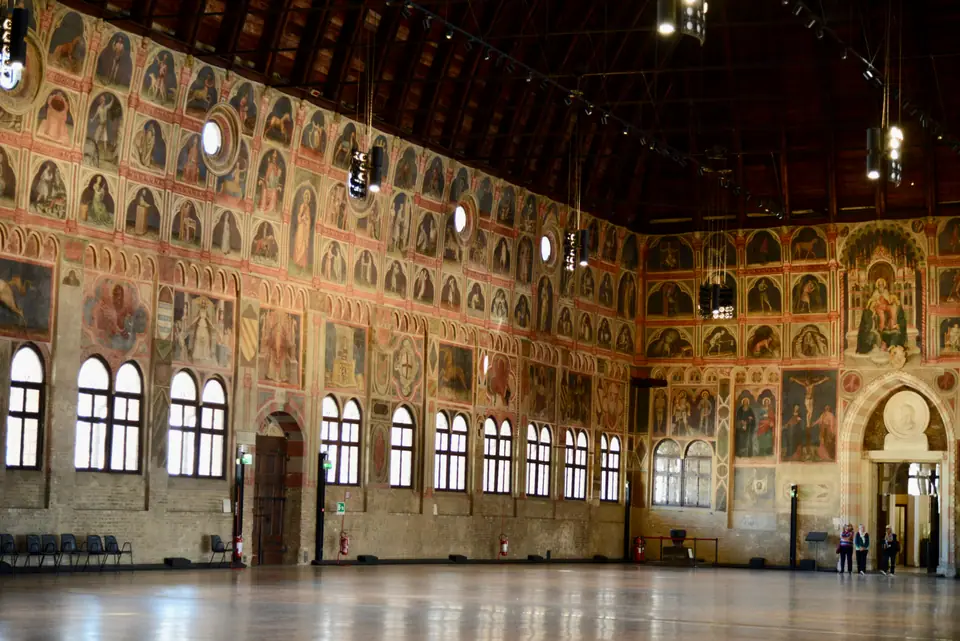
Fire gutted the chambers on 2 February 1420 before Venetian architects unified everything inside one single-span courtroom. Inside, the open hall measures 81.5 metres long (often rounded to 82 metres), 27 metres wide and 24 metres tall. Outside, its steep lead-sheathed roof ridge rises nearly 40 metres above city paving stones. Fierce summer storms tested that ceiling violently on 17 August 1756, when a freak tornado ripped away lead plates across the upper vault. Engineer Bartolomeo Ferracina repaired the soaring ribbed timber ceiling cleanly afterward, keeping Il Salone among Europe's largest column-free medieval upper halls. Natural daylight slants down across gleaming marble flagstones like an upturned wooden ship hovering over fruit baskets.
333 Astrological Panels by Miretto and Ferrara
Before flames swept the building in 1420, Giotto and his circle had already painted its walls, leaving rare fourteenth-century fragments visible low beside side windows. Between 1425 and 1440, painters Nicolò Miretto and Stefano da Ferrara executed an immense replacement panorama covering over two thousand square metres across 333 painted panels. Guided by Paduan astronomer-physician Pietro d'Abano, three stacked horizontal registers link each month to zodiac signs, seasonal farm work, civic trades, planets and human temperaments. Walking patiently along the upper walls reveals lively medieval crafts, seasonal harvests and quiet allegories panel by panel across open light.
The 1466 Wooden Horse and Debtor's Shame Stone
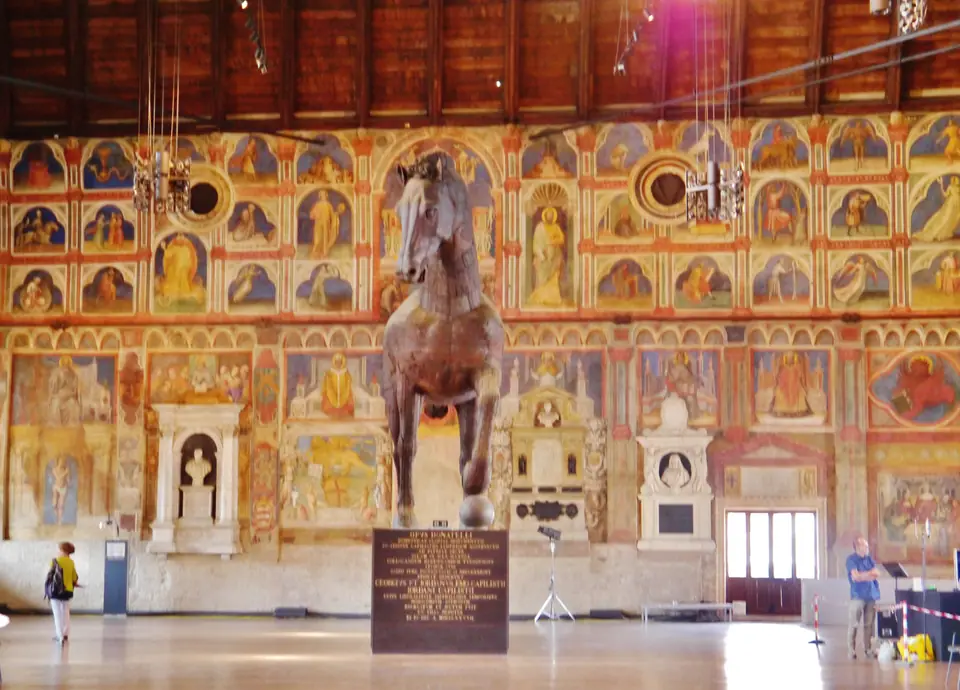
Two unforgettable secular objects sit directly across the gleaming pavement, bringing medieval urban rituals sharply to life beyond dry legal parchments. Near the western entrance stands a colossal wooden horse sculpted in 1466 for a tournament pageant and later gifted by the Capodilista family. Its steady striding silhouette intentionally echoes Donatello's monumental equestrian Gattamelata outside Il Santo.
Walk toward the quiet northeastern corner to inspect a polished dark stone block called the Pietra del Vituperio ("Stone of Shame"). Insolvent medieval debtors stripped down to plain undergarments and sat upon this cold slab three times declaring public bankruptcy prior to exile. That public disgrace sparked the lasting Italian idiom restare in braghe di tela, meaning to end up ruined in plain linen shorts.
Brass Meridian Floor Ray and City Lengths
Scan the central stone floor and low masonry walls carefully for practical civic tools built directly into courtroom stone. Standing near the centre at solar noon rewards observers watching sunlight drop cleanly across engraved marble markings. Several distinct architectural details tie Il Salone directly back to Padua's everyday commercial life:
- 1761 Brass Meridian Line: Following his 1756 repairs, Bartolomeo Ferracina cut a slim brass meridian strip across central flagstones catching a sharp noon sunbeam through the roof.
- Pietre delle Misure Padovane: Iron gauges and carved stone slots preserve standardized medieval lengths for Paduan bricks, roof tiles and woollen cloth bolts.
- Peronio Civic Marker: Matching public stone measurement emblems wait outside on Piazza della Frutta to ensure honest market weights.
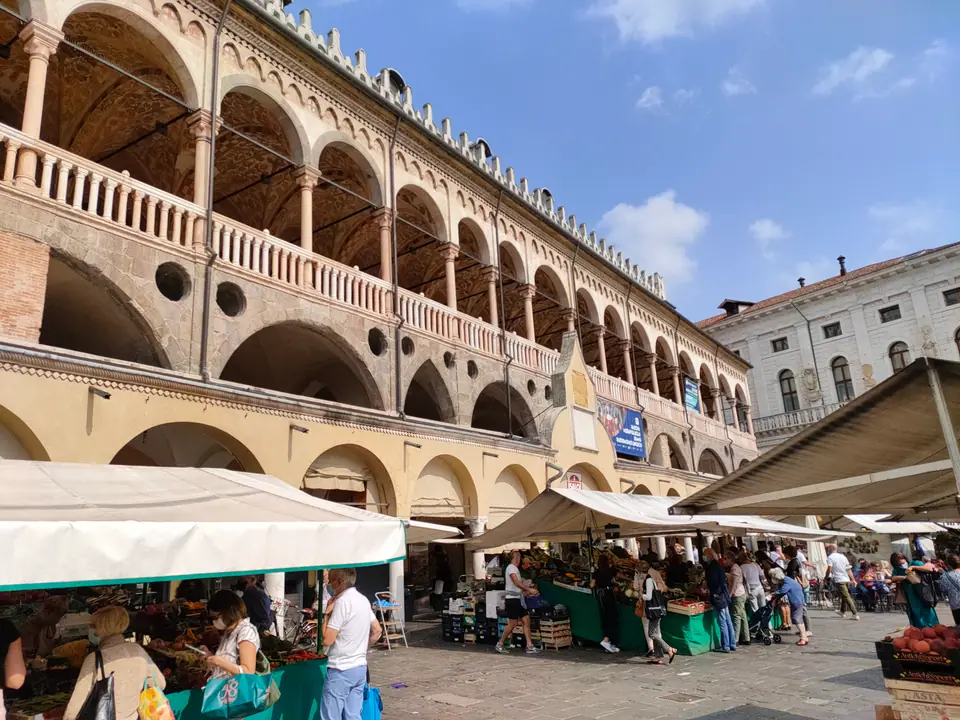
- Sotto il Salone Market Galleries: Ground-floor parallel stone corridors shelter cured meats, aged cheeses, fresh bread and wine counters trading continuously for over 800 years.
- External Covered Loggias: Broad perimeter arches shelter window shoppers from harsh midday glare or spring downpours.
Monday Closures and Twin Market Squares Below
Visit Tuesday through Sunday because Palazzo della Ragione closes every working Monday across the year. Entry pairs smoothly with 48-hour or 72-hour Padova Urbs Picta Cards, covering access upstairs directly beside Sotto il Salone market galleries. Check the official site ahead of arrival for current opening hours and standalone ticket prices. Downstairs, browsing ground-floor Sotto il Salone counters pairs naturally with picking up crusty loaves, aged mountain cheeses and crisp orchard fruit for shaded canal picnics.
Take time outside under the long stone arches after finishing inside the upper courtroom. Morning traders pack south-facing Piazza delle Erbe and north-facing Piazza della Frutta from Monday through Saturday. Around midday, stallholders sweep cobbles and fold canvas umbrellas cleanly for outdoor aperitivo tables across busy local calendars.
Where it is
- 1Palazzo della Ragione
- Treviso Airport (TSF) · about 37 km from here in a straight line
- Directions in Google Maps
Stations and taxi ranks: OpenStreetMap. Airports: OurAirports. Distances are in a straight line.
Traveller tips
Real advice from people who have been to Padua. Every tip is read by our team before it goes live.
No tips yet. Been here? Yours could be the first.
Thank you! Your tip will appear here after a quick review.
More in Padua
Continue exploring Padua with related neighbourhood, food, and planning guides