Photo: Threecharlie · CC BY-SA 4.0
Prato della Valle and Orto Botanico: Statues and Living Plants
Draining the Prato della Valle marsh, reading its 78 statues and touring Padua's 1545 UNESCO Orto Botanico and 2014 glasshouses.
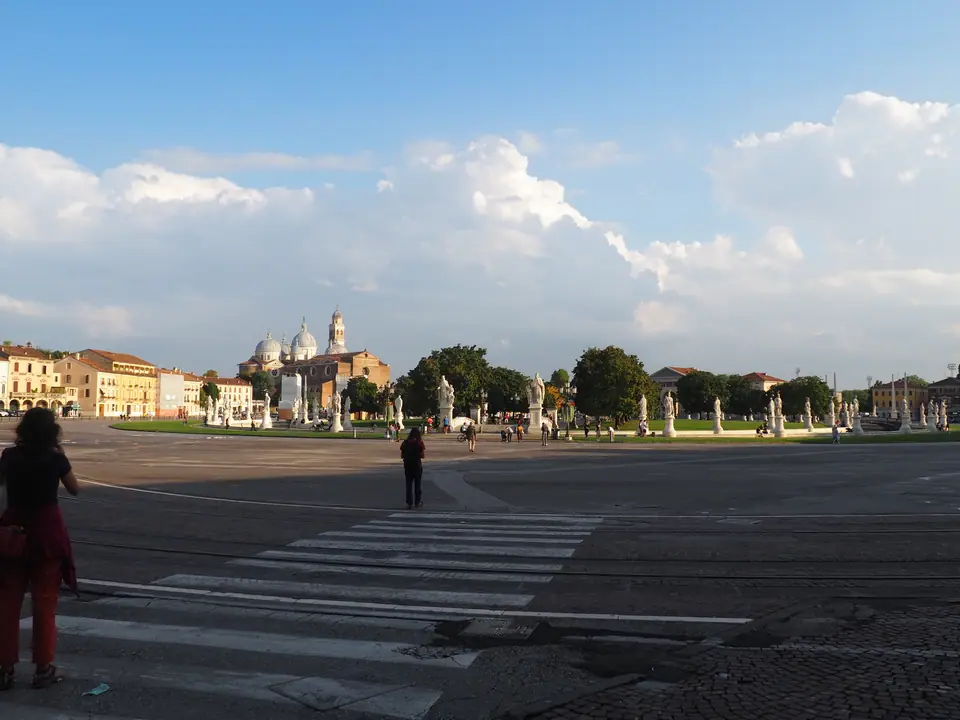
Just south of the Basilica of Saint Anthony, tight medieval stone alleys break open abruptly into fresh sunlight and manicured green turf. Separated by barely five minutes of quiet walking stand monumental Prato della Valle and the historic Orto Botanico di Padova. Together they trade dim church frescoes for water reflections, stone statues and five centuries of botanical science. Frequent SIR1 trams stop directly outside at Prato della Valle and Santo, connecting both sites back toward the station.
Draining the Roman Zairo Marsh Under Andrea Memmo
Measuring roughly 88,620 square metres (widely rounded to 90,000 square metres, or nine hectares), Prato della Valle ranks as Italy's second-largest monumental square and among the largest public squares in Europe. Buried peacefully beneath its crisp gravel paths lie stone foundations of the Roman theatre known as Zairo. For centuries afterward, stubborn seasonal flooding left the low hollow a soggy grazing pasture and fairground called Valle del Mercato before municipal purchase in 1767.
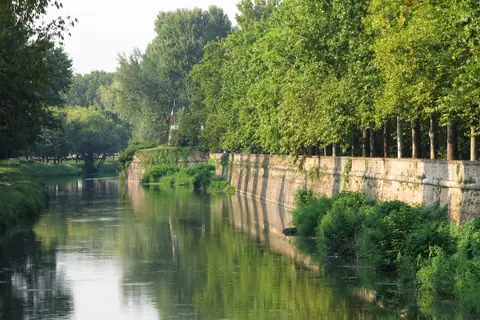
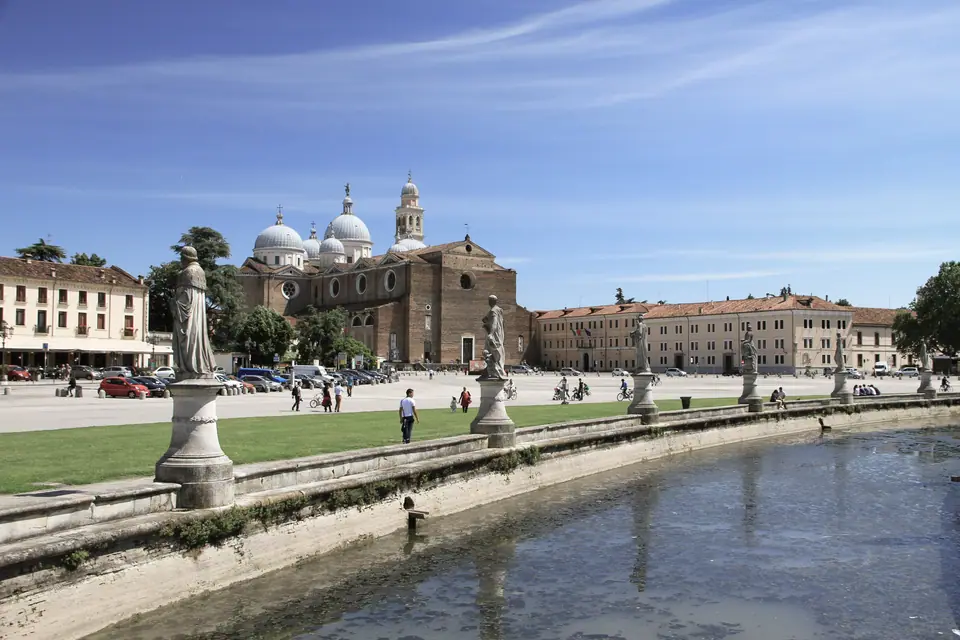
Civic transformation launched in 1775 under Venetian magistrate Andrea Memmo working closely with architect Domenico Cerato and excavator Simone Stratico. Francesco Piranesi famously engraved their elegant plan in 1785. Memmo collected stagnant groundwater cleanly inside an elliptical canal loop, raising dry central turf below the multi-domed brick facade of Basilica di Santa Giustina.
Costozza Statues Framing Isola Memmia's Canal
Four balanced stone footbridges cross that water ring onto shaded green lawns named Isola Memmia, where students picnic and pause between lectures. Wide stone ledges along the inner bank turn effortlessly into sunny outdoor benches when classes let out across town. Along both canal banks stand concentric rows of carved statues fashioned from pale Costozza limestone between 1775 and 1883. Sculptors completed 78 figures out of 88 planned, placing 40 along the outer curb and 38 facing the inner moat while leaving ten pedestals capped with stone obelisks or blank.
Strolling slowly around the calm water ring reveals famous Paduan luminaries carved into pale local stone. Familiar figures include Roman historian Livy, legendary founder Antenor, Galileo Galilei, Petrarch, Torquato Tasso, Andrea Mantegna and Andrea Memmo himself, preserved cleanly after careful 1990s restoration.
Saturday Stalls and Antiques on the Oval Ring
Rather than sleeping like a sterile monumental park, the elliptical outer pavement shifts character continuously across local calendars. Every Saturday morning sees over 160 open-air stalls ringing the outer curb with produce, fabrics and household wares. Every third Sunday fills the entire promenade with dealers during the monthly Mercato dell'Antiquariato antiques fair. Spring brings Padova Marathon finishers sprinting across the paving in April, while mid-August and New Year evenings gather whole neighbourhoods onto the lawns.
A 1545 Venetian Senate Garden of Simples
Five minutes northeast behind quiet ochre brick walls hides Padua's earlier UNESCO World Heritage site (Reference 824, inscribed in 1997). In June 1545 the Venetian Senate established Orto Botanico di Padova as an academic Hortus Simplicium ("Garden of Simples"). Medical faculty used living plots to train students on true healing herbs rather than risking dangerous street substitutes. Recognised as the world's oldest academic botanical garden still occupying its original ground, it predates Pisa's 1591 move to its current site.
Quadripartite Geometry Inside the Circular Wall
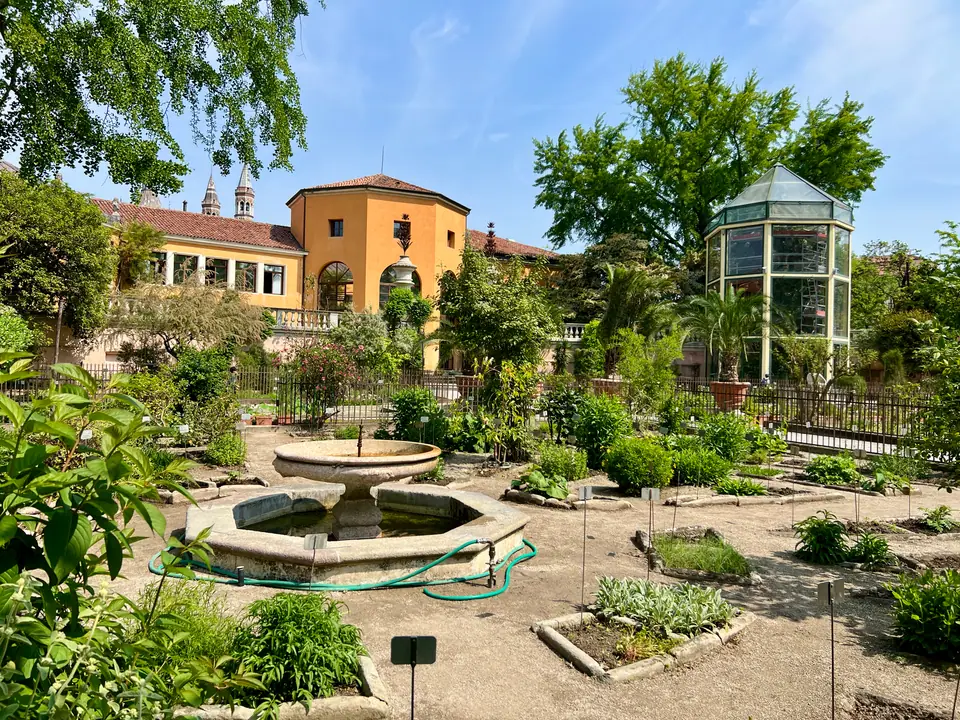
Stepping through the historic iron gate reveals crisp Renaissance order designed by humanist Daniele Barbaro and architect Andrea Moroni. An unbroken circular brick wall 84 metres across, known as the Hortus Cinctus, rises inside a water canal. Inside sits a square divided cleanly into four symmetrical raised beds and cool gravel walkways around a stone basin. Across its 2.2-hectare historic heart, roughly 3,500 plant species and around 6,000 specimens grow outdoors and under glass. An 11.4-hectare UNESCO buffer zone protects the expanded grounds, now measuring roughly 3.5 hectares.
Goethe's 1585 Dwarf Palm and Historic Specimens
Walk directly toward the octagonal glass shelter guarding the garden's oldest living celebrity: Goethe's Palm (Chamaerops humilis), planted back in 1585. German writer Johann Wolfgang von Goethe studied its multi-stem trunks on 27 September 1786 while developing ideas for The Metamorphosis of Plants. Outdoor beds nearby label delicate alpine blooms, toxic nightshades and aromatic spices brought back aboard sixteenth-century Venetian ships. Shaded benches tucked beside old stone fountains give quiet spots to rest between garden quadrants.
Biodiversity Glasshouses and the 2023 Botanical Museum
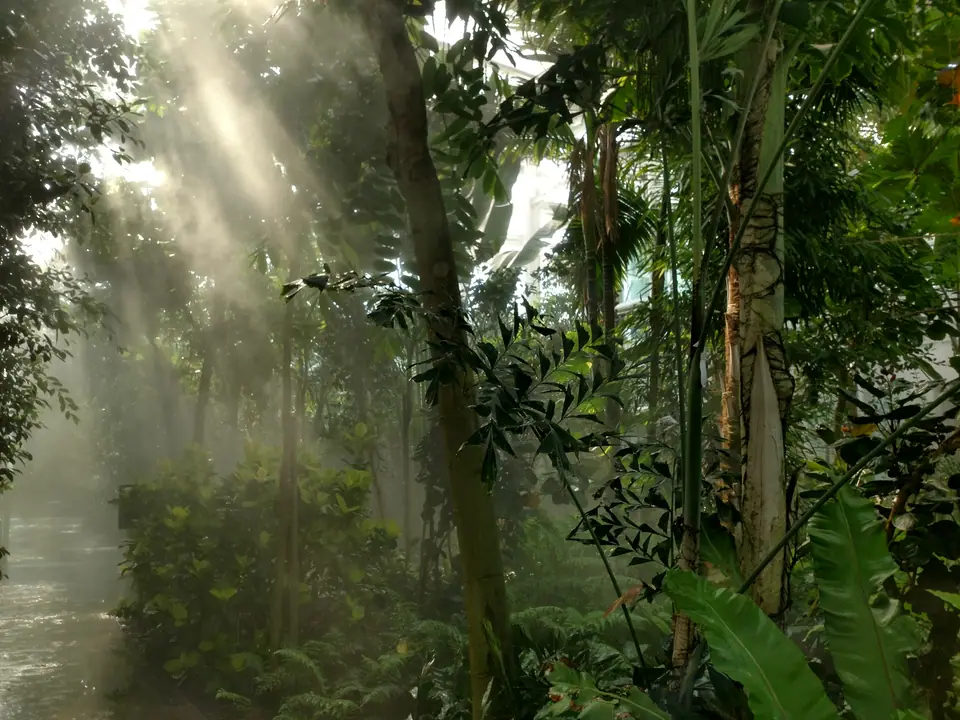
Step beyond the old circular wall to explore two bold modern additions raised by the University of Padua. Sun-warmed herbs inside the ancient stone ring contrast vividly with steamy glass canopies directly beside it. Opened in 2014, the soaring solar-heated, rainwater-recycling Biodiversity Garden (Giardino della Biodiversità) shelters over 1,300 plant species. Elevated steel paths cross five global climate biomes ranging from humid rainforest to arid scrubland, letting visitors trace rainfall shifts underfoot.
Directly beside those modern glasshouses stands the 2023 Botanical Museum exhibiting historical pressed herbaria, antique treatises and glass apothecary jars. Always check official seasonal closing hours before heading back toward downtown Padua. Warm-season hours extend from April to September and shorten from November to February, while non-holiday Mondays remain closed year-round.
Where it is
- 1Prato della Valle and Orto Botanico
- Treviso Airport (TSF) · about 37 km from here in a straight line
- Directions in Google Maps
Stations and taxi ranks: OpenStreetMap. Airports: OurAirports. Distances are in a straight line.
Traveller tips
Real advice from people who have been to Padua. Every tip is read by our team before it goes live.
No tips yet. Been here? Yours could be the first.
Thank you! Your tip will appear here after a quick review.
More in Padua
Continue exploring Padua with related neighbourhood, food, and planning guides