


























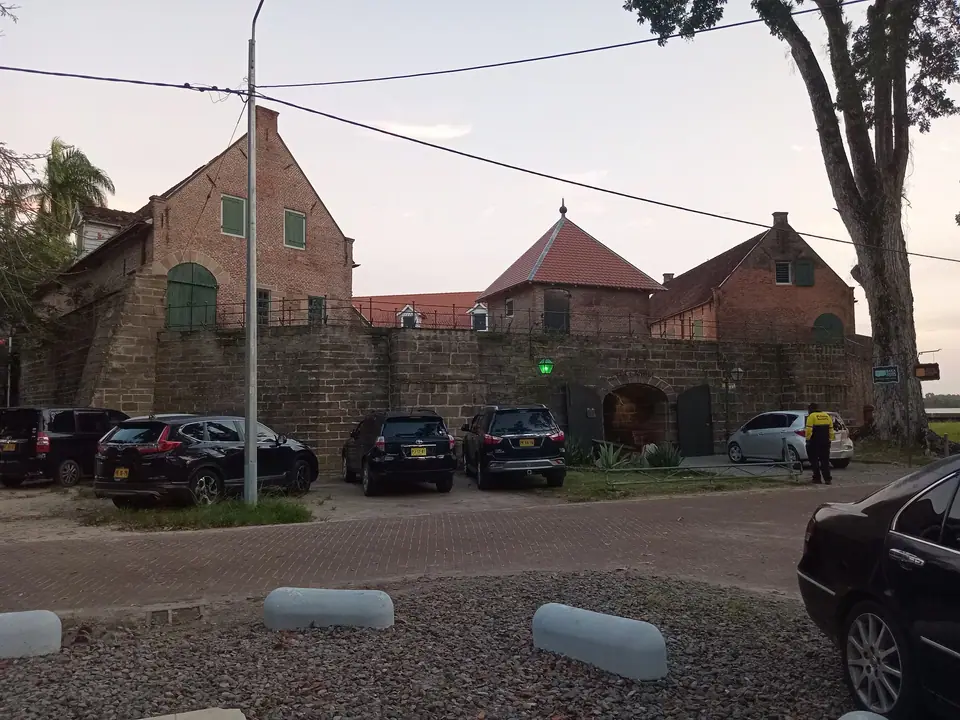
Fort Zeelandia, Onafhankelijkheidsplein and Palmentuin Guide
Explore the historic heart of UNESCO-listed Paramaribo: tour 1667 Fort Zeelandia on the Suriname River, admire the 1730 Presidential Palace on Onafhankelijkheidsplein, and walk Palmentuin.
Every visit to the UNESCO Historic Inner City of Paramaribo begins at the bend of the Suriname River where the city was born. Within a five-minute walk, three interconnected landmarks trace more than three and a half centuries of Surinamese history: the seventeenth-century river fortress of Fort Zeelandia, the white colonial ensemble of Onafhankelijkheidsplein (Independence Square), and the royal palm forest of the Palmentuin.
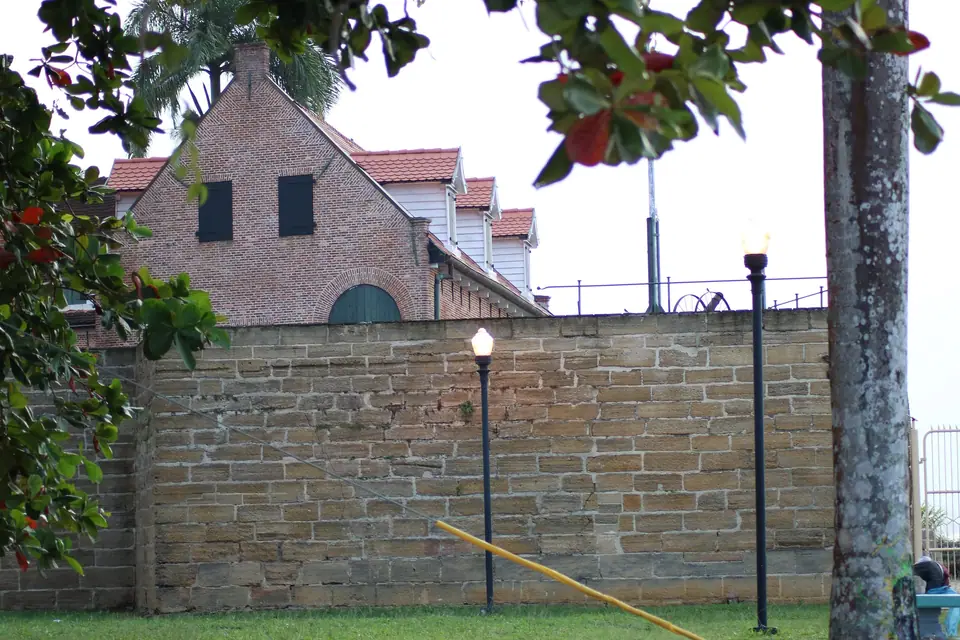
Fort Zeelandia (1667) and the Surinaams Museum
Perched on a natural ridge of compacted seashells overlooking the Suriname River bend, the site of Fort Zeelandia was first fortified with a wooden palisade by French traders in 1640 and expanded by English colonists under Lord Francis Willoughby in 1651 as Fort Willoughby. On 26 February 1667, a Dutch fleet from Zeeland commanded by Admiral Abraham Crijnssen captured the fortress, renaming it Fort Zeelandia, an exchange formalised under the Treaty of Breda, in which the Dutch retained Suriname while ceding New Amsterdam (New York) to the British.
Built as a pentagonal fort with five low bastions crafted from native shell-limestone (schelpsteen) and red bricks carried as ship ballast from the Netherlands, the inner courtyard surrounds the 1790 whitewashed brick Commandeursgebouw, the Gunpowder Magazine (Kruithuis), and red-shuttered wooden officers' houses. Since 1995 the fortress has housed the Stichting Surinaams Museum, displaying pre-Columbian Indigenous pottery, colonial plantation tools, nineteenth-century dioramas by Gerrit Schouten, and a memorial on the outer bastion to the fifteen citizens executed here on 8 December 1982; check the official museum site for current opening hours.
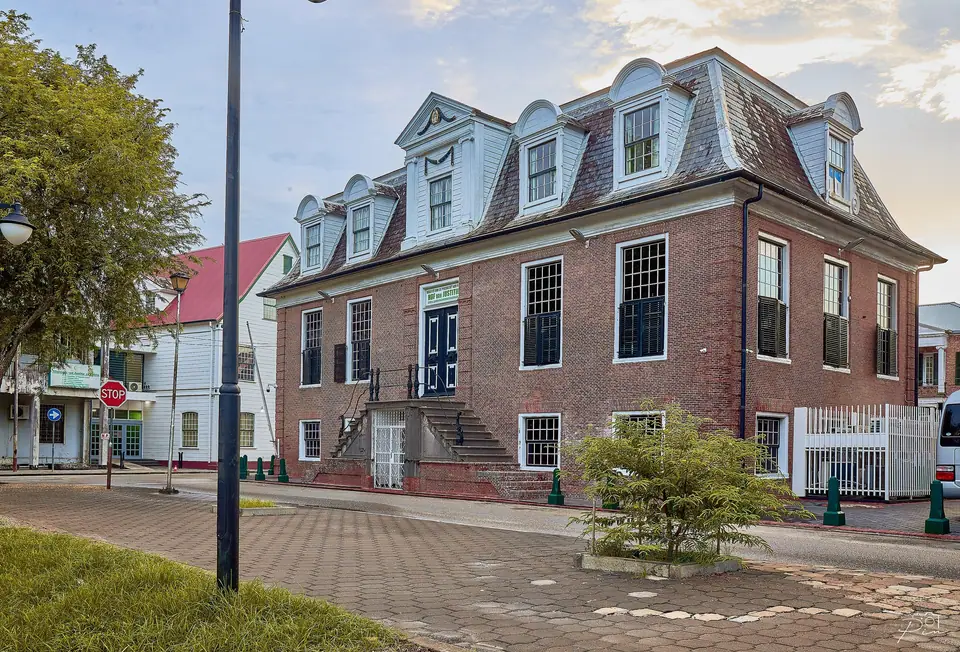
Onafhankelijkheidsplein and the Presidential Palace (1730)
Immediately west of Fort Zeelandia opens the lawn of Onafhankelijkheidsplein (Independence Square), known during colonial times as Oranjeplein and Gouvernementsplein. Dominating the northern side stands the Presidential Palace of Suriname (Het Presidentieel Paleis). Built in 1730 over a brick ground storey and expanded in 1768 under Governor Jean Nepveu, its symmetrical white-painted timber facade is crowned by a carved triangular pediment bearing the coat of arms of the Geoctroyeerde Sociëteit van Suriname (Chartered Society of Suriname).
Flanking the square are several of the finest buildings in the UNESCO zone: the 1836 neoclassical red-brick Ministry of Finance with its white Ionic columns and octagonal clock tower, the 1791 brick-and-wood Court of Justice, the 1776 Hoekhuis on Waterkant, and the colonial townhouses of Mr. F. H. R. Lim A Po Straat.
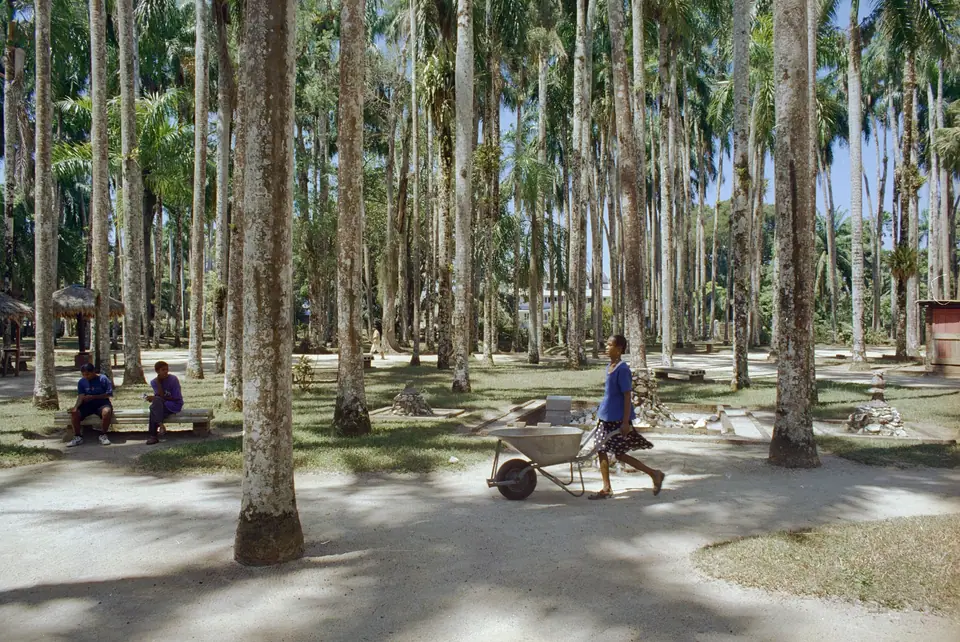
Palmentuin (The Royal Palm Garden, 1683 to 1688)
Pass through the wrought-iron gate directly behind the Presidential Palace to enter the Palmentuin, a four-hectare park shaded by more than 1,000 towering royal palms (Roystonea oleracea). Planted between 1683 and 1688 by order of Dutch Governor Cornelis van Aerssen van Sommelsdijck as the private garden of the governor's residence, the park's shell paths are home to troops of wild squirrel monkeys, white-throated toucans, and herons, transforming during national holidays like Keti Koti into an open-air craft and food fair.
Traveller tips
Real advice from people who have been to Fort Zeelandia, Onafhankelijkheidsplein and Palmentuin. Every tip is read by our team before it goes live.
No tips yet. Been here? Yours could be the first.
Thank you! Your tip will appear here after a quick review.
More in Paramaribo
Continue exploring Paramaribo with related neighbourhood, food, and planning guides
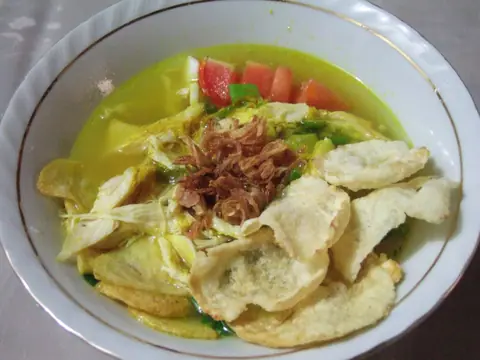
What to Eat in Paramaribo: Pom, Javanese Saoto, Hindustani Roti and Schaafijs
Paramaribo, Suriname
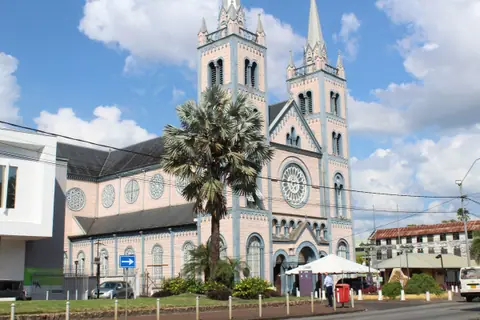
Saint Peter and Paul Cathedral, Keizerstraat Mosque and Synagogue Guide
Paramaribo, Suriname
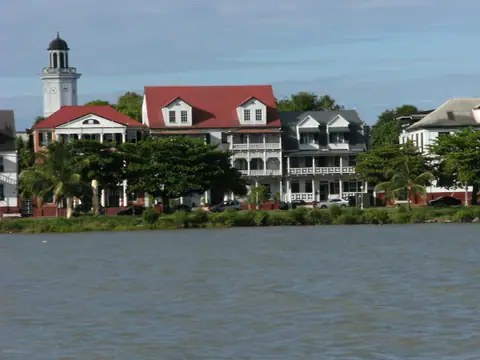
Waterkant, Central Market and UNESCO Wooden Streets Guide
Paramaribo, Suriname
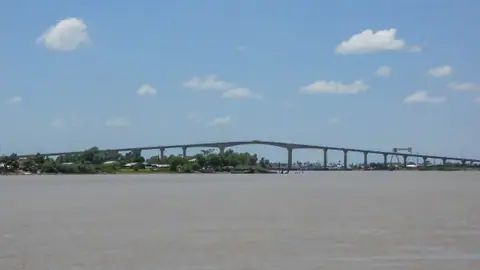
Jules Wijdenbosch Bridge, Peperpot Nature Park and Meerzorg Guide
Paramaribo, Suriname
