


























Waterkant, Central Market and UNESCO Wooden Streets Guide
Walk the Suriname River boulevard of Waterkant, explore the 1821 post-fire wooden merchant houses of the UNESCO zone, and visit the Central Market and Maroon Herb Market.
To appreciate why Paramaribo was inscribed on the UNESCO World Heritage List in 2002, walk the riverfront promenade of Waterkant and the grid of streets immediately behind it (Heerenstraat, Kromme Elleboogstraat, Domineestraat, and Keizerstraat). Here, seventeenth-century Dutch urban planning and brick-ballast foundations merge with tropical wooden craftsmanship created by Afro-Surinamese Creole carpenters.
Waterkant and the Great Fires of 1821 and 1832
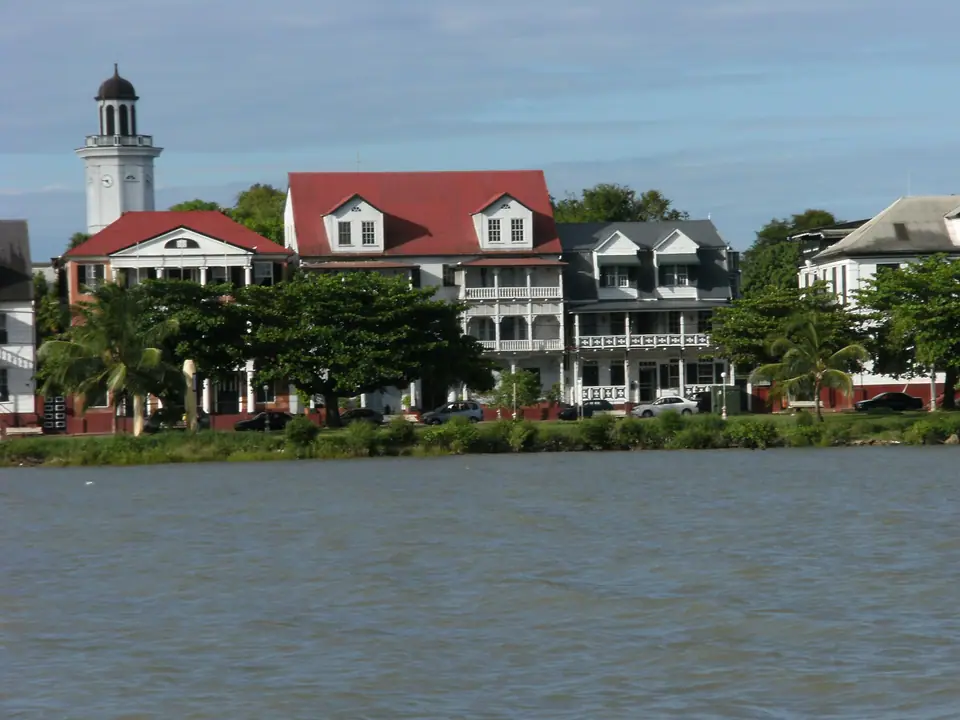
Stretching for nearly a kilometre along the western bank of the Suriname River from Onafhankelijkheidsplein down to the ferry pier and Central Market, Waterkant ("Waterside") was for two centuries the maritime doorstep of the colony, where sailing ships loaded Surinamese sugar, coffee, cacao, and cotton. On 21 January 1821, a cooking fire swept through the timber town, destroying more than 400 buildings, followed by a second major blaze in September 1832.
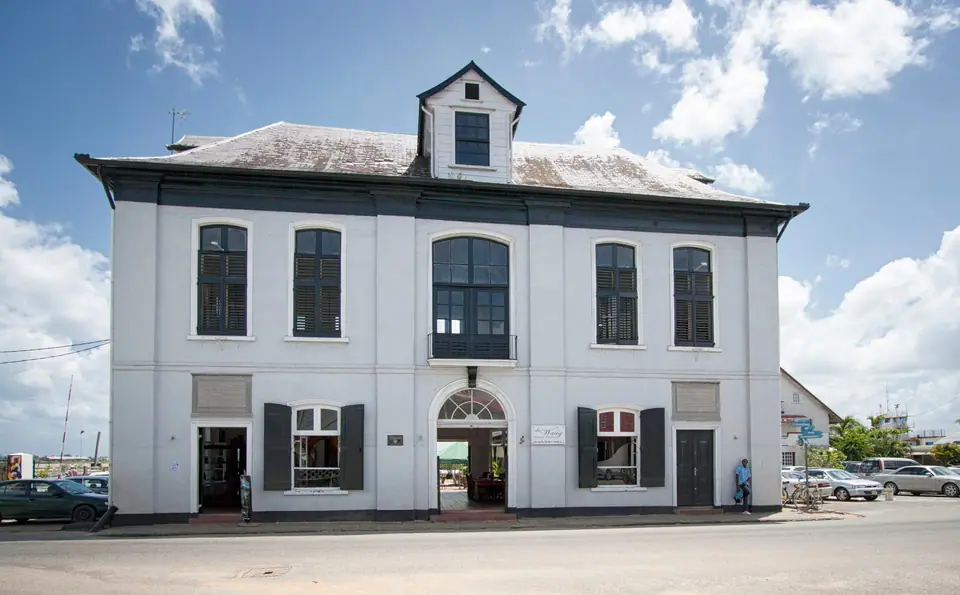
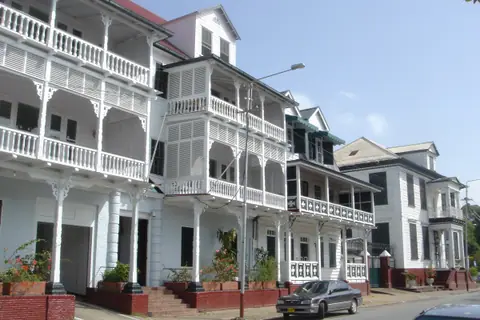
Rebuilt in the 1820s and 1830s under strict fire codes with wider avenues and brick ground foundations, Waterkant today presents an unbroken row of two- and three-storey white-painted wooden merchant houses accented by dark-green louvered shutters, symmetrical sash windows, steep gabled roofs with dormer windows, and recessed verandas. Under the riverside almond and tamarind trees, open-air benches and food stalls serve Javanese bami, saté, and cold Parbo beer looking out toward the Jules Wijdenbosch Bridge.
How Paramaribo's UNESCO Wooden Architecture Works
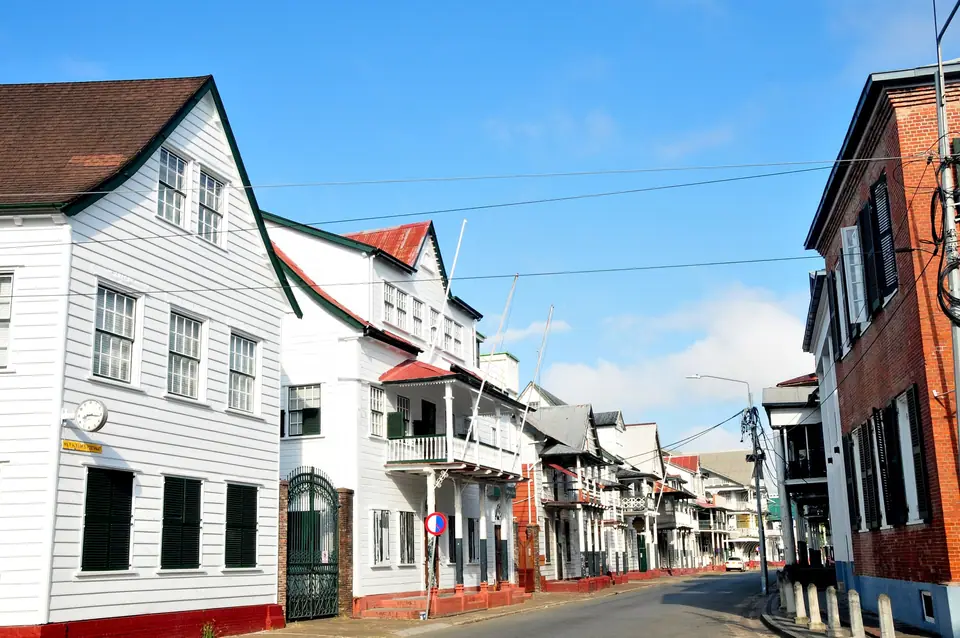
As you walk one block inland along Mr. F. H. R. Lim A Po Straat, Heerenstraat, and Wagenwegstraat, look closely at the details that distinguish Paramaribo:
- Brick Ballast Plinths and Native Hardwoods: Because Suriname's coastal plain has no building stone, Dutch ships carried red and yellow bricks as ballast on the outbound voyage. Builders laid these bricks as ground foundations, then framed the upper storeys out of dense Amazonian hardwoods such as bruinhart (Vouacapoua americana), groenhart, locus, and cedar.
- Carved Fanlights and Ventilated Galleries: Above the central entrance doors sit hand-carved wooden fanlights (bovenlichten) that allow warm air to escape while drawing cool river breezes through the house. Look too for the 1835 Neo-Renaissance tower of the Reformed Church (Centrumkerk) on Kerkplein and the 1778 Lutheran Church on Waterkant.
Centrale Markt (Central Market) and the Maroon Market (Vreedzaammarkt)
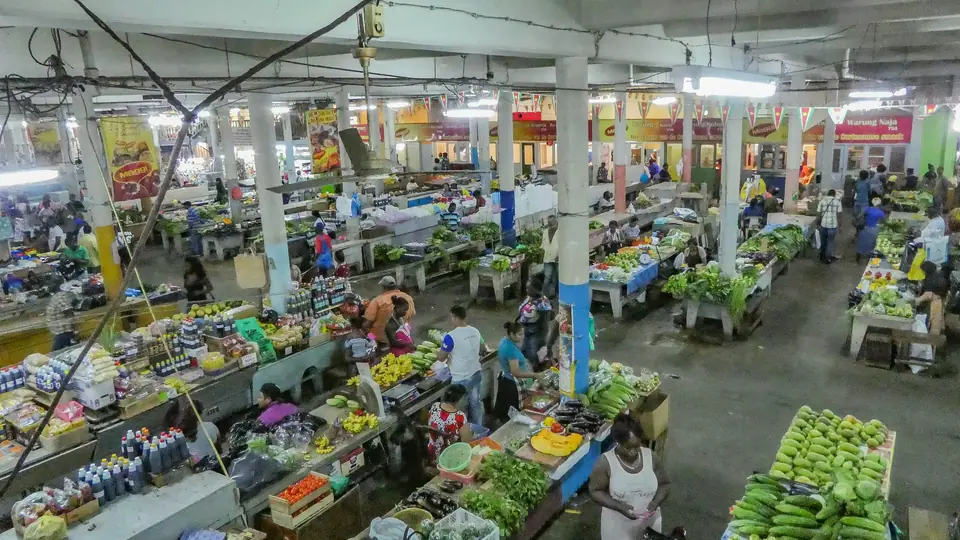
At the southern end of Waterkant right beside the riverboat stelling stands the two-storey Centrale Markt (Central Market), the largest covered market in Suriname. Downstairs, stalls overflow with pomtayer roots, yardlong beans, bitter melon (sopropo), eddoes, golden Madame Jeanette chillies, and smoked fish. Immediately west along the riverbank operates the open-air Vreedzaammarkt (Maroon Market), where Saramaka and Ndyuka Maroon women sell giant crisp discs of toasted cassava bread, cold-pressed maripa palm oil, carved calabash gourds, embroidered pangi wrap cloths, and traditional forest herbs (oso dresi).
Traveller tips
Real advice from people who have been to Waterkant, Central Market and UNESCO Wooden Streets. Every tip is read by our team before it goes live.
No tips yet. Been here? Yours could be the first.
Thank you! Your tip will appear here after a quick review.
More in Paramaribo
Continue exploring Paramaribo with related neighbourhood, food, and planning guides
Paramaribo: UNESCO Wooden Inner City, Suriname River and Planning Tips
Paramaribo, Suriname
Things to Do in Paramaribo: Fort Zeelandia, Wooden Cathedral and Commewijne River
Paramaribo, Suriname
How to Get to Paramaribo: Johan Adolf Pengel (PBM) and Zorg en Hoop (ORG) Airports
Paramaribo, Suriname
Best Time to Visit Paramaribo: Dry Seasons, Keti Koti and Owru Yari
Paramaribo, Suriname
