


























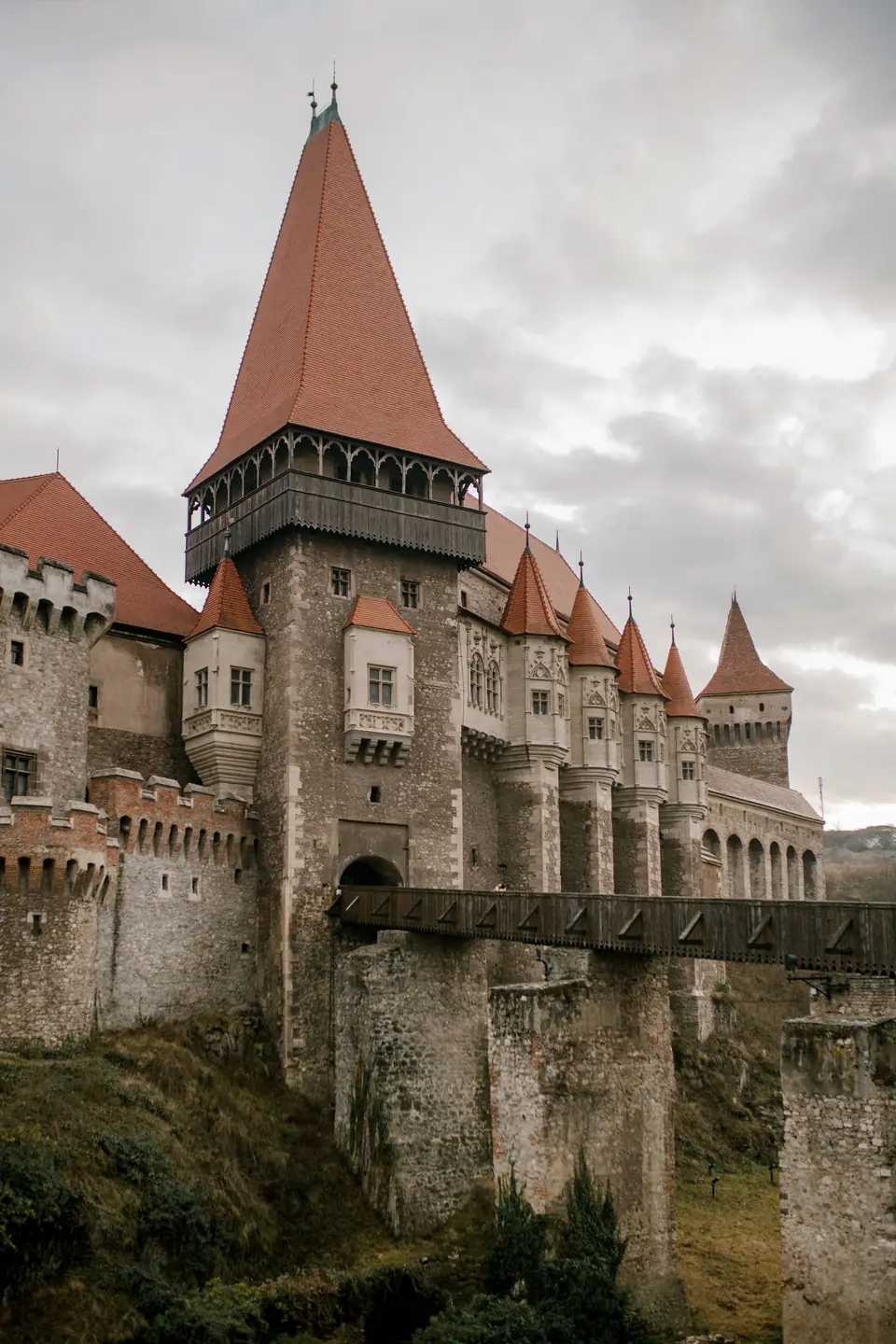
Mission San Diego de Alcalá: California's First Mission, Gardens and History
Touring California's first Spanish mission founded in 1769 in Mission Valley, including the five-bell campanario, courtyards and archaeological grounds.
Tucked against the northern hillside of Mission Valley overlooking the San Diego River, Mission San Diego de Alcalá holds the historical title of the Mother of the Missions. Founded on 16 July 1769 by Franciscan friar Junípero Serra during the Portolá expedition, it was the very first of the twenty-one Spanish missions established along El Camino Real, the colonial Royal Road that eventually stretched north to Sonoma past San Francisco. While early settlers initially raised a wooden chapel beside the military fort on Presidio Hill directly above Old Town San Diego, Father Luis Jayme received permission to relocate the mission six miles east up the valley in August 1774 to secure reliable river water for farming and distance the Indigenous Kumeyaay population from the Spanish soldiers stationed at the coastal presidio.
Indigenous Kumeyaay History, the 1775 Uprising and Five Rebuilt Churches
Understanding the calm adobe quadrangle you walk through today requires looking at the turbulent early decades of the valley site. For thousands of years before Spanish ships entered San Diego Bay, the Mission Valley corridor and surrounding mesas were home to the Kumeyaay people, with the village of Nipaguay located beside this stretch of the San Diego River. Just over a year after the mission moved to Nipaguay, on the night of 4 November 1775, several hundred Kumeyaay warriors from inland villages attacked and burned the wooden mission compound in resistance to colonial rule. During the uprising, young Mallorcan friar Father Luis Jayme walked out toward the attackers offering a peaceful greeting and was killed by the creek bed, becoming California's first Catholic martyr.
When Junípero Serra returned the following year to oversee reconstruction, the Franciscans rebuilt the complex as a fortified adobe quadrangle. In total, five successive church structures have stood on this exact footprint. After earthquakes damaged earlier buildings, the fourth church was dedicated on 12 November 1813. Following Mexican independence and the Secularisation Act of 1834, the mission lands passed into private hands, and after the Mexican-American War, the United States Cavalry occupied the sanctuary for over a decade, partitioning the church nave into two floors to stable horses below and quarter troops above. By the late nineteenth century, the roofless adobe walls had nearly weathered away until a meticulous 1930 to 1931 architectural restoration reconstructed the 1813 sanctuary along its original lines.
The Five-Bell Campanario and the Restored 1813 Adobe Sanctuary
Approaching the hilltop grounds in eastern San Diego, visitors are greeted by the mission's gleaming whitewashed stucco facade and its landmark tiered Campanario, an asymmetrical forty-six-foot brick bell wall rising to the right of the sanctuary entrance. Five bronze bells hang inside open arches arranged in three stepped tiers; the largest bell in the lower arch, named Mater Dolorosa (Mother of Sorrows), was cast in San Diego in 1894 by melting down five cracked colonial mission bells from the eighteenth and nineteenth centuries, while an original royal Spanish crown bell cast in 1802 hangs nearby.
Stepping through the heavy carved timber doors brings you into the long, narrow Mission Church, built without side aisles so that the structural weight rests on four-foot-thick walls of sun-dried adobe brick. Because tall timber did not grow on the coastal mesas, work crews hauled rough-hewn cedar and pine ceiling beams (vigas) more than fifty miles down from the Cuyamaca and Palomar mountains near Julian. Inside, herringbone-patterned red ladrillo floor tiles, geometric Spanish-Moorish stencils along the walls, and a gilded reredos behind the main altar create a cool, quiet sanctuary. Flush with the steps before the altar lies the marble tomb slab marking the resting place of Father Luis Jayme alongside two early Franciscan friars. Elevated to a Minor Basilica by Pope Paul VI in 1976, the church still operates as an active Catholic parish.
Quadrangle Gardens, Padre Luis Jayme Museum and Archaeological Ruins
Your self-guided walking tour loops clockwise through the interior quadrangle courtyard, lushly planted with California pepper trees, palms, citrus trees, birds-of-paradise, scarlet bougainvillea and historic olive groves descended from the earliest olive cuttings planted by the Franciscan padres across California. Along the covered adobe walkways (corredores), take time to visit four historical stops:
- The Convento Wing and Recreated Serra Cell: Immediately inside the entrance, a small whitewashed room furnished with a simple plank bed, rawhide chair, writing table and tallow candle recreates the austere sleeping quarters used by Junípero Serra during his visits to San Diego.
- The Padre Luis Jayme Museum: Houses eighteenth-century silk liturgical vestments, silver chalices, Spanish colonial ironwork, original handwritten baptismal and marriage ledgers signed by Serra, and an important collection of woven Kumeyaay baskets, stone grinding tools and clay water jars unearthed on the grounds.
- The 1800s Convento Foundations and Excavations: At the northern rear edge of the garden, brick foundation outlines mark the archaeological footprint of the original eighteenth-century friars' living quarters, workshops and sacristy, alongside remnants of the late-nineteenth-century St. Anthony's school built for Kumeyaay children.
- The Mission Cemetery (Campo Santo): Positioned immediately beside the northern church wall, the walled burial ground dating to 1774 is planted with heirloom rose bushes and marked by white wooden crosses and a central brick cross memorialising the hundreds of Indigenous neophytes and early settlers buried here.
Riding the MTS Green Line Trolley and Pairing Mission Valley Sights
Mission San Diego de Alcalá is one of the easiest historic sites in the county to reach without a car. Using a contactless bank card or PRONTO pass on the MTS Trolley network, ride the MTS Green Line Trolley from downtown Santa Fe Depot, the Gaslamp Quarter or the Old Town transit hub and step off at the Mission San Diego Station beside the stadium park; from the platform, walk less than ten minutes north up Twain Avenue and San Diego Mission Road straight to the mission gates. Drivers arriving via Interstate 8 or Interstate 15 will find free surface parking outside the visitor entrance.
Allow sixty to ninety minutes to tour the basilica, gardens and museum. For a chronological walk through early California history, pair a morning here with a short trolley ride west to the nineteenth-century adobes of Old Town San Diego and the Junípero Serra Museum on Presidio Hill, then continue to the Spanish Colonial Revival palaces of Balboa Park as part of a wider San Diego itinerary.
Traveller tips
Real advice from people who have been to Mission San Diego de Alcalá: California's First Mission, Gardens and History. Every tip is read by our team before it goes live.
No tips yet. Been here? Yours could be the first.
Thank you! Your tip will appear here after a quick review.
More in San Diego
Continue exploring San Diego with related neighbourhood, food, and planning guides
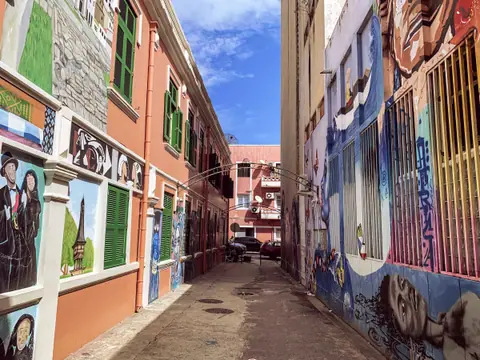
North Park and Hillcrest in San Diego: 30th Street Breweries, Cafes and Uptown Walk
San Diego, United States

Barrio Logan and Chicano Park in San Diego: Monumental Bridge Murals and Logan Avenue
San Diego, United States

Liberty Station and Point Loma Harbor: Public Market, Arts District and Shelter Island
San Diego, United States

Del Mar and Solana Beach: Cedros Design District, Annie's Canyon and Seagrove Park
San Diego, United States
