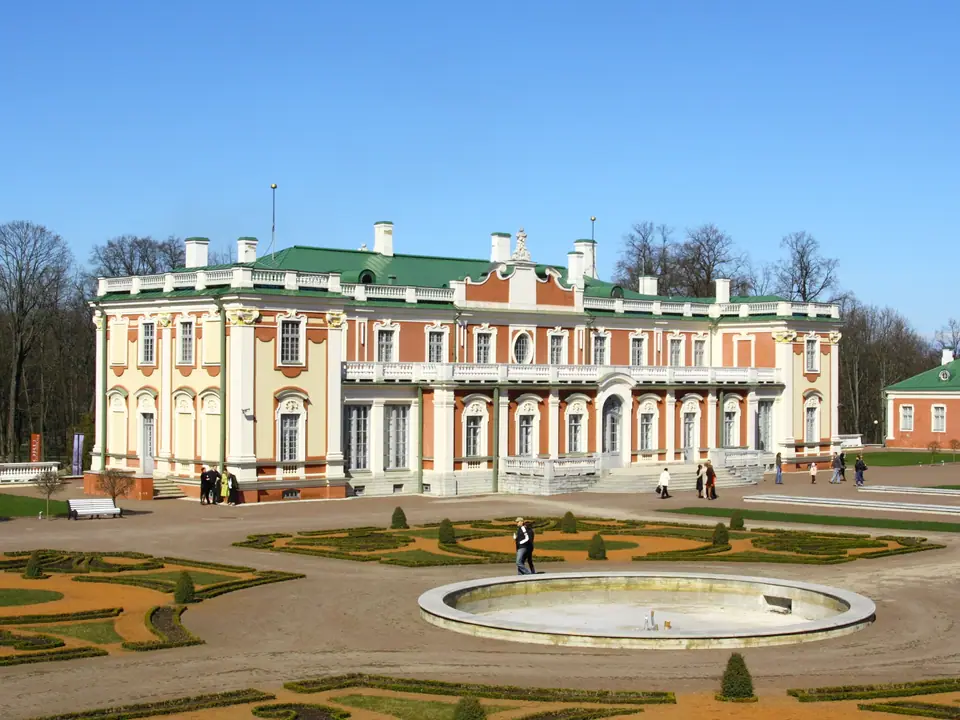
Photo: Holger Vaga · CC BY 2.0
Kadriorg, Pirita and the Song Grounds
A tsar's palace, Kumu, the Song Festival Grounds and the Pirita beach and convent.
East of the Old Town, Tallinn turns green and open. Kadriorg is a palace and park laid out for a Russian tsar, Pirita is a seaside district with a beach and a medieval convent, and between them an arch faces a field where Estonians sing. This guide walks the east side, with the history that makes each stop reward the tram ride.
For the walled town, read the Old Town guide.
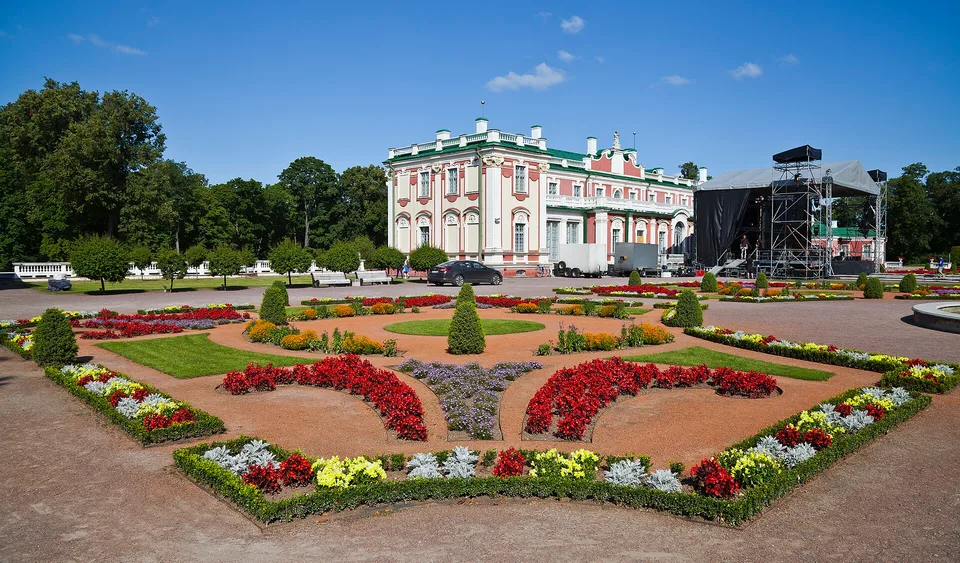
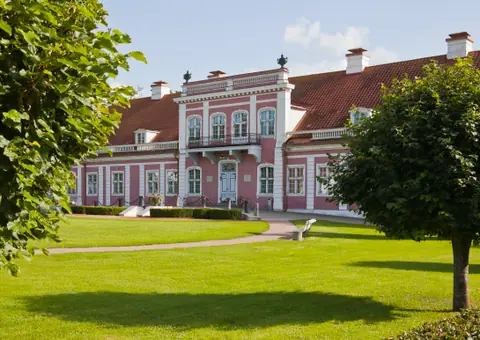
Peter the Great's Baroque Kadriorg Palace
Peter the Great bought a manor house for his wife Catherine after the 1710 siege of Reval and commissioned the palace that took its place. Construction began on 25 July 1718, and the main building was completed by 1725. Nicola Michetti made the designs, working with Gaetano Chiaveri and Mikhail Zemtsov. The name, Kadrioru loss in Estonian and Schloss Katharinental in German, means Catherine's valley. The palace became a summer residence for Estonia's head of state in 1929 and an official residence in 1934 under Konstantin Päts, and a purpose-built presidential palace on the grounds was completed in 1938. It is now a branch of the Art Museum of Estonia showing foreign art from the 16th to the 20th centuries, and it reopened in 2000.
Swan Pond and Japanese garden in Kadriorg Park
The park covers about 70 hectares, and its history began in 1718, when Peter the Great ordered his areas at the Fonnenthal summer manor to be re-designated. The Swan Pond, Luigetiik, is its best-known water body, and the Japanese Garden, whose first stage was completed in 2011, is the newest part. The Russalka Memorial was erected on 7 September 1902, on the ninth anniversary of the 1893 sinking of the Russian warship Rusalka on its way to Finland. Amandus Adamson made the bronze, the first monument in Estonia by an Estonian sculptor, and an angel holds an Orthodox cross towards the assumed direction of the wreck.
Estonian modern painting inside Kumu Art Museum
The Art Museum of Estonia was founded on 17 November 1919, and in late 1991 the Estonian parliament decided to secure a new building for it in Kadriorg Park. Kumu houses a thorough collection of Estonian art, with paintings by Konrad Mägi, Ants Laikmaa and Johannes Greenberg. Before the new building, a temporary exhibition opened on 1 April 1993 in the Estonian Knighthood House. The foreign art collection is shown separately in the palace.
| Place | Key fact | What to see |
|---|---|---|
| Kadriorg Palace | Begun 25 July 1718 | Foreign art, 16th to 20th centuries |
| Kumu | Museum founded 1919 | Estonian art |
| Song Festival Grounds | Stage built in 1959 | The arch and the field |
| Pirita Convent | Church consecrated 1436 | The ruins |
| Pirita Beach | Up to 30,000 visitors a day in summer | Sand and pines |
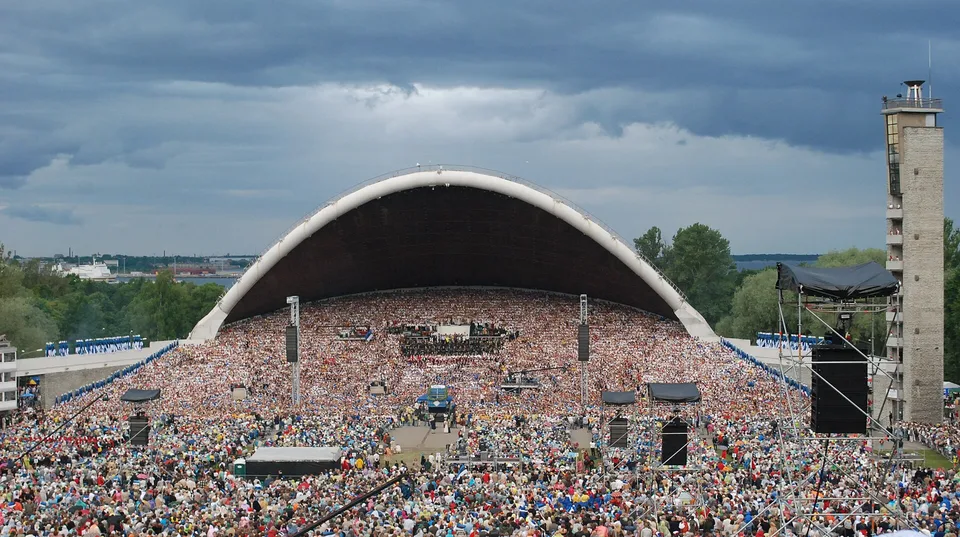
Sweeping acoustic arch at the Song Festival Grounds
The arched stage was built in 1959, and the 15th Estonian Song Festival in 1960 was the first held on it. Henno Sepmann designed it together with Alar Kotli and Endel Paalmann, and it was meant to hold more than 15,000 singers. The grounds lie between Narva Road and Pirita Road, with an optimal concert capacity of 75,000 and up to 100,000 at the Song Festival. The first festival was held in 1869 in Tartu, and since 1923 the event has typically been held every five years, in June or July. The joint choir has comprised more than 30,000 singers with audiences of 80,000, and the 2019 festival listed 32,302 performers from choirs across the country, while the 2025 festival, the XXVIII Song Celebration, was held in Tallinn with 990 choirs and 31,027 performers. The 1947 celebration, the twelfth, had 25,760 performers.
1988 Singing Revolution and Baltic Way heritage
The grounds became a political stage in the Singing Revolution of 1987 to 1991. On 10 and 11 June 1988, mass spontaneous singing at the grounds drew up to 300,000 people, a figure since questioned. On 23 August 1989 about two million people formed a human chain from Tallinn through Riga to Vilnius, the Baltic Way. Estonia declared independence on the late evening of 20 August 1991, and the following morning Soviet troops reportedly tried to storm the TV tower without success.
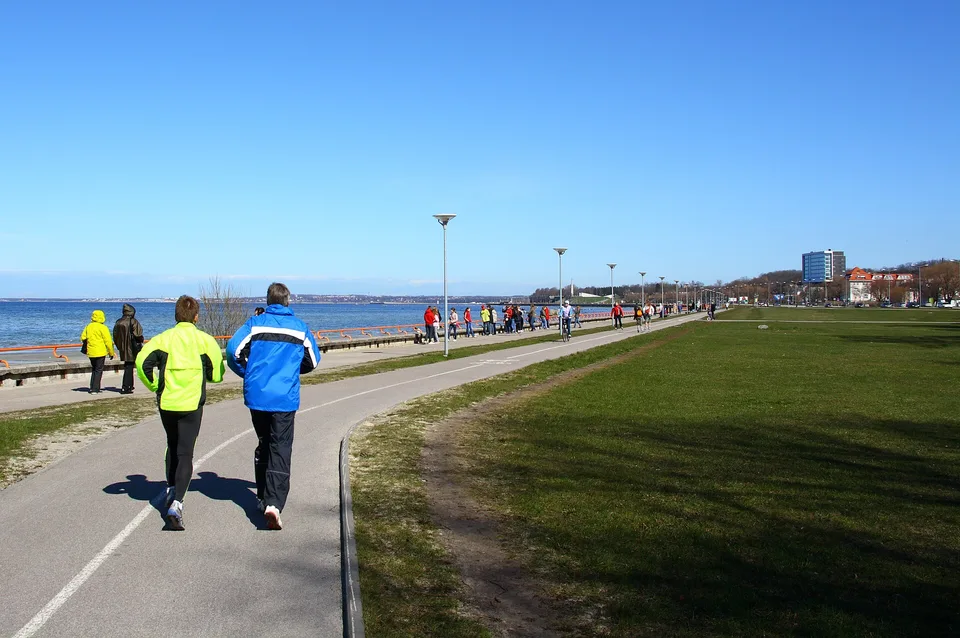
Pinewoods, sandy bay and medieval ruins in Pirita
Pirita Beach is the largest in Tallinn and can draw up to 30,000 visitors a day in summer. The district also has a yachting harbour, a cycle track, the Pirita Forest and the Maarjamäe War Memorial. Pirita Convent was a Bridgettine convent from 1407 to 1575, a permit to quarry dolomite for it was granted in 1417 and the main church was consecrated on 15 August 1436. Russian troops under Ivan the Terrible sacked, looted and burned the convent in 1577, during the Livonian War, and it was then abandoned.
Eastbound tram route through Kadriorg and Pirita
- Begin at Kadriorg Palace and walk the park.
- Visit Kumu for Estonian art.
- Walk or take transport to the Song Festival Grounds.
- Continue to Pirita for the beach or the convent.
The route works at any season, since the museums cover a wet day. For a seasonal view, read best time to visit.
Where it is
- 1Kadriorg, Pirita and the Song Grounds
- Lennart Meri Tallinn Airport (TLL) · about 4 km from here in a straight line
- Directions in Google Maps
Stations and taxi ranks: OpenStreetMap. Airports: OurAirports. Distances are in a straight line.
Traveller tips
Real advice from people who have been to Tallinn. Every tip is read by our team before it goes live.
No tips yet. Been here? Yours could be the first.
Thank you! Your tip will appear here after a quick review.
More in Tallinn
Continue exploring Tallinn with related neighbourhood, food, and planning guides