Photo: Guillaume Speurt · CC BY-SA 2.0
The Old Town and Toompea
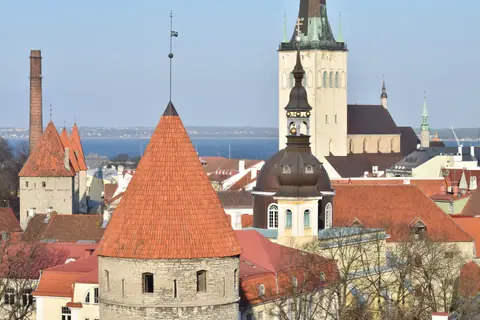
Toompea, the Town Hall, three medieval churches, the city wall and Fat Margaret.
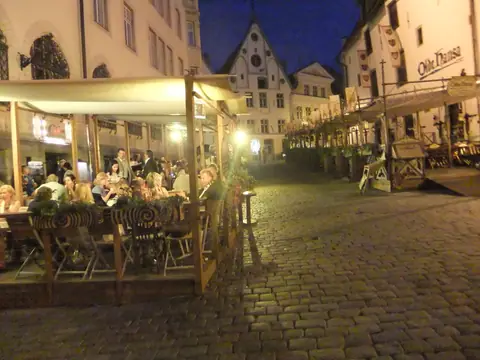
Tallinn Old Town has two halves: Toompea, the hill of rulers and parliaments, and the lower town of merchants and guilds. They stood apart for centuries and still feel different, so a good visit takes both. This guide walks the Old Town in a sensible order, from the hill down to the Town Hall Square and along the walls, with the dates and details that explain what you see.
For the wider city, read our travel guide.
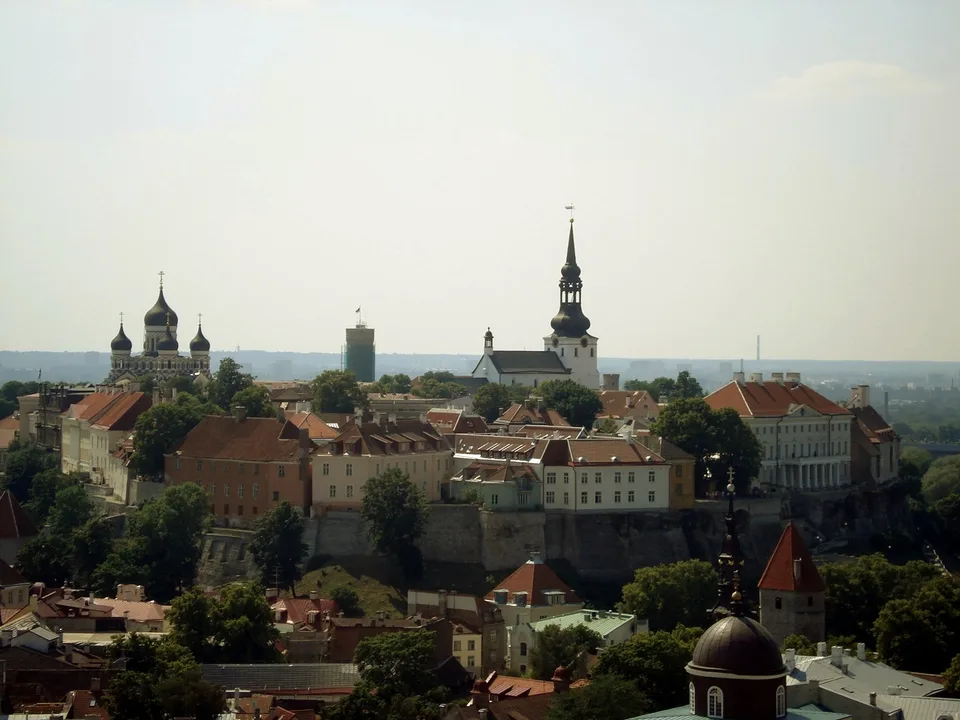
Toompea Hill, Parliament and coastal views
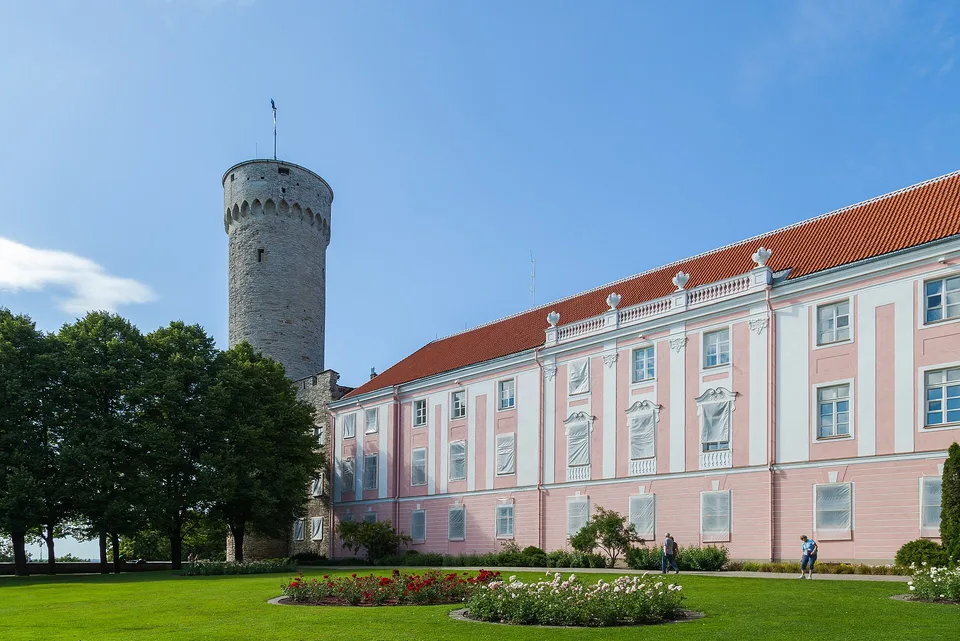
Toompea reaches about 48 metres in elevation, stands 20 to 30 metres above its surroundings and has a foot at 17 to 20 metres above sea level. Danish King Valdemar II attacked Tallinn in the summer of 1219, and the Danish crusaders began building a new castle on the hill. After Denmark sold its holdings in 1346, the Livonian Order ruled northern Estonia for 215 years. Toompea Castle today houses the Riigikogu, the Estonian parliament, with 101 members, and the Pikk Hermann tower rises above it. The tower was originally 35 metres and was later rebuilt taller. A new parliament building in an Expressionist style was erected in the former courtyard of the castle in 1920 to 1922. Several viewing platforms look out over the lower town, and the Patkuli stairs, built in 1903, gave the hill a new access route.
Onion domes at Alexander Nevsky Cathedral
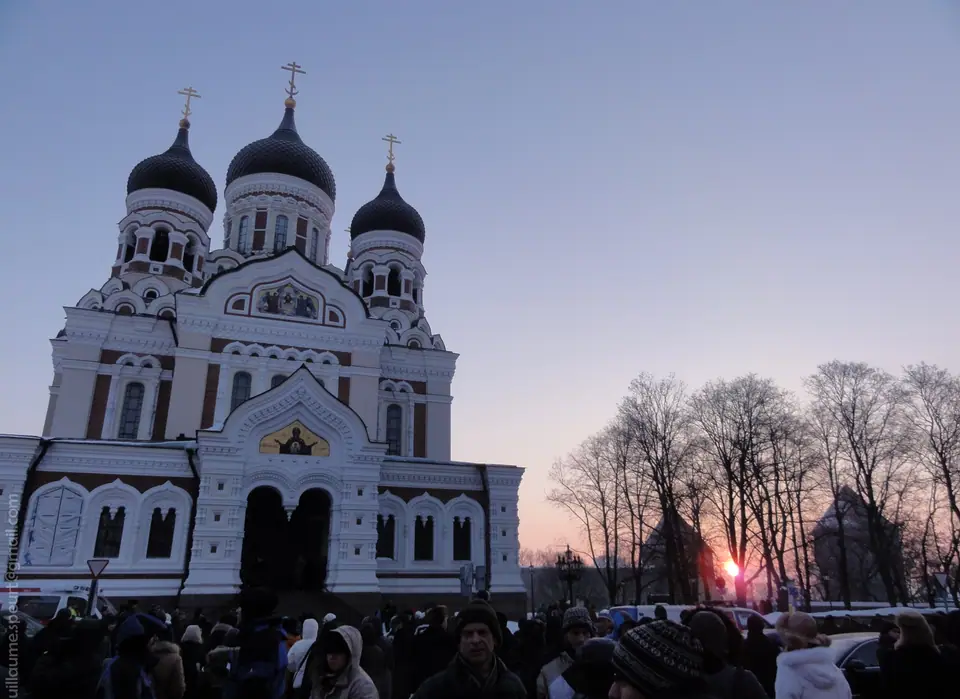
The Russian Orthodox cathedral on Toompea was built between 1894 and 1900, when Estonia was part of the Russian Empire, in a Russian Revival style designed by Mikhail Preobrazhensky. It has 11 bells cast in Saint Petersburg, and the largest weighs about 16 tons. It is dedicated to Alexander Nevsky, a grand prince of Kyiv later venerated as a saint. After independence the architect Karl Burman proposed demolishing or converting it in 1924, and a demolition date of 1 May 1929 was set but cancelled, so no final decision was made. It belongs to the Estonian Orthodox Church of the Moscow Patriarchate.
Estonian Lutheran seat at St Mary's Cathedral
The Toomkirik, or Dome Church, was completed on its current site in 1240, in the 13th century, and is now the seat of the Estonian Evangelical Lutheran Church. It stands a few steps from the parliament, so you can see both a ruling institution and a place of worship on a single square.
| Landmark | Key fact | What to notice |
|---|---|---|
| Alexander Nevsky Cathedral | 1894 to 1900 | Onion domes and 11 bells |
| St Mary's Cathedral | Completed on this site in 1240 | The Lutheran seat |
| Town Hall | 1402 to 1404 | Gothic tower of 64 m |
| St Nicholas' Church | About 1230 to 1275 | Medieval art and a Danse Macabre |
| St Olaf's Church | First mentioned in 1267 | Spire of 123.7 m |
| Fat Margaret | 1511 to 1530 | A 25 m round harbour tower |
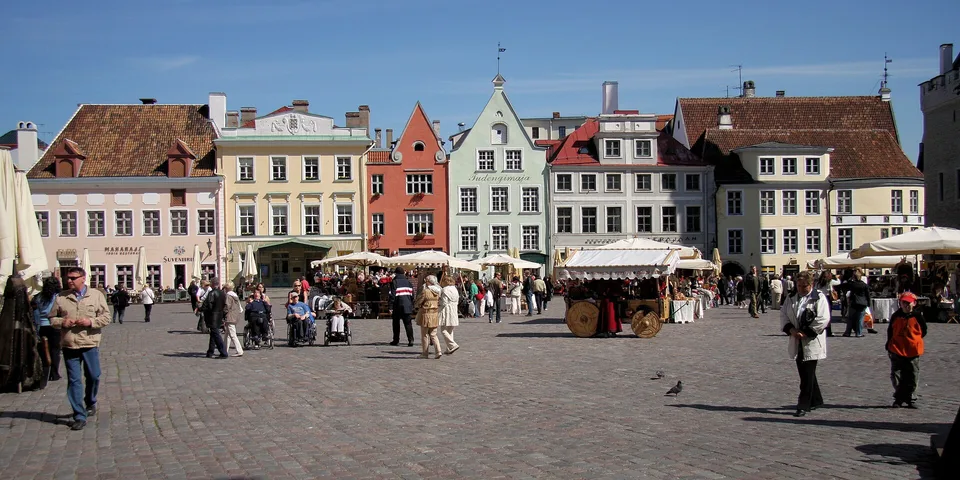
Gothic gables and Old Thomas at Tallinn Town Hall
The Town Hall on the Town Hall Square was built between 1402 and 1404 in the Gothic style and is the last surviving Gothic town hall in Northern Europe. Its tower is 64 metres tall, and the weather vane Old Thomas, placed on the building in 1530, is now a copy. The town council worked in the building until 1970, and the parlour, or raesaal, was its most important room, where aldermen met and voted.
Danse Macabre art inside St Nicholas' Church
Westphalian merchants built the church, known as Niguliste, around 1230 to 1275. It was Catholic at first and became Lutheran during the Reformation in the 1520s. Soviet bombing on 9 March 1944 severely damaged it and destroyed most of its interior, renovation ran from 1953 to 1981, and a fire on 12 October 1982 burned out the tower and destroyed its spire. It opened in 1984 as a museum and concert hall, a branch of the Art Museum of Estonia. It holds Bernt Notke's Danse Macabre, of which only the first fragment survives from a painting about 30 metres wide, and the High Altar of 1478 to 1481 from the workshop of Hermen Rode, one of the largest northern German altarpieces of the 15th-century Hanseatic League.
Climbing the tall spire of St Olaf's Church
Oleviste kirik was first mentioned in 1267, when Queen Margaret of Denmark granted parish rights to the Cistercian convent of St Michael in Reval. Its spire reaches 123.7 metres, a platform in the tower stands at 60 metres, the tower has been hit by lightning about ten times and the church has burned down three times. From 1944 to 1991 the Estonian KGB used the spire as a radio tower and surveillance point. The Soviet regime handed the building to Baptists in 1950, and it remains an active Baptist church.
Medieval round towers along the city wall
Margaret Sambiria ordered the first wall in 1265. It was less than 5 metres tall and about 1.5 metres thick at its base, and the walls were enlarged in the 14th century. They remain largely extant today, although several towers have been demolished or destroyed. Walk along Müürivahe, where Helleman Tower stands at number 48, Hinke Tower at 32 and Assauwe Tower at 12. The Nunna Tower stands at Väike-Kloostri 1, and the Nun's Gate beside it was demolished in 1868. The Kiek in de Kök name is an old Low German nickname for towers on town fortifications, meaning peek into the kitchen, from the way the occupants could see into nearby houses. The Tallinn tower stands at Komandandi tee 2.
Cannon tower Fat Margaret and the Great Coastal Gate
The Estonian Maritime Museum occupies Fat Margaret, Paks Margareeta, built from 1511 to 1530 to guard the harbour. It is 25 metres in diameter and 20 metres high, standing beside Great Coastal Gate, Suur Rannavärav, a 16th-century arch flanked by towers. Reconstructed from 1978 to 1981 after stints as an armoury and prison, it closes the north edge of town.
Upper-to-lower Old Town walking circuit
- Start on Toompea at the cathedral and the castle.
- Descend to the Town Hall Square and enter the Town Hall or the museum church.
- Climb St Olaf's if the tower is open.
- Walk the wall along Müürivahe.
- Finish at Fat Margaret and the harbour.
Allow a day, then head westward into Kalamaja.
Where it is
- 1The Old Town and Toompea
- Lennart Meri Tallinn Airport (TLL) · about 6 km from here in a straight line
- Directions in Google Maps
Stations and taxi ranks: OpenStreetMap. Airports: OurAirports. Distances are in a straight line.
Traveller tips
Real advice from people who have been to Tallinn. Every tip is read by our team before it goes live.
No tips yet. Been here? Yours could be the first.
Thank you! Your tip will appear here after a quick review.
More in Tallinn
Continue exploring Tallinn with related neighbourhood, food, and planning guides