Photo: Raki_Man · CC BY 3.0
Kalamaja and the Creative City
Wooden houses, Telliskivi, Patarei, the Seaplane Harbour and Linnahall on one north-west walk.
Kalamaja lies just north-west of the Old Town on the coast of Tallinn Bay, and it shows a different side of the city: wooden working-class houses, a sea fortress turned museum and a former factory complex full of studios and cafés. This guide explains how the district grew and what to see on a walk that runs from the harbour to Telliskivi.
For the walled town next door, read the Old Town guide.
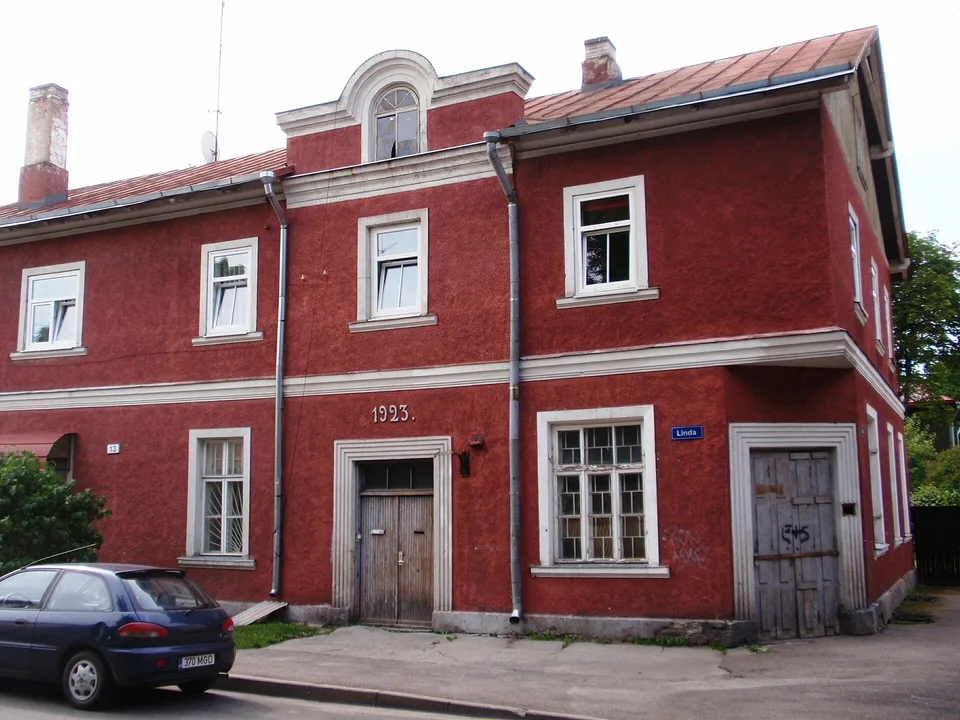
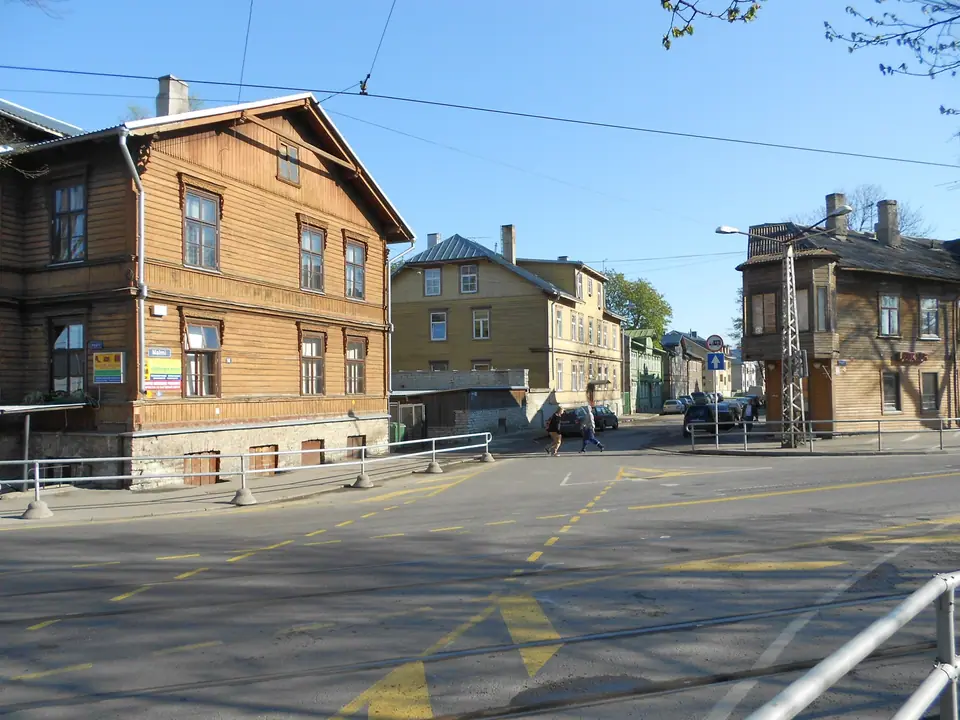
Painted wooden workers' houses in Kalamaja
Kalamaja is Estonian for fish house, and its German name was Fischermay. It was Tallinn's main fishing harbour for most of the city's history, and from the 14th century the area was dominated by fishermen, fishmongers and boat wrights. The 1870 railway link to Saint Petersburg brought factories and thousands of workers, and the wooden houses that give the district its character were built to house them. It is a subdistrict of Põhja-Tallinn with 12,930 residents as of 1 August 2022, keeping quiet streets lined with painted wooden houses built for factory workers and their families.
The Kalamaja Cemetery, founded in the 15th or 16th century, is the oldest in Tallinn. Soviet authorities flattened it in 1964, and only a gate belltower remains. A Baptist prayer house stands on Kalju Street. A former railway embankment was turned into a walking trail called the Culture Kilometre in 2011 and into a street in 2015, and it now links several of the sights below, including the Creative Hub, Kultuurikatel, which hosted an opening night of Tallinn Music Week.
| Place | Key fact | Good for |
|---|---|---|
| Kalamaja streets | Wooden workers' houses after 1870 | A slow walk |
| Telliskivi Creative City | Over 300 companies, 10 buildings | Cafés, shops and galleries |
| Patarei Sea Fortress | Built 1830 to 1837 | Exterior coastal walk during renovation |
| Seaplane Harbour | 1916 to 1917 hangars | A museum with a submarine and an icebreaker |
| Linnahall | Opened 19 July 1980 | The Soviet-era harbour landmark |
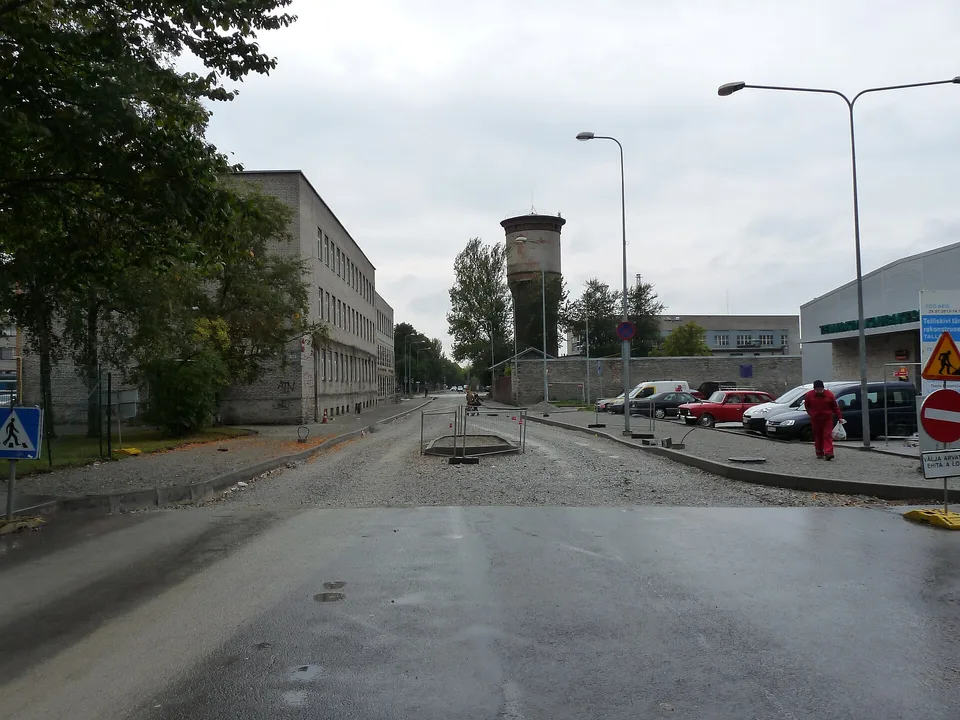
Workshops, galleries and Fotografiska at Telliskivi
Telliskivi occupies the former Baltic Railway Company factory on Telliskivi Street. Jaanus Juss founded the creative city in 2007, and its first tenant, the headquarters of the Tallinn Black Nights Film Festival, moved in during 2009. It now holds over 300 companies, about 90 per cent of them creative enterprises, in 10 buildings with more than 25,000 square metres. There are nearly 30 shops, about a dozen restaurants, two theatres and seven galleries, and the complex hosts nearly 1,000 cultural events a year. Street art covers its outdoor areas, and a flea market is held weekly. Fotografiska, the photography centre, opened in 2019, and its restaurant received a green Michelin star in 2022.
Tsarist sea ramparts along Patarei promenade
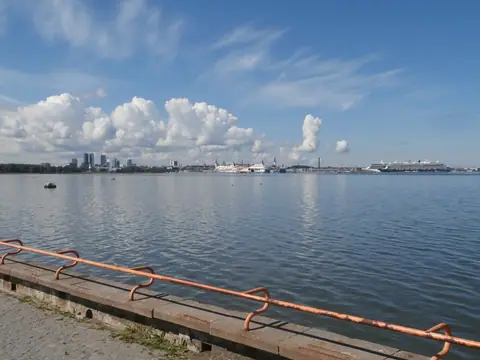
Emperor Nicholas I ordered the Patarei fortress, and it was built between 1830 and 1837 as part of the tsarist fortifications. It was converted into barracks in 1864, and from 1919 it served as a prison until December 2002. After the 1940 Soviet occupation it came under the NKVD as Estonian SSR NKVD Prison No. 1, a key site of detention for arrested officials and officers, many of whom were sent to Gulag camps. Its capacity was nearly 1,000 prisoners at the opening, about 1,500 in the 1930s and a normal 1,200 in 1941. An exhibition area opened in 2019, though the four-hectare sea fortress interiors remain closed for comprehensive reconstruction towards a planned 2027 museum reopening. Meanwhile, the Kalaranna seaside promenade stays open to inspect the exterior masonry along Tallinn Bay.
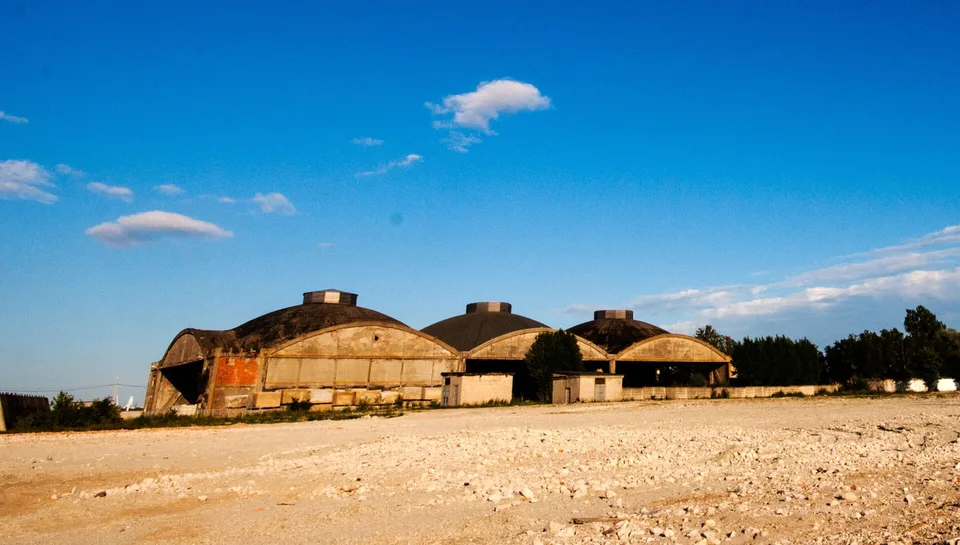
Cold War submarine inside Seaplane Harbour domes
The Estonian Maritime Museum is housed in 1916 to 1917 seaplane hangars, and the second museum site opened there in May 2012. Exhibits include the steamer-icebreaker Suur Tõll, built in 1914, and a Second World War Kalev-class submarine named Lembit. Following an extensive refurbishment completed in May 2024, the early concrete hangars display both vessels beside refreshed maritime exhibits under towering ribbed domes.
Concrete 1980 Olympic terrace at Linnahall
Linnahall opened on 19 July 1980, after groundbreaking in 1975, as part of the preparations for the Olympic sailing event, which was held in Tallinn because Moscow had no suitable venue. Raine Karp and Riina Altmäe designed it, and it has a capacity of 4,200. Its Soviet name was the V. I. Lenin Palace of Culture and Sport, and it became officially known as Linnahall in 1991. The ice rink closed in 2009 and the concert hall in 2010. It stands in the harbour just beyond the Old Town walls, and it is not the municipal Town Hall despite the name.
Creative quarter route from Telliskivi to Linnahall
- Begin at Telliskivi and walk the creative complex.
- Follow the Culture Kilometre towards the sea.
- Visit the Seaplane Harbour, then walk past Patarei's outer sea walls along the Kalaranna promenade.
- Finish at Linnahall for a view back to the Old Town.
The route takes about half a day at a relaxed pace. For a meal afterwards, see what to eat in Tallinn, and for a base here, read where to stay.
Where it is
- 1Kalamaja and the Creative City
- Lennart Meri Tallinn Airport (TLL) · about 7 km from here in a straight line
- Directions in Google Maps
Stations and taxi ranks: OpenStreetMap. Airports: OurAirports. Distances are in a straight line.
Traveller tips
Real advice from people who have been to Tallinn. Every tip is read by our team before it goes live.
No tips yet. Been here? Yours could be the first.
Thank you! Your tip will appear here after a quick review.
More in Tallinn
Continue exploring Tallinn with related neighbourhood, food, and planning guides