Carthage and Sidi Bou Said on the TGM Coastal Train
Riding the TGM railway along the Gulf of Tunis to ancient Punic and Roman Carthage and cliffside Sidi Bou Said.
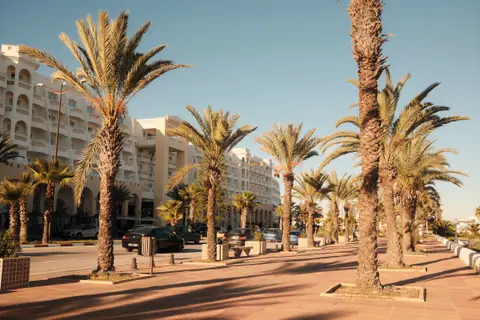
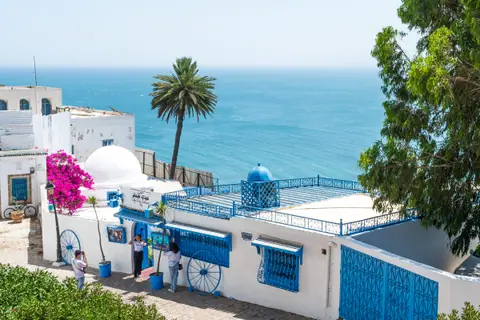
Fifteen kilometres north-east of central Tunis along the curve of the bay, two of North Africa's most famous destinations sit consecutive stops apart on the TGM suburban railway: the UNESCO World Heritage archaeological landscape of Carthage, and the clifftop village of Sidi Bou Said, painted entirely in dazzling whitewash and Mediterranean blue.
How to visit Carthage: Antonine Baths, Byrsa Hill and the Punic Ports
Founded by Phoenician settlers from Tyre under Queen Dido in 814 BC, destroyed by Rome at the end of the Third Punic War in 146 BC, and rebuilt by Julius Caesar and Augustus as the capital of Roman Africa Proconsularis, Carthage is not a single walled site. Instead, its ruins are scattered across a leafy seaside suburb of pine trees and diplomatic villas. Buy a single combined entry ticket at your first site and focus on three core stops along the TGM line:
- Tophet of Salammbô and the Punic Ports (TGM: Carthage Salammbô): begin at the sacred Phoenician precinct of Tanit and Baal Hammon lined with carved limestone stelae, then walk five minutes to the two artificial lagoons of the Punic Ports: the rectangular commercial harbour and the circular military cothon with its central admiral's island where Carthaginian quinqueremes were dry-docked.
- Byrsa Hill and the Acropolis (TGM: Carthage Byrsa): climb the hill that formed the ancient Punic citadel to examine excavated 2nd-century BC Hannibal-era residential streets (fitted with cisterns and mosaic floors) beside the former 19th-century Saint Louis Cathedral and panoramic views over the Gulf of Tunis.
- The Antonine Baths / Thermes d'Antonin (TGM: Carthage Hannibal): walk down through pine gardens right to the Mediterranean water's edge to explore the vast vaulted basement substructures and re-erected 15-metre Corinthian granite column of the largest Roman bath complex built on the African continent (completed under Emperor Antoninus Pius in 162 AD), alongside the adjacent Roman Villas quarter and Amphitheatre.
Sidi Bou Said: blue doors and Baron d'Erlanger's decree
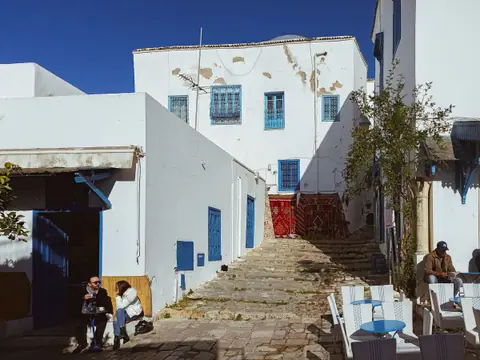
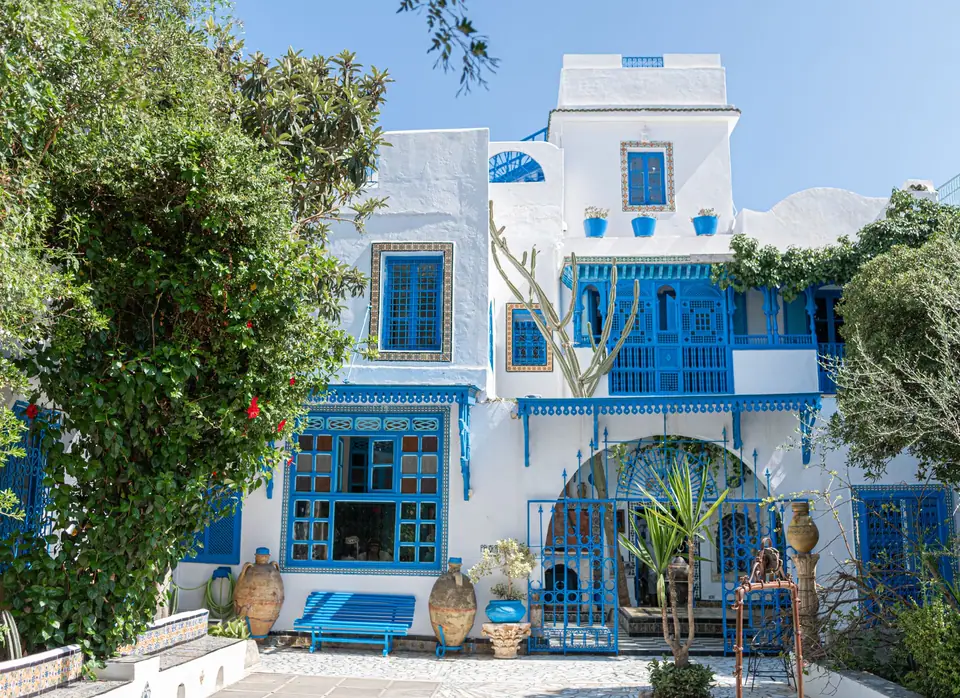
Reboard the TGM train for five minutes to Sidi Bou Said station and walk uphill into the pedestrian village named after the 13th-century Sufi saint Abou Said ibn Khalef. In the 1910s, French painter and musicologist Baron Rodolphe d'Erlanger championed a municipal decree requiring every house to be painted white with doors, shutters and latticed wooden balconies (moucharabiehs) in a specific shade of sky-and-cobalt blue.
Ennejma Ezzahra, Café des Délices and pine-nut tea
First visit d'Erlanger's cliffside palace of Ennejma Ezzahra to admire its carved stucco halls and collection of Arab musical instruments, and step into the courtyard museum of Dar el-Annabi. Afterwards, wander past the tiered terraces of Café des Délices and the steps of Café des Nattes, picking up a hot sugar-rolled bambalouni doughnut on your way down.
Traveller tips
Real advice from people who have been to Carthage and Sidi Bou Said on the TGM Coastal Train. Every tip is read by our team before it goes live.
No tips yet. Been here? Yours could be the first.
Thank you! Your tip will appear here after a quick review.
More in Tunis
Continue exploring Tunis with related neighbourhood, food, and planning guides