Tunis
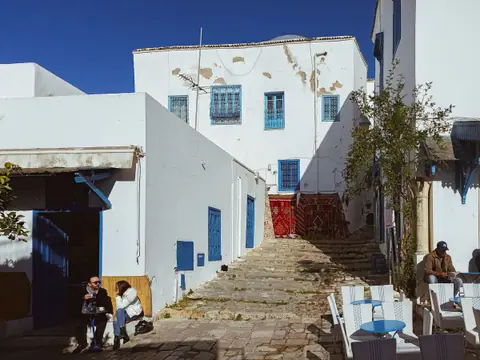
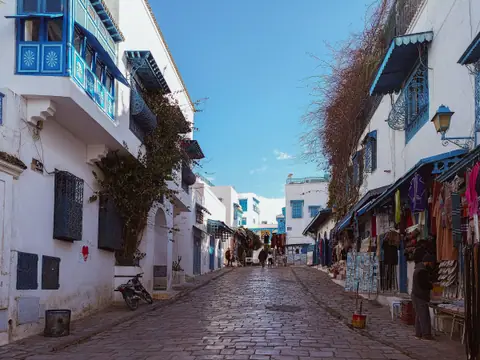
Tunisia's Mediterranean capital, where the vaulted souks and Husainid palaces of the UNESCO Medina meet the Roman mosaics of the Bardo Museum and the TGM coastal train to Carthage and blue-and-white Sidi Bou Said.
Quick decisions
How many days?
3 days: the UNESCO Medina and Avenue Habib Bourguiba on day one, the TGM coastal train to the ruins of Carthage and cliffside Sidi Bou Said on day two, and the Roman mosaics of the Bardo National Museum plus a seafood lunch in La Goulette on day three. Follow our three-day route.
Where should I stay?
The Medina: restored 18th- and 19th-century courtyard dars near the Kasbah or Bab el-Bhar. Centre Ville (Avenue Habib Bourguiba): French-era hotels close to the TGM station. Sidi Bou Said or La Marsa: breezy coastal bases on the Gulf of Tunis. Compare areas in our neighbourhood overview.
Do I need a car?
No. The historic Medina is pedestrian, the suburban TGM light rail links central Tunis directly with La Goulette, Carthage, Sidi Bou Said and La Marsa, and Metro Leger Line 4 runs straight to the Bardo Museum.
Best for
Ancient history and mosaics: Punic and Roman Carthage alongside the world's richest Roman mosaic collection at the Bardo. Islamic architecture: 7th-century Zitouna Mosque and tiled Ottoman-Husainid palaces. Mediterranean coastal towns: Sidi Bou Said and La Marsa.
Before you go
Use the TGM train and metered yellow taxis: carry small Tunisian dinar notes for rail tickets and taxis, and check morning courtyard viewing hours at Zitouna Mosque. Read our practical briefing.
Getting around
Tunis-Carthage Airport (TUN): located just 8 kilometres north-east of the centre, a short metered yellow taxi ride from either the Medina gates or the northern coastal suburbs. Details in arrival and transport.
Continue your trip
SNCFT trains from Gare de Tunis (Place de Barcelone) run south to Sousse, El Jem and Sfax or north-west to Bizerte, while shared louages reach Kairouan, Dougga and the Cap Bon peninsula.
Overview
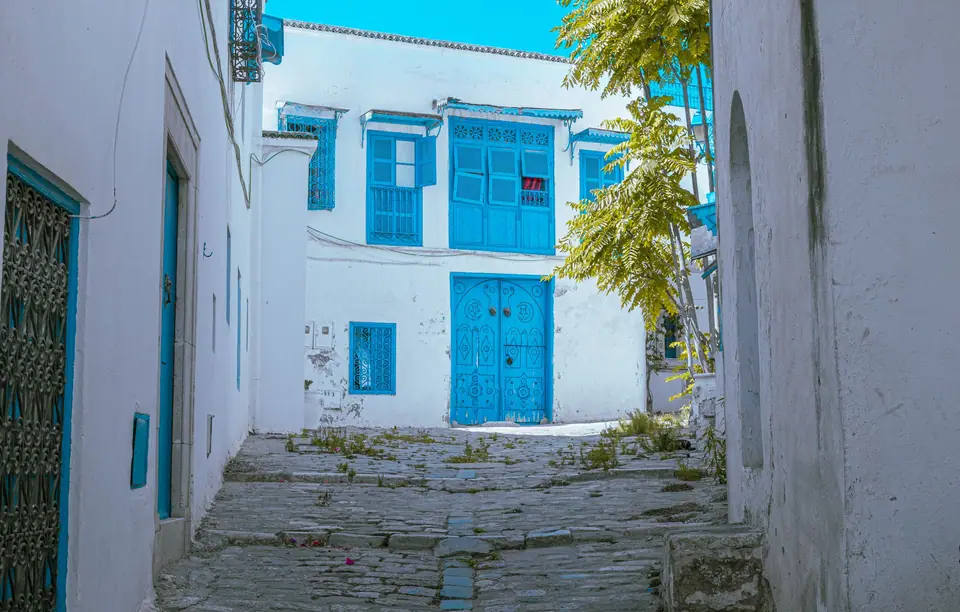
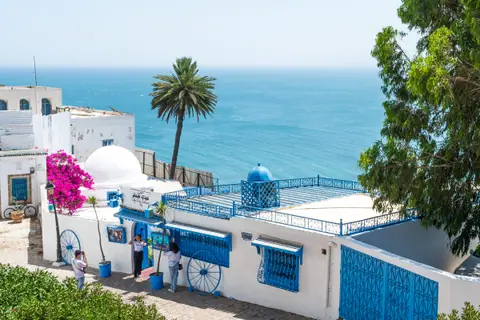
Tunis occupies an isthmus between the shallow lagoon of Lake Tunis and the salt lake of Sebkha Sejoumi, opening east onto the sparkling Gulf of Tunis. Few Mediterranean capitals pack so many distinct eras into a single metropolitan shoreline: within thirty minutes on public rails, you can move from the 9th-century Aghlabid domes and 18th-century Ottoman palaces of the UNESCO-listed Medina of Tunis to the tree-lined arcades of Avenue Habib Bourguiba, the matchless Roman floor mosaics of the Bardo National Museum, and the Punic harbours and clifftop white-and-blue lanes of Carthage and Sidi Bou Said.
Start with our first-timer briefing and the best things to do in Tunis.
Getting there
Tunis-Carthage International Airport (TUN) sits only 8 kilometres from central Place de l'Indépendance, making arrival one of the quickest in North Africa. Inside the city, the green Metro Leger trams connect Place de Barcelone and Place du Bardo, while the historic TGM suburban train crosses the causeway over Lake Tunis to La Goulette, Carthage, Sidi Bou Said and La Marsa. See how to get to Tunis and around.
Where to stay
Visitors split roughly in half between the atmospheric courtyard guesthouses (dars) of the old Medina and the seaside villas and boutique hotels of Sidi Bou Said, La Marsa and Gammarth along the northern coast, with French-built Centre Ville offering practical mid-range hotels in between. Compare all options in where to stay in Tunis.
Things to do
Follow the scent of jasmine and ambergris through Souk el-Attarine to the great courtyard of Zitouna Mosque and the tiled palaces of the Medina, spend a morning marvelling at mythological Roman mosaics inside the Bardo National Museum, and ride the TGM rail out to the Antonine Baths of Carthage and Sidi Bou Said. Full list in things to do in Tunis.
Food and drink
Tunisian cooking is bold, sun-ripened and perfumed with harissa (roasted red chilli paste spiced with caraway and coriander), olive oil and capers: crisp triangular brik à l'oeuf pastries, steaming morning bowls of chickpea lablabi, whole grilled sea bream and red mullet in the port of La Goulette, and hot sugar-dusted bambalouni doughnuts in Sidi Bou Said. Read more in our Bardo, La Goulette and food overview.
Culture
Heir to ancient Phoenician and Roman Carthage just down the bay, Tunis rose to prominence at the end of the 7th century around the Zitouna Mosque, flourished as a medieval miniature empire under the 13th- to 16th-century Hafsid dynasty, and acquired its octagonal minarets, painted wooden ceilings and Andalusian craft guilds under Ottoman Dey and Husainid Beylical rule before becoming the capital of independent Tunisia in 1956.
Weather by month
Tunis is warmest in August, with average highs around 35°C, and coldest in January, when nights drop to about 8°C. December is the wettest month, with rain on about 8 days. For mild weather with fewer rainy days, aim for April and May.
| Month | Low | Range | High | Rain | Rainy days |
|---|---|---|---|---|---|
| Jan | 8°C | 16°C | 61 mm | 8 d | |
| Feb | 8°C | 17°C | 49 mm | 7 d | |
| Mar | 10°C | 20°C | 44 mm | 6 d | |
| Apr | 12°C | 23°C | 38 mm | 5 d | |
| May | 16°C | 27°C | 22 mm | 3 d | |
| Jun | 20°C | 31°C | 10 mm | 2 d | |
| Jul | 23°C | 35°C | 3 mm | 1 d | |
| Aug | 23°C | 35°C | 7 mm | 1 d | |
| Sep | 21°C | 31°C | 36 mm | 4 d | |
| Oct | 17°C | 26°C | 55 mm | 6 d | |
| Nov | 13°C | 21°C | 56 mm | 7 d | |
| Dec | 9°C | 17°C | 64 mm | 8 d |
Averages of daily values from 2015 to 2024. Rainy days are days with at least 1 mm of rain. Source: Open-Meteo · Compare destinations by month.
Tunis on the map
Every place we cover in Tunis. Tap a category or pin to explore.
In-depth Tunis guides
Browse the guides grouped by topic: sights, neighbourhoods, food, transport, day trips and trip planning.
Sights, Landmarks & Parks
Key monuments, viewpoints, museums and nature trails.
- Best Things to Do in TunisWorld-class Roman mosaics, medieval craft souks, Punic and Roman baths, cliffside blue doors and harbour fish.
- The Medina of Tunis and Avenue Habib BourguibaGuild souks, Husainid palaces and rooftop terraces in the medieval Medina, plus French-era Centre Ville.
- Carthage and Sidi Bou Said on the TGM Coastal TrainRiding the TGM railway along the Gulf of Tunis to ancient Punic and Roman Carthage and cliffside Sidi Bou Said.
- The Bardo National Museum, La Goulette and Tunisian FoodRoman mosaics inside a Husainid palace at the Bardo, plus La Goulette harbour fish, brik and lablabi.
Neighbourhoods & Where to Stay
Districts, historic quarters and the best bases for your stay.
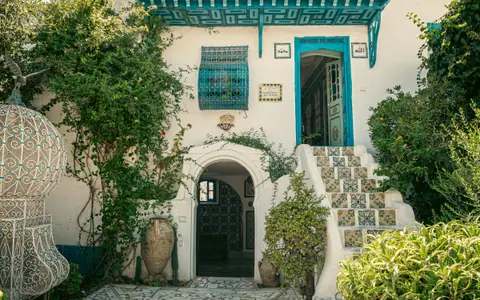
Getting Around & Arrival
Airport transfers, public transit, passes and driving rules.
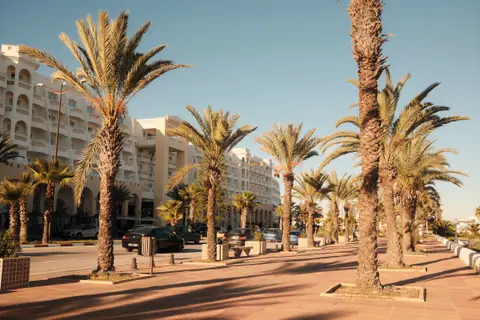
Trip Planning & Itineraries
When to visit, what to pack and day-by-day routes.
- Tunis: What to Know Before You GoUnderstanding Tunis's three distinct zones, closed currency rules, TGM trains and Medina navigation.
- Best Time to Visit TunisSpring wildflowers at Carthage, warm October swimming, summer jasmines and mild museum winters.
- What to Wear in TunisWhat to wear from the traditional alleys of the Medina to the breezy coastal hills of Sidi Bou Said.
- Tunis 3-Day Itinerary: Medina, Carthage, Sidi Bou Said and BardoThree days combining the medieval Medina, ancient Punic-Roman Carthage, Sidi Bou Said and the Bardo Museum.
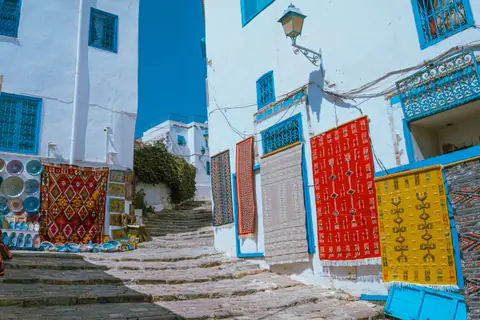
Need your embassy or consulate in Tunisia? See embassies and consulates in Tunisia.
Reviews
Log in to write a review.
No reviews yet.