Tunis: What to Know Before You Go
Understanding Tunis's three distinct zones, closed currency rules, TGM trains and Medina navigation.
Short answer: think of Greater Tunis as three linked worlds (the historic Medina, the French-era Centre Ville and the northern coastal suburbs of Carthage, Sidi Bou Said and La Marsa), carry Tunisian dinar cash withdrawn at the airport, and use the TGM coastal train and Metro Leger to move between them.
Three neighbourhoods that work together
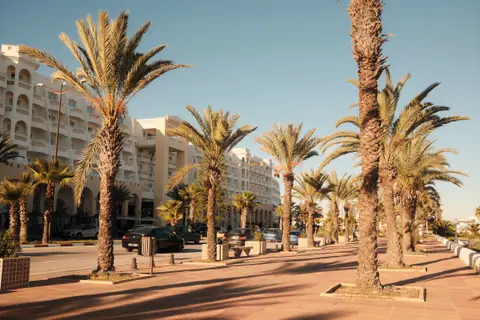
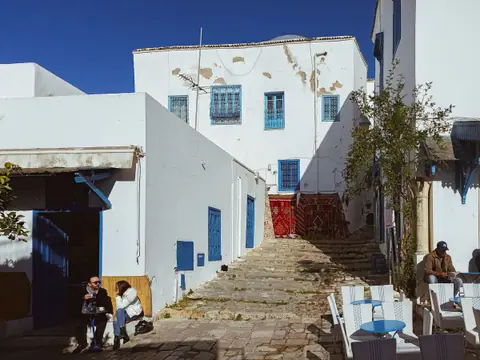
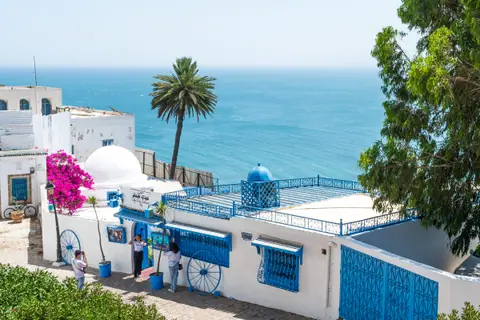
On a map, Tunis looks sprawling, yet everything visitors want to see falls along a clear east-to-west and coastal axis. At the western high point sits the walled medieval Medina, descending to the freestanding arch of Bab el-Bhar (Porte de France). Directly east of that gate stretches the gridded 19th- and 20th-century Ville Nouvelle along tree-lined Avenue Habib Bourguiba down to the edge of Lake Tunis. At the eastern end of the avenue, the TGM suburban railway crosses a narrow causeway across the lagoon (flanked by feeding flamingos in winter) to reach the port of La Goulette, the dispersed archaeological sites of Carthage, cliffside Sidi Bou Said and the beaches of La Marsa.
Tunisian dinar rules, cards and taxis
The Tunisian dinar (TND) is a closed currency: you cannot buy it before arriving in Tunisia and it is illegal to export dinar notes when you fly home. Use the ATMs or official bank exchange counters in the arrivals hall at Tunis-Carthage Airport, keep your exchange receipts so you can convert any leftover notes back at the airport before departure, and carry small 5-, 10- and 20-dinar notes for yellow metered taxis, TGM and Metro tickets, museum entries and Medina souk stalls. Larger hotels and restaurants in La Marsa, Les Berges du Lac and Centre Ville accept Visa and Mastercard.
Navigating the Medina and Carthage archaeological sites
Inside the Medina, craft souks are grouped by traditional guild around the central Zitouna Mosque; mornings and early afternoons from Monday to Saturday are the liveliest times to browse, as many stalls close on Sundays. At Carthage, the Punic and Roman ruins are spread across several residential hills rather than a single fenced park; buy the combined multi-site ticket at your first stop (such as the Antonine Baths or Byrsa Hill) and keep it to enter the remaining sites. Compare bases in where to stay in Tunis.
Traveller tips
Real advice from people who have been to Tunis: What to Know Before You Go. Every tip is read by our team before it goes live.
No tips yet. Been here? Yours could be the first.
Thank you! Your tip will appear here after a quick review.
More in Tunis
Continue exploring Tunis with related neighbourhood, food, and planning guides