








Kyoto Tea Ceremony
A bowl of whisked matcha, a seasonal sweet and an hour of slow, exact movement, in the city where the tea ceremony took its modern form.
Overview
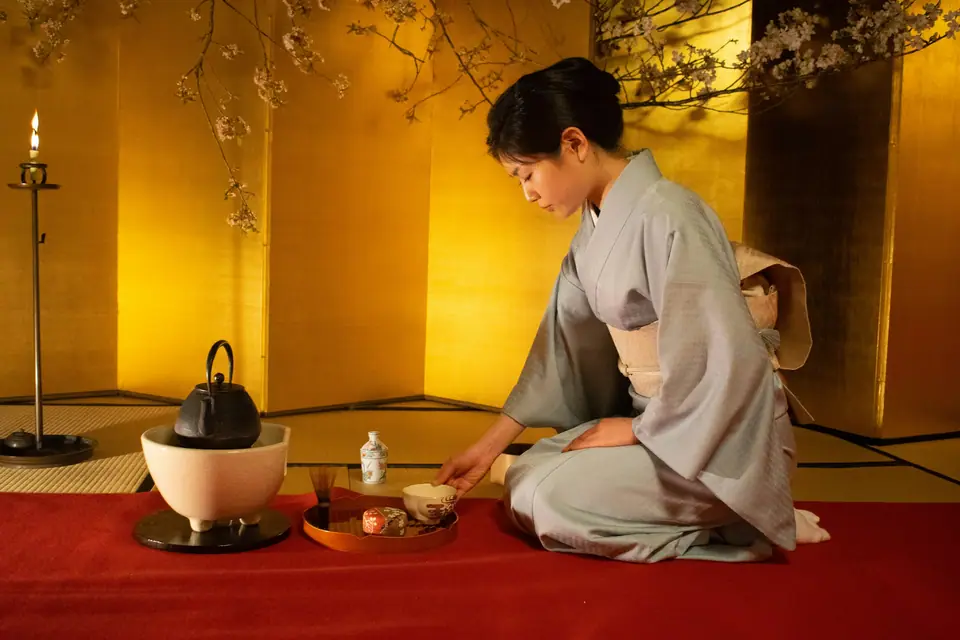
The Japanese tea ceremony, chanoyu (literally "hot water for tea") or sado ("the way of tea"), is a set sequence in which a host prepares powdered green tea for guests. It took the shape we know in Kyoto in the 16th century under the tea master Sen no Rikyu, and the city is still home to the headquarters of the main schools. Every movement has a set order: how the host folds the silk cloth, where the scoop rests, which way the bowl faces. It can look stiff at first. After a few minutes it starts to feel calming, a little like watching someone cook with total attention.
The sessions offered to visitors are short, simplified versions with an explanation in English. They are not the four-hour formal gatherings with a full meal that practitioners attend, and they don't claim to be. Done well, they're one of the most direct ways into Kyoto's culture you'll find in a few days.
What happens, in order
- Entering the room. Shoes off at the step. You kneel on tatami, often after looking at the tokonoma, the alcove with a hanging scroll and a single flower chosen for the season.
- The sweet. You're served a wagashi, a small traditional sweet, often made of bean paste and shaped like a flower or a leaf of the month. Eat it before the tea. Its sweetness balances the bitterness that follows.
- The preparation. The host purifies each utensil with precise gestures, spoons matcha into the bowl, adds hot water from an iron kettle and whisks it into a fine froth with a bamboo whisk (chasen). Visitor sessions serve usucha, the thin, frothy style. Thick koicha is kept for formal gatherings.
- Receiving the bowl. Bow, pick it up with your right hand, rest it on your left palm, and turn it clockwise a little, twice, so its decorated front faces away from you. It's a way of not drinking from the best side.
- Drinking. Three or so sips. A small slurp on the last one is polite, not rude. Wipe the rim with your fingertips, turn the bowl back and set it down.
- Your turn. Many sessions end with guests whisking their own bowl. It's harder than it looks.
Sitting seiza
The formal posture is seiza: kneeling with your weight back on your heels. Most visitors last about ten minutes before their feet go numb. Nobody expects you to hold it for an hour. Hosts will tell you to sit cross-legged or shift your legs to the side whenever you need to, and it isn't rude to do so. Stand up slowly at the end, because dead feet are a common way to stumble.
Is it for everyone?
It suits anyone curious about Japanese culture, couples, and children old enough to sit still. It doesn't suit people who hate slow things, and matcha is bitter, so some find it an acquired taste. With young children, choose a short session that includes whisking your own tea, which keeps their hands busy.
How to Book
There are three broad types, and they're very different.
Tea houses and cultural centres run small group sessions with an explanation in English, mostly in Higashiyama, Gion and downtown. This is what most visitors want: a real tea room, a qualified host, and time for questions. Look for a small group size and a host from one of the recognised schools, such as Urasenke or Omotesenke.
Temples are a mixed picture. Many Zen temples serve a bowl of matcha and a sweet on a veranda facing the garden. That's lovely, but it's tea with a view, not a ceremony. A few temples do run proper sessions, usually booked well in advance.
Kimono packages add dressing in a rented kimono before the ceremony. They take longer, feel more like a photo experience, and the explanation is often shorter. Choose one if the kimono is the point for you.
Book online a few days ahead, more in cherry blossom season and November. Check the cancellation policy and ask what language the session is in. Most sessions last under an hour, so one fits easily into an afternoon of our 3-day itinerary.
Tips
- Wear clean, hole-free socks and clothing you can kneel in. A long, tight skirt is hard work. Our what to wear guide explains why Kyoto is a slip-on shoe city.
- Skip strong perfume. It competes with the tea and the incense.
- Take off rings and watches before you hold the bowl. Some bowls are old and valuable, and metal scratches them.
- Ask before taking photos. Most visitor sessions allow them at set moments, not during the host's preparation.
- Need chairs? Knee or back trouble doesn't rule you out. Some places run ryurei style sessions at a table with chairs, and others provide low stools. Ask when you book, and check for steps at the entrance.
- Pair it with Uji. If you like the tea, the town where much of Kyoto's matcha is grown is an easy half day away. See our things to do list.
Reviews
Log in to write a review.
No reviews yet.
You might also like

Ubud Cycling Tour
Usually a half day to a full day including hotel pickup, with around 2 to 3 hours on the bike · Bali
Tokyo Izakaya Food Tour
About 3 hours, usually three or four stops in one or two neighbourhoods · Tokyo
Moroccan Cooking Class in Marrakech
About 3 to 5 hours, including the market visit and the meal you cook · Marrakech

Inca Trail Trek to Machu Picchu
4 days and 3 nights for the classic trek, 1 long day for the short version (2 days with a night in Aguas Calientes and a second visit) · Machu Picchu