










What to Wear in Kyoto
Kyoto has one packing rule that other cities don't: you'll take your shoes off many times a day. Temple halls, ryokan rooms, some restaurants, even the fitting rooms in a few shops. Laced boots that take two minutes to undo get tiring very quickly. Bring comfortable walking shoes you can slip on and off, and socks without holes, because everyone will see them.
The ground is harder than it looks. Fushimi Inari is a climb of stone steps, the Higashiyama lanes are sloped and paved, and the gravel paths in temple gardens are hard on thin soles. Expect to walk fifteen kilometres on a full sightseeing day.
Temples and shrines have no formal dress code, but people dress modestly. Very short shorts and beachwear look out of place in a Zen temple, even if nobody says anything. In summer that's a real trade-off, because July and August are hot and humid. Light, loose cotton or linen is the answer. Locals carry a small towel (a tenugui) for sweat, a folding fan, and a parasol.
In winter the problem is inside. Wooden temple halls are unheated and open to the air, and you'll be standing on cold boards in your socks. Thick socks and a warm layer you can keep on indoors make a big difference.
Packing list
- Walking shoes that slip on and off easily
- Several pairs of plain, hole-free socks (thick ones in winter)
- A light layer for air-conditioned trains and cool evenings
- A compact umbrella, essential in June and early July
- A hat, small towel and folding fan from June to September
- A coin purse, since Japan still uses a lot of coins
- A small bag for your own rubbish, as bins are rare
- A day bag with room for shoes, as some temples hand you a plastic bag to carry them in
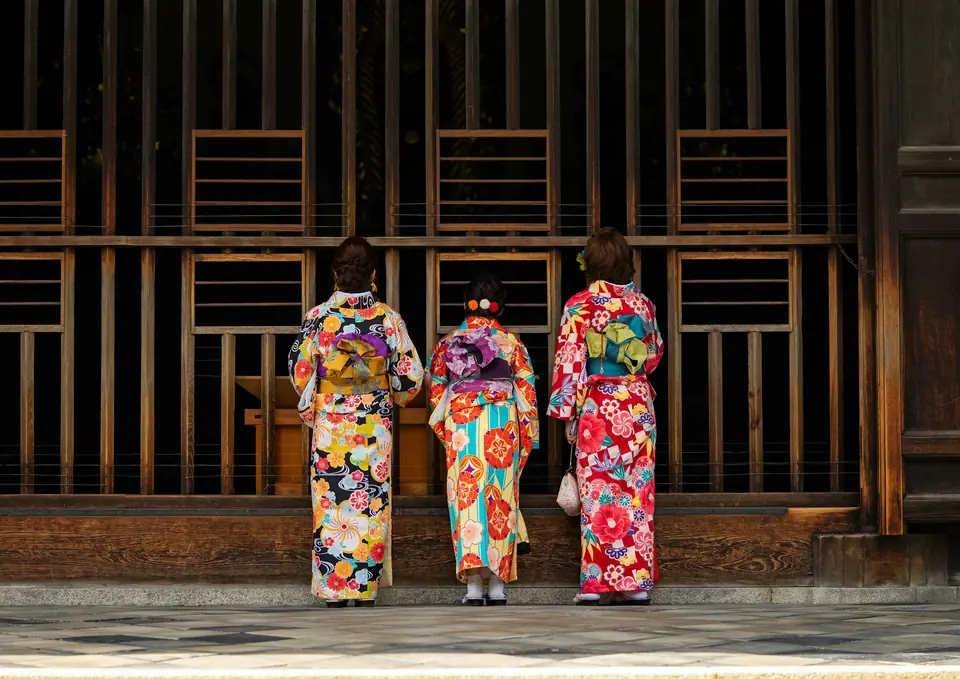
Kimono rental shops are all over Higashiyama and Gion, and renting one for a day is popular and welcome. Choose a shop that dresses you properly (left side over right), and bring shoes you can walk in, because the wooden sandals are hard on your feet. Leave plenty of time if you plan to wear it to Fushimi Inari, where the climb is steep. Our Fushimi Inari guide covers the route, and the best time to visit guide has the weather month by month.