


























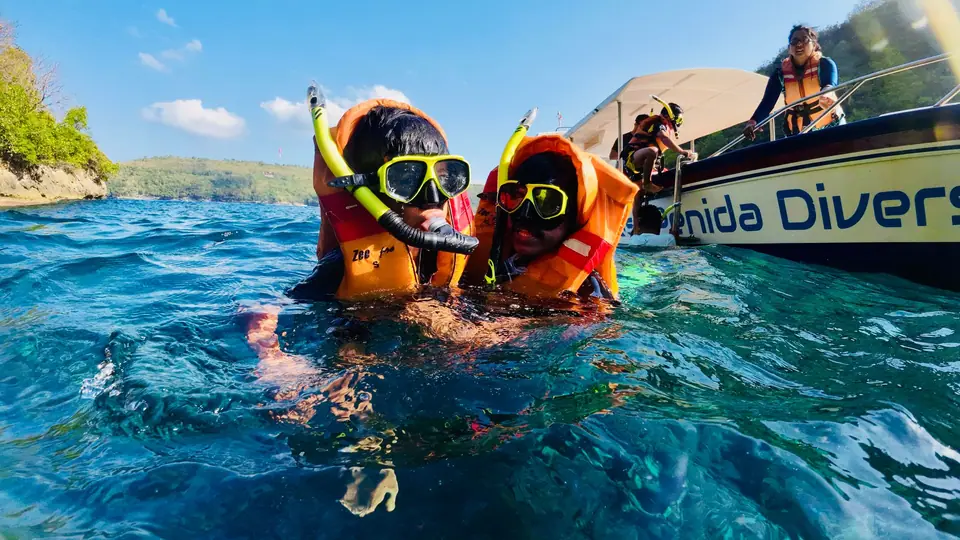
Nusa Penida Snorkelling Trip from Bali
Manta rays wheeling below you off Bali's wild neighbour island, and the boat checks that matter more than the photos.
Overview
Reef mantas live around Nusa Penida all year. They come in to cleaning stations off the island's southwest cliffs, where small fish pick parasites off their skin, and they feed on plankton near the surface. On a good day you float face down in the swell and a ray three metres or more across banks underneath you, close enough to see its gill slits flex. That is the reason to go, and most trips deliver it. What can spoil it is the sea.
Where the boats go
A typical trip visits three or four spots. Manta Bay is the usual snorkelling site: a bay under the cliffs, sheltered by comparison, where mantas feed close to the surface. Manta Point, further along the south coast, is a cleaning station more often used by divers, exposed to the open ocean and frequently rough. The other stops are reef sites such as Crystal Bay, Gamat Bay and the walls near Toyapakeh, with coral, turtles on lucky days and currents that can be strong. Snorkellers see mantas from above; if you want to be at their level, you need a dive trip.
Sea conditions, the real deciding factor
The channel between Bali and Nusa Penida is deep and its currents are notoriously strong. From December to March the weather is unsettled and trips are cancelled more often. The dry months usually bring calmer surface conditions and better visibility, though the water can turn surprisingly cold, and big southern swells still roll in on some days. Boat captains decide on the day, and a switch from Manta Point to a calmer site is a good sign, not a rip-off.
Safety, in plain terms
Boat safety around Bali is uneven, and part of the tourist fleet is lightly regulated. In March 2025 a snorkelling boat heading from Sanur to Manta Point capsized in heavy swell off Nusa Penida and a passenger died; police said life jackets were on board but some passengers were not wearing them. Snorkellers have also been struck by boat propellers around the Nusa islands. None of this means you should stay ashore. It does mean choosing the operator on its safety, not its price.
Who it suits, and who it doesn't
It suits confident swimmers who are fine in open water with waves. It does not suit weak swimmers, anyone who gets badly seasick, or families with small children, who will be happier on the shore reefs at Amed described in our beaches guide. We would also skip the combined packages that pair snorkelling with a land tour to Kelingking and Broken Beach on the same day. Both halves end up rushed, and Penida's roads are slow.
How to Book
There are two ways to do it. The day trip from Bali collects you from your hotel, takes you to Sanur for the fast boat, and then either snorkels from that boat or transfers you to a smaller local one. It is long but simple. Staying a night on Nusa Penida or Nusa Lembongan lets you snorkel in the morning, when the sea is often calmer, without the crossing on the same day. Our getting there guide covers the fast boats from Sanur.
Before booking, ask:
- how many snorkellers go on each boat, and how many guides are in the water with them
- whether life jackets and buoyancy vests are provided in your size, and fins
- what the plan is if Manta Point or Manta Bay is too rough
- whether the regency's visitor fee and the marine area fee are included; a new collection system started in September 2026 and also charges at some sites, including Crystal Bay, so check the current arrangement
- the cancellation terms for bad weather
Look at the boat photos. A twin-engine boat with a canopy and visible safety gear beats a small open boat crammed with people.
Tips
- Wear the life jacket on the crossing. Not beside you, on you, fastened.
- Take seasickness tablets early, before the boat leaves Sanur, not when you start to feel it.
- Keep your distance. Stay several metres from the mantas, never touch or chase them, and don't swim directly over a cleaning station. Touching strips the protective mucus from their skin.
- Stay near the guide and the boat. Currents can carry you away quickly, and other boats move through the same sites.
- Bring a rash vest or thin wetsuit. It protects against sunburn, jellyfish and the cold dry-season water.
- Use reef-safe sunscreen, and put it on well before you get in.
- Keep the next morning free of flights. Bad weather can cancel return boats too.
Reviews
Log in to write a review.
No reviews yet.
You might also like
Kecak Fire Dance at Uluwatu Temple
About 3 hours: an hour or more at the temple before the show, then about an hour of performance · Bali

Ubud Cycling Tour
Usually a half day to a full day including hotel pickup, with around 2 to 3 hours on the bike · Bali

Mount Batur Sunrise Trek
About 1.5 to 2 hours up and 3 to 4 hours on the trail in total; a long night and morning with transfers from Ubud or the south · Bali
