




Ubud Cycling Tour
A morning spent rolling downhill from the Batur crater rim towards Ubud on village lanes, past rice fields, orange groves and family temples.
Overview
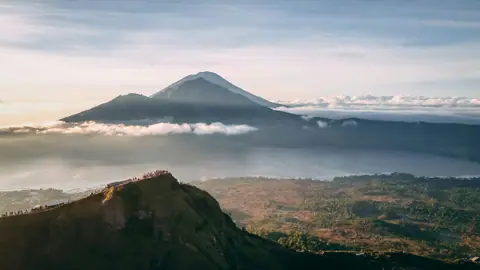
The classic Bali bike tour is built around gravity. A van collects you in the early morning and drives you up to Kintamani, on the rim of the Batur caldera at around 1,400 metres. You get breakfast with a view across to Mount Batur and its lake, then you get on a bike and spend the next couple of hours rolling back down towards Ubud. Almost all of it is downhill.
That format is why it works for people who don't normally cycle. You brake more than you pedal. Most routes include one or two short climbs, and the van follows the group, so anyone who is tired can climb in and ride the rest of the way.
What the route passes
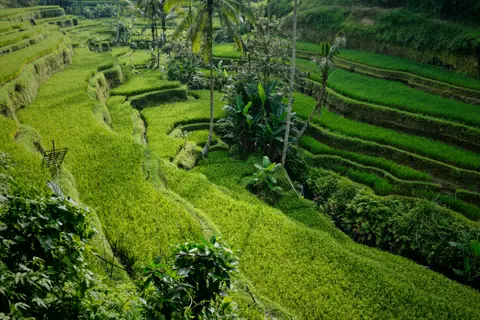
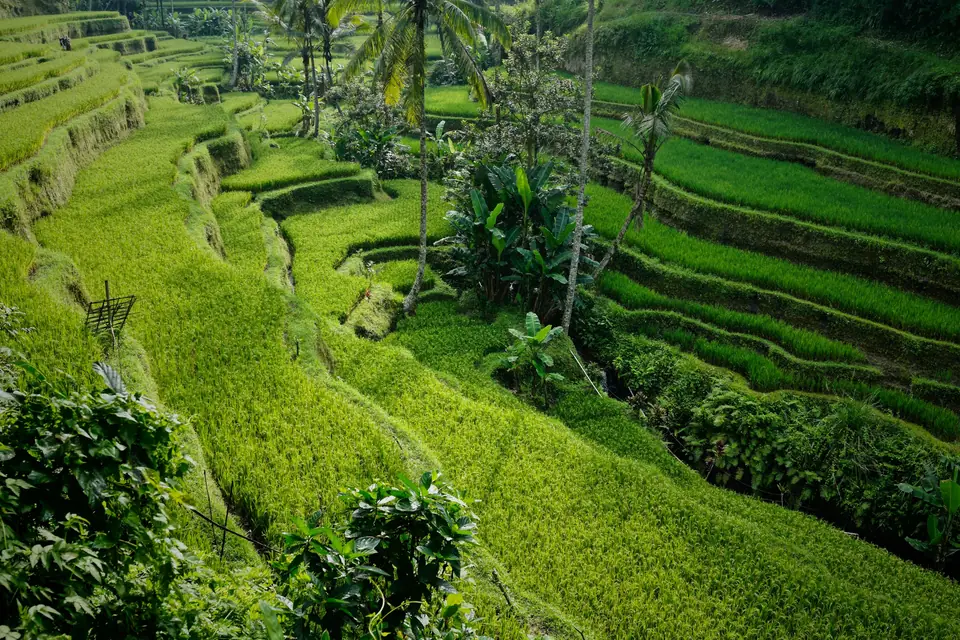
The first stretch runs through the cool highlands, where the crops are oranges, cabbages and chillies rather than rice. As you drop, the air warms up and the landscape turns into the Bali on the postcards: terraced paddies, coconut palms, bamboo, and a shrine at the corner of every field. The better operators leave the main road quickly and use narrow village lanes, some paved, some concrete strips barely wider than the handlebars.
Along the way most tours stop at three places.
- A coffee plantation. A garden walk past coffee, cacao and spice plants, then a tasting of Bali coffee and herbal teas.
- Rice fields. A walk along the edge of the paddies, often with an explanation of subak, the old system that shares water between farmers through temples. You see how a working field looks, which Tegallalang's crowds never show you.
- A village compound. A family house with its separate pavilions, kitchen and household temple, often the guide's own. This is the part many people remember best, because it's the only moment on a Bali holiday when you step inside a home.
A word on kopi luwak
The coffee stop usually includes kopi luwak, beans passed through the gut of a civet, a small wild cat-like animal. The trouble is how it's produced for tourists. Studies by World Animal Protection found that civets on plantations along the tourist roads of Gianyar and Bangli were kept in small, bare cages with wire floors and fed a poor diet to produce beans. We'd skip the tasting and ask not to see caged animals. If a plantation keeps civets in cages, it tells you all you need to know.
Traffic and safety
The quiet lanes are fine. The risk sits on the few stretches of main road, where you share space with trucks, tourist vans and scooters. Stay in single file, keep your speed down on wet or sandy concrete, and don't let the downhill tempt you into racing. The brakes are working hard on a descent this long, so check them before you start.
How to Book
Tours are sold by small local companies, often family-run, and by booking sites. Most include hotel pickup (earlier from the south coast than from Ubud), breakfast, the bike and helmet, the stops, and lunch, frequently at a family compound.
When you compare, look for:
- Group size. A group of eight or ten moves smoothly. Twenty riders means long waits and more time on the main road.
- The bike. Mountain bikes with front suspension and disc brakes are what you want. Ask about sizes for children.
- E-bikes. Several operators offer electric bikes, and some run separate e-bike loops closer to Ubud through Tegallalang and the rice fields. These suit riders who want to go uphill as well as down, or who are less confident.
- A support van that follows the group, and a guide at both front and back.
- Insurance. Check what the operator covers, and if your own travel policy includes cycling.
Access to the Kintamani area carries a local entry fee. Ask if your tour price includes it. Cancellation terms vary a lot, and many local operators charge in full for same-day cancellations. Our Ubud guide covers the other day trips from town.
Tips
- Season. The dry months, roughly April to October, give the clearest views of Batur at breakfast. In the wet season rides usually still go ahead, since storms tend to come later in the day, but lanes get slippery. See our best time to visit guide.
- Bring a layer. Kintamani is cold in the early morning, and you will be glad of a light jacket for the first descent.
- Cover your knees and shoulders for the temple and compound stops, or carry a sarong.
- Fitness. If you can ride a bike on a flat road, you can do this. What matters more is being comfortable braking for a long time.
- Who it suits: families with children around eight and up, first-time visitors who want to see village life, and anyone who has had enough of temple car parks. It suits less well serious cyclists looking for a workout.
- Don't pair it with the Batur sunrise hike on the same day. Both start before dawn.
Reviews
Log in to write a review.
No reviews yet.