

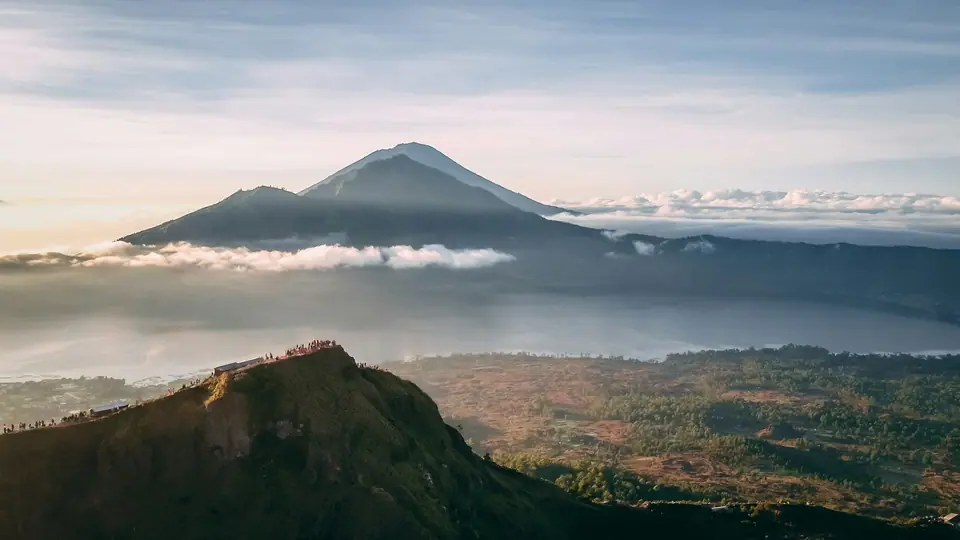
Mount Batur Sunrise Trek
A night climb up an active volcano in the north of Bali, timed to reach the rim as the sun comes up over the caldera, Lake Batur and Mount Agung.
Overview
Mount Batur is an active volcano standing inside a much older and much larger caldera in Kintamani, in the highlands of north-central Bali. Its summit is about 1,700 metres high, low enough for anyone reasonably fit to reach in the dark and high enough to look down on everything around it. Its last eruptions were around 2000, and you'll walk past black lava flows from earlier ones on the drive in.
The trek is built around one moment. You start with head torches in the small hours, climb through the dark in a slow line of lights, and sit on the rim as the sky turns orange behind Mount Agung, Bali's highest and holiest mountain. Below you, Lake Batur fills the eastern side of the caldera, and the villages along its shore wake up. On clear mornings Mount Abang rises beside Agung, and Mount Rinjani on Lombok shows on the horizon further east.
How hard is it?
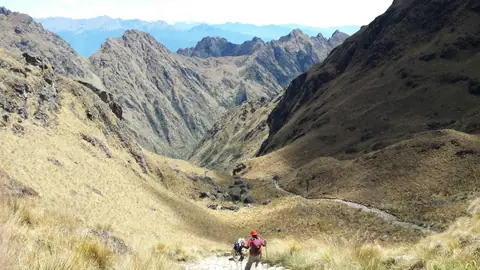
Moderate, with one catch. The lower section climbs gently through fields and scrub. The upper third is steep and made of loose volcanic scree and gravel, where you slide back a little with each step. Most groups take one and a half to two hours to the top, with stops. Coming down on the same loose ground is harder on the knees than going up, and it's where people fall. You don't need any climbing experience, but you do need to be comfortable walking uphill for two hours with little flat ground.
At the top
Guides serve a simple breakfast at the summit: bread, bananas and eggs, often cooked in the steam that vents from cracks in the ground near the crater. It's more novelty than meal, but warm food in the cold is welcome. After sunrise, some groups add a loop around the crater rim, where steam rises from the ground and long-tailed macaques wait near the huts for food. Don't feed them, and keep your bag closed.
Who it suits, and who should skip it
It suits active travellers who don't mind losing a night's sleep, and it's one of the few big views on the island you earn on foot. It is also very busy. On a dry-season morning hundreds of people share the summit, and the rim can feel like a viewing gallery. If you want solitude, this is not the place.
Skip it with bad knees, a fear of loose downhill slopes, young children or a heart or breathing problem. It's also a poor idea on your first night after a long-haul flight. The jeep sunrise tour is a sensible alternative: a four-wheel drive takes you across the old lava fields to a viewpoint below the volcano for the same sunrise over Agung, with no climbing. You miss the summit view into the caldera, but not much else.
Recent rules
In 2023 the governor announced a ban on climbing Bali's sacred mountains, Batur included. It was never put into effect, because the province cannot permanently close these areas under national rules, and the treks carry on. A 2025 circular from the governor asks foreign visitors to explore natural sites with certified guides and to respect sacred places. You'll also need the Bali tourist levy paid before you arrive; see our Bali travel guide.
How to Book
You can't climb Mount Batur alone. The local trekking guide association, working with the customary village, runs the trails and checks hikers at the start points; independent hikers get stopped and told to hire a guide. Every tour, however you book it, ends up with one of their registered guides.
Most people book a package with hotel pickup. From Ubud the drive to the trailhead takes a little over an hour, so pickup is usually between 2am and 3am. From Seminyak, Canggu or Kuta it's around two hours, so expect to be collected about 2am. You're back at your hotel by late morning or around midday.
When you compare, check:
- Group size. A small group means you set your own pace and don't wait at every stop.
- That the guide fee, head torch, breakfast and water are included.
- Which route: the standard route up and back, or a longer loop via the crater rim.
- Extras such as a coffee plantation stop or hot springs by the lake afterwards, which are pleasant but make the day longer.
- The cancellation policy for bad weather or a change in the volcano's alert level.
Private tours cost more but let you start when you like, which helps if you're slower on hills. Our Ubud guide covers the town most people set out from.
Tips
- Dress for cold. It can be around 10 to 15°C on the rim before sunrise, with wind. Bring a fleece or light down jacket, long trousers and a hat; you'll strip off on the way up and put it all back on at the top. Our what to wear guide has the rest.
- Wear shoes with grip. Trainers with a good sole work. Sandals and smooth soles don't on the scree.
- Carry your own water and a snack, plus some small change for toilets and drinks sold on the trail.
- Pick the season. From about April to October the summit is more often clear. In the wet months you may climb for two hours and see only cloud. Cloud can sit on the rim in any month, and no guide can promise a view.
- Go midweek if your dates allow; weekends and holidays are the busiest.
- Keep the afternoon free. After a 2am start, a pool and a nap are the right plan.
Reviews
Log in to write a review.
No reviews yet.