Photo by Bob Fisher on Unsplash
Watching Sumo in Tokyo
Fifteen days of bouts at the national sumo hall in Ryogoku, three times a year, and a morning at a training stable for the months in between.
Overview
Sumo is the one Japanese tradition you can watch as a sports fan rather than as a respectful outsider. The crowd cheers, groans and throws cushions when a grand champion loses. Most bouts last seconds. Everything around them takes minutes: the salt thrown to purify the ring, the stares, the false starts. After a few hours it stops feeling slow and starts feeling like tension.
There are six grand tournaments (honbasho) a year, and three are in Tokyo, at the Ryogoku Kokugikan: in January, May and September. Each lasts fifteen days, starting and ending on a Sunday. The other three are in Osaka, Nagoya and Fukuoka. Our best time to visit guide shows how those months fit with Tokyo's seasons.
How a tournament day runs
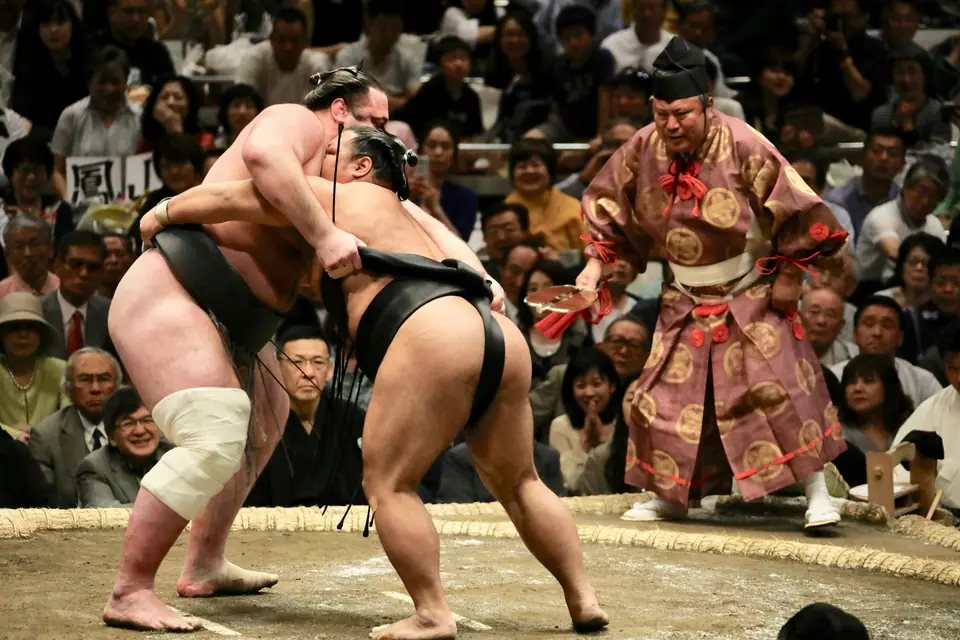
The doors open in the morning and the lowest divisions start early, in a near-empty hall. These are young wrestlers, some of them teenagers, and the bouts come fast. Through the middle of the day the level rises and the seats slowly fill. You can walk down close to the ring at this point and nobody minds.
Mid-afternoon, the second division (juryo) holds its ring-entering ceremony, and later the top division (makuuchi) follows: wrestlers in embroidered silk aprons climbing onto the ring in a line. Then the grand champion, the yokozuna, performs his own ceremony with a white rope belt, stamping and clapping while the whole hall watches. The top-division bouts fill the last couple of hours, and the day ends with a bow-twirling ritual after the final bout.
So you don't need to be there from the start. Arriving in early to mid afternoon gives you the ceremonies and every bout that matters. The tournament's final weekend, with the title often decided on the last day, is the loudest.
Outside tournament months
Wrestlers live and train in stables (heya), most of them in and around Ryogoku. Practice (keiko) starts early in the morning and ends before lunch. A few stables let small groups watch through booked tours with a guide who explains what is happening. Stables pause practice around tournaments and during regional tours, so check dates before planning around it.
Who it suits
Anyone who likes live sport, and anyone curious about ritual, since sumo is half of each. Children usually love the size and noise, though a full day is long. It suits people who need a back rest less well in box seats. Skip a stable visit if you can't sit on the floor quietly for two hours.
How to Book
Tickets go on sale online several weeks before each tournament, through the Japan Sumo Association's official ticket site, which has an English version. Weekends and the final days go within minutes. Weekdays in the first week are easier.
- Box seats (masu-seki). Square floor boxes on tatami cushions, sold as a whole box. A box for four is cramped for four adults with long legs. Shoes come off. Some boxes are sold for two.
- Chair seats. Upstairs, with back support and a clear view down onto the ring. For first-timers we think they're the more comfortable choice, especially in the front rows.
- Ringside seats. On the floor beside the ring, with strict rules and a real chance of a wrestler landing on you.
- Same-day tickets. A limited number of seats at the back of the upper floor are sold at the Kokugikan each morning, cash only, one per person. The queue starts early. Check the official site first, because the system has changed in recent years.
Resale sites and tour packages sell tickets at a markup. Stable practice visits need to be booked through a tour operator or the local tourism platform. Don't contact a stable directly, and don't just turn up at the door.
Tips
- Keep the ticket stub. You can usually leave and come back in once, handy for lunch in Ryogoku.
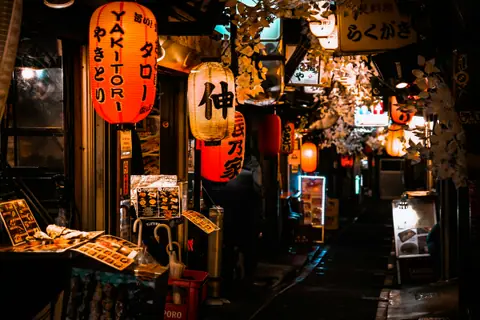
- Eat chanko nabe. The protein-heavy hot pot wrestlers eat daily. Ryogoku has many chanko restaurants, several run by retired wrestlers. Inside the hall, the yakitori made in the building's basement is the classic snack.
- Watch the arrivals. In the afternoon, top wrestlers walk in from the street in yukata, and fans line the approach to the hall.
- At a stable, sit cross-legged or kneeling, never with legs stretched out. Phones on silent, no talking to the wrestlers, no perfume, no leaving and coming back.
- Combine it. Ryogoku is a short ride south of Asakusa, and our things to do list has more for the east side of the river.
Reviews
Log in to write a review.
No reviews yet.