Best Time to Visit Tokyo: Cherry Blossom, Autumn & Seasons
Month-by-month weather patterns, cherry blossom and autumn leaf timing, Golden Week crowds, and winter visibility for Mount Fuji.
The two most rewarding windows to visit Tokyo are late March to mid-May (spring) and October to early December (autumn). Both shoulder seasons combine mild daytime temperatures between 16°C and 23°C with comfortable walking conditions across the city's parks and shrine grounds. Spring brings the famous cherry blossom (sakura, sah-KOO-rah) followed by fresh green maple leaves. Autumn brings crisp, dry air and blazing golden ginkgo avenues. Because hotel demand peaks during late March and November, reserve your base in our where to stay in Tokyo guide well in advance.
Comparing Tokyo's four seasons month by month
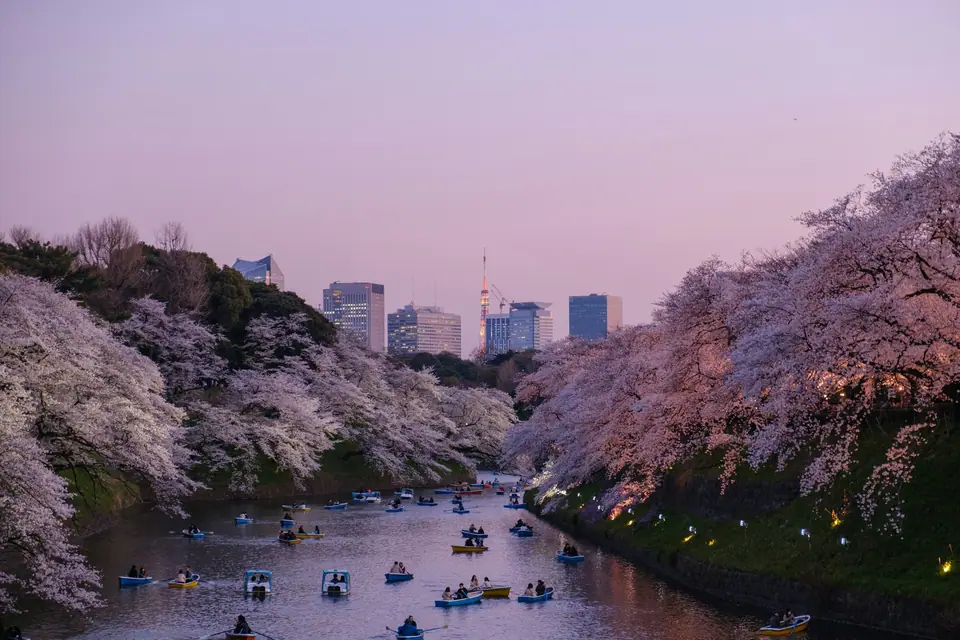
- Spring (Late March to May) / Autumn (October to Early December): In Tokyo, pale pink Somei-Yoshino cherry blossoms typically open around the third week of March. They reach full bloom (mankai) between late March and early April. For roughly seven to ten days, petals carpet the castle moats at Chidorigafuchi, Ueno Park, Shinjuku Gyoen, and the Meguro River. May brings warm, breezy days after the Golden Week holidays. Autumn starts with mild October weather. By mid-to-late November and early December, yellow ginkgo tunnels glow at Meiji Jingu Gaien (Icho Namiki) and crimson Japanese maples (momiji) colour Rikugien and Koishikawa Korakuen gardens.
- Rainy Season & Summer (June to Early September): From early June to mid-July, the East Asian plum rain front known as tsuyu (tsoo-YOO) brings warm skies and frequent showers. Rainfall averages 192 mm across 15 wet days in June, while blooming hydrangeas (ajisai) brighten temple steps at Hakusan Shrine and Kamakura. Once the rain front lifts in mid-July, Tokyo enters six weeks of intense subtropical heat and heavy humidity. Afternoon highs pass 31°C to 35°C and muggy nights stay above 24°C. Late August through September marks the peak Pacific typhoon season, which can occasionally suspend Shinkansen and airport trains for a day before clearing into bright blue skies.
- Winter (Mid-December to February; Highs 9°C to 11°C, Lows 0°C to 3°C): Winter is Tokyo's driest, sunniest, and most underrated season. It averages just 5 to 7 wet days per month under cloudless cobalt skies. Cold dry winds blow down from the Japanese Alps with zero summer haze. Because the air stays so clear, December through February offers the highest chance of seeing snow-capped Mount Fuji from observation decks like Shibuya Sky and the Tokyo Metropolitan Government Building. It is also the clearest season for day trips to Hakone and Kawaguchiko.
Where to see cherry blossoms vs autumn foliage in Tokyo
If your trip coincides with peak spring bloom (late March to early April) or peak autumn colour (mid-November to early December), target these specific parks early in the morning:
- Top Cherry Blossom (Sakura) Spots: Rent a rowboat beneath the weeping cherry trees along the imperial castle moat at Chidorigafuchi. You can also reserve a timed morning ticket for the 1,000 cherry trees inside Shinjuku Gyoen, where varied early- and late-blooming cultivars extend the viewing window into mid-April. Stroll the lantern-lit canal banks of the Meguro River in Nakameguro, or walk the riverside promenade of Sumida Park framing the Tokyo Skytree near Asakusa.
- Top Autumn Foliage (Kōyō & Icho) Spots: Walk down the 300-metre four-row avenue of 146 clipped golden ginkgo trees at Meiji Jingu Gaien in late November. In addition, book an evening illumination slot among the teahouses and weeping maples of Edo-era Rikugien Garden in Bunkyo Ward, or explore the vermilion bridges of Koishikawa Korakuen near Tokyo Dome.
Major Tokyo festivals (matsuri) and national holiday periods
Timing your trip around Tokyo's traditional shrine festivals adds unforgettable energy, whereas domestic travel holidays require careful train planning:
- Golden Week (29 April to 5 May). Four consecutive national holidays (Showa Day, Constitution Memorial Day, Greenery Day, and Children's Day) create Japan's busiest domestic travel week. Central Tokyo itself remains enjoyable, but Shinkansen bullet trains require reserved-seat bookings weeks ahead.
- Sanja Matsuri in Asakusa (Third Full Weekend of May). Tokyo's liveliest traditional Shinto festival centres on Asakusa Shrine beside Sensō-ji. Teams of chanting locals carry around a hundred gilded portable shrines (mikoshi, mee-KOH-shee) on their shoulders through the streets for three days.
- Kanda Matsuri or Sannō Matsuri (Mid-May & Mid-June, Alternating Years). Two of the three great Edo festivals (Edo Sandai Matsuri) alternate between odd-numbered years (Kanda Myojin Shrine near Akihabara) and even-numbered years (Hie Shrine in Akasaka).
- Sumida River Fireworks Festival (Sumidagawa Hanabi Taikai, Last Saturday of July). Dating back to 1733, this summer display launches roughly 20,000 fireworks shells over the Sumida River near Asakusa as hundreds of thousands of spectators gather in cotton summer kimono (yukata).
- Obon Week (Mid-August, Around 13 to 16 August). A major family ancestral holiday when long-distance trains and highways out of Tokyo run at peak capacity.
- New Year / Shōgatsu (29 December to 3 January). Japan's quietest family holiday period, when many state museums, Tsukiji stalls, and small independent restaurants close for four or five days. Over three million people walk through the forest of Meiji Jingu and the gates of Sensō-ji between New Year's Eve and 3 January for hatsumōde (the first shrine visit of the year). Department stores reopen on 2 January to sell lucky grab-bags (fukubukuro).
During December and January, evening winter illuminations (iruminēshon) also light up the zelkova trees of Marunouchi Naka-dori, Keyakizaka Street in Roppongi Hills, and Omotesando. In late February and early March before the cherry trees open, fragrant plum blossoms (ume) bloom across Yushima Tenjin Shrine and Hanegi Park. In late April and early May, purple wisteria trellises perfume Kameido Tenjin Shrine in eastern Koto Ward, while crimson azaleas cover the sculpted hills of Nezu Shrine in Bunkyo Ward. For budget-conscious travellers, late January through mid-February and early June offer the lowest hotel rates and shortest restaurant queues of the year. Before packing for July humidity or January winds, check our what to wear in Tokyo guide for season-by-season clothing checklists.
Where it is
- 1Tokyo
- Tokyo Haneda International Airport (HND) · about 19 km from Tokyo in a straight line
- Directions in Google Maps
Stations and taxi ranks: OpenStreetMap. Airports: OurAirports. Distances are in a straight line.
Traveller tips
Real advice from people who have been to Tokyo. Every tip is read by our team before it goes live.
No tips yet. Been here? Yours could be the first.
Thank you! Your tip will appear here after a quick review.
More in Tokyo
Continue exploring Tokyo with related neighbourhood, food, and planning guides