


Tokyo Izakaya Food Tour
An evening of yakitori smoke, cold beer and tiny counters under the railway, with someone to explain the menu and open the right doors.
Overview
An izakaya is a Japanese pub that takes its food as seriously as its drink. The word joins i (to stay) and sakaya (a sake shop), from the days when shops let customers drink on the premises. Today it covers everything from a chain with touch-screen ordering to a counter with six stools and one cook who has grilled chicken there for forty years. You order small plates a few at a time, share them, and keep drinking. It's where Tokyo office workers go after work, and it's the most sociable way to eat in the city.
A guided izakaya tour takes you to the second kind, the small old places visitors find hard to walk into on their own. The usual format is a small group, three or four stops in one area, a set of dishes and drinks at each, and a guide who orders, translates and explains what's on the stick in front of you.
Where the tours go
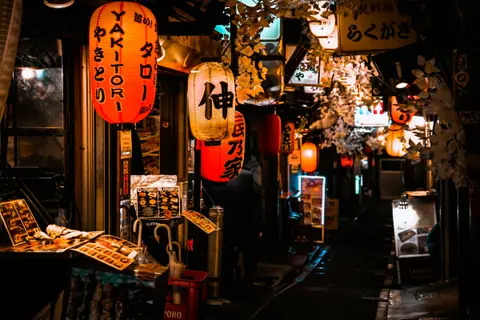
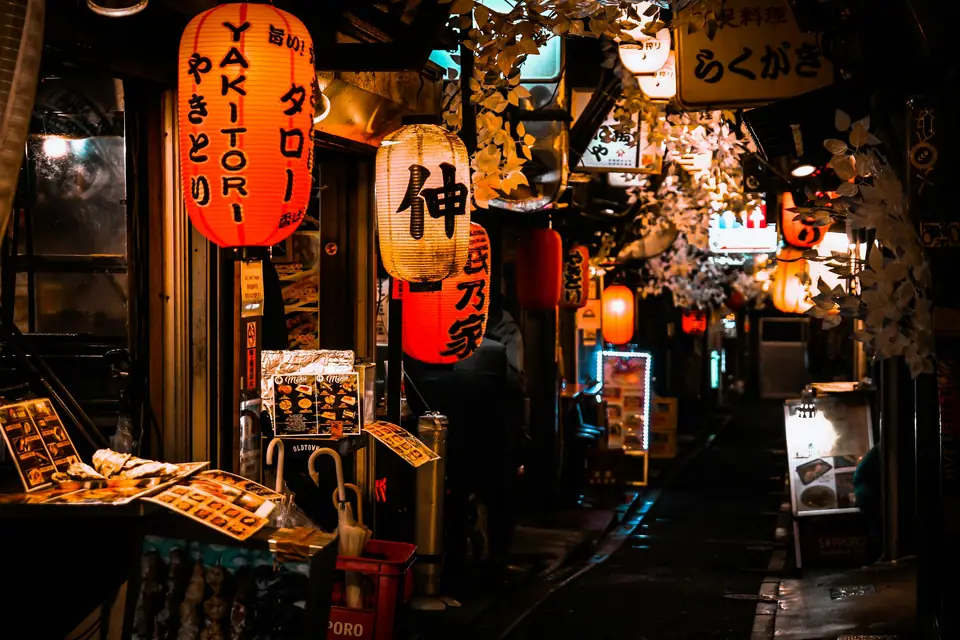
- Omoide Yokocho, Shinjuku. A strip of narrow lanes beside the tracks at the west exit, lined with yakitori counters that date back to the post-war black market. Smoky, cramped and the classic first stop.
- Golden Gai, Shinjuku. Around 200 bars squeezed into six alleys, most seating a handful of people. It's for drinking, not eating, so tours usually end here.
- Yurakucho. Izakaya built into the brick arches under the JR tracks between Yurakucho and Shimbashi, with plastic stools spilling into the street and trains rumbling overhead.
- Shimbashi. The salaryman district. Less photogenic, more real: standing bars, cheap beer and suits loosening their ties.
Our Shibuya and Shinjuku guide covers the Shinjuku alleys by day as well as by night.
What you eat and drink
Yakitori, grilled chicken skewers, is the backbone: thigh with leek (negima), meatballs (tsukune), skin, heart and liver, seasoned with salt (shio) or a sweet soy glaze (tare). Expect also oden, a winter dish of fishcakes, daikon radish and eggs simmered in dashi broth; karaage, fried chicken; edamame; sashimi; and motsu nikomi, a stew of offal in miso. To drink: draft beer, sake, a highball (whisky and soda), or shochu, a distilled spirit, mixed with oolong tea or lemon.
Who it suits
First-time visitors who are shy of unmarked doors and Japanese-only menus, solo travellers, and anyone curious about offal and not squeamish. It suits vegetarians poorly, since most of the menu is chicken, pork and fish stock. Tours are for adults: the legal drinking age in Japan is 20. It's also not quiet, not smoke-free everywhere, and not comfortable if you dislike sitting knee to knee with strangers.
How to Book
Tours are sold through the big booking platforms and by small local companies. Compare them on these points:
- Group size. Many of these bars seat eight. A group of six fits; a group of fifteen gets split up or taken to larger, blander places.
- What's included. Check how many dishes and drinks come with each stop, and whether the table charge is covered.
- Dietary needs. Tell the company when you book. A no-pork request is usually easy, a vegetarian one hard, and fish-based dashi is in almost everything.
- The area. Shinjuku is the most atmospheric, Yurakucho and Shimbashi the most local.
- Cancellation terms. Most allow free cancellation until a day or two before. Tours run in light rain, since many stops are indoors or under the tracks.
Pickup is not usual; you meet the guide at a station exit. Tokyo stations have dozens of exits, so check the exact one on a map the day before. If you stay near Shinjuku or Ginza, you can walk home afterwards, which is one reason our where to stay guide favours those areas.
Tips
- Expect the otoshi. Most izakaya bring a small appetiser you didn't order and add a per-person table charge for it. It's not a scam, it's the seat fee. Golden Gai bars charge a cover instead.
- Wait for kanpai. Don't drink until everyone has a glass and the table has toasted. Pour for others, not for yourself, and let someone top up yours.
- Don't take refusals personally. Some tiny bars are regulars only or turn away groups of visitors, often because they can't manage without a shared language. A sign in English at the door means you're welcome.
- Know the smoking rules. Since April 2020, Tokyo places with staff must be smoke-free indoors apart from sealed smoking rooms, but some small bars can still allow smoking. The sign at the entrance tells you, and under 20s may not enter smoking areas.
- Doing it yourself works well at Yurakucho, where many places have picture menus. For Asakusa's Hoppy Street, see our Asakusa guide.
- Pay cash at the smallest counters, and don't tip.
Reviews
Log in to write a review.
No reviews yet.
You might also like
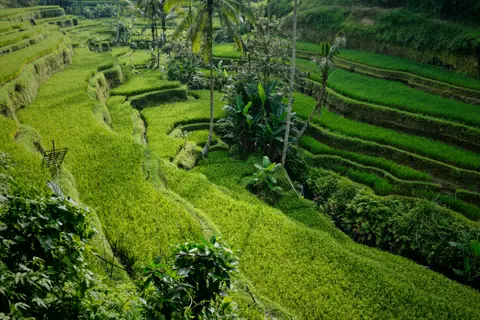
Ubud Cycling Tour
Usually a half day to a full day including hotel pickup, with around 2 to 3 hours on the bike · Bali
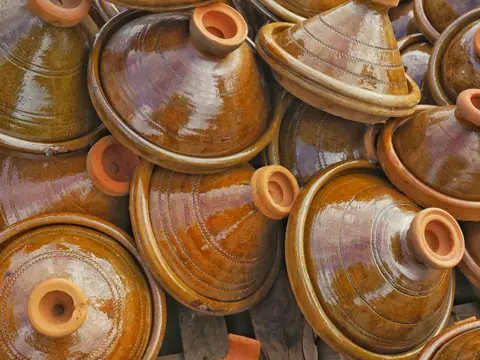
Moroccan Cooking Class in Marrakech
About 3 to 5 hours, including the market visit and the meal you cook · Marrakech

Inca Trail Trek to Machu Picchu
4 days and 3 nights for the classic trek, 1 long day for the short version (2 days with a night in Aguas Calientes and a second visit) · Machu Picchu
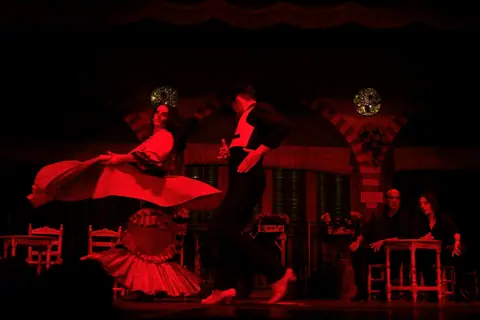
Flamenco Show in Barcelona
About 1 hour for a tablao show, 75 minutes to 1.5 hours for a concert-hall gala, 2 to 2.5 hours with dinner · Barcelona