Asakusa Guide: Senso-ji and Old Tokyo
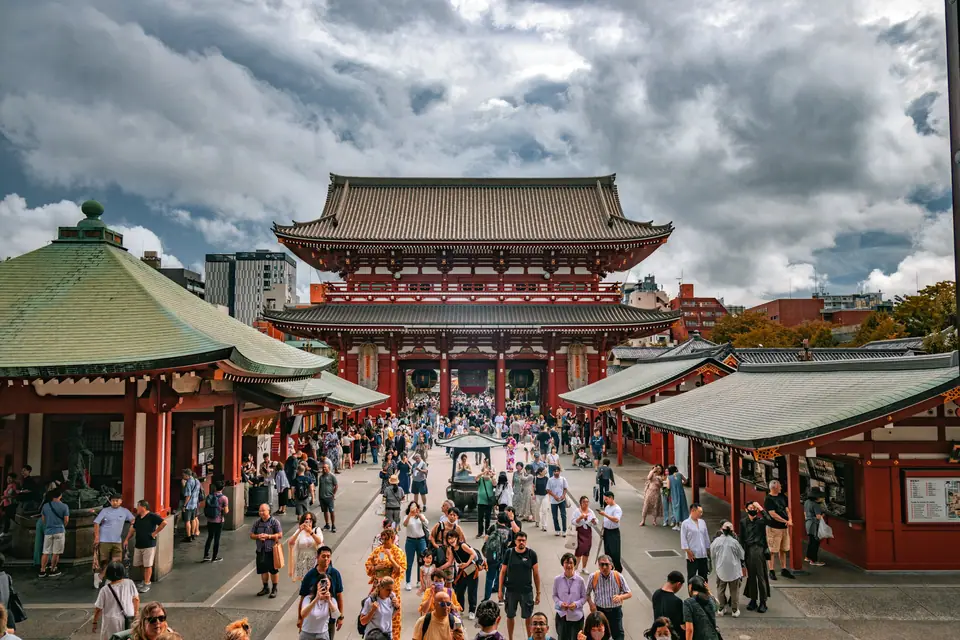
According to the temple's story, in the year 628 two fishermen pulled a small golden statue of Kannon, the goddess of mercy, out of the Sumida River. The shrine built for it became Senso-ji, the oldest temple in Tokyo, and Asakusa grew up around it as the city's great pleasure district of theatres, teahouses and street food. The main buildings are post-war reconstructions, but the crowds, the smoke and the snacks carry on as they always have.
This loop takes about two to three hours. Arrive by the Ginza or Asakusa subway line, or the Tobu line, all at Asakusa station.
- Kaminarimon. The Thunder Gate, with a red paper lantern nearly four metres tall hanging in the middle and statues of the wind god Fujin and thunder god Raijin on either side. Every visitor photographs it, so come before 8am or after dark for a clear shot.
- Nakamise-dori. A shopping street of about 90 stalls leading to the temple. Try ningyo-yaki (small sponge cakes filled with red bean paste) and age-manju (deep-fried buns). Shops ask you to eat beside the stall rather than on the move. Most stalls open mid-morning.
- Hozomon. The inner gate, with a pair of giant straw sandals (waraji) hanging on its back wall, gifts meant to show that a guardian with feet this size watches over the temple.
- The incense burner and main hall. Waft the smoke from the big bronze jokoro over yourself for good health, then go up to the main hall. Nearby, you can draw an omikuji, a paper fortune. If it's bad, tie it to the metal racks and leave the bad luck behind. The hall closes in the late afternoon, but the grounds are open all night and beautifully lit.
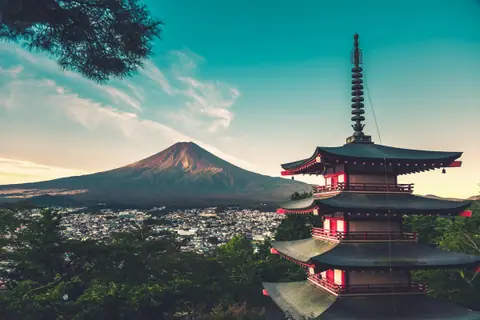
- The five-storey pagoda and Asakusa Shrine. The pagoda stands to the left of the hall. Just to the right is Asakusa Shrine, built in 1649 and one of the few structures here to survive the war. It hosts the Sanja Matsuri in May.
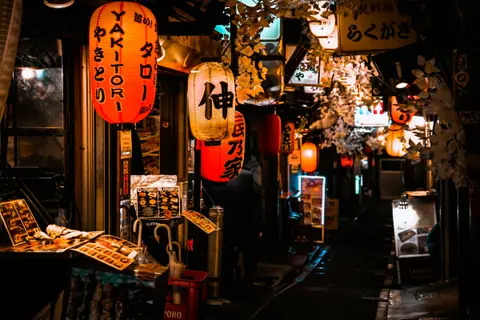
- Denboin-dori and Hoppy Street. West of Nakamise, Denboin-dori has painted shutters and small craft shops. A block further, Hoppy Street is lined with open-fronted izakaya serving stewed beef tendon and Hoppy, a low-alcohol beer mixed with shochu. It's at its best in the late afternoon.
- Kappabashi. Ten minutes west, Kappabashi Dogu-gai is the street where restaurants buy their equipment: knives, lacquer bowls, noren curtains and the plastic food models seen in restaurant windows.
- The Sumida River. Finish at Azuma Bridge. Across the water are the golden flame on the Asahi Beer Hall and the Tokyo Skytree, 634 metres tall. From the pier below, water buses run downriver towards Hama-rikyu garden.
Rickshaw pullers on Kaminarimon-dori offer short tours with commentary. They're fun with children, pricey for what you get. Asakusa is also a pleasant place to sleep, as our where to stay guide explains, and our 3-day itinerary starts here at dawn.