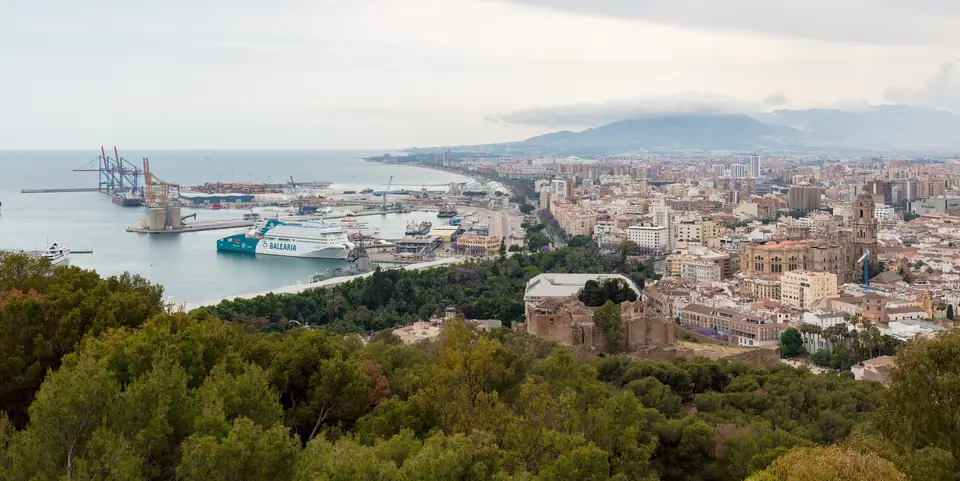
A detailed walking route through one of Europe’s oldest Mediterranean ports: Phoenician walls, the Moorish Alcazaba and Gibralfaro, Picasso’s birthplace, and the palm-shaded Paseo del Parque.
Phoenician Malaka, Nasrid Double Ramparts and Nineteenth-Century Alameda
Founded around 770 BC by Phoenician mariners from Tyre as Malaka at the foot of Mount Gibralfaro (Jabal Faruh, Mountain of the Lighthouse), Málaga is one of the oldest continuously inhabited cities in Western Europe. Under Emperor Augustus it thrived as a Roman confederate port exporting garum fish sauce and almonds, leaving behind the first-century BC Roman Theatre directly beneath the eleventh-century Hammudid and Nasrid palatine fortress of the Alcazaba.
Reconquered by the Catholic Monarchs in 1487, who began the Renaissance Cathedral known affectionately as La Manquita for its unfinished south tower, Málaga is the 1881 birthplace of Pablo Ruiz Picasso and has reinvented itself in the twenty-first century around the Museo Picasso, Carmen Thyssen, Pompidou, and Custom House museums.
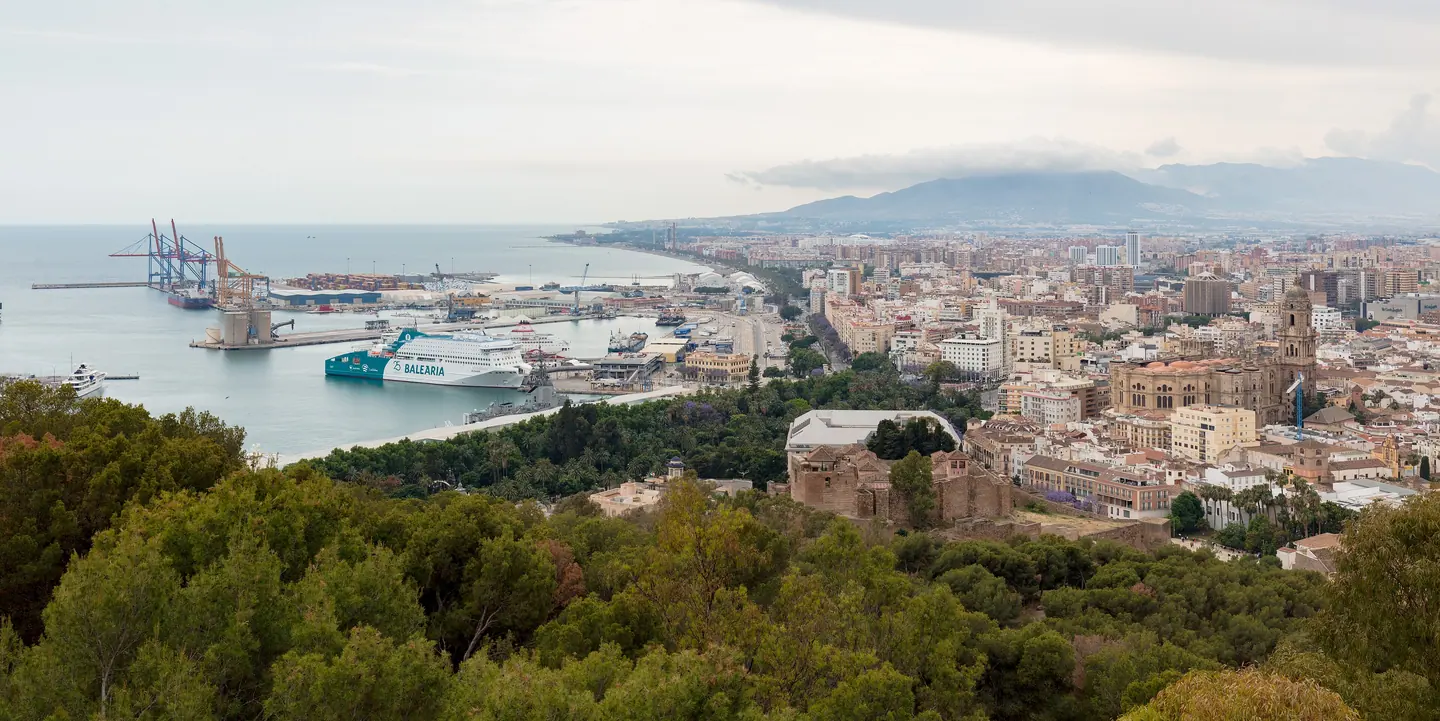
Roman Theatre, Alcazaba Palaces & Gibralfaro Castle
Roman Theatre of Málaga & Garum Vats, Alcazaba of Málaga Vaulted Double Ramparts, Puerta de la Bóveda, Patio de los Naranjos & Cuartos de Granada Nasrid Arches, Coracha Walled Ramp, and Castle of Gibralfaro Ramparts Panorama over the Bay and Bullring
Roman Theatre of Málaga
Constructed during the reign of Augustus, this ancient performance space remained concealed beneath later municipal buildings until its rediscovery in 1951. Visitors can examine the semicircular tiers of the cavea, the orchestra pit and preserved marble elements that Moorish architects later quarried for fortress fortifications.
Roman Garum Processing Pools
Adjacent to the Roman theatre visitor centre, these sunken stone vats formed part of Malaca's lucrative fish-salting and garum industry. The plastered rectangular basins demonstrate how Roman merchants processed mackerel and offal into the prized Mediterranean condiment that funded the city's early expansion.
Alcazaba Lower Barbican
Engineered by the Hammudid dynasty in the eleventh century, this outer defensive wall forms the initial barrier of Málaga's palatial citadel. The limestone masonry incorporates salvaged Roman column drums and capitals, creating a fortified stepped approach that forced attackers into exposed flanking fire from defensive towers.
Puerta de la Bóveda
Constructed with an intentional ninety-degree bend, this vaulted gatehouse prevented attackers from mounting a direct ramming assault against the interior defences. The brick archway opens into a shadowy chamber where defenders could trap intruders beneath arrow slits, marking a classic example of medieval Islamic military engineering.
Puerta de las Columnas
This second major fortified gateway showcases the recycling of Roman spolia within Moorish military architecture. Slender fluted marble columns flank the keyhole archway, reinforcing the structure while displaying conquered materials to intimidate visitors ascending toward the upper residential enclosures.
Torre del Cristo
Serving as both a defensive tower and a passage gate, this fortified redoubt required intruders to navigate two consecutive sharp turns under direct missile fire. Catholic monarchs converted its interior into a chapel following the siege of 1487, leaving brick vaulting and decorative plasterwork intact.
Plaza de Armas of the Alcazaba
This broad terrace served as the muster ground and living quarters for the citadel's permanent military garrison. Today, landscaped paths wind through cypress trees, stone pools and restored crenellated ramparts that overlook the modern port of Málaga and the Mediterranean coastline.
Puerta de los Cuartos de Granada
Marking the transition between the military sector and the palatial residence, this thick portal guarded the governors of Málaga. The arch gives way to an elevated ramp, isolating the domestic quarter from potential mutinies by the soldiers garrisoned in the lower courts.
Patio de los Naranjos
Restored during the twentieth century using historic Moorish plans, this peaceful courtyard retains central water channels that circulate irrigation water to surrounding orange trees. The enclosed space reflects the classic Andalusi riad garden style, designed to provide cool shade and scented air within domestic living areas.
Cuartos de Granada
These residential suites accommodated Taifa kings and subsequent Nasrid governors who administered the Mediterranean province. The rooms feature polylobed arches, carved stucco work and coffered wooden ceilings, offering insight into the domestic court culture that flourished prior to the Christian Reconquista.
Patio de la Alberca
A central rectangular pool forms the axis of this restored Nasrid palace enclosure, designed to mirror the northern portico and surrounding sky. The low brick borders and flanking myrtle hedges emulate the architectural traditions seen on a larger scale at the Alhambra in Granada.
Torre del Homenaje of the Alcazaba
Rising at the eastern end of the upper palace, this substantial square tower served as the final line of defence for the citadel. From its roof, commanders maintained signalling lines across the bay and coordinated defences with Gibralfaro Castle along the connecting ridgeline.
Torre de la Armadura Mudéjar
This corner tower houses a surviving sixteenth-century Mudéjar wooden ceiling, assembled using intricate interlocking carpentry known as lazo work. It illustrates the enduring craft techniques of Muslim artisans who remained in southern Spain under Spanish Habsburg rule following the fall of the emirate.
La Coracha
This defensive corridor snakes up the rocky hillside, enclosed by high parallel stone walls lined with crenellated parapets. It allowed troops to move securely between the lower citadel and the hilltop castle without exposing their flanks to ground forces assaulting the slopes.
Castle of Gibralfaro Outer Ramparts
Enlarged by the Nasrid ruler Yusuf I in 1340, these stout stone ramparts follow the natural contours of the mountain crest. Visitors walking the perimeter walls encounter defensive bastions, zig-zag walkways and firing platforms engineered to withstand heavy siege artillery and naval bombardments.
Airón Well
Dug by Moorish engineers to secure water independence during prolonged military blockades, this remarkable shaft penetrates forty metres into the solid mountain. Rainwater collected from surrounding platforms supplemented the spring-fed reservoir, keeping garrison troops hydrated during the three-month siege of 1487.
Torre Mayor of Gibralfaro
Positioned at the highest point of Mount Gibralfaro, this monolithic tower provided unbroken surveillance over the Alboran Sea towards North Africa. Its elevated platform permitted sentries to detect approaching pirate fleets and coordinate beacon signals across the entire Andalusian coastal watchtower network.
Gibralfaro Interpretation Centre
Housed within an eighteenth-century gunpowder warehouse, this military exhibition displays uniforms, navigational instruments, maps and weaponry spanning five centuries of garrison life. The displays detail the siege operations of Ferdinand and Isabella and the subsequent evolution of coastal artillery fortresses.
Mirador de Gibralfaro
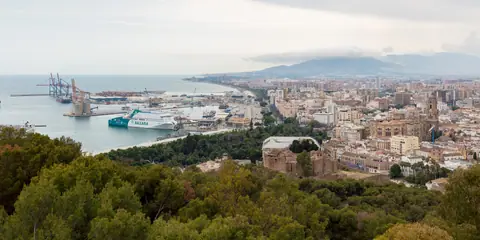
Located just below the western castle ramparts, this pine-shaded vantage point yields sweeping views across the port, the cathedral and the circular La Malagueta bullring. The overlook clearly demonstrates how the mountain controlled naval anchorages and protected medieval Málaga from maritime attacks.
Jardines de Puerta Oscura
Designed by architect Fernando Guerrero-Strachan in the 1930s, these stepped gardens blend Mediterranean cypress, jacaranda and bougainvillea across the rocky foundations of the Alcazaba. Stone staircases, ceramic-tiled fountains and resting benches connect the base of the Roman ruins directly with the higher fortress gates.
Málaga Cathedral (La Manquita), Picasso Museum & Plaza de la Merced
Málaga Cathedral (Incarnation Cathedral) Choir Stalls by Pedro de Mena & Rooftop Bóvedas Walk, Bishop’s Palace on Plaza del Obispo, Museo Picasso Málaga in the 16th-Century Buenavista Palace, Church of Santiago (where Picasso was baptised), Plaza de la Merced Obelisk, and Picasso Birthplace Museum (Casa Natal)
Málaga Cathedral
Constructed between 1528 and 1782, this grand structure combines Renaissance and Baroque designs over a former mosque site. The southern tower remains unfinished due to redirected municipal funds, earning it the affectionate moniker La Manquita. Visitors observe ornate twin organs and a grand limestone facade fronting the historic square.
Málaga Cathedral Choir Stalls
Crafted largely by sculptor Pedro de Mena in the seventeenth century, these wooden stalls rank among Spain's finest ecclesiastical carvings. Forty-two relief panels portray saints and church fathers with exquisite anatomical detail. The central bishop's throne exhibits refined ornamental openwork carved from solid cedar and mahogany timber.
Málaga Cathedral Bóvedas
Access to the outer vaulted roofs lets travellers trace the structural evolution of the complex across distinct building phases. A perimeter walkway winds past neoclassical domes, defensive stone balustrades, and high flying buttresses. The viewpoint presents wide outlooks across the port, Mount Gibralfaro, and the dense surrounding street grid.
Episcopal Palace of Málaga
Commissioned in 1762 by Bishop José de Molina Lario, this residential palace showcases striking red and ochre plasterwork on Plaza del Obispo. The stone portal rises through three tiered storeys, crowned by an alabaster statue of the Virgin Mary. The inner courtyards and exhibition rooms periodically host displays of sacred art.
Plaza del Obispo
Dating back to the Muslim era, this open space received its monumental character during the eighteenth century. A central stone fountain supplied by the San Telmo Aqueduct has anchored the plaza since 1785. Flanked by palm trees, it serves as a principal gathering point before the cathedral's Baroque western entrance.
Museo Picasso Málaga
Inaugurated in 2003, this institution occupies the historic Palacio de los Condes de Buenavista. The permanent collection features over two hundred works donated by Picasso family members, charting his stylistic transitions across eight decades. Below the galleries, excavated Phoenician, Roman, and Renaissance foundations are open for direct inspection.
Palacio de Buenavista
Erected in the early 1500s for Diego de Cazalla, this mansion displays a classic Mudéjar-influenced courtyard framed by two tiers of open stone arcades. Builders repurposed dressed stone from the neighbouring Moorish fortifications. The upper floor boasts intricate carved wooden artesonado ceilings crafted by Andalusian master carpenters.
Church of Santiago Apóstol
Founded by the Catholic Monarchs in 1490, this parish blends Gothic architecture with distinct Mudéjar brickcraft. Its square bell tower displays Islamic ornamental motifs originally common to regional minarets. Inside stands the ornate baptismal font where infant Pablo Picasso was baptised on 10 November 1881.
Plaza de la Merced
Originally functioning as a public market outside the city gates, this square developed its elegant nineteenth-century perimeter through bourgeois townhouses. Flocks of pigeons here famously inspired early sketches by the young Picasso. Paved walking paths, jacaranda trees, and open terraces surround the memorial commemorating General Torrijos and his comrades.
Torrijos Monument
Designed by architect Rafael Mitjana and erected in 1842, this central obelisk honours General José María de Torrijos and forty-eight companions executed in 1831. The monument stands directly over the crypt where their mortal remains are interred. Bronze wreaths and inscribed commemorative names adorn the heavy granite pedestal.
Picasso Birthplace Museum
Located at number fifteen Plaza de la Merced, this nineteenth-century townhouse preserves the domestic environment of Picasso's formative youth. The museum displays original family heirlooms, period furnishings, and sketches by his father, painter José Ruiz y Blasco. Temporary exhibitions highlight the artist's graphic prints, ceramics, and personal documentation.
Statue of Pablo Picasso
Created by sculptor Francisco López Hernández in 2008, this figurative bronze statue depicts Picasso in his later years. The artist is seated calmly on a marble bench with a notebook and pencil in hand. Positioned outside his childhood home, it offers a tangible connection to the city's artistic lineage.
Church of San Agustín
Established by the Augustinian order in 1575, this complex features a quiet cloister with classical Tuscan columns and semicircular arches. The single-nave church houses Baroque altarpieces alongside traditional processional images revered by local brotherhoods. Its solid exterior brickwork defines the narrow pedestrian character of Calle San Agustín.
Palacio de Zea-Salvatierra
Constructed toward the end of the seventeenth century and updated in the eighteenth century, this residence showcases typical aristocratic Baroque styling. A rusticated stone portal features a split curved pediment framing the ancestral coat of arms. The structure served as Málaga's municipal town hall during the nineteenth century.
Plaza del Carbón
This irregular junction developed its name as the historic distribution centre for charcoal and firewood brought in from rural settlements. Today, it presents handsome nineteenth-century facades and pedestrian routes leading directly toward the cathedral and Calle Larios. A central marble fountain adds traditional urban detail to the streetscape.
Teatro Echegaray
Originating in 1932 as a neighbourhood cinema, this venue underwent a comprehensive municipal refurbishment completed in 2009. The facade retains historicist detailing that reflects central Málaga's early twentieth-century architectural character. Its intimate three-tier auditorium hosts a diverse cultural programme comprising dance, chamber concerts, and independent theatrical productions.
Plaza de San Jerónimo
This secluded paved corner sits tucked behind Calle Granada, providing an alternative vantage point on Santiago's brick bell tower. The whitewashed residential architecture represents traditional inner-city dwellings from the eighteenth and nineteenth centuries. Potted plants and narrow alleyways preserve an older domestic atmosphere steps away from primary tourist thoroughfares.
Pasaje de Chinitas
Opened in 1846 across the footprint of a former convent, this narrow pedestrian passage joins Plaza de la Constitución with surrounding lanes. It historically housed the legendary Café de Chinitas, celebrated in poetry by Federico García Lorca. A marble gateway and overhanging wrought-iron balconies preserve its nineteenth-century bohemian air.
Church of San Juan Bautista
Founded in 1487 following the Christian conquest, this parish church preserves a solid Gothic-Mudéjar entry tower. Major earthquake damage in 1680 prompted substantial rebuilding, resulting in elaborate Baroque interior naves and gilded chapel altars. It remains an essential headquarters for several historic Holy Week brotherhoods.
Palacio de Villalón
This stately home features an authentic two-storey central courtyard supported by carved marble columns and ornate plaster friezes. Following careful historical restoration, the premises opened in 2011 to accommodate the Museo Carmen Thyssen Málaga. The permanent collection focuses predominantly on nineteenth-century Andalusian genre paintings and Spanish romantic landscape traditions.
Calle Larios, Carmen Thyssen, Atarazanas Market & Old Quarter
Plaza de la Constitución, Calle Marqués de Larios, Pasaje de Chinitas, Museo Carmen Thyssen in Palacio de Villalón, Church of the Sacred Heart, Atarazanas Central Market (14th-Century Nasrid Marble Shipyard Arch & Stained-Glass Window), San Juan Tower, and Museo del Vino
Plaza de la Constitución
Serving as the heart of urban civic life since the Reconquista, this open space historically housed the town hall and the city jail. Visitors can observe bronze newspaper front pages embedded into the marble paving celebrating the 1978 Spanish Constitution, alongside the sixteenth-century Genoese Fountain.
Calle Marqués de Larios
Inaugurated in 1891, this central avenue was designed by architect Eduardo Strachan using curved corner facades inspired by contemporary architectural trends in Chicago. The paved pedestrian boulevard connects the city port to the main square and displays classical symmetry across its grand residential buildings.
Pasaje de Chinitas
Constructed on the site of the former convent of the Augustinians in the nineteenth century, this narrow pedestrian arcade leads towards a tranquil central courtyard. The passage was celebrated in Spanish literature by Federico García Lorca as the home of the historic flamenco venue Café de Chinitas.
Museo Carmen Thyssen
Housed within the restored Palacio de Villalón, this art museum focuses primarily on nineteenth-century Andalusian painting and romantic costumbrismo. The structure retains its original Renaissance central courtyard with carved wooden arcades, below which archaeologists excavated remains of Roman domestic dwellings and fish-salting vats.
Church of the Sacred Heart
Erected in 1920 to designs by architect Fernando Guerrero Strachan, this church presents an authentic neo-Gothic facade complete with pointed arches and detailed stone tracery. The interior features a central nave flanked by ribbed vaults and an octagonal crossing tower that illuminates religious imagery.
Atarazanas Market
Built between 1876 and 1879, this municipal food hall preserves an original fourteenth-century Nasrid horseshoe marble arch from the city's ancient naval dockyards. The opposite facade features an expansive stained-glass window portraying key historical monuments and maritime scenes of the province.
Church of San Juan Bautista
Founded in 1487, this parish underwent extensive rebuilding following a severe earthquake in 1680. The detached baroque tower over the western portal, completed in the late eighteenth century, stands beside an interior rich in gilded chapels dedicated to historic local penitential brotherhoods.
Museo del Vino Málaga
Occupying the eighteenth-century Palacio de Biedmas, this cultural museum details the heritage of sweet fortified wines produced across the province. The exhibition spaces display an extensive archive of nineteenth-century wine posters, lithographic labels, antique barrels and historic presses used in regional production.
Fuente de Génova
Sculpted in Genoa from white marble, this Renaissance water fountain was brought to Spain and installed in Málaga during the sixteenth century. The central column features carved tiers displaying mythological figures, classical sirens and maritime motifs that feed cascading water into the lowest octagonal basin.
Sociedad Económica de Amigos del País
Established in 1789, this civic institution is situated in an eighteenth-century building that originally functioned as the Royal Maritime College. Its historic facade displays classical mouldings and baroque balconies, leading to an interior archive and gallery spaces dedicated to scholarly lectures and historical exhibitions.
Palacio de Villalón
Constructed during the sixteenth century, this aristocratic residence retains monumental stone doorways and a two-tier interior courtyard bordered by carved timber balustrades. It forms the architectural core of the neighbouring museum, showcasing mudéjar-influenced timber ceilings alongside exposed Roman archaeological layers beneath its foundations.
Church of the Holy Martyrs
Erected in the late fifteenth century to honour the Roman martyrs Ciriaco and Paula, this church features a prominent mudéjar brick tower. Subsequent eighteenth-century renovations introduced an elaborate rococo plasterwork interior, high gilded altarpieces, and decorated side chapels housing famous processional statues.
Plaza de San Juan
Situated in the western portion of the old quarter, this square opens directly before the ornate baroque tower and porch of San Juan church. The space provides a visual transition between dense Islamic-era street layouts and the grander domestic residences developed by merchants in later centuries.
Plaza de Félix Sáenz
Marking the intersection between Calle Nueva and Calle San Juan, this public space was named after a merchant benefactor. The square is dominated by the former Félix Sáenz department store, an exceptional neo-mudéjar building designed by Manuel Rivera Valentín featuring detailed brickwork and glazed ceramic tiling.
Calle Nueva
Engineered in 1491 to connect the main civic square with the western city wall, this street represents one of the earliest urban modifications after the Reconquista. Today it presents a traditional pedestrian corridor lined with nineteenth-century residential blocks, traditional balconies, and ground-floor artisan shops.
Calle Compañía
Taking its name from the Society of Jesus who built their church and school here, this curving street links Plaza de la Constitución with northern quarters. The lane passes noble residences with wrought-iron balconies and provides pedestrian access to the Sacred Heart sanctuary and Palacio de Villalón.
Plaza de San Pedro de Alcántara
Located near the city's ancient western ramparts, this square developed following the demolition of monastic structures in the nineteenth century. Shaded by mature ficus trees, the square features traditional Andalusian residential facades with painted stucco surrounds and acts as a gateway to the nearby Wine Museum.
Plaza de las Flores
Constructed in the late nineteenth century during the urban renovations that created Calle Larios, this small square features a central stone fountain and colourful floral planters. Surrounded by traditional apartment buildings with shuttered windows, it offers a sheltered resting point adjacent to the central shopping avenues.
Monument to the Marquis of Larios
Positioned at the southern approach to Calle Larios, this monumental statue was designed by sculptor Mariano Benlliure in 1899. The marble plinth features allegorical bronze figures representing Work and Charity, surmounted by the standing bronze portrait of the influential textile and railway industrialist.
Puerta del Mar
This urban avenue traces the location of the former defensive sea gate that once controlled access between the port and the medieval walled city. Following the demolition of the ramparts, it developed into a tree-lined street characterized by grand nineteenth-century bourgeois residences and civic administration buildings.
Museo de Málaga (Aduana), Paseo del Parque, Muelle Uno & Malagueta
Museo de Málaga in the Neoclassical Palacio de la Aduana, Subtropical Paseo del Parque, Málaga City Hall & Pedro Luis Alonso Rose Gardens, Palmeral de las Sorpresas, Centre Pompidou Málaga Coloured Glass Cube, La Farola Lighthouse (1817), Plaza de Toros de La Malagueta, and Malagueta Beach
Palacio de la Aduana (Museo de Málaga)
Engineered in the late eighteenth century following designs by Manuel Martín Rodríguez, this imposing palace draws inspiration from Italian Renaissance palazzi with rusticated stone facades. It now hosts the Museum of Málaga, displaying Roman mosaics, Moorish ceramics, and nineteenth-century Spanish canvas paintings arranged around a central porticoed courtyard.
Paseo del Parque
Created at the end of the nineteenth century, this public promenade features botanical specimens collected across five continents, thriving in Málaga's mild Mediterranean microclimate. Travellers stroll along shaded walkways flanked by towering palms, ornate iron benches, classical marble fountains, and sculptured busts dedicated to local civic figures.
Málaga City Hall
Architects Fernando Guerrero Strachan and Manuel Rivera Valentín designed this grand municipal seat, combining Andalusian regionalist aesthetics with classical Italianate balustrades. Notable details include carved relief panels celebrating local commerce, stained glass windows illuminating the grand marble staircase, and decorative pinnacles crowning the corner towers.
Jardines de Pedro Luis Alonso
Laid out in 1945 by architect Fernando Guerrero Strachan Rosado, this tranquil park honours the city's first post-war mayor. The layout blends Hispano-Arabic garden traditions with French parterres, incorporating low cypress hedges, rectangular reflecting pools, and dozens of aromatic rose varieties positioned beneath orange trees.
Jardines de Puerta Oscura
Conceived in the 1930s to frame the base of the Alcazaba fortress, these stepped grounds feature stone stairways, fountains, and masonry retaining walls. Shaded pergolas support climbing bougainvillea, while native Mediterranean flora provides picturesque viewing points overlooking the harbour and the neighbouring municipal park.
Palmeral de las Sorpresas
Constructed along Quay 2 of the port, this waterfront development replaced industrial docks with an open pedestrian esplanade. Its signature feature is a continuous, wave-shaped white canopy structure designed by Junquera Arquitectos, which casts shifting shade over gardens and maritime boarding piers.
Centre Pompidou Málaga
Inaugurated in 2015 as the first international branch of the Parisian museum, the venue is marked on the surface by El Cubo, an installation designed with artist Daniel Buren. The subterranean galleries exhibit rotating selections of twentieth and twenty-first century painting, sculpture, and multimedia installations.
Muelle Uno
Opened in late 2011 on Quay 1, this modern development transformed old port storage sectors into a public leisure walkway. Visitors find restaurants, shops, and maritime berths for visiting yachts, offering clear sightlines towards the Alcazaba battlements across the harbour basin.
Capilla de la Virgen del Carmen
Erected in 1732 out of local sandstone, this compact baroque chapel long served as a place of prayer for departing mariners and port workers. Following modern redevelopments along the quay, the standalone building was carefully restored, retaining its classic bell gable and carved stone portal.
La Farola
One of the oldest operational stone lighthouses in mainland Spain, this maritime tower features a female grammatical gender in its Spanish name. Engineered from local masonry, the structure comprises a cylindrical lantern shaft standing atop a square neoclassical keeper's pavilion that marks the port mouth.
Plaza de Toros de La Malagueta
Designed by the architect behind Madrid's Teatro María Guerrero, this sixteen-sided arena displays intricate brickwork arches and traditional wrought-iron detailing. It also houses a cultural exhibition centre focused on the history of bullfighting and local regional traditions, situated right in the Malagueta quarter.
Malagueta Beach
Spanning over one kilometre along the Mediterranean, this urban beach was formed following modern coastal engineering that widened the shore. Flanked by high-rise residential blocks and seafood chiringuito pavilions, it remains a lively gathering ground featuring open exercise areas and rental points for maritime recreation.
Hospital Noble
Funded through the estate of English physician Joseph Noble, this hospital was constructed in the 1860s to treat foreign sailors, cholera sufferers, and indigent locals. The brick and stone facade demonstrates Victorian Neo-Gothic influences, including pointed arches and lancet windows, set behind a manicured palm garden.
Fuente de Génova
Carved in Genoa in the mid-1500s from white Carrara marble, this fountain originally stood in central public plazas before its eventual relocation to the park. The carved basins feature intricate depictions of sirens, marine creatures, and classical nymphs, showcasing early modern Italian maritime stonework.
Auditorio Eduardo Ocón
Situated within the central clearing of the botanical park, this acoustic shell stages community concerts and seasonal cultural events. The structure pays tribute to Eduardo Ocón Rivas, an influential nineteenth-century composer and cathedral choir master who helped shape the classical musical heritage of Málaga.
Palacio de Miramar
Inaugurated in 1926 by King Alfonso XIII, this palatial resort reflects eclectic Andalusian architecture with prominent Moorish tilework, baroque plaster flourishes, and towers. After serving for decades as the provincial law courts, it underwent meticulous restoration to return to its original status as a grand seaside hotel.
Casa Palacio de Zea-Salvatierra
This former residence represents late-baroque civil architecture in Málaga, featuring an ashlar portal flanked by Corinthian columns and a wrought-iron balcony. Having served as the city hall in the nineteenth century, it retains an interior courtyard typical of aristocratic houses built shortly after the Reconquista.
Fuente de las Tres Gracias
Cast by the Val d'Osne foundry in France and installed in the late nineteenth century, this ornamental fountain stands in Plaza del General Torrijos. It depicts three female figures supporting a decorative water basin, surrounded by manicured flowerbeds that regulate coastal traffic between the park and the beach.
Monumento al Marqués de Larios
Erected in 1899 at the western terminus of the park, this monumental group honours Manuel Domingo Larios, key developer of Málaga's nineteenth-century industrial prosperity. Sculpted allegorical bronze figures representing labour and charity flank the pedestal, beneath the standing likeness of the nobleman.
Batería de San Felipe
Constructed as part of the Spanish Crown's coastal reinforcement programmes, this stone bastion mounted artillery to protect incoming merchant fleets from corsairs. Surviving rampart sections and thick stone retaining works are incorporated into the modern base supporting the lighthouse breakwater.
Soho Street Art, CAC, Pedregalejo Espetos & La Concepción Gardens
Soho Barrio de las Artes Murals (Obey & D*Face), Alameda Principal, English Cemetery of Málaga (1831 oldest Protestant cemetery in mainland Spain), Pedregalejo & El Palo Traditional Fishing Boats (Jábegas), Russian Museum & Automobile Museum in Old Tobacco Factory, and Jardín Botánico-Histórico La Concepción
Centro de Arte Contemporáneo de Málaga
Set inside the 1930s rationalist building of the former Mercado de Mayoristas, this cultural venue displays painting, sculpture, and video installations. Visitors can explore changing international exhibitions alongside works by prominent Spanish artists. Its location along the Guadalmedina riverbed anchors the artistic identity of the neighbouring Soho district.
Soho Barrio de las Artes
Spanning several blocks between the Alameda Principal and the port, this quarter transformed into an open-air urban gallery through the MAUS cultural initiative. Large-scale murals by renowned street artists like Shepard Fairey and D*Face adorn previously neglected residential facades. The streets also host independent design studios, craft workshops, and alternative theatre spaces.
Alameda Principal
Laid out during the late eighteenth century over land reclaimed from the sea, this grand avenue served as the aristocratic promenade of industrial Málaga. The central walkway features monumental century-old ficus trees alongside restored bourgeois townhouses. Recent pedestrianisation projects have restored generous walking spaces that connect the railway terminus with the historical quarter.
English Cemetery of Málaga
Founded by British Consul William Mark, this burial ground provided a dignified resting place for non-Catholic foreign residents and sailors. Designed as a terraced garden overlooking the sea, it contains neogothic crypts, carved marble monuments, and native Mediterranean flora. Notable figures buried here include the writer Gerald Brenan and American naval officer Robert Boyd.
Automobile and Fashion Museum
Housed in the restored 1920s Tabacalera complex, this museum displays more than eighty historic vehicles alongside vintage high-fashion garments. The collection ranges from early twentieth-century carriages and Art Deco roadsters to mid-century sports cars. Extravagant automobile designs by Bugatti and Rolls-Royce are paired alongside original dresses by Dior, Chanel, and Balenciaga.
Tabacalera of Málaga
Erected between 1928 and 1930, this vast factory complex demonstrates regionalist and neo-Mudéjar architectural influences. Originally designed for cigar production, its red-brick pavilions and expansive central plazas reflect Málaga's industrial prosperity during the early twentieth century. Today, the municipal government has converted the preserved halls into major cultural facilities and municipal exhibition galleries.
Colección del Museo Ruso
Occupying one of the central pavilions of the historic Tabacalera, this exhibition venue was established to showcase art across several centuries. The spacious galleries display religious icons, Imperial portraits, Soviet realism, and avant-garde movements. An auditorium, reading rooms, and educational facilities complement the rotating artistic programmes mounted inside the former factory halls.
La Concepción Historical-Botanical Garden
Created in 1855 by the Marquis and Marchioness of Casa Loring, this lush estate ranks among the finest subtropical gardens in southern Europe. Winding paths lead past towering palms, giant ficus trees, and a historic iron arbour draped in wisteria. The grounds also preserve an archaeological pavilion, neoclassical water features, and panoramic valley viewpoints.
Pedregalejo Beach Promenade
Pedregalejo preserves the architectural character of an old Andalusian fishing village, characterised by low-rise fishermen's cottages lining a coastal footpath. Along the shoreline, cooks roast fresh sardines over olive wood embers in sand-filled wooden boats called barcas. The coastal path offers an authentic glimpse into the city's culinary traditions and maritime way of life.
El Palo Beachfront
Located just east of Pedregalejo, this coastal neighbourhood has maintained its strong working-class maritime heritage. The beachfront remains active with local fishermen mending nets and launching handcrafted wooden boats. Numerous waterfront establishments prepare fried seafood dishes, while the promenade provides wide walking areas beside small breakwaters and sheltered sandy coves.
Church of Nuestra Señora de las Angustias
Constructed in the early twentieth century to serve the local fishing community, this church features a modest whitewashed facade with regionalist detailing. The interior houses revered processional images, most notably the patron Virgin associated with maritime blessings. During local festivals, the parish coordinates coastal processions where images are carried through the surrounding neighbourhood streets.
Plaza de la Marina
Constructed following the demolition of the southern defensive sea walls in the nineteenth century, this open plaza acts as a central crossroads. The square features a prominent bronze sculpture of the Cenachero, the traditional Málaga fish vendor carrying baskets balanced on his elbows. Subterranean parking beneath the pavement incorporates preserved sections of the old Moorish maritime ramparts.
Málaga Park
Bordering the port along the base of Mount Gibralfaro, this linear municipal park was laid out with exotic plant species collected across several continents. Shaded avenues are lined with towering Cuban royal palms, bamboo groves, and flowering bird of paradise plants. Intricate marble statues, regionalist tiled benches, and ornamental fountains decorate the central pathways.
Torre Mónica
Standing 104 metres high, this massive brick smokestack was constructed in 1923 for the San Andrés lead smelting factory. It survives as a prominent monument to the city's nineteenth and twentieth-century smelting and metalworking industries. The chimney earned its nickname in 1993 when a local resident painted the name Mónica down its masonry shaft.
Huelin Park
Designed around an artificial lake and a restored industrial chimney, this public park revitalised the coastal working-class district of Huelin. Over seven hundred trees provide shade along winding jogging tracks, sports grounds, and dog runs. The grounds stand as a successful urban regeneration project that preserves nineteenth-century manufacturing structures within a landscaped public park.
Monumento a Cánovas del Castillo
Positioned at the eastern gateway of Málaga Park, this sculpture honours Antonio Cánovas del Castillo, the Málaga-born politician who architected the nineteenth-century Bourbon Restoration. Sculpted by Mariano Benlliure, the bronze likeness stands atop an allegorical pedestal decorated with reliefs depicting historical state events. The monument reflects late-Victorian civic pride and conservative political history in the region.
Peñón del Cuervo
Located along the eastern coastline beyond El Palo, this dramatic geological feature rises directly out of the Mediterranean shore. The dark limestone formation naturally divides the pebbled beach into two protected swimming coves. An elevated pedestrian and cycling path passes the promontory, offering long views across the eastern bay toward the cliffs of Maro.
San Andrés Beach Promenade
Stretching south-west from the port entrance, this urban beach promenade witnessed the 1831 execution of General José María Torrijos and his liberal comrades. Today, the paved seafront is equipped with outdoor fitness areas, cycle paths, and open views over the city's commercial dockyards. It connects central transit hubs directly to the Tabacalera cultural zone.
Hacienda de San Jerónimo
Situated close to the botanical gardens in the Guadalmedina valley, this agricultural country house dates from the period of Málaga's nineteenth-century vineyard and citrus wealth. The estate preserves traditional Andalusian rural architecture with whitewashed courtyards, ceramic details, and irrigation aqueducts. It illustrates the affluent suburban retreats constructed by the city's mercantile families along the river valley.
Guadalmedina Riverbed Walk
The Guadalmedina river has shaped Málaga's urban geography for centuries, dividing the historical city centre from the western districts. Concrete embankments constructed after catastrophic floods now frame walking routes adjacent to the Soho arts district and contemporary cultural spaces. Several historic and modern pedestrian bridges cross the open channel, connecting residential avenues with commercial avenues.
Hilltop Castles and Seafront Walks in Málaga
Our main Málaga guide covers airport arrivals, neighbourhood bases and multi-day pacing to complement this walk; see also our full collection of city route guides.