A 100-stop walking and island route along Santorini’s volcanic caldera rim, Bronze Age Akrotiri, Venetian kastelia fortresses, Assyrtiko vineyards, and Nea Kameni crater.
Minoan Thera, Bronze Age Pumice and Venetian Cliff Fortresses
Known in antiquity as Strongyle (The Round One) and later Thera, Santorini was shaped around 1600 BC by one of the largest volcanic eruptions in recorded human history, which collapsed the centre of the island into a sea-filled caldera and buried the multi-storey Minoan port town of Akrotiri beneath metres of pumice, preserving its vivid Bronze Age frescoes intact.
Resettled by Dorian Spartans in the ninth century BC atop Mesa Vouno (Ancient Thera), the island later took the name Santa Irini from Venetian crusaders after 1204, who built five fortified cliff-top settlements (kastelia) at Skaros, Oia, Pyrgos, Emporio, and Akrotiri while sea captains carved barrel-vaulted cave houses (ypostega) into the volcanic cliffs.
Fira, Firostefani & Imerovigli Caldera Rim
Museum of Prehistoric Thera, Orthodox Metropolitan Cathedral Fira, Archaeological Museum of Thera, Old Port Karavolades Stairs, Three Bells of Fira Firostefani, Agios Georgios Imerovigli, and Skaros Rock
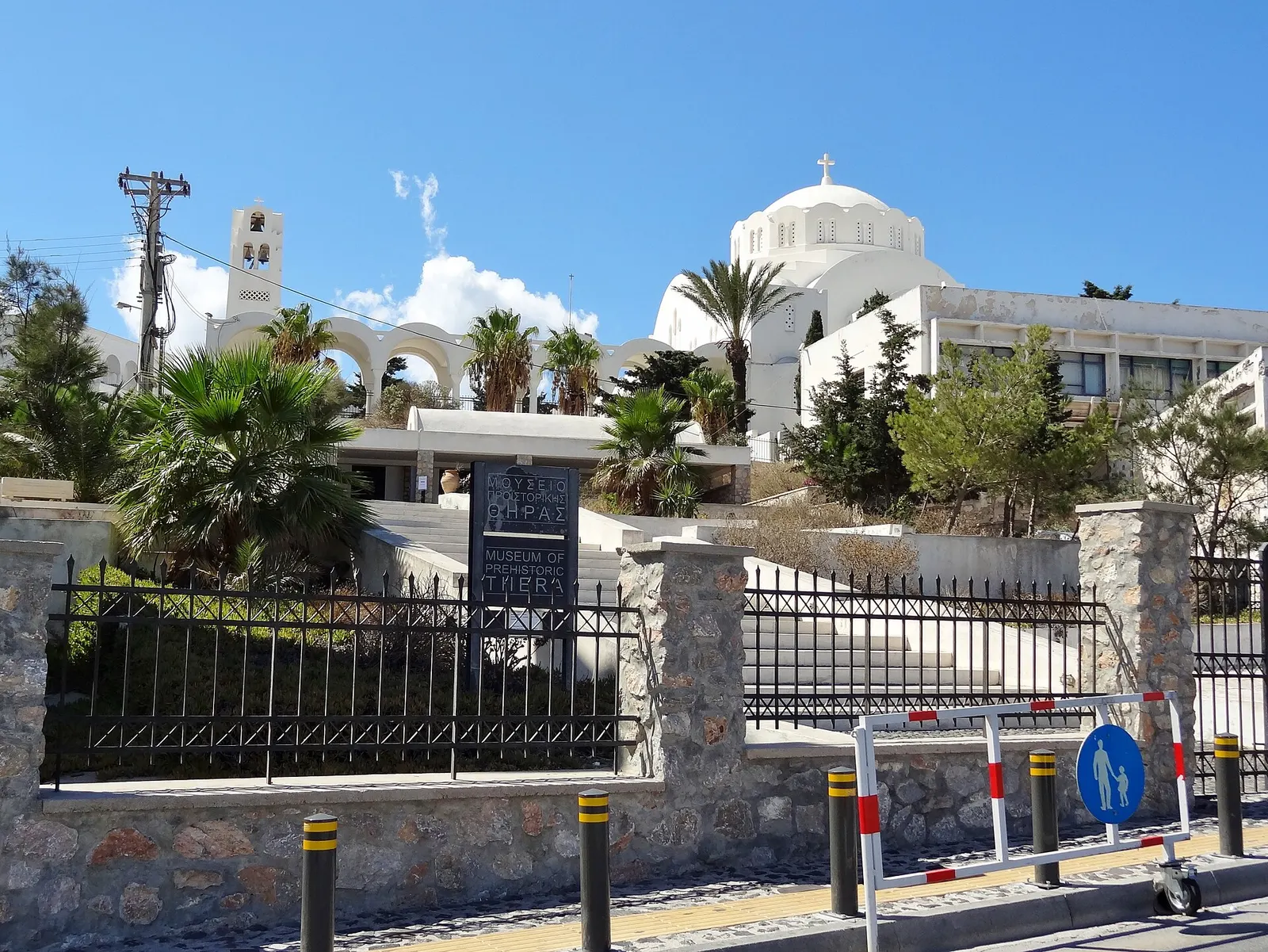
Museum of Prehistoric Thera
Located in the heart of Fira, this institution houses important finds unearthed from the excavations at Akrotiri. The collection includes Minoan pottery, intricate wall paintings such as the Blue Monkeys fresco, and everyday Bronze Age tools. We encounter a comprehensive view of Aegean civilisation before the catastrophic volcanic eruption of the seventeenth century BC.
Orthodox Metropolitan Cathedral
Erected in the nineteenth century and rebuilt following the severe 1956 earthquake, this whitewashed cathedral commands a prominent position in Fira. Its exterior features graceful arcades, a prominent bell tower, and a distinct dome visible from across the rim. Inside, visitors can observe elaborate modern frescoes painted by local artist Christoforos Asimis.
Archaeological Museum of Thera
Constructed in 1960 to replace a facility destroyed by earthquake, this museum focuses on the classical heritage of the island. Exhibits trace the history of settlement from the Doric colonisation through the Roman era, displaying archaic inscriptions, Hellenistic clay figurines, and geometric pottery. The artefacts were largely excavated from ancient Thera on Mesa Vouno.
Karavolades Stairs
Comprising nearly six hundred paved stone steps, this steep pathway has historically connected Fira with its maritime landing below. Built into the cliffs, the route was formerly traversed exclusively on foot or by pack animals transporting cargo. Today, walking down offers views of the volcanic rock strata that compose the cliffs of the island.
Old Port of Fira
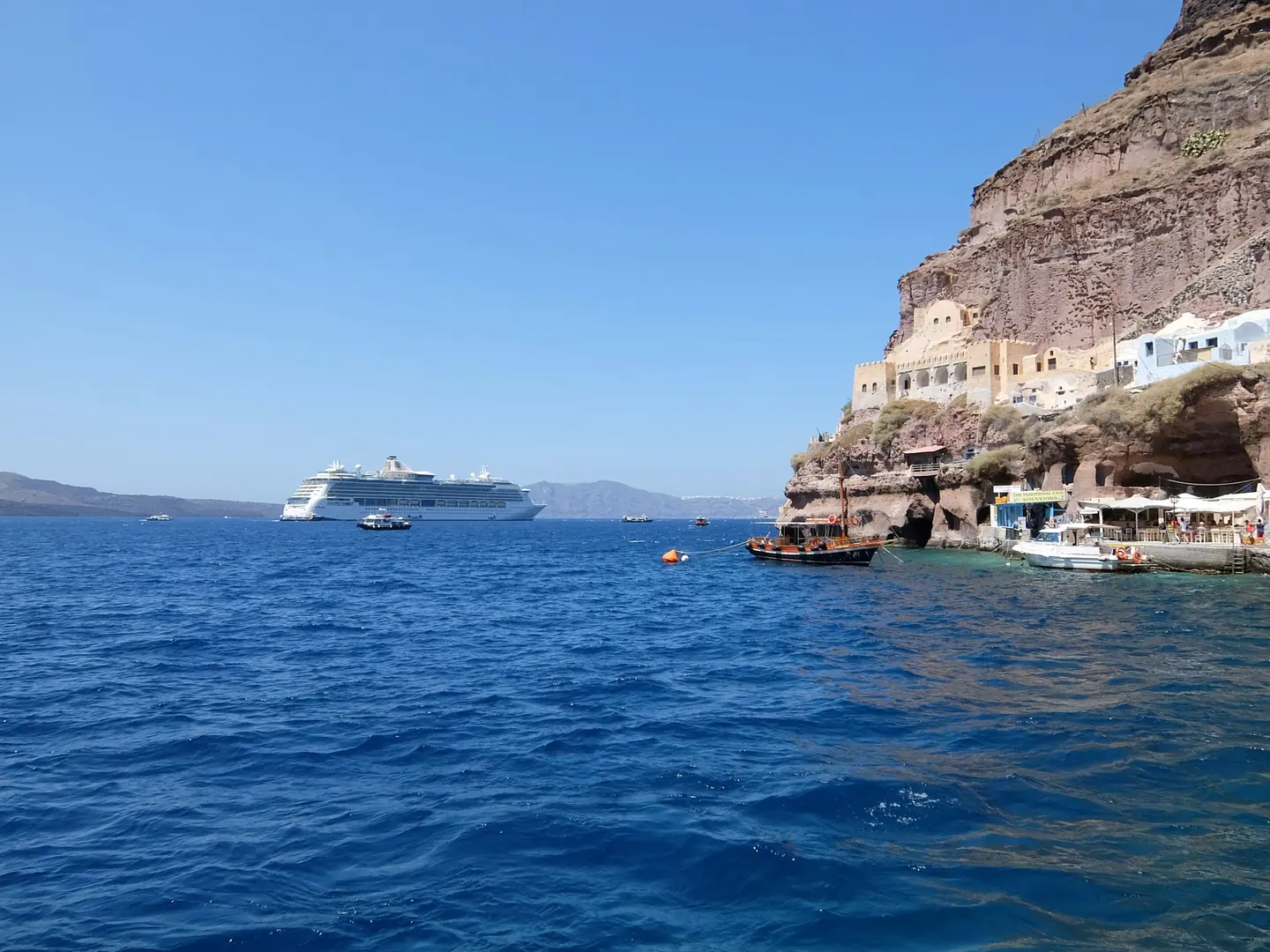
Historically the main point of maritime entry for the island, this water-level harbour is hemmed in by sheer volcanic precipices. Passenger tenders from cruise vessels still dock here, transferring travellers to the cable car or the stone steps above. The quay retains old stone warehouses, boat moorings, and small tavernas facing the caldera.
Catholic Cathedral of Saint John the Baptist
Standing in the historic Catholic quarter of Fira, this cathedral displays a distinct peach and cream baroque facade with a handsome clock tower. Constructed in the early nineteenth century and restored following the 1956 earthquake, it serves the island's long-established Latin community. The interior features classical religious portraiture, marble balustrades, and vaulted ceilings.
Dominican Convent
Established in 1596 and relocated to Fira in the nineteenth century, this monastic institution houses an order of cloistered Dominican nuns. The complex exhibits traditional Cycladic architecture blended with classical Catholic styling, featuring a tranquil internal cloister. While the living quarters remain private, the convent church opens regularly for services, where visitors hear choral vespers.
Megaro Gyzi Museum
This restored seventeenth-century family mansion survived the 1956 earthquake and now operates as a cultural centre. Managed by the Catholic diocese, it displays historical engravings, archival documents, maps, and photographs illustrating Santorini prior to modern tourism. It also features a collection of local rock specimens and regularly hosts musical performances.
Santorini Cable Car
Donated by the Nomikos Foundation and built in the early 1980s, this transit system climbs two hundred and twenty metres up the cliff face. It provides mechanical access between the water's edge and Fira, alleviating pressure on the historic mule trail. The ride offers views across the caldera waters and the submerged volcanic crater.
Three Bells of Fira
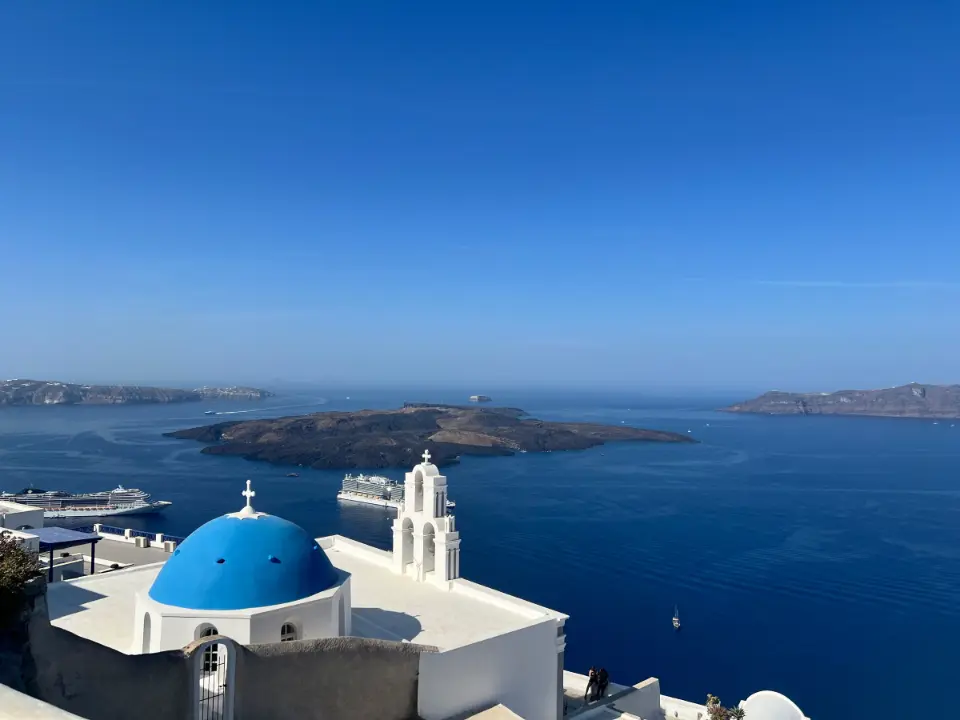
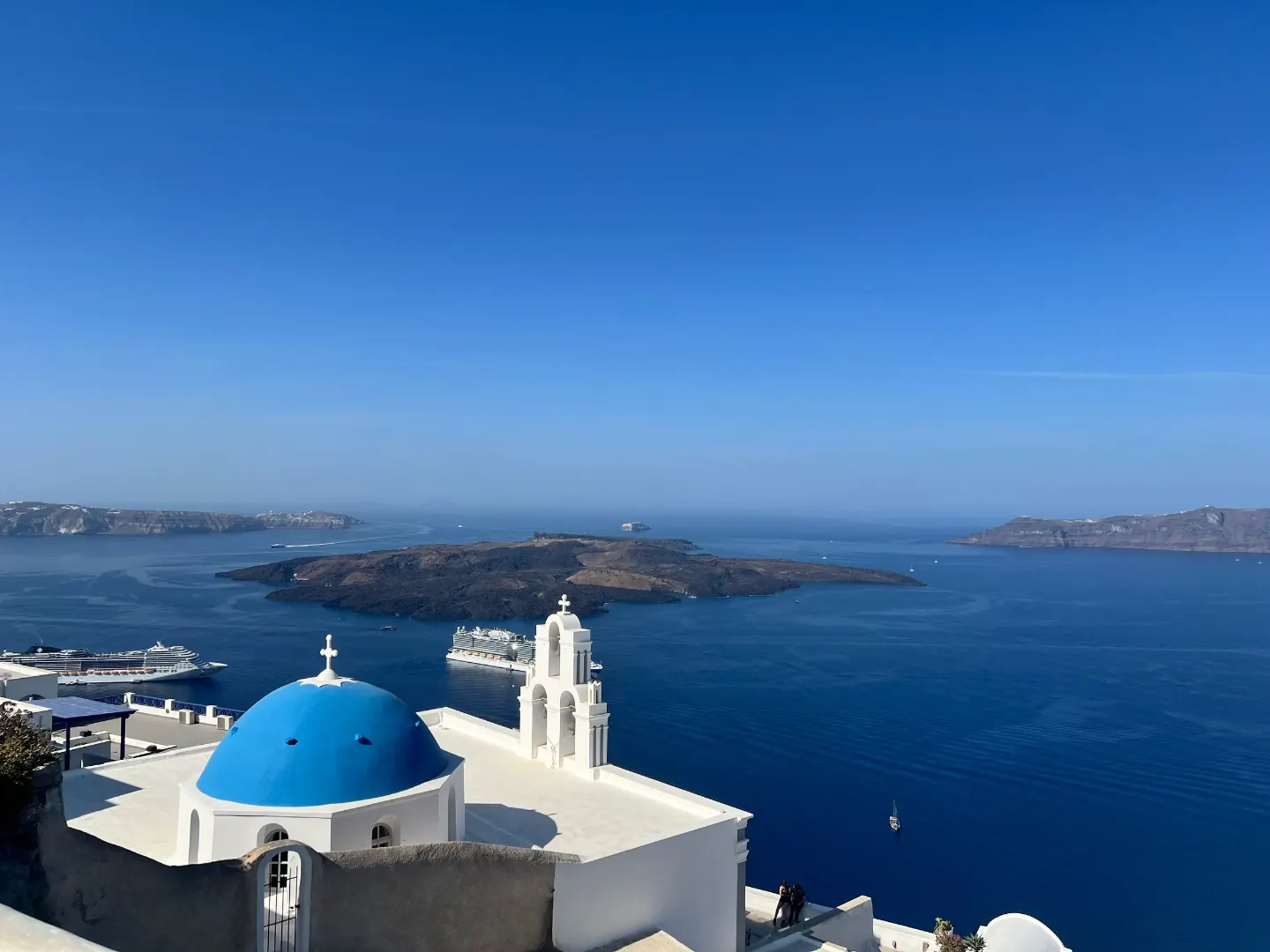
Officially dedicated to the Dormition of the Virgin Mary, this eighteenth-century church stands along the cliff path in Firostefani. The building is distinguished by its blue dome and a triple bell-gable set against the open sea. It was rebuilt after sustaining damage during the 1956 earthquake and remains an example of Aegean ecclesiastical architecture.
Agios Gerasimos Church
Located in the square of Firostefani, this Orthodox sanctuary is surrounded by local cypress trees. The church presents a traditional whitewashed exterior with a large blue dome and a prominent bell tower that chimes across the cliffside. The terrace in front provides a view extending towards Nea Kameni and the cliffs of Imerovigli.
Church of Saint John the Theologian
Positioned where Fira transitions into Firostefani, this chapel is built directly into the upper reaches of the caldera rim. The structure exhibits the barrel-vaulted roof typical of traditional Cycladic masonry, designed to withstand intense maritime winds. Its quiet courtyard contains marble inscriptions that record several restorations completed across the nineteenth and twentieth centuries.
Agios Georgios Church Imerovigli
Occupying a raised plateau in central Imerovigli, this church is distinguished by its surrounding pine grove and wide paved square. Reconstructed following the earthquake of 1956, it retains classical Cycladic whitewash and deep yellow accents on its bell arches. The site serves as a community gathering space along the pedestrian path connecting Fira with Oia.
Church of the Anastasi
Positioned low on the cliff rim facing Skaros Rock, the Church of the Anastasi, or Resurrection, dates from the nineteenth century. It is known for its distinct blue dome and an ornate two-tiered bell tower that frames views of the sea below. The adjacent stone terraces provide panoramas of the western approach to the island.
Panagia Malteza
According to local tradition, this church was built after an icon was discovered floating near Malta in the seventeenth century. Reconstructed in the twentieth century, the sanctuary houses an intricate, hand-carved wooden iconostasis displaying scenes from the Old Testament. Its neoclassical facade and twin bell gables stand out among the surrounding Cycladic domestic houses.
Skaros Rock
Protruding from the caldera wall below Imerovigli, this headland served as the island's primary fortified capital during Venetian rule. Built during the thirteenth century to protect against pirate incursions, the fortress survived numerous earthquakes before being abandoned in the eighteenth century. Today, stone foundations, cisterns, and defensive ramparts remain visible across the crag.
Church of Panagia Theoskepasti
Clinging to the sheer western cliff edge of Skaros Rock, this remote chapel looks out directly across the open caldera. Rebuilt several times after tremors, the whitewashed building features a vivid blue dome and an open flagstone terrace. Access is possible only via a rugged descent following the stepped hiking trail around the southern promontory.
Agios Ioannis Katiforis
Perched on the steep edge where the village of Imerovigli meets the pathway to Skaros, this compact chapel has centuries-old maritime connections. Its name refers to the steep downhill incline on which it stands. The terrace functions as a natural viewing point for observing the geological stratification of the cliff and the ruined Venetian settlement below.
Bellonias Cultural Centre
Founded in 1994 by the Bellonias family, this cultural foundation promotes local arts and literature in Fira. The modern building houses a significant public lending library, seminar rooms, and an exhibition hall dedicated to Aegean painters and sculptors. It hosts an active programme of lectures, poetry readings, and chamber music concerts throughout the year.
Church of Agios Minas
Standing on the southern perimeter of Fira, this historic church is noted for its low, whitewashed dome and distinctive single bell-gable. Built directly into the volcanic cliff, it overlooks the southern sweep of the caldera toward the village of Akrotiri. It represents an enduring element of the townscape that survived major twentieth-century geological disturbances.
Caldera Cliff Trail to Oia & Ammoudi Bay
Theoskepasti Chapel, Prophet Elias Chapel Imerovigli, Mavro Vouno Trail, Finikia Village, Church of Panagia Platsani, Oia Blue Domes Agios Spyridon, Castle of Agios Nikolaos Oia, Naval Maritime Museum, and Ammoudi Bay
Skaros Rock
Skaros Rock supported the primary fortified settlement of Santorini throughout the Venetian period. Constructed in the thirteenth century to deter pirates, the citadel survived multiple sieges before devastating earthquakes prompted its abandonment. Today, travellers inspect weathered stone foundations, ruined dwellings and defensive bastions clinging to the precipitous volcanic promontory.
Panagia Theoskepasti Chapel
Panagia Theoskepasti occupies an isolated rock terrace directly beneath the western cliffs of Skaros Rock. This modest Cycladic chapel features whitewashed plaster walls, a curved barrel vault and a distinctive blue dome. It looks outward over open maritime waters, offering a peaceful sanctuary away from the main pedestrian paths of Imerovigli.
Prophet Elias Chapel Imerovigli
Erected along the caldera rim between Imerovigli and Oia, this simple church honours the prophet Elijah. The whitewashed structure exemplifies rural Aegean ecclesiastical design with its clean lines, arched bell gables and unadorned stone courtyard. It marks a classic orientation point for hikers traversing the ancient volcanic footpath toward Oia.
Chapel of Saint Anthony
The Chapel of Saint Anthony sits along an elevated ledge north of Imerovigli, facing the submerged caldera. Built according to traditional Cycladic proportions, the modest building features curved buttresses and an understated bell canopy. Hikers often pause here to study the exposed layers of basalt, pumice and red pozzolana across the cliff wall.
Chapel of Saint Mark
Positioned beside the traditional pack-mule trail, the Chapel of Saint Mark displays a domed roof and an open terrace overlooking the sea. Its brilliant lime-wash finish contrasts sharply against the dark volcanic soil of the ridge. The site provides unobstructed views across the water towards Thirassia and the northern cape.
Panagia Katiforiani
Panagia Katiforiani stands upon the descending eastern contours of Imerovigli, looking towards the Aegean Sea. Built to serve local farming families, the church displays twin barrel vaults and traditional stone-paved courtyards. The interior contains modest iconographic screens and maritime votive offerings left by island seafarers across centuries.
Mavro Vouno Trail
Mavro Vouno, or the Black Mountain, forms a rugged geological boundary between Imerovigli and the Oia peninsula. The trail navigates dense deposits of dark basalt and volcanic scoria formed during ancient Minoan eruptions. Walking this exposed crest reveals how geological forces fractured the island into its current crescent shape.
Prophet Elias Church of Mavro Vouno
Occupying a barren crest along the northern track, this small shrine serves as a stark landmark amid dark volcanic debris. The chapel exhibits a solitary nave, whitewashed plaster finish and a humble arched bell gable. Travellers observe wide panoramas across both the internal caldera basin and the open Aegean.
Agios Georgios Church Finikia
Located in the preserved agricultural hamlet of Finikia, Agios Georgios features a courtyard shaded by palm trees and traditional stone masonry. The church interior houses ornate nineteenth-century wood carvings and gilded icons venerated by local residents. It anchors the quiet village lanes, where preserved canavas and earth houses line the hillside.
Panagia Matrona Finikia
Panagia Matrona was constructed in 1859 by local seafarers and grape growers in Finikia. The building displays an imposing bell tower, a spacious pebble-mosaic courtyard, and an ornate iconostasis fashioned by Aegean craftsmen. The surrounding neighbourhood retains traditional cave-cellar architecture once dedicated entirely to the island's celebrated wine production.
Chapel of Agia Kyriaki
Agia Kyriaki sits along the gentle ravines of Finikia, built partly into the volcanic tuff. Its simple Cycladic exterior blends smoothly with traditional canavas, the historical wine-pressing cellars of the region. Visitors will observe original stone lintels and lime-washed walls that have weathered multiple seismic events over two centuries.
Church of Panagia Platsani
Panagia Platsani dominates the primary marble-paved plaza of Oia. Originally situated inside the Venetian castle, the church was reconstructed in its present location following the devastating 1956 earthquake. The exterior boasts a magnificent six-bell pyramid tower, white barrel vaults and a grand central dome overlooking the village centre.
Church of Agios Spyridon
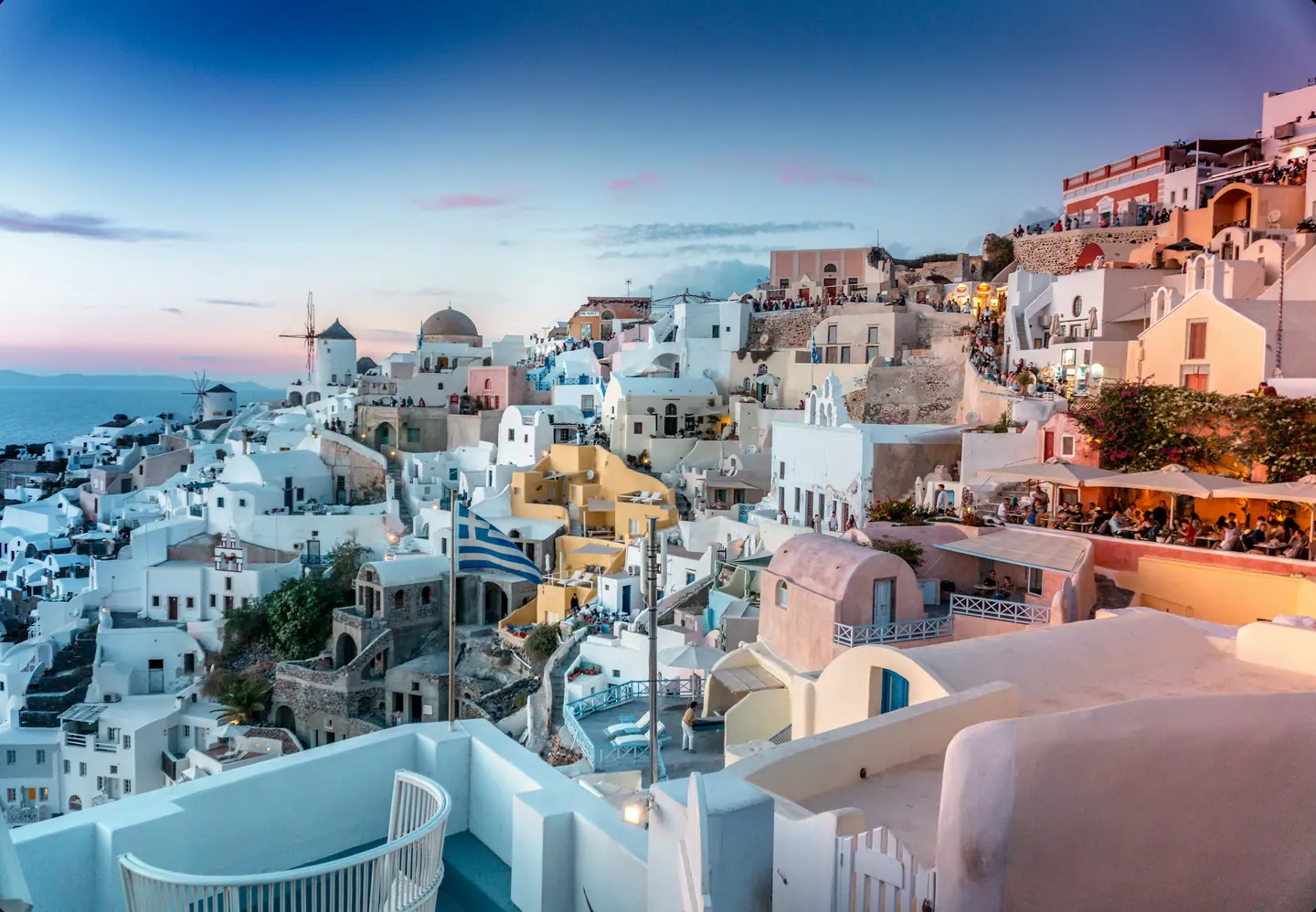
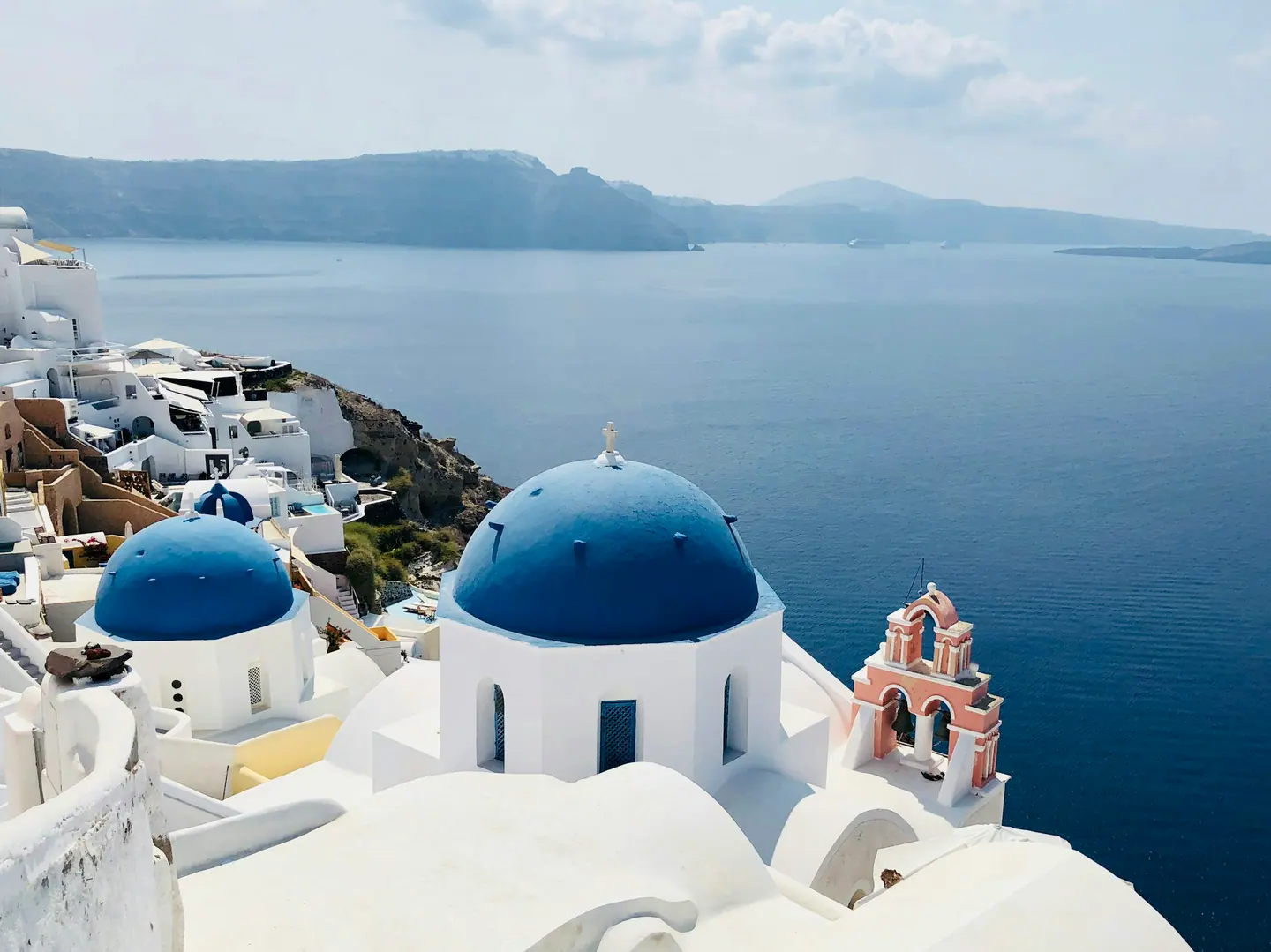
Agios Spyridon is renowned for its sky-blue dome and whitewashed bell belfry overlooking the deep waters of the caldera. Erected in the late nineteenth century, the church exemplifies classic Aegean maritime architecture. It stands adjacent to sister chapels on a steep cliffside terrace, forming an internationally recognisable landmark.
Church of the Anastasis Oia
The Church of the Anastasis, or the Resurrection, stands directly alongside Agios Spyridon on the lower cliffs of Oia. It features a distinctive ochre-and-pink bell frame housing delicate bronze bells beside its historic blue dome. The building reflects the wealth generated by nineteenth-century ship captains who financed parish construction.
Castle of Agios Nikolaos Oia
The Castle of Agios Nikolaos, founded in the fifteenth century by the Venetian Argyri family, served as a defensive lookout against Ottoman raids. Much of the fortress collapsed during the 1956 earthquake, leaving the stone goulas watchtower and broken perimeter bastions. The site remains a prime vantage point for viewing the open sea and coastal sunset.
Windmills of Oia
These cylindrical masonry windmills once harnessed prevailing Aegean gusts to grind barley and wheat for island communities. Constructed with thick volcanic stone and thatched conical roofs, they formed an essential industrial component of rural Santorini. Several structures have been carefully conserved, illustrating traditional maritime engineering from previous centuries.
Naval Maritime Museum of Oia
Housed in a restored nineteenth-century neoclassical captain's residence, this museum records the rich seafaring legacy of Santorini. The collection includes rare nautical equipment, ship logs, historical photographs and carved figureheads from nineteenth-century sailing barks. It illuminates the era when Oia maintained a formidable commercial shipping fleet across the Black Sea and Mediterranean.
Church of Agios Ioannis Thalassinos
Perched on the lower western switchbacks heading down towards the sea, Agios Ioannis Thalassinos directly faces maritime traffic. This small chapel was established by sailors grateful for safe passage through hazardous Aegean waters. The exterior exhibits humble whitewashed forms and a small iron cross mounted against the volcanic horizon.
Ammoudi Bay
Ammoudi Bay serves as the traditional harbour of Oia, situated almost three hundred steps below the cliff-edge village. Lined with waterfront tavernas, modest fishing boats and weathered boathouses, the port contrasts sharply with the vertical red scoria cliffs behind it. Historic stone quays once accommodated cargo boats loading sweet Vinsanto wine barrels.
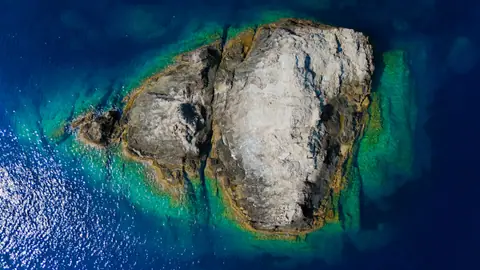
Saint Nicholas Islet
Saint Nicholas Islet lies just off the shoreline path south of Ammoudi Bay, accessible by swimming or small skiff. The volcanic outcrop supports a small whitewashed church dedicated to Saint Nicholas, patron of mariners. Swimmers and walkers frequently venture out to the rocky ledge, taking in views of the towering Oia cliff face above.
Pyrgos, Megalochori, Emporio & Assyrtiko Vineyards
Karterados Cave Houses, Messaria Argyros Mansion, Pyrgos Kasteli, Prophet Elias Monastery Summit, Santo Wines Caldera View, Venetsanos Winery, Megalochori Bell Tower, and Emporio Kasteli & Goulas Tower
Karterados Traditional Cave Dwellings
Carved directly into the volcanic ash along a sunken riverbed, these troglodytic dwellings sheltered islanders against maritime pirate raids. Travellers can examine whitewashed facades that conceal vaulted subterranean chambers, deep domestic storage niches and rock-cut cisterns engineered to preserve scarce island rainfall.
Church of the Presentation of the Virgin Mary, Karterados
Serving as the central parish sanctuary of Karterados, this grand multi-domed church showcases a blend of vernacular Aegean masonry and neoclassical accents. Visitors should observe the elaborate tiers of open belfries, the whitewashed perimeter courtyard and the carved wooden iconostasis preserved inside.
Argyros Mansion, Messaria
Constructed in 1888 by landowner and vintner George Argyros, this grand residence exemplifies the wealth generated by Santorini's historic wine export trade. The interior retains original Bavarian furniture, Austrian crystal chandeliers and hand-painted ceiling frescoes illustrating mythological scenes.
Church of Saint Dimitrios, Messaria
Standing amid the cobbled alleys of Messaria, Saint Dimitrios presents an imposing facade framed by dual multi-arched bell towers and traditional Cycladic barrel vaulting. The whitewashed exterior contrasts against bright azure domes, while the shaded atrium offers an authentic glimpse into local ecclesiastical gatherings.
Pyrgos Kasteli
Constructed around the thirteenth century under Venetian rule, this hilltop stronghold formed a defensive network across the island. Dense outward-facing stone walls served as fortifications, leaving narrow, winding stairways and arched tunnels designed to confound intruders climbing toward the central summit.
Church of Theotokaki, Pyrgos
Situated just below the peak of Pyrgos Kasteli, this compact Byzantine sanctuary dates from the tenth century. The interior preserves ancient religious treasures, including an intricately carved wooden templon, weathered devotional icons and original post-Byzantine wall frescoes displayed within its diminutive vaulted nave.
Ecclesiastical Collection of Pyrgos
Housed within the restored chapel of Agia Triada at the castle entrance, this collection displays regional religious artifacts spanning several centuries. Exhibits include silver reliquaries, gold-embroidered vestments and rare Cretan school icons that reveal the historic mercantile ties connecting Santorini to Mediterranean trade networks.
Church of the Presentation of the Virgin, Pyrgos
Completed in 1660, this majestic church crowns the highest point of Pyrgos Kasteli, visible from across the surrounding plains. The structure features a large cupola, an ornate multi-tiered bell wall and an interior adorned with silver-sheathed icons and grand bronze candelabra.
Prophet Elias Monastery Summit
Founded in 1711 atop Mount Profitis Ilias, this historic complex rises 567 metres above sea level. Resembling a fortress with high defensive walls, the site houses rare manuscripts, monastic printing artifacts and an expansive open terrace presenting panoramic views across the entire archipelago.
Santo Wines Caldera View
Operated by the Union of Santorini Cooperatives, this clifftop facility promotes indigenous viticulture and traditional dry Assyrtiko production. Visitors can observe educational displays detailing the unique basket-pruning kouloura method while looking out across the flooded caldera basin and the Kameni volcanic islets.
Venetsanos Winery
Constructed in 1947 by the Venetsanos family, this was the first industrial winery on the island. The facility made innovative use of structural gravity to transfer grape must through processing halls down to the port below, long before electricity was established throughout the region.
Megalochori Traditional Square
The central square of Megalochori serves as the civic anchor for a village that was a prominent nineteenth-century winemaking hub. Lined by neoclassical mansions with heavy wooden carriage gates, the space showcases whitewashed stone walls, bougainvillea canopies and quiet open-air tavernas.
Megalochori Bell Tower
This elegant architectural arch spans the main village path, functioning both as a civic gateway and an ornate bell tower. Decorated with intricate triangular pediments and symmetrical bell embrasures, the structure offers a prime demonstration of late nineteenth-century Cycladic architectural craftsmanship.
Church of the Virgin Mary, Megalochori
Known locally as Panagia ton Eisodion, this parish church is celebrated for its elaborate iconographic treasures. The interior houses an extraordinary wood-carved calendar icon portraying 365 individual saints, alongside centuries-old gold-leaf decorations and a towering multi-tiered limestone bell tower outside.
Gavalas Winery Heritage Cellar
Operating for over three centuries, this family-run canava preserves the traditional method of subterranean wine ageing. Visitors can inspect old stone foot-treading basins, massive oak barrels and educational displays about rare indigenous grape varietals such as Katsano and Voudomato cultivated in nearby vineyards.
Emporio Kasteli
Dating to the fifteenth century, this fortified quarter remains exceptionally intact. The outer houses form a continuous stone barricade with tiny windows, pierced only by a single gateway, the Porta, which leads into an intricate labyrinth of overhead arches, external staircases and tunnels.
Goulas Tower of Emporio
Standing just outside the primary perimeter of Emporio Kasteli, this massive rectangular watchtower was built in the seventeenth century, possibly by the D'Argent family. The fortified outpost served as a defensive refuge and agricultural depot, complete with internal storage wells and high firing embrasures.
Church of the Annunciation, Emporio
Dominating the western entrance to Emporio, this large nineteenth-century church exhibits typical Aegean ecclesiastical architecture. Its distinctive multi-level belfry features delicate carved limestone balustrades, while the adjoining courtyard is paved with traditional black and white volcanic pebble mosaics called chochlakia.
Church of Panagia Mesani, Emporio
Erected directly within the inner courtyard of Emporio Kasteli, this historic church served as the spiritual stronghold for refuge-seeking villagers. Inside, visitors can view a sixteenth-century wooden iconostasis of exceptional detail, surrounded by historic silver votive offerings and early Cycladic religious iconography.
Windmills of Gavrilos Ridge
Constructed along the windswept Gavrilos ridge south of Emporio, this series of cylindrical stone windmills dates from the nineteenth century. These protected cultural monuments once ground locally grown barley and wheat, utilising the powerful northern Aegean breezes to sustain the island's domestic food supplies.
Ancient Akrotiri, Red Beach & Lighthouse Point
Akrotiri Archaeological Site, House of the Ladies, Xeste 3, Akrotiri Venetian Castle, Red Beach Kokkini Paralia, White Beach, Vlychada Sculpted Tuff Cliffs, Industrial Tomato Museum, and Akrotiri Lighthouse
Akrotiri Archaeological Site
Buried by the catastrophic Thera eruption around 1600 BC, this prehistoric port reveals multi-storey stone buildings and sophisticated drainage networks. Visitors walk along elevated bioclimatic timber walkways above paved streets. We can observe ancient masonry walls, imported Cretan storage vessels, and preserved millstones still resting in domestic workshops.
House of the Ladies
This three-storey residence inside Akrotiri takes its name from wall frescoes depicting women donning Minoan garments and floral robes. Structural remains highlight an internal light well designed to illuminate the inner corridors. Archeologists found intact clay jars and evidence of advanced carpentry techniques supporting the upper floorboards.
Xeste 3
Xeste 3 served as an important ritual centre for the prehistoric community, constructed with dressed ashlar masonry blocks. The interior holds a sunken lustral basin flanked by frescoes portraying saffron gatherers and female initiation ceremonies. We examine multiple levels of doorways known as pier-and-door partitions that regulated interior light.
Xeste 4
Standing near the southern edge of the excavations, Xeste 4 ranks as the largest public structure uncovered at Akrotiri. The facade features carefully cut volcanic stone blocks framing broad entrance steps. Fragmentary wall paintings discovered within depict men processing along stairways, reflecting an elite civic or religious role.
West House at Akrotiri
The West House borders the triangular town square and served as a well-to-do private dwelling. It famously preserved the miniature wall painting showing a naval flotilla voyaging between coastal towns. An upper-floor chamber retains a ceramic hearth, stone drainage basins, and large windows that once surveyed the harbour.
Sector Alpha
Located near the entrance of the excavated zone, Sector Alpha contained significant commercial stores for olive oil, wine, and grains. Rows of large ceramic pithoi remain anchored into clay floorings. The structural timber frames embedded in the mudbrick walls reveal ancient construction methods engineered to absorb earthquake shocks.
Sector Delta
Sector Delta encompasses four interconnected residential blocks arranged along a paved street. Excavators discovered the famous Spring Fresco here, which depicted swallows darting among flowering lilies across three walls. The ground level features domestic hearths, bronze utensils, and stone grinding troughs preserved by volcanic pumice.
Akrotiri Venetian Castle
Known locally as La Ponta, this fortified castle was constructed by the Venetian Sanudo dynasty in the thirteenth century. The dense cluster of stone homes once surrounded a central watchtower overlooking the southern waters. Although damaged during the 1956 earthquake, the remaining perimeter bastions offer clear views of the village.
Church of Agia Theodosia
Standing before the historic castle gate, Agia Theodosia is identifiable by its whitewashed bell tower and sky-blue cupola. The interior houses carved timber iconostases and venerated icons dedicated to maritime protectors. Local families gather in the paved courtyard, which commands a panoramic view of the caldera rim.
Church of the Presentation of Christ Akrotiri
This traditional church exemplifies vernacular Cycladic architecture with its barrel-vaulted ceiling and smooth lime plaster finish. Modest arches frame the stone bellcote, which houses three tuned bronze bells. Its orientation offers quiet surroundings and vistas across the agricultural terraces that drop down toward the Aegean Sea.
Red Beach
Red Beach, or Kokkini Paralia, owes its distinctive colour to pulverized basalt cliffs rich in iron deposits. The sheer rock face rises abruptly from the dark pebbles, showcasing layered pyroclastic strata from past eruptions. Coastal trails lead around the headland, though rockfalls regularly shape this dynamic geological landscape.
Church of Agios Nikolaos Akrotiri
Set directly on the footpath leading toward Red Beach, this small church honours Saint Nicholas, the patron of mariners. The brilliant white exterior stands in stark contrast to the dark reddish cliffs behind it. Fishermen built the structure into the stone face, providing shelter for coastal travellers navigating the shoreline.
White Beach
Accessible primarily by boat from Akrotiri, Aspri Paralia presents dramatic limestone and pumice rock walls. The pale headlands form a natural amphitheatre around dark sand and grey pebbles. Sea-carved caverns puncture the cliff base, offering insight into ongoing marine erosion across Thera's southern coast.
Akrotiri Lighthouse
Erected by a French commercial firm in 1892, this stone beacon stands on the extreme southwestern cape of Santorini. The square masonry tower rises ten metres above the keeper's quarters, flashing light across critical Aegean shipping lanes. The cliff-edge grounds provide unhindered views over the open sea and caldera cliffs.
Mavrorachidi Viewpoint
Positioned along the road toward the lighthouse, this elevated ridge overlooks the deep volcanic caldera from the south. The vantage point displays the submerged crater floor between the Kameni islands and the rim settlements of Fira and Oia. Low stone windbreaks across the ridge shelter traditional, ground-hugging Assyrtiko vineyards.
Balos Cove
Located on the inner rim north of Akrotiri village, Balos Cove was historically used by fishermen to haul boats ashore. Carved into the pumice rock are syrmata, traditional rock-cut doors used for winter boat storage. The tranquil bay reveals volcanic dykes slicing vertically through older horizontal ash deposits.
Church of Agios Epifanios
Perched on a rise south of Akrotiri village, Agios Epifanios features simple Cycladic lines and a double-arched bell-gable. The surrounding fields showcase drystone walls that prevent soil erosion on volcanic gradients. We can inspect traditional threshing floors and stone cisterns designed to collect winter rainwater.
Vlychada Sculpted Tuff Cliffs
The coastal cliffs at Vlychada consist of deep deposits of volcanic ash and compacted tuff. Wind and sea spray have carved the white rock into natural fluted pillars, alcoves, and surreal canyon-like crevices. The formation demonstrates the immense volume of pyroclastic surges expelled during the Bronze Age eruption.
Industrial Tomato Museum D.Nomikos
Housed in a 1945 seaside processing plant at Vlychada, this museum documents Santorini's historic tomato paste industry. Visitors examine original steam-driven engines, sorting tables, processing cauldrons, and can-closing machinery. The exhibits explain the agricultural importance of the small, drought-resistant Santorini cherry tomato grown in volcanic soil.
Vlychada Port
Constructed beneath the ash cliffs, Vlychada Port provides safe anchorage for fishing vessels and catamarans navigating southern Santorini. Stone jetties shelter wooden caiques and nets drying along the quayside. The basin offers clear views of geological layers exposed by natural erosion along the southern shoreline.
Ancient Thera, Kamari, Nea Kameni Volcano & Thirassia
Ancient Thera Mesa Vouno, Sanctuary of Artemidoros, Hellenistic Theatre of Thera, Panagia Episkopi Byzantine Church, Kamari Black Beach, Perissa, Nea Kameni Volcanic Crater, Palea Kameni Hot Springs, and Manolas Thirassia
Ancient Thera
Founded by Spartan colonists in the ninth century BC, this elevated settlement retains foundations spanning Hellenistic, Roman, and Byzantine epochs. Visitors walk paved limestone streets past civic buildings, residential complexes, and ancient cisterns. The exposed ridge reveals dramatic panoramic vantage points across both the eastern and southern coastlines of the island.
Sanctuary of Artemidoros
Carved directly into living rock, this outdoor precinct was established in the third century BC by Artemidoros of Perge, an officer of Ptolemy. Stone reliefs display sacred animal symbols representing the gods: an eagle for Zeus, a lion for Apollo, and a dolphin for Poseidon. Inscribed epigrams commemorate the founder and his chosen patrons.
Hellenistic Theatre of Thera
Constructed during the Ptolemaic period in the second century BC, this theatre served both dramatic performances and civic assemblies for the urban population. The cavea retains tiers of carved stone seating dug directly into the hillside above a semi-circular orchestra. The architectural orientation offered spectators expansive maritime perspectives during public gatherings.
Agorá of Ancient Thera
Extending along the natural spine of the mountain, the long marketplace served as the social and commercial core of ancient life. Foundations of administrative offices, stoas, and Roman statue bases delineate the historic gathering ground. Travellers can examine inscribed honorary decrees and official dedications carved into the surrounding limestone blocks.
Gymnasium of the Ephebes
Dating from the sixth century BC, this athletic quarter includes a spacious courtyard where Spartan youths trained in physical discipline and cultural studies. The rocks surrounding the terrace feature numerous archaic graffiti, including carved names of athletes and traditional dedicatory inscriptions. Adjoining ruins include changing chambers and Roman-era bath modifications.
Sanctuary of Apollo Karneios
Established in the sixth century BC, this temple complex formed the centre for the annual Karneia festival, an essential Spartan religious observance. The layout includes an enclosed temple building with a small cella, an open courtyard, and monolithic limestone altars. Deep inscriptions cut into adjacent stone surfaces record historic musical and athletic contests.
Basilica Stoa of Ancient Thera
Rebuilt during the early Roman Imperial period, this extensive portico provided sheltered space for judicial proceedings, commerce, and civic assemblies. The ground plan reveals a central nave flanked by monumental interior colonnades that supported a timber roof. Statues of the imperial family were displayed along the rear walls to demonstrate local loyalty.
Panagia Episkopi
Commissioned by Byzantine Emperor Alexios I Komnenos in the late eleventh century, this historic cathedral stands as a rare surviving imperial foundation on Santorini. The interior holds exceptional tempera frescoes, ornate marble relief panels, and an exquisite marble iconostasis. The building endured pirate raids and earthquakes, retaining its role as an enduring ecclesiastical centre.
Kamari Beach
Stretching for several kilometres along the eastern shoreline, this black shingle beach was developed following the destructive 1956 earthquake. The immediate coastline is dominated by the sheer northern wall of Mesa Vouno rising directly from the surf. Archaeological finds suggest the shore served as an auxiliary harbour for Ancient Thera during antiquity.
Perissa Beach
Located on the southern flank of Mesa Vouno, this coastal strip features volcanic sediments produced by prehistoric caldera eruptions. The dark strand connects seamlessly to Perivolos beach, providing an extensive coastal walking route. Geological layers exposed along the neighbouring headland demonstrate the sequence of local volcanic and tectonic activity.
Church of the Holy Cross, Perissa
Rebuilt following the 1956 earthquake, this grand structure ranks among the largest parish churches in Santorini, featuring multi-tiered bell towers and bright blue domes. Excavations beneath the foundations revealed remnants of an early Christian basilica destroyed in the Arab raids of the seventh century. The interior contains gilded chandeliers and ornate Greek Orthodox iconography.
Mesa Vouno
Unlike the volcanic pumice comprising most of Santorini, this jagged mountain consists of pre-volcanic metamorphic limestone forming the ancient basement of the island. The promontory rises nearly four hundred metres above sea level, providing natural fortifications for historic settlements. Hiking trails traverse the slopes, connecting coastal villages to high archaeological remains.
Nea Kameni Volcanic Crater
Formed through repeated subsea eruptions over the last four centuries, this uninhabited islet features barren fields of basalt and dacite lava flows. Trails lead to the rim of the central Georgios crater, which erupted during the mid-twentieth century. Travellers can observe active sulphur fumaroles, steaming gas vents, and dramatic geologic fault lines.
Palea Kameni Hot Springs
Formed during volcanic activity in the second century BC, the smaller of the two Kameni islets houses warm thermal springs in secluded coastal coves. Subterranean geothermal vents heat the inlet waters, infusing the bay with iron oxide and mineral clays. Marine vessels regularly anchor off the coast, allowing passengers to enter the warm mineral pools.
Manolas
Perched on the eastern rim of Thirassia island, this quiet village preserves traditional Cycladic architecture largely untouched by modern resort developments. Houses feature cave-like dwellings dug directly into volcanic ash layers alongside stone windmills and narrow flagstone passages. The village commands direct views across the caldera toward Oia and Fira.
Monastery of the Assumption, Thirassia
Established in the eighteenth century, this fortified white monastery overlooks the southern entrance of the caldera and the open Sea of Crete. The complex features an enclosed walled courtyard, monastic cells, and a gold-leaf wooden iconostasis inside the katholikon. The site provides an atmosphere of solitude away from the busier eastern islands.
Korfos Harbour
Serving as the traditional marine access point for Thirassia, this narrow landing is framed by sheer geological layers of black and red volcanic basalt. A zigzagging staircase of over two hundred wide stone steps connects the quay with the village of Manolas above. Traditional wooden caiques and passenger ferries moor along the simple concrete jetty.
Riva Harbour
Located on the gentle northern plain of Thirassia, this small maritime port handles vehicle ferries and regional passenger boats connecting to mainland Santorini. The surrounding landscape displays rural farming terracing and small whitewashed chapels built against volcanic pumice beds. A wide sandy beach borders the harbour installations, offering clear maritime views across the channel.
Church of Agia Irini, Thirassia
Situated near the northern shore of Thirassia, this whitewashed chapel is dedicated to Saint Irene, from whom the Crusader name Santa Irini or Santorini is said to derive. Built in traditional island vernacular style, it features barrel-vaulted roofing and a clean bell-gable. The courtyard offers peaceful perspectives over maritime traffic crossing the caldera mouth.
Chapel of Profitis Ilias, Thirassia
Located at one of the highest elevations on the Thirassia ridge, this modest whitewashed chapel was constructed to honour the patron saint of mountaintops. The site provides unobstructed panoramic perspectives of the entire Santorini archipelago, showing the ring of prehistoric caldera walls. The trail leading to the chapel crosses abandoned agricultural terraces and dry stone boundaries.
Footpaths and Ridge Villages Across Santorini
Pair this route with the practical neighbourhood breakdowns, climate charts and transport advice in our Santorini Caldera Path, Oia & Ancient Akrotiri travel overview, alongside additional mapped city walks.