Naxos
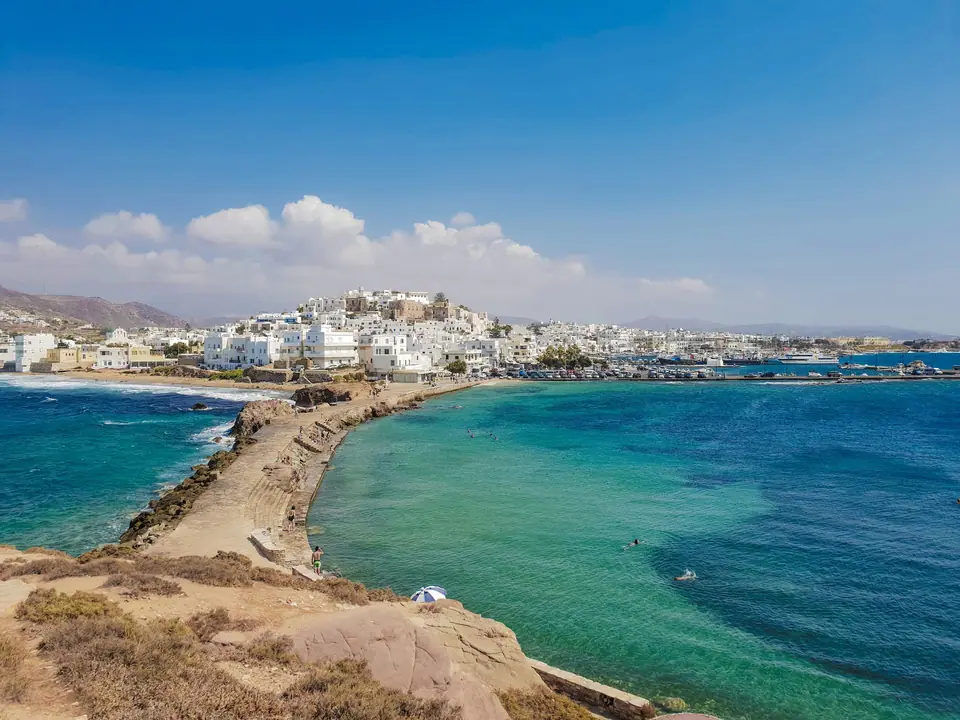
Largest and most fertile of the Cyclades, where the 530 BC marble Portara gate of Apollo and the Venetian Kastro of Chora meet endless golden-sand beaches at Plaka and Agios Prokopios, marble mountain villages in Apeiranthos and Halki, and PDO Naxos potatoes and cheeses.
Quick decisions
How many days?
3 to 4 days: the 530 BC Portara, Chora's Venetian Kastro and Agios Georgios on day one, the golden sand beaches of Agios Prokopios, Agia Anna and Plaka on day two, and the inland marble villages of Halki, Filoti, Apeiranthos and the Kouros statues on day three. Follow our three-day route.
Where should I stay?
Naxos Town (Chora) & Agios Georgios (St George Beach): walk to the Portara, the ferry port, 60 tavernas AND a shallow sandy beach in five minutes. Agios Prokopios, Agia Anna & Plaka: beachfront stays 15 minutes south by bus. Compare bases in our island overview.
Do I need a car?
Not for Chora and the south-west beaches; essential for the mountain villages. Frequent KTEL buses run every 20 to 30 minutes from Chora port along Agios Prokopios, Agia Anna and Plaka; rent a car for 1 or 2 days to explore Halki, Apeiranthos, Apollonas and Alyko.
Best for
Endless golden sand beaches: a 10-kilometre unbroken chain of turquoise bays from Agios Prokopios to Plaka and Mikri Vigla. Venetian & Archaic history: the 530 BC Portara, 1207 Kastro and 6th-century BC Kouros giants. Farm-to-table Cycladic food: Naxos potatoes, Arseniko and Graviera cheeses.
Before you go
Walk out to the Portara 45 minutes before sunset and taste PDO Naxian cheeses: unlike barren Cycladic islands, Naxos is self-sufficient with green valleys, cattle herds and citron orchards. Read our practical briefing.
Getting around
Ferries dock directly in the heart of Naxos Town (Chora): unlike Santorini or Mykonos, you roll your suitcase straight off the ferry gangway onto the Chora promenade. Details in arrival and transport.
Overview
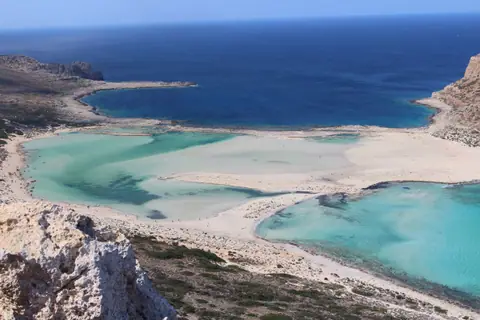
Rising at the dead centre of the Aegean Sea as the largest, highest and greenest island of the Cyclades archipelago, Naxos is the culinary and geographical heart of the island chain. Crowned by 1,003-metre Mount Zas (where mythological Zeus grew to manhood after being born on Crete, and where Dionysus, God of Wine, made his home), Naxos looks like two islands fused together: along its western coast stretches a ten-kilometre ribbon of white-gold crystalline sand and turquoise water, while its mountainous interior hides fertile olive-and-citron valleys, Byzantine frescoed chapels and marble villages.
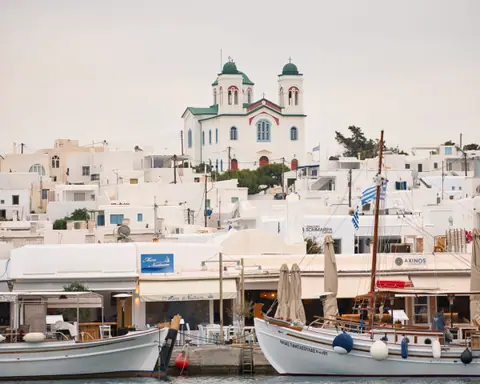
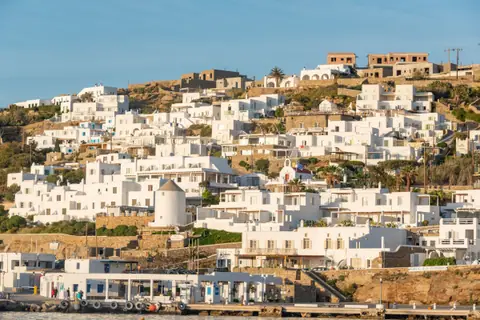
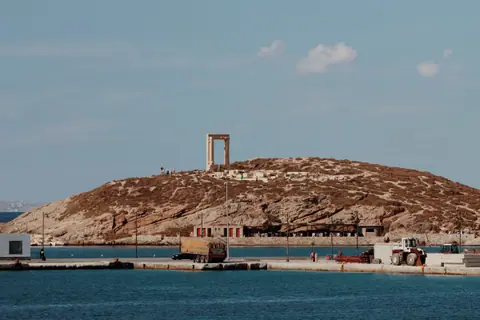
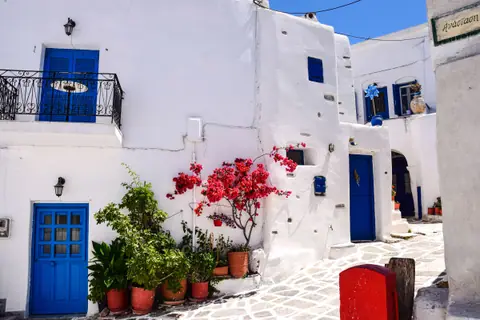
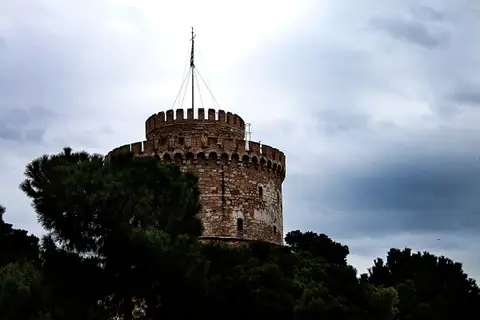
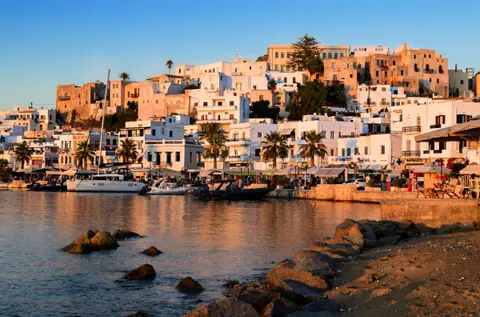
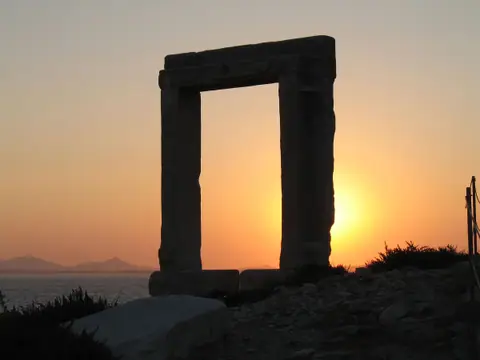
Greeting every arriving ferry on the islet of Palatia is the 530 BC marble Portara (Great Door of the Temple of Apollo), framing the conical hill of Naxos Town (Chora), its 1207 Venetian Kastro and whitewashed Bourgos. Just minutes south begin the legendary beaches of Agios Prokopios, Agia Anna, 4-kilometre Plaka and cedar-forested Alyko, while inland roads wind up to the neoclassical towers of Halki, marble-paved Apeiranthos, and the 6th-century BC Kouros giants kept inside ancient quarries. Start with our before-you-go briefing and top things to do in Naxos.
Getting there
Naxos is one of the easiest islands in Greece to arrive at: all Blue Star and SeaJets ferries from Athens (Piraeus and Rafina), Paros (30 to 45 minutes), Mykonos (40 minutes) and Santorini (1.5 to 2 hours) dock directly at the central pier of Naxos Town (Chora), and the main KTEL Bus Terminal sits literally at the foot of the ferry pier. Naxos National Airport (JNX) lies just 3 kilometres south of Chora (5 minutes by taxi or bus) with multiple daily 40-minute flights from Athens. See getting to Naxos and how KTEL buses and car rental work.
Where to stay
Because the shallow sandy bay of Agios Georgios (Saint George Beach) starts just 400 metres south of the historic Chora waterfront, staying in Naxos Town or Agios Georgios gives you the best of both worlds: you walk to a sandy beach by day and walk into the Venetian Kastro and Old Market alleys for dinner every night without needing a car or bus. If you prefer waking up directly on a resort beach, book in Agios Prokopios, Agia Anna or Plaka (connected to Chora by buses until midnight). Compare all bases in where to stay in Naxos.
Things to do
Walk across the stone causeway to watch sunset through the 530 BC marble Portara, climb through the 13th-century gate of the Venetian Kastro and the labyrinth of Bourgos, swim along the turquoise coves of Agios Prokopios and Agia Anna, cycle or stroll the dunes of Plaka Beach and the cedar forest of Alyko, visit the 530 BC marble Temple of Demeter and the giant Kouros of Melanes and Apollonas, sip Kitron liqueur in Halki, and wander marble-built Apeiranthos. Full list in things to do in Naxos.
Food and drink
Unlike rocky Cycladic islands that import their produce, Naxos has vast agricultural plains and dairy herds, making it a gastronomic powerhouse famous across Greece for PGI-protected Naxos Potatoes, PDO hard sweet Graviera Naxou cheese, aged sheep-and-goat Arseniko cheese, slow-cooked Kalogiros beef with aubergine and cheese, Rosto garlic-and-wine pork in Apeiranthos, and PDO Kitron liqueur distilled from the fragrant leaves of the citron tree in Halki since 1896. Read more in our Naxos food and cheese guide.
Culture
Ruled from 1207 to 1566 as the capital of the Venetian Duchy of the Archipelago under Marco Sanudo, leaving fortified stone tower-houses (pyrgia) and a Catholic cathedral atop the Kastro alongside Orthodox villages, Naxos was the ancient marble-sculpting quarry that supplied the colossal statues of Delos.
Weather by month
Naxos is warmest in August, with average highs around 29°C, and coldest in January, when nights drop to about 10°C. December is the wettest month, with rain on about 8 days. For mild weather with fewer rainy days, aim for May, September and October.
| Month | Low | Range | High | Rain | Rainy days |
|---|---|---|---|---|---|
| Jan | 10°C | 14°C | 74 mm | 9 d | |
| Feb | 10°C | 15°C | 60 mm | 7 d | |
| Mar | 11°C | 16°C | 46 mm | 6 d | |
| Apr | 14°C | 20°C | 20 mm | 3 d | |
| May | 17°C | 24°C | 10 mm | 2 d | |
| Jun | 21°C | 27°C | 2 mm | 0 d | |
| Jul | 23°C | 29°C | 0 mm | 0 d | |
| Aug | 23°C | 29°C | 0 mm | 0 d | |
| Sep | 21°C | 27°C | 8 mm | 1 d | |
| Oct | 18°C | 23°C | 28 mm | 3 d | |
| Nov | 14°C | 19°C | 52 mm | 6 d | |
| Dec | 11°C | 16°C | 78 mm | 8 d |
Averages of daily values from 2015 to 2024. Rainy days are days with at least 1 mm of rain. Source: Open-Meteo · Compare destinations by month.
Naxos on the map
Every place we cover in Naxos. Tap a category or pin to explore.
In-depth Naxos guides
Browse the guides grouped by topic: sights, neighbourhoods, food, transport, day trips and trip planning.
Sights, Landmarks & Parks
Key monuments, viewpoints, museums and nature trails.
- Best Things to Do in NaxosStanding beneath a 2,500-year-old marble temple doorway, swimming on 4km sand dunes and exploring marble villages.
- The Portara (530 BC Temple of Apollo), Palatia Islet and Grotta BeachStanding beneath the 2,500-year-old marble doorway of Apollo on Palatia islet at sunrise and sunset.
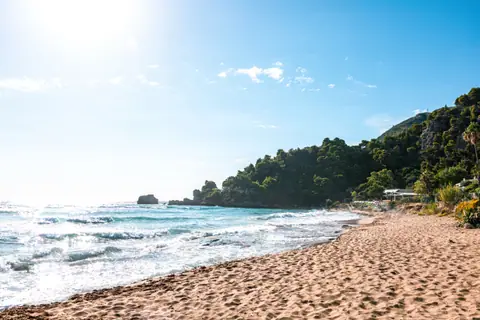
- The Close Beaches: Agios Georgios, Agios Prokopios and Agia AnnaFive to fifteen minutes south of Chora by bus: shallow St George Beach and the neon-turquoise coves of Agios Prokopios and Agia Anna.
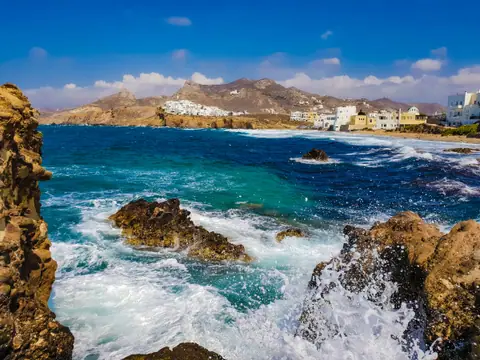
- The Wild South-Western Coast: 4-Kilometre Plaka Beach, Mikri Vigla and Alyko Cedar ForestFour kilometres of golden sand dunes at Plaka, twin-sided Mikri Vigla and the street-art ruins of Alyko cedar forest.
- The Heart of Inland Naxos: Halki (Vallindras Kitron), Panagia Drosiani and FilotiSixteen kilometres inland from the beaches: neoclassical Halki, the 1896 Kitron distillery and the plane tree of Filoti.
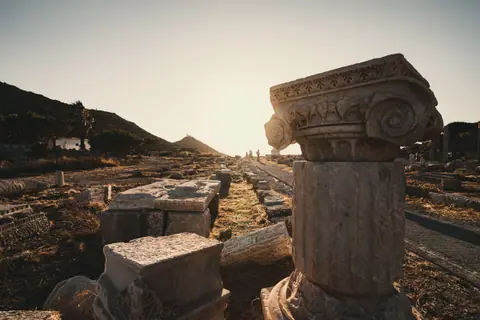
- The Archaic Giants: The Kouros of Melanes & Apollonas and the 530 BC Temple of DemeterSeeing where ancient Greek marble sculpture was born: the 530 BC Temple of Demeter and three giant unfinished Kouros statues.
- Hiking Mount Zas (1,003m, Highest Peak in the Cyclades), Cave of Zeus and RotondaClimbing to the 1,003-metre roof of the Cyclades via the mythological Cave of Zeus and watching sunset at Rotonda.
- Venetian Towers of Naxos: Bazeos Tower, Belonia Tower and Agia MonasteryWhy forty fortified stone feudal towers dot the olive valleys of Naxos, led by the 17th-century Bazeos Tower.
Neighbourhoods & Where to Stay
Districts, historic quarters and the best bases for your stay.
- Walking Naxos Town (Chora): The 1207 Venetian Kastro, Bourgos and Old MarketClimbing from the whitewashed vaulted alleys of Bourgos into the noble 1207 stone citadel of the Venetian Kastro.
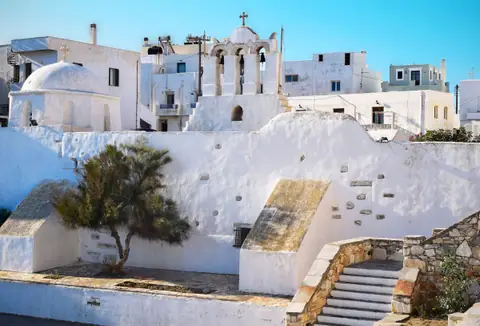
- Where to Stay in Naxos: Chora & Agios Georgios vs Agios Prokopios, Agia Anna and PlakaDeciding whether to stay in walkable Chora / St George Beach or right on the sand in Agios Prokopios or Plaka.
Food & Drink
Local dishes, markets, cafés and dining districts.

Getting Around & Arrival
Airport transfers, public transit, passes and driving rules.
- Getting to Naxos: Walk-Off Ferry Port (From Athens, Paros & Santorini) and Airport (JNX)Why arriving at Naxos Ferry Port, where you walk straight off the ramp into Chora, beats every other Cycladic port.
- Getting Around Naxos: KTEL Bus Lines (#1 Beaches & #2 Villages) and Car Rental TipsHow to use Naxos's punctual KTEL bus lines for the beaches and when to rent a car for the mountain loop.

Day Trips & Excursions
Easy half-day and full-day trips from the city.
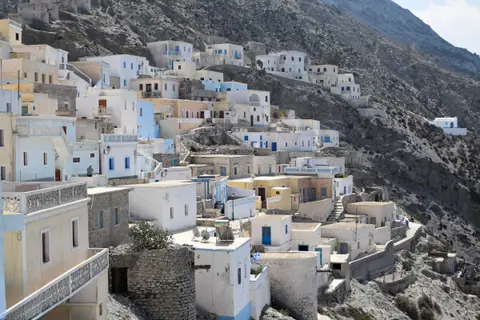
- Apeiranthos ('The Marble Village'), Venetian Towers and the Wild East Coast (Moutsouna)At 600 metres elevation in the eastern mountains: a village paved entirely in white Naxian marble with two Venetian towers.
- Day Trip to Koufonisia & The Small Cyclades (Or Delos & Mykonos Boat Cruise)Sailing south to the neon-blue natural rock pools of Koufonisi or north to sacred Delos and Mykonos.
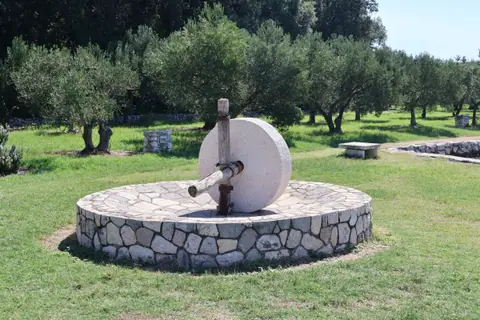
- The Wild Northern Loop: Koronos, Eggares Olive Press and the Cliff Road from ApollonasCompleting the grand northern mountain-and-cliff loop of Naxos from Koronos and Apollonas back via Eggares.
Trip Planning & Itineraries
When to visit, what to pack and day-by-day routes.
- Naxos: What to Know Before You GoUnderstanding Naxos's walkable port layout, the 10-kilometre south-western beach chain and inland village loop.
- Best Time to Visit Naxos: Calm September Seas, Green May Valleys and Summer WindsWhy June and September are the golden months for Naxos's 10-kilometre beach chain and inland village walks.
- What to Wear in Naxos: Grippy Shoes for Marble Alleys, Mount Zas Trainers and Wind LayersWhy you never need water shoes on Naxos's beaches, but DO need grippy soles for Apeiranthos's polished marble streets.
- 3 to 4 Days in Naxos: The Portara, Venetian Kastro, Plaka Beach and Marble VillagesThree sun-and-flavour-filled days linking the 530 BC Portara and Venetian Kastro with Plaka Beach and the marble villages.
Need your embassy or consulate in Greece? See embassies and consulates in Greece.
Reviews
Log in to write a review.
No reviews yet.