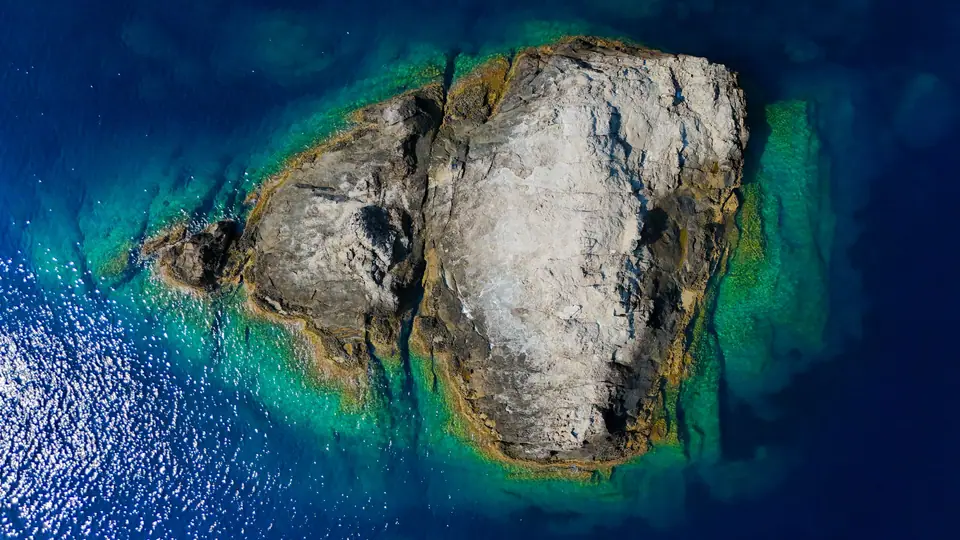
Corfu
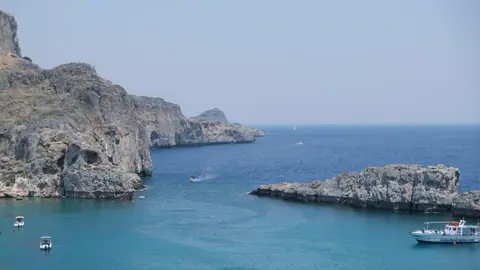
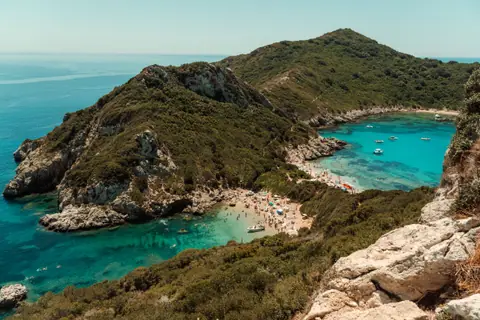
Emerald jewel of the Ionian Sea, where the Venetian arcades, pastel Campiello alleys and twin sea fortresses of UNESCO-listed Corfu Old Town meet the six turquoise bays of Paleokastritsa, twin-beach Porto Timoni and Empress Sisi's Achilleion Palace.
Quick decisions
How many days?
4 days: UNESCO-listed Corfu Old Town, the Liston, Old Fortress and Vlacherna Monastery (Kanoni) on day one, the six emerald bays of Paleokastritsa, Angelokastro and Porto Timoni on day two, Empress Sisi's Achilleion Palace and west-coast beaches on day three, plus a boat cruise to Paxos and Antipaxos on day four. Follow our multi-day route.
Where should I stay?
Corfu Old Town & Garitsa Bay: walkable Venetian alleys, evening dining and main Green Bus hub. Paleokastritsa: dramatic emerald coves on the north-west coast. Gouvia, Kontokali or Glyfada: central resort bays or sunset sand beaches. Compare bases in our island overview.
Do I need a car?
Not for Corfu Town, Kanoni and Paleokastritsa; very helpful for Porto Timoni and Mount Pantokrator. Blue City Buses cover Kanoni and Achilleion while Green KTEL Buses reach Paleokastritsa, Sidari and Glyfada; rent a compact car for hidden coves and mountain villages.
Best for
Venetian-French architecture: pastel multi-storey kantounia alleys, the arcaded Liston and twin Venetian citadels. Lush green scenery: four million ancient olive and cypress trees framing emerald bays. Ionian island hopping: day boats to Paxos, Antipaxos and the Blue Caves.
Before you go
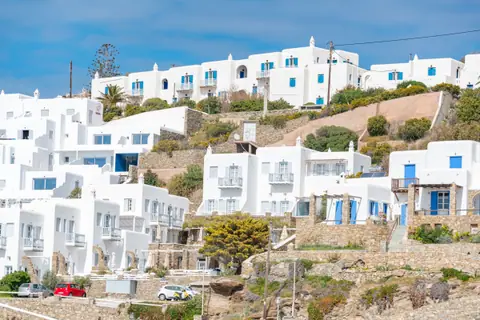
Expect Venetian pastel palaces rather than white Cycladic cubes: Corfu was never ruled by the Ottomans, four centuries of Venetian rule (1386 to 1797) plus French and British protectorates gave it an Italianate look, cricket matches on the Spianada and spicy Venetian-style stews. Read our practical briefing.
Getting around
From Corfu Airport (CFU) or Igoumenitsa Ferry Port: the airport sits just 2.5 kilometres south of Corfu Old Town (10 minutes by Blue Bus #15 or taxi). Details in arrival and transport.
Continue your trip
Sail one hour south to Paxos and Antipaxos, take the 90-minute ferry to mainland Igoumenitsa (for Parga, Zagori and Meteora), or hop a 30-minute hydrofoil to Saranda in Albania.
Overview
Floating at the northern entrance to the Ionian Sea where Greece meets the heel of Italy and the mountains of Albania, Corfu (known in Greek as Kerkyra, after the mythological nymph Korkyra loved by Poseidon) looks and feels completely different from the dry, whitewashed islands of the Aegean. Watered by generous winter rains and blanketed by more than four million untamed Venetian olive trees and towering Italian cypresses, it is the greenest large island in Greece.
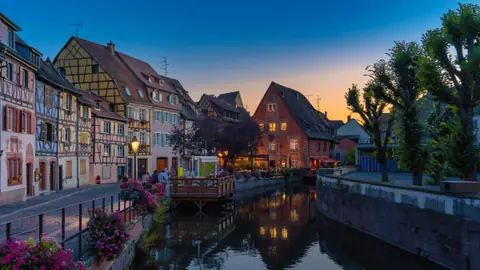
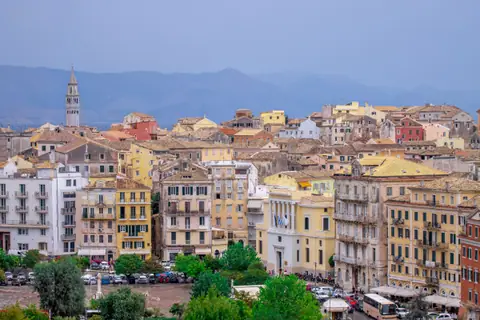
Because Corfu successfully repelled every Ottoman siege and remained under the rule of the Republic of Venice for over four hundred years (1386 to 1797), followed by Napoleonic French and British rule until 1864, its UNESCO-listed Old Town resembles a pastel-painted cousin of Venice, Naples and Paris, bookended by the Old and New Venetian Fortresses and the royal park of Mon Repos and whitewashed Vlacherna Monastery. Along its dramatic western and northern cliffs lie the six emerald coves of Paleokastritsa, the double-isthmus beach of Porto Timoni, the sculpted sandstone of Cape Drastis, and the neon-blue waters of Paxos and Antipaxos. Start with our before-you-go briefing and top things to do in Corfu.
Getting there
Corfu Ioannis Kapodistrias International Airport (CFU) sits on a lagoon causeway just 2.5 kilometres south of Corfu Old Town, so close that watching planes glide over the Vlacherna Monastery footbridge at Kanoni is a famous island pastime. Blue Municipal Bus #15 connects the terminal with San Rocco Square (Old Town) and the Ferry Port in 10 minutes. Around the island, Blue Buses cover the urban perimeter (Kanoni, Mon Repos, Achilleion, Benitses and Gouvia), while Green KTEL Coaches link the Green Bus Terminal with Paleokastritsa, Glyfada, Sidari and Kassiopi. See getting to Corfu and how Blue vs Green buses work.
Where to stay
For a 3- to 5-day first visit, stay in or right beside Corfu Old Town (around the Spianada, Campiello or Garitsa Bay): you have fifty Venetian-Corfiot tavernas outside your door, instant access to both Blue and Green buses, and morning excursion boats to Paxos. If you want to wake up above crystal-clear snorkelling coves, base yourself on the north-west coast in Paleokastritsa; for calm east-coast family bays, choose Kontokali, Dassia or Kassiopi; for golden west-coast sunsets, pick Glyfada or Agios Gordios. Compare all regions in where to stay in Corfu.
Things to do
Drink morning coffee beneath the French vaulted lamps of the Liston and get lost in the pastel kantounia alleys of Campiello, climb the sea-surrounded bastion of the 1546 Old Venetian Fortress, walk across the sea jetty to Vlacherna Monastery and Mouse Island (Pontikonisi), take a wooden boat into the sea caves of Paleokastritsa, hike down to twin-bay Porto Timoni, tour Empress Sisi's Achilleion Palace, and cruise to Paxos and Antipaxos. Full list in things to do in Corfu.
Food and drink
Corfiot cuisine (Kerkiraiki Kouzina) is pure Venetian-Ionian comfort food, built on slow-braised meats, warm spices (cloves, cinnamon, nutmeg and allspice), garlic, white wine and kumquats: rooster or beef slow-simmered in a rich spiced tomato-and-wine sauce served over thick hollow pasta (pastitsada), veal pan-seared with white wine, garlic and fresh parsley (sofrito), fiery red scorpionfish stew (bourdeto), British-legacy ginger beer (tsitsibira) and sweet orange-gold kumquat liqueur. Read more in our Corfu food and drink guide.
Culture
Home to Greece's first university (the Ionian Academy, 1824), eighteen philharmonic brass bands, the revered silver reliquary of patron saint Spyridon, and the childhood bays where naturalist Gerald Durrell wrote My Family and Other Animals.
Weather by month
Corfu is warmest in August, with average highs around 33°C, and coldest in January, when nights drop to about 6°C. November is the wettest month, with rain on about 11 days. For mild weather with fewer rainy days, aim for April and May.
| Month | Low | Range | High | Rain | Rainy days |
|---|---|---|---|---|---|
| Jan | 6°C | 14°C | 136 mm | 12 d | |
| Feb | 6°C | 15°C | 118 mm | 10 d | |
| Mar | 8°C | 17°C | 88 mm | 9 d | |
| Apr | 11°C | 20°C | 56 mm | 7 d | |
| May | 15°C | 25°C | 34 mm | 5 d | |
| Jun | 19°C | 29°C | 14 mm | 2 d | |
| Jul | 21°C | 32°C | 6 mm | 1 d | |
| Aug | 21°C | 33°C | 12 mm | 1 d | |
| Sep | 18°C | 28°C | 68 mm | 5 d | |
| Oct | 15°C | 24°C | 128 mm | 9 d | |
| Nov | 11°C | 19°C | 168 mm | 11 d | |
| Dec | 7°C | 15°C | 162 mm | 12 d |
Averages of daily values from 2015 to 2024. Rainy days are days with at least 1 mm of rain. Source: Open-Meteo · Compare destinations by month.
Corfu on the map
Every place we cover in Corfu. Tap a category or pin to explore.
- Paleokastritsa's 6 Emerald Bays, Sea Caves, 1228 Monastery and Angelokastro →
- Day Cruise to Paxos, Antipaxos (Voutoumi Beach) and the Blue Sea Caves →
- The North-East Coast ('Kensington-on-Sea'): Kassiopi, Kalami (The Durrells) and Kerasia →
- Mount Pantokrator (906m Summit) and the 14th-Century Ghost Village of Old Perithia →
In-depth Corfu guides
Browse the guides grouped by topic: sights, neighbourhoods, food, transport, day trips and trip planning.
Sights, Landmarks & Parks
Key monuments, viewpoints, museums and nature trails.
- Best Things to Do in CorfuVenetian arcades, twin sea fortresses, double-bay beaches, emerald sea caves and cruises to Paxos.
- The Twin Fortresses of Corfu: The 1546 Old Fortress and 1576 New FortressClimbing the twin Venetian sea fortresses that made Corfu the unconquered bastion of the Adriatic.
- Kanoni, Whitewashed Vlacherna Monastery, Mouse Island and Mon Repos PalaceFour kilometres south of Old Town: walking the sea causeway to Vlacherna Monastery and strolling the royal forest of Mon Repos.
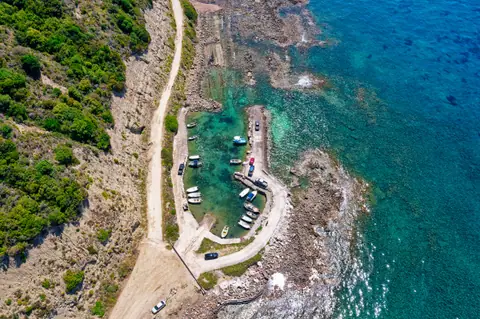
- Porto Timoni Twin Beach, Afionas Village and Agios Georgios PagonHiking 25 minutes down from whitewashed Afionas village to the twin back-to-back turquoise coves of Porto Timoni.
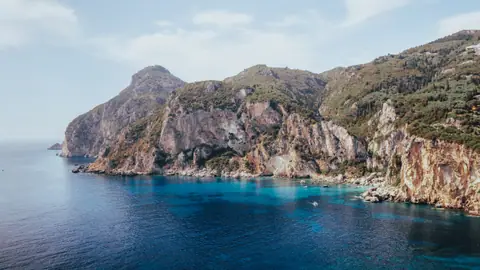
- The Sculpted North-West: Cape Drastis, Loggas Sunset Cliff and Canal d'AmourWhere wind and waves carved white clay cliffs into natural swimming canals at Sidari and towering stacks at Cape Drastis.
- Empress Sisi's Achilleion Palace (1890), Gastouri and Kaiser's BridgeTen kilometres south of Corfu Town: the hillside sculpture gardens and Homeric terraces of Empress Sisi's Achilleion Palace.
- The Golden West-Coast Sand Beaches: Glyfada, Kontogialos, Agios Gordios and Issos DunesTrading pebble coves for miles of fine golden sand, sunset waves and cedar dunes along Corfu's western coast.
Neighbourhoods & Where to Stay
Districts, historic quarters and the best bases for your stay.
- Corfu Old Town (UNESCO): The Liston, Spianada, Campiello and St SpyridonWalking the Venetian-French-British heart of Corfu Old Town from the arcaded Liston into the alleys of Campiello.
- Where to Stay in Corfu: Old Town, Paleokastritsa, North-East (Kassiopi) and GlyfadaChoosing the right base in Corfu, from Venetian Old Town boutiques to emerald Paleokastritsa or sandy Glyfada.
Food & Drink
Local dishes, markets, cafés and dining districts.
Getting Around & Arrival
Airport transfers, public transit, passes and driving rules.
- Getting to Corfu: Kapodistrias Airport (CFU), Igoumenitsa Ferries and Albania BoatsReaching Corfu Old Town in ten minutes from the runway on Blue Bus #15 or arriving by ferry from Italy, mainland Greece or Albania.
- Getting Around Corfu: Blue City Buses vs Green KTEL Buses and Car Rental TipsMastering Corfu's colour-coded Blue (urban) and Green (island-wide) bus networks and narrow mountain roads.
Day Trips & Excursions
Easy half-day and full-day trips from the city.
- Paleokastritsa's 6 Emerald Bays, Sea Caves, 1228 Monastery and AngelokastroTwenty-three kilometres from Corfu Town: six clover-leaf emerald coves, sea caves and the 305m cliff castle of Angelokastro.
- Day Cruise to Paxos, Antipaxos (Voutoumi Beach) and the Blue Sea CavesSailing one hour south of Corfu to the blinding-turquoise coves of Antipaxos, the Blue Caves and pastel Gaios.
- The North-East Coast ('Kensington-on-Sea'): Kassiopi, Kalami (The Durrells) and KerasiaWhere olive and cypress trees dip their branches directly into glass-calm white-pebble bays facing Albania.
- Mount Pantokrator (906m Summit) and the 14th-Century Ghost Village of Old PerithiaClimbing into the cool northern highlands of Corfu to dine in 14th-century Old Perithia and stand atop 906m Mount Pantokrator.
Trip Planning & Itineraries
When to visit, what to pack and day-by-day routes.
- Corfu: What to Know Before You GoUnderstanding Corfu's Venetian heritage, how Blue and Green buses split the island, and choosing between east and west coasts.
- Best Time to Visit Corfu: Orthodox Easter, Lush May/June Greens and Warm SeptembersTiming your trip for Corfu's emerald spring landscapes, warm September seas or the famous pot-throwing Easter festival.
- What to Wear in Corfu: Grippy Shoes for Porto Timoni, Water Shoes and Old Town ChicWhy two pairs of shoes (grippy trainers for Porto Timoni and water shoes for pebble coves) will make your Corfu trip.
- 3 to 4 Days in Corfu: Venetian Old Town, Kanoni, Paleokastritsa, Porto Timoni and PaxosThe ultimate 3-to-4-day route covering Corfu Old Town, Kanoni, Paleokastritsa, Porto Timoni and Paxos.
Need your embassy or consulate in Greece? See embassies and consulates in Greece.
Reviews
Log in to write a review.
No reviews yet.