


























Quick Field Data
- UNESCO Inscription: 1985 (extended in 2007), designated for its complete medieval defensive circuit, Gothic cathedral, and extra-muros Romanesque churches and convents.
- Scale & Footprint: Encloses an irregular quadrilateral of 31 hectares (77 acres) within a defensive wall perimeter of 2,516 metres averaging 3 metres in thickness and 12 metres in height.
- Access & Ticketing: The historic streets and exterior gate plazas remain freely open to pedestrians, while the elevated rampart walkways, Gothic cathedral, and extra-muros sanctuaries operate individual ticket desks; check the official site for schedules.
- Arrival Logistics: Located within Castile and León in central Spain in central Spain, connected by rail and highway to Madrid.
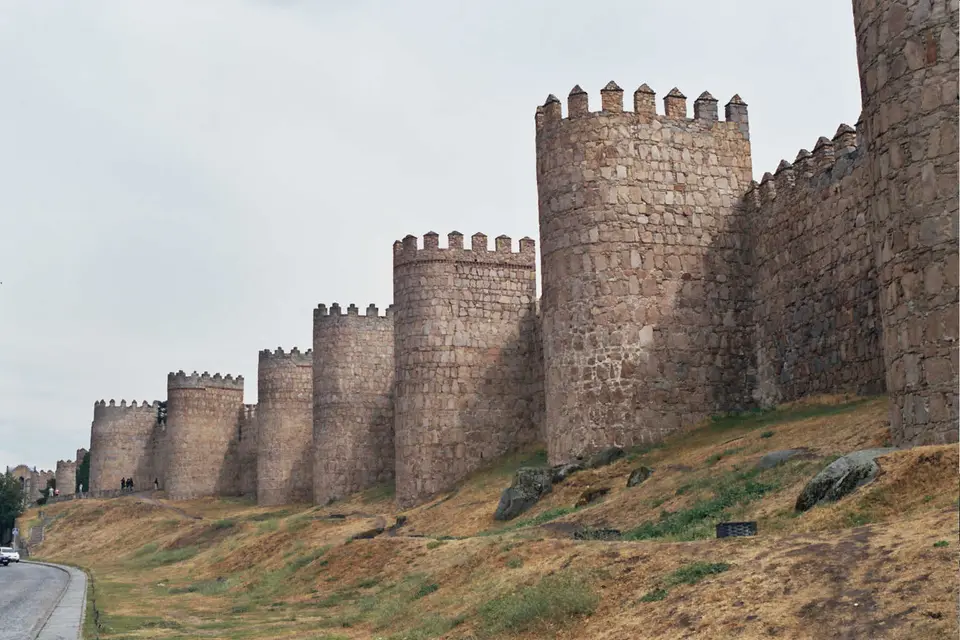
Rising across a high rocky ridge within Castile and León in central Spain in central Spain, the walled historic city of Ávila and its surrounding churches preserves the most complete medieval town fortification system in Spain. Since 1985, the UNESCO World Heritage Atlas in 1985 and expanded in 2007 to include additional extramural churches and Renaissance convents, this austere settlement has long been celebrated as the City of Saints and Stones. Founded in the eleventh century during the Christian repopulation of the central Spanish plateau to protect Spanish territories from the Moors, Ávila is famous both as the birthplace of the sixteenth-century mystic Saint Teresa and as where Grand Inquisitor Torquemada was buried. Travellers arriving from Madrid encounter an unbroken granite curtain wall punctuated by semicircular towers and monumental arched gateways. Granite towers guard the high plateau.
Alfonso VI's Repopulation Policy and the Medieval Defensive Circuit
The medieval rebirth of Ávila stemmed directly from the strategic military and demographic programme launched after King Alfonso VI reconquered Toledo in 1085. To shore up the vulnerable southern frontier of the Kingdom of Castile between the central mountain ranges and the southern river basin, the Castilian crown initiated an ambitious policy of repoblaciones (repopulation), settling Christian communities from northern Spain into fortified frontier towns. Alongside the neighbouring Castilian strongholds of Segovia and Salamanca, Ávila rose to prominence during the Middle Ages as a key military and ecclesiastical anchor of this frontier defence line.
Whereas many other Castilian frontier cities later dismantled segments of their medieval ramparts to accommodate modern urban growth, Ávila alone preserved its entire surrounding perimeter wall intact. Historical records attribute the start of construction on the defensive enclosure to the year 1090, although architectural analysis indicates that the greater part of the surviving masonry was rebuilt during the twelfth century and completed between the eleventh and fourteenth centuries. Recognising the historical importance of this unbroken stone circuit, the Spanish state registered the Walls of Ávila (Las Murallas de Ávila) as a National Monument on 24 March 1884, a century before its UNESCO inscription in 1985.
Laid out as an even quadrilateral (an irregular rectangle enclosing 31 hectares or 77 acres) adapted to the topography of the ridge, the walls trace a continuous circumference of 2,516 metres (8,255 feet). Built in part using dressed stones recycled from earlier Roman and pre-existing structures, the curtain walls maintain an average thickness of 3 metres (9.8 feet) and rise to an average height of 12 metres (39 feet). Depending on whether corner and gate bastions are counted alongside the curtain turrets, historical and UNESCO surveys enumerate between 82 and 88 semicircular towers projecting at regular intervals around the perimeter.
Nine Monumental Gates, the Cathedral Apse Bastion, and Extra-Muros Sanctuaries
Access between the intra-muros medieval town and the surrounding countryside is provided by nine gates constructed and modified across different historical periods. The two most imposing and oldest gateways sit along the vulnerable eastern flank where the plateau ground is flattest: the Puerta de San Vicente (Gate of Saint Vincent) and the Puerta del Alcázar (Gate of the Fortress). Both of these eastern entrances are flanked by twin semicircular towers rising 20 metres (66 feet) high, linked high above the roadway by a dramatic semicircular stone arch and crowned with crenellated battlements.
Directly between the Puerta de San Vicente and the Puerta del Alcázar, the eastern defensive wall integrates the fortified semicircular apse of the Cathedral of Ávila itself. Known locally as the cimorro, this massive granite apse projects outward from the curtain wall as one of the defensive towers of the city, uniting the military austerity of a frontier fortress with the sacred architecture of Spain's earliest Gothic cathedral. Inside the walled enclosure, narrow cobbled lanes connect Romanesque and Gothic parish churches with fortified noble palaces built to guard the city gates.
Equally vital to the UNESCO serial designation are the religious monuments standing extra-muros (outside the walls), where medieval stonecutters and sixteenth-century monastic patrons had wider ground to build. The initial 1985 inscription incorporated four masterpieces of Castilian Romanesque church architecture located just beyond the ramparts: the Basilica of San Vicente, the Church of San Pedro, the Church of San Andrés, and the hermitage of San Segundo beside the river. In 2007, the World Heritage boundary was expanded to include three additional Romanesque parish sanctuaries (San Martín alongside San Nicolás and Santa María de la Cabeza) together with three celebrated fifteenth- and sixteenth-century convents and monasteries that embody the Golden Age of Ávila: the Convent of La Encarnación, the Convent of San José (the first foundation established by Saint Teresa in her reform of the monastic order), and the Real Monasterio de Santo Tomás, which served as a summer palace for the Spanish monarchs and houses the tomb of Torquemada.
Taken together, the intra-muros fortress town and its ring of extramural Romanesque churches and Renaissance convents demonstrate how Ávila evolved from an eleventh-century military outpost into a premier spiritual centre of sixteenth-century Spain. Walkers who trace both the elevated parapet walk and the outer perimeter road can observe how the rough-hewn granite stones recycled into the 1090 and twelfth-century ramparts contrast with the finely carved Romanesque portals of San Vicente and San Pedro and the austere monastic cloisters outside the gates. This dialogue between defensive stone engineering and religious devotion defines the urban character of Ávila across every square and hillside viewpoint.
Walking the Parapet Path and Exploring the Extramural Ring
Today, visitors can walk directly atop the crenellated allure of the Walls of Ávila for roughly half of their 2,516-metre circumference. While certain stretches of the rampart remain inaccessible where the medieval masonry is integrated directly into the cathedral apse and adjacent palaces, the restored pedestrian wall-walk offers commanding views over the tiled roofs of the intra-muros quarter and the surrounding plateau.
Across every sector of the fortified plateau, the visual continuity between the medieval ramparts and the historic buildings inside and outside the gates remains unbroken. Because the twelfth-century builders constructed the 2,516-metre perimeter using heavy blocks of local grey granite and recycled stones, the defensive circuit blends into the rocky ridge above the Castilian plain. Whether viewed from the extramural Romanesque churches of San Pedro and San Vicente on the eastern plateau or from the western viewpoint near San Segundo, the semicircular towers and crenellated curtain walls define one of the best-preserved medieval townscapes in Europe.
Organising a full-day walking loop that pairs the upper wall walk with the extramural churches and convents reveals both the twelfth-century frontier town and its sixteenth-century monastic flowering. Walking along the accessible sections of the ramparts and through the nine historic gates reveals how the granite towers and the vaulted apse of the fortified cathedral anchored this fortified town across Castile and León, while the surrounding extramural sanctuaries and convents outside the perimeter walls complete the architectural circuit.
- Compare the twin eastern gates and the cathedral apse from outside the walls: Begin your walk on the eastern plaza outside the ramparts to see how the 20-metre twin towers of the Puerta del Alcázar and Puerta de San Vicente frame the protruding fortified apse of the Gothic cathedral between them.
- Walk the elevated parapet path along the northern and western ramparts: Ascend the public access stairs onto the 3-metre-thick walls to trace the semicircular towers from above, looking out toward the Romanesque shrine of San Segundo and the open Castilian countryside.
- Follow the extramural route from San Vicente to Santo Tomás: Dedicate your afternoon to walking outside the nine gates to visit the Romanesque churches of San Vicente, San Andrés, and San Pedro alongside the sixteenth-century Convent of San José together with the royal monastery of Santo Tomás.
