





















Quick Field Data
- UNESCO Inscription: 1997 · Criteria (iii), (iv)
- Scale & Footprint: An Alpine cultural landscape in the Eastern Alps spanning the provinces of Upper Austria, Styria and Salzburg, centred on Hallstatt at 511 metres above sea level
- Access & Ticketing: The village lanes, lakeshore and church square are free; the salt mine tour, the funicular, the Skywalk platform and the ossuary have tickets
- Arrival Logistics: Hallstatt station lies on the opposite side of the lake, and the ferry Stephanie crosses to the village to meet the trains all year round
Salt, Timber and a Village on a Ledge
The landscape around Hallstatt is the result of one resource: salt. UNESCO dates systematic salt production here to the Middle Bronze Age. The operator of the mine calls it the oldest salt mine in the world and presents about 7,000 years of mining history. Today the mine has 21 levels, from 514 metres up to about 1,267 metres above sea level.
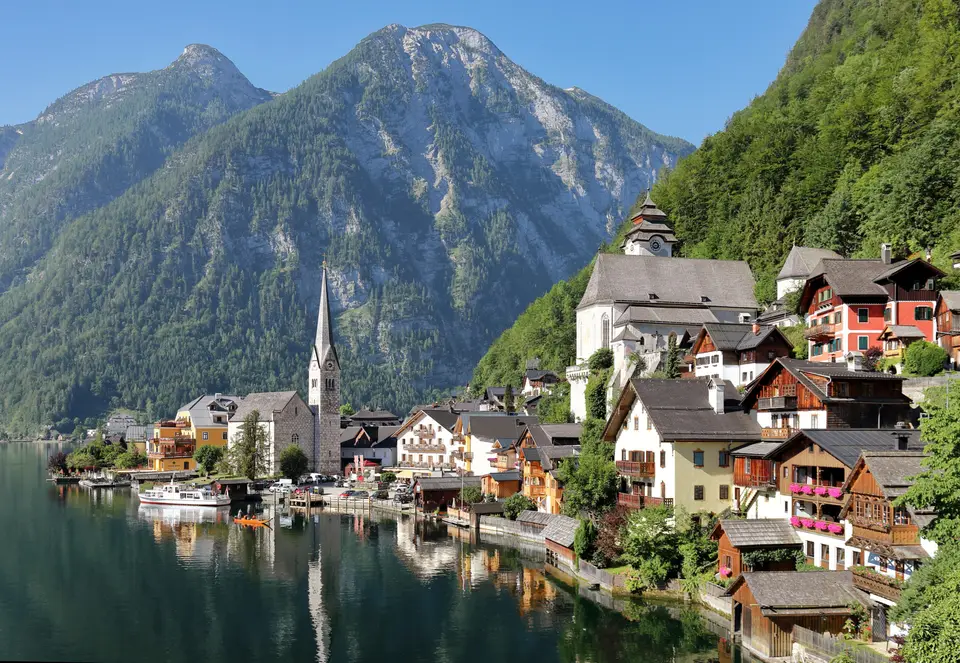
The village itself sits on a narrow strip between the south-western shore of Lake Hallstatt and the steep slopes of the Dachstein massif. There was no flat land to spare. Houses climb the slope in tiers above the water. Until 1890 there was no road at all. People and goods arrived by boat or along narrow mountain paths.
Mining needed large amounts of timber, which came from the upland forests. The mountain pastures were used for summer grazing. UNESCO notes that this seasonal movement of herds still continues. Salt, timber and dairy farming together shaped the valleys over about 2,500 years.
The protected landscape covers much more than the village. It takes in the Dachstein mountains, the lake and the surrounding valleys in three Austrian provinces. Most visitors see only Hallstatt, but the same story runs through the mine above the village and the high pastures of the Dachstein.
From the Hallstatt Culture to the Romantic Painters
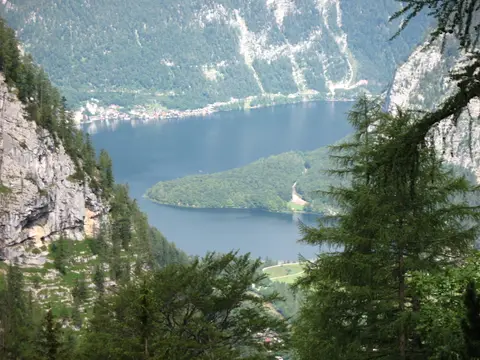
Hallstatt gave its name to a whole period of European prehistory. The Hallstatt culture, from about 800 to 450 BC, is named after the finds made here. In 1846 Johann Georg Ramsauer discovered a prehistoric cemetery in the high valley above the village. He excavated 1,045 burials. About 1,300 burials have now been found, holding around 2,000 people.
Salt was extracted here in the Iron Age from the eighth to the fifth century BC. The Hallstatt Museum in the village explains this early history and the salt trade. New finds still appear. In 2025 a Roman cameo with the head of Medusa, dated to the second century AD, was found during construction work at a new funicular station.
The village took its present look after a fire in 1750. UNESCO notes that it was rebuilt in a late Baroque style. The ossuary in St Michael's Chapel holds more than 1,200 skulls, and around 600 of them are painted.
In the nineteenth century, artists and writers came to paint and describe the lake and the mountains. UNESCO credits them with spreading the region's reputation, which later brought tourism. Tourism has grown so much that it now needs managing. Estimates put day visitors at 10,000 to nearly 30,000 on busy days, most of them on coach tours.
Since autumn 2020 tour coaches have needed booked time slots. The number of coach arrivals was cut to 54 a day, about half the earlier allowance. In 2023 the mayor announced plans to reduce coach numbers again. Visitors who stay overnight or arrive by train and ferry see a much quieter village. The village's fame has spread far: in 2012 it was reported that a full-scale copy of Hallstatt had been built in Huizhou, in the Chinese province of Guangdong.
Visiting the Village, the Mine and the High Valley
Hallstatt has fewer than 800 residents, and their homes line the same lanes that visitors walk. Keep to public paths, respect private gardens and avoid drones near houses. The best light on the village comes from the lake and from the high valley above it.
- Arrive by Ferry and Walk the Lakeshore: Take the train to Hallstatt station and cross the lake on the ferry Stephanie, which lands in the village centre. The tourist board notes it is the only boat service on an Austrian lake that runs in winter. Walk the lakeshore lanes first, then climb up to the ossuary in St Michael's Chapel.
- Ride Up to the Salt Mine and Skywalk: The funicular climbs from the village to the high valley above it, where the salt mine is. The mine tour includes a mine train and the wooden miners' slides. The Skywalk platform stands 360 metres above the village and looks over the lake and the Dachstein. Check the mine's website for its season before you go.
- Avoid the Peak and Explore Further: Arrive before the coaches or stay until evening, when the lanes empty. Spring and autumn are quieter than July and August. Use the ferry and trains to reach other lakes of the Salzkammergut. Browse Alpine heritage across Europe in our UNESCO World Heritage Atlas, and continue to Salzburg, our closest city guide.
