


























Quick Field Data
- UNESCO Inscription: Inscribed in 1987 as a cultural site in Beijing, China, and extended in 2004 to include the Shenyang palace complex in Liaoning Province.
- Scale & Footprint: Nearly 10,000 rooms across the Forbidden City in Beijing (built 1406 to 1420) plus 114 Shenyang structures dated to 1625, 26, and 1783.
- Access & Ticketing: Both palace complexes operate with timed daily visitor caps and advance identity registration; check the official site before planning your visit.
- Arrival Logistics: Reached via central Beijing public transport along the historic north-south meridian axis and regional rail connections northeast to Shenyang in Liaoning.
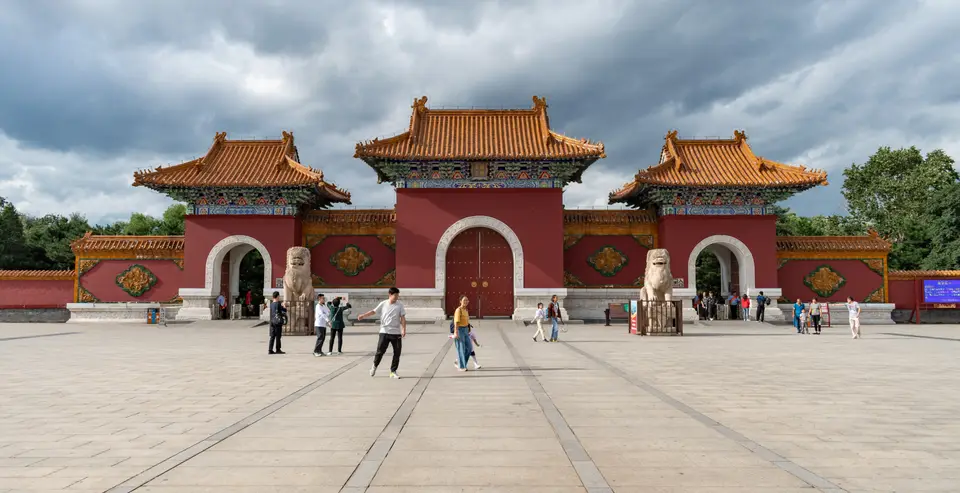
Set at the heart of Beijing and across the northern plains in Shenyang, the Ming and Qing imperial palaces in Beijing and Shenyang stand at the core of late imperial state power in China. Built as the royal residences of the Ming and Qing rulers from the 15th to the 20th century, the dual complexes governed the political, ceremonial, and administrative life of the empire until 1911. The Beijing complex, famous worldwide as the Forbidden City, took shape between 1406 and 1420 under the Ming emperor Zhu Di and served as the supreme seat of authority for 505 years, hosting the coronations of 14 Ming emperors and 10 Qing rulers. Farther north in Liaoning Province, the Shenyang palace comprises 114 buildings erected between 1625, 26, and 1783 by the founders of the Qing Dynasty before they expanded their rule into central China and transferred the primary capital to Beijing in the 17th century. Together within the UNESCO World Heritage Atlas, these two ensembles trace the transition from Ming metropolitan orthodoxy to the multi-ethnic court synthesis of the Manchu, Han, Mongolian, and Tibetan traditions.
What gives the dual inscription its deep historical weight is the dialogue between metropolitan continuity in Beijing and frontier state formation in Shenyang. In Beijing, the Forbidden City inherited and refined the spatial geometry of the earlier Yuan city layout, organising nearly 10,000 rooms containing court furniture, libraries, and works of art along a strict central axis. Its symmetrical plan separates the ceremonial outer court at the front from the residential inner court at the rear, supplemented by landscaped courtyards and royal Buddhist chambers established since the 14th century. In Shenyang, also known as the Houjin Palace or Shenglin Palace, the architecture records the rise of the last dynasty to rule China and the distinct cultural customs of the Manchu and northern tribes. After the dynastic move south, the Shenyang complex functioned as a secondary capital and temporary royal residence until 1911, linked closely to the surrounding ritual geography of the Three Tombs of Shengjing, namely the Yongling, Fuling, and Zhaoling mausoleums in Liaoning.
Axial Geometry, Court Hierarchy, and Manchu and Han Synthesis
Walking through the Forbidden City reveals how ancient Chinese urban planning translated political philosophy into timber, brick, and glazed tile. Every gate, courtyard, and hall obeys a rigorous architectural hierarchy governed by the central north-south axis. The outer court at the southern front was designed for grand state ceremonies, imperial audiences, and the promulgation of edicts, projecting the absolute authority of the Mandate of Heaven. Behind it, the inner court housed the daily living quarters of the emperor, empresses, and concubines, alongside landscaped gardens that adapted elements of the earlier Yuan capital. Over a span of 300 years during the Qing era, the construction techniques, roof profiles, and bracket systems perfected between 1406 and 1420 set the official standard for state architecture across China. Within the palace precincts, a series of royal Buddhist chambers absorbed architectural and decorative motifs from Manchu, Han, Mongolian, and Tibetan artisans, demonstrating how the court managed religious diplomacy across Inner Asia.
In Shenyang, the 114 structures built during 1625, 26, and 1783 display a markedly different spatial logic rooted in early Manchu military and tribal organisation. Rather than replicating the flat, strictly linear progression of Beijing, the Shenyang palace integrates Manchu tent-inspired council layouts and elevated residential platforms with traditional Han timber framing and dragon-motif tiles. It houses an important imperial library and ceremonial halls that served both as the founding seat of the Qing state and, later, as an auxiliary palace during emperors' ancestral tours to the northeast. Those tours connected the Shenglin Palace directly to the 17th-century imperial tombs in Liaoning Province, which were added to the broader Ming and Qing funerary heritage in 2000, 2003, and 2004 across 3,434.9 hectares. Just as the Hongwu Emperor had reformed Ming mausoleum layouts and the Xianling Tomb in Hubei Province was built for the 12th Ming emperor between 1519 and 1566, the early Qing rulers paired palace construction in Shenyang with the Yongling, Fuling, and Zhaoling tombs and later built the Eastern and Western Qing tombs near the 13 Ming tombs in Beijing and Hebei.
Navigating the Forbidden City Axis and Shenyang
Exploring both components of the heritage listing requires treating Beijing and Shenyang as two halves of a single historical narrative. In Beijing, the sheer scale of the 1416 to 1911 seat of power means that a focused route along the central axis followed by the western or eastern side courtyards and landscaped gardens yields a far clearer architectural reading than attempting to rush through every gallery. In Shenyang, the more compact footprint of the 114 structures allows visitors to compare the earliest 1625 and 26 Manchu ceremonial halls directly against the 1783 high-Qing additions built for visiting emperors. Because both palaces protect fragile timber interiors, lacquered furniture, and silk or paper archives, movement follows one-way courtyard circuits and strict conservation boundaries.
- Book timed entry and carry identification: Both the Forbidden City in Beijing and the Imperial Palace in Shenyang enforce advance booking systems tied to visitor identity documents; check the official site well ahead of travel to confirm seasonal entry rules and gallery access.
- Read the outer and inner courts in sequence: Start along the southern ceremonial gates and outer court halls in Beijing to observe the formal Ming axial symmetry established between 1406 and 1420 before moving into the residential inner court, royal Buddhist chambers, and northern landscaped gardens.
- Pair Shenyang's palace with its ancestral landscape: When visiting the 114 buildings of the Houjin or Shenglin Palace in Shenyang, examine the Manchu and Han architectural transitions alongside the nearby 17th-century Zhaoling and Fuling tomb parks in Liaoning Province to see how early Qing court and funerary traditions developed together.
Beyond the palace walls of Beijing and Shenyang, the ritual authority of the Ming and Qing courts extended directly to the funerary complexes where emperors and their ancestors were buried. They shaped imperial China. Under the founding Hongwu Emperor of the Ming dynasty, traditional Chinese mausoleum design underwent major structural reforms: builders replaced the earlier bucket-shaped square earthen mounds with round or oblong burial tumuli, eliminated the older underground palace layout, and expanded the sacrificial temple halls at the front of each complex. While the Hongwu Emperor constructed ancestral complexes such as Ming Huangling in Fengyang, Anhui for his parents Zhu Wusi and Lady Chen, and Ming Zuling in Xuyi, Jiangsu for his ancestral grandfather and earlier forebears, later Ming rulers established the famous cluster of 13 imperial tombs near Beijing, led by Changling, alongside provincial mausoleums such as Xiaoling in Jiangsu and the Xianling Tomb in Hubei Province, erected between 1519 and 1566 for the 12th Ming emperor.
When the Qing dynasty entered Beijing from Shenyang and claimed the Mandate of Heaven, the new Manchu rulers deliberately aligned their funerary and court traditions with Han Chinese precedents to reassure their subjects that established customs would be honoured. Applying classical Feng Shui cosmology to embody harmony between humanity and the surrounding terrain of mountains and rivers, Qing architects organised the Eastern Tombs and Western Tombs in Hebei Province, including Jingling and Chongling, around strict hierarchical sequences matching emperors and concubines. Across China, during this period, the three 17th-century ancestral mausoleums in Liaoning Province, namely Yongling, Fuling, and Zhaoling, known collectively as the Three Tombs of Shengjing and added to the heritage list in 2004 after the 2000 and 2003 tomb inscriptions across 3,434.9 hectares, preserved stone statues, carved steles, and dragon-motif tiles that linked the Shenyang palace directly to the rise of the Qing imperial house.
Preservation Standards and Modern Visitor Flow
Conserving nearly 10,000 timber-framed rooms in Beijing and 114 historic buildings in Shenyang demands continuous structural carpentry, roof-tile glazing, and fire-prevention engineering. Timber columns, mortise-and-tenon brackets, and polychrome eaves suffer from seasonal temperature swings between dry northern winters and humid summers. Restoration teams maintain traditional woodworking and mineral-pigment techniques inherited from Ming and Qing workshops so that repairs preserve the structural authenticity documented at the 1987 and 2004 inscriptions.
For travellers, the most rewarding moments come when stepping off the main axial concourses into the quieter side courtyards where the proportions of red walls, stone balustrades, and carved eaves can be studied without haste. Across 505 years of rule by 14 Ming and 10 Qing emperors, these courtyards framed the administrative decisions, scholarly compilations, and multi-ethnic rituals that shaped modern China. Experiencing both the metropolitan grandeur of the Forbidden City and the northern dynastic roots of Shenyang completes the architectural portrait of late imperial governance.
