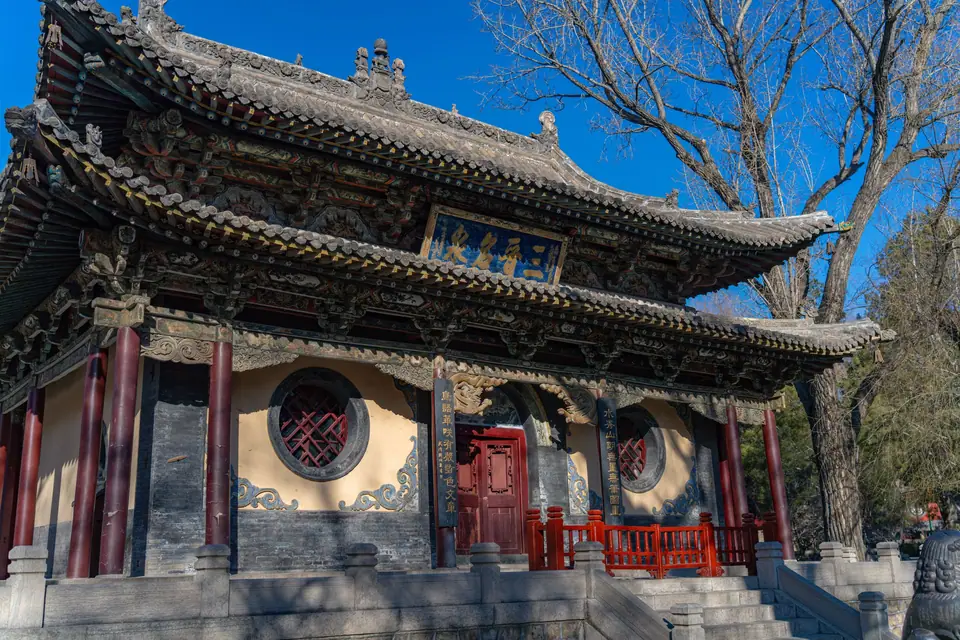
White Cloud Temple (Baiyunguan) and Fayuan Temple: Daoist and Tang Courtyards
Exploring the Quanzhen Daoist headquarters at White Cloud Temple and the lilac-shaded courtyards of Tang-dynasty Fayuan Temple.
While the Lama Temple in northeast Dongcheng draws the largest crowds of visitors, the western district of Xicheng holds two extraordinarily atmospheric, working religious sanctuaries where you can watch resident Daoist priests with topknots and Buddhist monastics go about their daily study far from the main tourist buses.
White Cloud Temple (Baiyunguan): the Vatican of Northern Daoism
Located just outside the West Second Ring Road near Nanlishilu or Muxidi Station (Subway Line 1), White Cloud Temple (Baiyunguan) is the supreme ancestral monastery of the Quanzhen (Complete Perfection) School of Daoism. Originally founded in 739 CE during the Tang dynasty as the Temple of Heavenly Eternity, the complex took its modern identity in 1224 when the revered Daoist master Qiu Chuji (Master Changchun) returned from his famous three-year journey across Central Asia to advise Genghis Khan against bloodshed, and was granted charge of all religious affairs in northern China from this very courtyard.
As you walk north through its seven axial halls and side courtyards, look for three playful folk-Daoist customs practiced by every local visitor:
- Touching the Stone Monkey (Shihou): carved in tiny low-relief into the right-hand granite jamb of the outer Shanmen Gate archway sits a miniature stone monkey rubbed shiny black by centuries of fingers for longevity and health (legend says three stone monkeys hide inside the temple grounds).
- Striking the Bronze Coin at Wofeng Bridge: immediately inside the gate arches the stone Wind-calming Bridge (Wofengqiao); beneath the arch hangs a giant wooden coin with a bronze bell in its square central hole, where visitors toss small copper tokens to ring the bell for auspicious luck.
- Finding Your Birth-Year Deity in the Hall of Sixty Jiazi (Yuanchen Hall): inside this western side hall stand sixty individually sculpted statue generals representing every year of the sixty-year Chinese lunar cycle, where worshippers bow before the guardian of their exact birth year (Benming Tai Sui).
Fayuan Temple (Source of the Dharma Temple) near Niujie
Directly east of the Niujie Mosque (a short walk from Caishikou Station on Lines 4 and 7 or Niujie Station on Line 19), Fayuan Temple is the oldest surviving Buddhist temple inside central Beijing, founded in 645 CE by Tang Emperor Taizong to commemorate soldiers fallen on the northeastern frontier and today home to the Buddhist Academy of China. In mid-April, hundreds of ancient purple and white lilac trees (dingxiang) fill its six quiet courtyards with fragrance, while resident monastery cats lounge on Ming stone plinths outside the Pavilion of the Great Compassion.
Traveller tips
Real advice from people who have been to White Cloud Temple (Baiyunguan) and Fayuan Temple: Daoist and Tang Courtyards. Every tip is read by our team before it goes live.
No tips yet. Been here? Yours could be the first.
Thank you! Your tip will appear here after a quick review.
More in Beijing
Continue exploring Beijing with related neighbourhood, food, and planning guides