


























Peking Opera and the Huguang Guild Hall: Painted Faces and Stages
Understanding the painted faces and acrobatics of Peking Opera and choosing between historic guild halls and grand modern theatres.
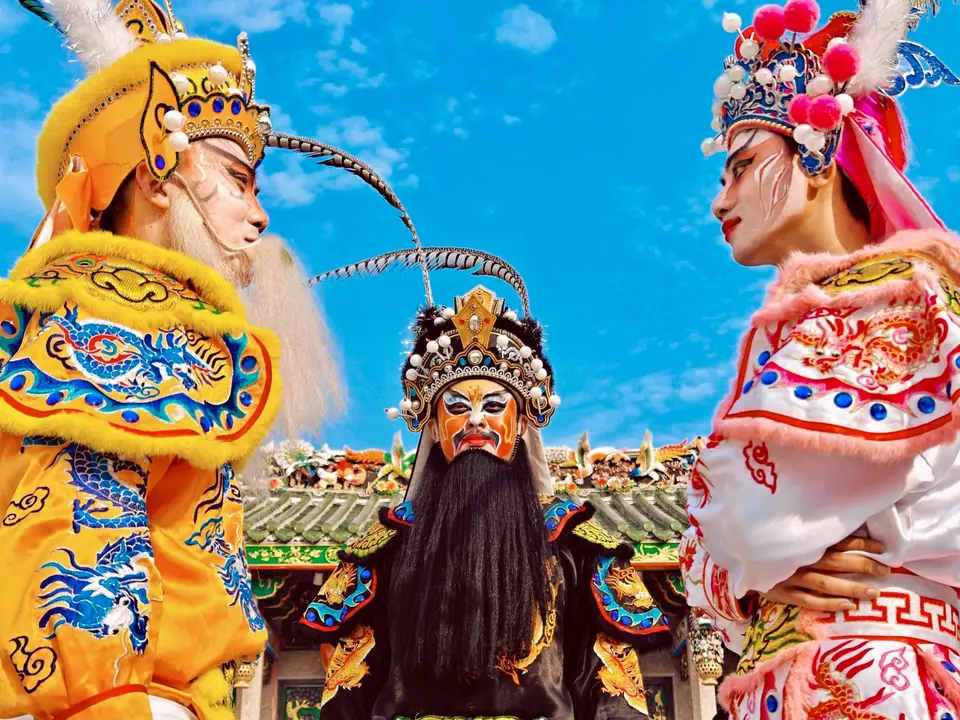
Inscribed on the UNESCO Representative List of the Intangible Cultural Heritage of Humanity, Peking Opera (Jingju) was born in Beijing in 1790 when four celebrated opera troupes from Anhui province entered the capital to perform for the eightieth birthday of the Qing Qianlong Emperor, gradually fusing regional melodies with Hubei musical traditions and crisp Beijing dialect. Rather than realistic stage sets, traditional Peking Opera uses an almost bare square wooden carpet where a single wooden table and two chairs can represent an imperial throne, a mountain pass, a city wall or a bridal chamber, while every movement of the actor's water-sleeves, pheasant plumes and eyes follows a strict poetic code.
Decoding the four roles and painted face (Lianpu) colours
Even if you do not speak Mandarin, most Beijing venues display bilingual English and Chinese surtitles on LED screens flanking the stage, and knowing the four foundational character types makes every scene immediate:
- Sheng (Male roles): split into bearded statesman-scholars (laosheng), high-pitched young lovers (xiaosheng) and acrobatic martial generals (wusheng) wearing four triangular battle flags (kaoqi) strapped to their backs.
- Dan (Female roles): virtuous noblewomen singing in refined falsetto (qingyi), lively clever maids in short jackets (huadan) and sword-wielding female warriors (wudan / daomadan).
- Jing (Painted-face roles): powerful warriors, judges or supernatural beings whose bold face paint reveals their moral character at first glance: red signifies loyalty and courage (such as Guan Yu); black denotes blunt integrity and impartiality (Judge Bao Zheng); blue or green indicates fierce, untamed bravery; gold and silver mark gods and spirits (such as the Monkey King, Sun Wukong); and a chalk-white face warns of a cunning, treacherous court minister (such as Cao Cao).
- Chou (Clown roles): marked by a small patch of white powder across the bridge of the nose, delivering vernacular Beijing wit and acrobatic tumbling.
Three classic venues to watch a performance
For historic architectural immersion, visit the Beijing Huguang Guild Hall (Huguang Huiguan) at Hufangqiao in Xicheng (Subway Line 7), built in 1807 with a square open wooden stage where masters such as Mei Lanfang once sang. For a lively one-hour introductory programme where you can arrive early to watch actors paint their faces in the dressing room, book the Liyuan Theatre inside the Qianmen Jianguo Hotel, or check the schedule at the purpose-built Mei Lanfang Grand Theatre (Chegongzhuang, Lines 2 and 6) and the National Centre for the Performing Arts.
Traveller tips
Real advice from people who have been to Peking Opera and the Huguang Guild Hall: Painted Faces and Stages. Every tip is read by our team before it goes live.
No tips yet. Been here? Yours could be the first.
Thank you! Your tip will appear here after a quick review.
More in Beijing
Continue exploring Beijing with related neighbourhood, food, and planning guides
Guomao and the Beijing CBD: China Zun and the CCTV Loop
Beijing, China
Panjiayuan Antique Market: Weekend Collectibles and Browsing Tips
Beijing, China
Hongqiao Pearl Market: Freshwater Pearls, Silk and Bargaining
Beijing, China
Fragrant Hills (Xiangshan Park): Autumn Red Leaves and Cableway
Beijing, China
